Showing posts with label symbolism. Show all posts

Tuesday, February 1, 2011

For the Love of Severus Snape

severus snape, what's not to love

Note: In this post, I discuss events that occur in the last three Harry Potter books.  I'm going to assume that you've read them, so there are spoilers.

As I argued in Harry Potter and the Book of Double Entendres, Harry Potter is filled with sexual symbolism.  What I left out of that discussion was Severus Snape. Since the last three books are so central to understanding his character, I thought it would be more appropriate to consider Snape on his own in the context of those three books.

Like any teenager, Harry must face anxiety about his sexuality and what kind of person he is through his physical and emotional relationships. But who is the focal point of this anxiety? For whom does he have the greatest unfulfilled desire for connection? Not Ginny, certainly; Harry's biggest worry with her is whether or not Ron will punch him in the face for liking his sister.  Cho Chang was definitely the early focus of Harry's attraction, but he abruptly lost interest in her in the fifth book--where, I would argue, his anxiety over rejection became embodied by none other than Severus Snape.

sexy snape

Snape is most certainly the sexiest character in Harry Potter, but why? He's repeatedly described as being physically unattractive and unpleasant.  And, just as with all the other teachers in Hogwarts, we know nothing of his personal relationships and assume he doesn't have any. However, he is interesting, and we're fascinated by him--because Harry is. This comes to a head in Order of the Phoenix, where they forcibly and repeatedly penetrate one another in an attempt to teach Harry occlumency. The sexual overtones are underlined by small, unconscious actions such as Snape "tracing his mouth with one long, thin finger" whenever he looks at Harry. 

It's no wonder Harry hates his occlumency lessons, as Snape recurrently violates Harry's mind, then berates him for being weak. But what frightens and infuriates Snape more than anything is when Harry reciprocates this insertion, catching a glimpse of Snape's own memories, making him vulnerable and inspiring a feeling of sympathy and camaraderie in Harry that Snape summarily rejects. This isn't the first or last time Harry recognizes a connection to Snape, only to have it turn into a feeling of abhorrence when Snape pushes him away.

For example, in The Half-Blood Prince, further parallels are drawn between Harry and Snape. After a lesson in Defense Against the Dark Arts, Harry fumes about Snape's passion for dark magic until Hermione points out that he sounds exactly like Harry. Meanwhile, unknown to either us or the book's characters, Harry is developing a man-crush on Snape's young alter ego, the Half-Blood Prince. The Prince is helpful, absolutely brilliant, funny, and the best teacher Harry's ever had. The depth of his attachment to the Prince is apparent in his hope that his father is really the Prince, even though logically he knows this can't be the case.

The point in all this is to say that Harry and Snape are not anathema to each other; quite the opposite. They're very similar and instinctively attracted to one another. In The Sorcerer's Stone, Harry is excited about potions until Snape makes it clear the first day of class that Harry's on his shit list. This pattern of constant attraction and rejection is what fosters in Harry his loathing of Snape--other teachers are hard on him and he dislikes many classes, but it is failure in Snape's class and his criticisms that really sting, because Snape is who he intuitively connects to.

But why does Snape repeatedly reject Harry? By the time we get to The Deathly Hallows, Harry burns with hatred for Snape, and with good reason: as far as he knows, Snape has betrayed the trust of Dumbledore and murdered him in cold blood. But like all passionate emotions, Harry's feelings for Snape aren't that far away from their opposite, in this case love. What Harry sees in Snape's dying memories appeases the negativity of the characters' interactions by once again reaffirming their connection and giving Harry the reason behind Snape's rejections.

Snape's objection to Harry is always that he's exactly like his father, James, a man Snape hated. But as Dumbledore points out, Harry is also very similar to Lily, the woman Snape loved. Therefor, to Snape, Harry is the embodiment of the pain and attraction he experienced as a youth, especially as he's the child Lily had with another man, and a living witness to her murder that Snape was indirectly responsible for. Snape is, perhaps, as attracted to Harry as Harry is to him; but he's also repulsed--by himself, his past, and his actions, all of which Harry is a breathing reminder. One might ask why Snape didn't simply choose to ignore this and instead focus on the positives and the connection he might have built with Harry, but his final memories show why he did not. Snape is completely unfamiliar with how to connect with people; not only that, but how to forgive others and himself. So he fell back on something he was more than practiced in, pushing the person he was most attracted to away.

Nevertheless, Snape recognizes that Harry is the only person at Hogwarts who can truly see him. That's why he demands Harry look at him as he takes his final breath. And would Harry take time out from defeating Voldemort to go wandering around the memories of a man he truly hated, or cared nothing for? Would he name his own child after someone he could never understand, call him the bravest man he ever knew (and that's saying something)? No. Harry never hated Snape, even at his angriest moments. Snape's rejection hurt him, and thus Snape became a symbol of Harry's sublimated desire for a connection with an older male figure. The sexual connotations that occasionally appeared with Snape in the context of that desire are, I think, not a sign that their attraction was sexual in nature, but merely one of the many reasons why it was destined not to go anywhere.

Sunday, January 30, 2011

The Glove

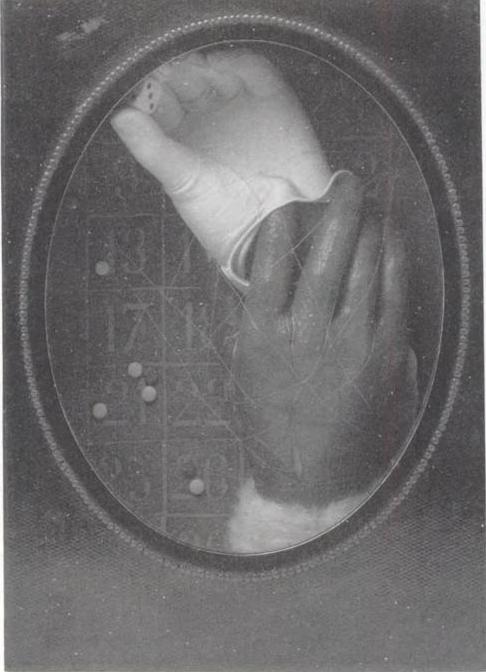
object by valentine hugo
Valentine Hugo, Objet

Have you ever noticed how gloves play a role in romance novels?  I was reading The Iron Duke by Meljean Brook the other day, and there's a great scene with the hero and heroine involving her glove (to hear me read the whole passage, click here):
Satin slid in a warm caress over her elbow, her forearm....  His expression changed as he continued to pull.  First registering surprise, as if he hadn't realized the glove extended past her wrist.  Then an emotion hard and sharp as the long glove slowly gave way.  It's white length finally dangled from his fingers, and to Mina seemed as intimate as if he held her stocking.... she felt exposed.  Stripped.

There are also memorable scenes involving gloves in Lord of Scoundrels by Loretta Chase, and (if I remember correctly) The Age of Innocence.  In Little Women, one of the signs Laurie's tutor is in love with Meg is that he keeps her glove.  So why are gloves charged with this sexual connotation?  It's not just because it's a piece of clothing and removing reveals a slice of skin--there's nothing inherently erotic about hands.  Gloves, however, do have a certain sexual symbolism. 

The surrealists believed an empty glove was an uncanny object because it had no life or anima where one expected to find it; it was like an empty piece of skin, without any soul.  A worn glove, however, is just the opposite:  the wearer gives it life, fills it with their own essence simply by slipping their hand inside.  It's a metaphor for the alchemical combination of male and female, and for the sexual act of creation.

A glove being worn also has a symbiotic relationship to the wearer.  In The Iron Duke, Trahaearn, the hero, is surprised by the nature of Mina's glove, just as he is surprised by her nature as well.  This is why taking off a glove is symbolically more sexual than putting it on--by taking off the heroine's glove, the hero inserts himself into her defenses.  In order to regain the power to animate, the heroine now needs the hero.  As Freud psychoanalyzed in one dream, the glove is basically analogous to the person who wears it, and the hero has taken possession of it.  That's not to say possession of a glove equates to possession of the heroine; but rather, the hero taking possession of the glove is a symbol of his desire (or vice-versa, although it doesn't usually work that way).

A visual demonstration of this idea is found in Objet by Valentine Hugo.  Valentine was the granddaughter of Victor Hugo, and had a huge crush on "the pope of surrealism," AndrĂ© Breton.  In Objet, she tried to attract his notice by engaging two gloves in a game of chance--i.e., love.  A love poem to Breton also accompanied the piece.  The tension in the piece comes from a central question--would the "male" glove (which looks remarkably similar to the description of Trahaearn's glove in The Iron Duke) succeed in breaching the female's defenses?  The answer was no--Breton was just not that into her.

With the main characters of these romance novels, however, the answer is a never-surprising yes.  Can you think of any other scenes where gloves play a symbolic role in novels or art?


Powered by ScribeFire.

Monday, April 27, 2009

Symbol or Fraud

A painting is a symbol for the universe. Inside it,
each piece relates to the other. Each piece is only answerable to the
rest of that little world. So, probably in the total universe, there is
that kind of total harmony, but we get only little tastes of it.

~Corita Kent

The Chasseur in the Forest by Caspar David Friedrich

From Booking Through Thursday:

My husband is not an avid reader, and he used to get very frustrated in college when teachers would insist discussing symbolism in a literary work when there didn’t seem to him to be any. He felt that writers often just wrote the story for the story’s sake and other people read symbolism into it.

It does seem like modern fiction just “tells the story” without much symbolism. Is symbolism an older literary device, like excessive description, that is not used much any more? Do you think there was as much symbolism as English teachers seemed to think? What are some examples of symbolism from your reading?

First of, your husband isn't an avid reader? How does he live? (LOL--kidding) I definitely believe that writers in the past--and the not-too-distant one, at that--used symbolism deliberately in their novels all the time. That was the style, not just in writing but in the visual arts as well. For example, Caspar David Friedrich is probably the most well-known German Romantic painter. He painted what most people today think of as "pretty landscapes," but his paintings were more than just scenic views. They were full of symbolism, expressing Friedrich's religous, philosophic, and political viewpoints. A Chasseur in the Forest is a painting that's all about the Napoleonic Wars and the expulsion of French troops from Germany. The lone figure is a French dragoon lost in the impenetrable forest, which symbolizes Germany. His ultimate fate (and the fate of the French army), death, is represented by the black crow on the tree stump--a symbol often used by Friedrich for death. Other symbols Friedrich regularly employed were colors to represent God or theological ideas, ships to represent human souls, and ruined churches to represent death (Friedrich was kind of obsessed with the whole death thing).


Mademoiselle Lange as Danae by Anne-Louis Girodet

Friedrich wasn't the only artist to use symbolism in his work, and symbols weren't used to only represent religious concepts. When the newly-married courtesan Mademoiselle Lange didn't like the portrait Girodet painted of her, he replaced it and hung a painting of her as Danae in the Paris Salon, instead. Danae is a mythological figure often used in allegorical paintings depicting courtesans, because Jupiter lured her into making love to him by appearing in the form of a shower of gold coins (don't ask me how that works, it's just the story). In this painting, Girodet was not just implying that Mlle. Lange was a prostitute, selling herself for the gold owned by her rich (and old) husband, but that she was cuckolding him (see the huge cock on the left staring at Mlle Lange's genitals?) with a young and handsome actor--you can see his portrait in the Bacchanalian head underneath Danae's seat, with gold coins stuck in his eyes. There are loads of other symbols in this painting, all of which were immediately apparent to the Parisian public, and all of which were completely insulting to Mlle Lange, her husband, and her luvah.

How could all these symbols, which seem relatively obscure to us today, be readily apparent to people at the time? Because viewers in the 19th century were trained to read the symbols in painting, just as I'm sure they were trained to recognize them in literature. Now, I have been known to say that art historians make stuff up, I admit; but by that I mean that some of our educated speculation is backed up by less proof than other theories. I don't know much about literary theory, but I imagine it's the same way. English teachers don't just pull this stuff out of their ass; they rely on things like letters, contemporary criticism, rough drafts, and so on to give them clues as to what the writer intended when he or she wrote the work. Sometimes, admittedly, they take this a bit farther than hard, irrefutable proof would support; but that's the fun of it. If I wanted to justify my every idea with irrefutable proof, I'd become an archaeologist. Or a police... person.


Most people today, however, are not trained to recognize symbols (unless they're part of a completely anachronistic profession like me :P). That doesn't mean that modern literature still doesn't use symbols--Animal Farm is obviously not just a story about animals that live on a farm, and The Great Gatsby isn't so much a novel with a traditional story as it is an allegory or modern American myth. Both books are full of symbols, like the T. J. Eckleburg billboard that symbolizes the eyes of God looking into Tom's soul.

However, the proliferation of symbolism in literature--and really all the arts--is only a fraction of what it used to be. Why? Because we no longer view the world in a symbolic way. We don't see spirituality in nature as Ralph Waldo Emmerson did, God in the power of Niaga Falls as Thomas Cole did, or think witchcraft causes bad dreams. Our world today is one of realities (so-called) and science and facts, not of symbols, signs, and mystery; and neither, for the most part, is our literature. Perhaps it's anachronistic to force people to continue thinking in those terms when they study art or literature, but that is the way the people who created those works understood the world they lived in.


Powered by ScribeFire.

LinkWithin

Related Posts Plugin for WordPress, Blogger...