Showing posts with label review. Show all posts

Saturday, July 31, 2021

Review: Gawain and the Green Knight


the hunt in the forest by paolo ucello
The Hunt in the Forest by Paolo Uccello, c. 1470

I

Gather all and put much thought 
to a tale of noble Camelot.
On New Year’s Eve the court did gather 
With wine and beer and much blather
Ladies fair and knights bold 
Plus Gweneviere and Arthur, we are told 
When all at once, what should they see 
But a walking, talking Christmas tree! 

(Actually it’s a man) 

Yes, ’twas a man, but green 
hair green, skin green, tongue green
Of great stature and much mass
Even his horse was the color of grass
Everything green, but eyes that were red
Even an idiot could guess where this led
But not Arthur and his patriotic knights
Who thought the green man rather nice

(How stupid are they?)

The Christmas Tree spoke, and offered a game
To anyone brave enough to issue his name
Strike a blow against the green man, and when the time came
A year from the next day, the green man would do the same.
What’s in it for the knights, one might wonder
But Sir Gawain this did not ponder.
He accepted the ax, and the green man knelt
Then to his neck, a fatal blow Wawain dealt.

(He chopped the Christmas Tree’s head off)

The head rolled about, the court watching whence it should land
Dismissing the Green Man, and thinking the matter at an end
Green blood spurted out from the tree
And Gawain anticipated congratulations there’d be
But the Christmas Tree rose from where he sat
And calmly collected his body’s hat
Holding his head, he told Gawain the way to his home
To meet a year from then, and to come alone

After which, he left.

II

Despite that Gawain was not too bright,
Even he knew to do what was right
Honor and chivalry demanded
He meet the Christmas Tree and be beheaded
Thus he set out in the morning
Uncertain about where he was going
A year later, and with much apprehension
For a view of reaching the Green Man’s mansion

(Which I’m guessing is in a forest)

But alas our knight knew not left from right
(re: none too bright)
Far and wide our hero did bumble
Searching for Green Man’s Green Chapel.
He was cold, and hungry, and sad to boot
When what should he spy: a moat!
Connected to a grand castle with turrets and flags
And the friendliest host Gawain’d ever had.

(Almost TOO friendly.)

The man himself was handsome and wealthy
With two others in residence: an old woman quite stealthy,
And a wife so beautiful she left Gawain nonplussed;
They took one look at each other and fell into lust.
Then with Gawain, a bargain the host assayed
That he would go hunting during the day
Upon his return, his catch he would giveth
And Gawain his daily claims would returneth.

(Sounds like another sketchy deal to me.)

But Gawain, like an idiot, pronounced his agreement
And into more trouble our hero descendeth.
But I shall say no more of Wawain’s toil
For fear that his tale I will spoil
At first I thought this story difficult to read
I did not comprehend the why of the characters’ deeds
But then Gawain met the lady, sorely tempting
And things got MUCH more entertaining.

(But who doesn’t like a little romance, right?)

Tis clear that this tale is all about pursuit:
of animals, women, and bravery to salute.
For while the host was hunting game,
The hostess was chasing down Gawain
Quite a dilemma for him to be thinking about
But of course not much thinking is done by that clout
Still, there’s a twist that I thought was grand
For in everything, a famous woman has a hand.

Highly recommended!


Originally posted at Medieval Bookworm in 2010. So long ago!

Saturday, January 28, 2017

Mini Reviews III: A Convenient Artistic Malice

mini reviews

This parcel of mini reviews features a contemporary romance set in New Zealand, a classic Regency, and a mystery/thriller from Japan. Enjoy!


artistic license
Artistic License by Elle Pierson

Art student Sophy is so distracted by a museum security guard with a face "Picasso would love" that she doesn't duck out of the way in time to avoid colliding with his impressively muscled torso. When she asks him to model for, Mick feels like he can't say no, and he's not sure he wants to. Will these two crazy kids get together???

I'll readily admit that I have a weakness for any book involving artists or art. Sometimes this leads me astray, but in this case it didn't. While Artistic License isn't a perfect novel–the clothing descriptions in the first chapter were enough to drive me bonkers; the author apparently has an obsession with jackets because I literally knew what kind of jacket every single character was wearing, or had ever worn–the story drew me in and, for the most part, I enjoyed reading it.

Sophy is an Anastasia Steele type of character: young, uncoordinated, shy, awkward, and not very confident. Normally this would be eye roll inducing, but here it felt authentic, possibly because Sophy is also quirky and accepting of herself as she is. Mick is slightly less well-drawn, but I loved the details in his mannerisms that gave the book a well-needed dash of realism.

This is one of those stories where the hero/heroine don't hook up for a long ass time for no good reason, and there were some niggling little details that bothered me, but overall Artistic License is a good–not great–read. If you're at loose ends searching for a romance, you could do worse.

the convenient marriage
The Convenient Marriage by Georgette Heyer

I've tried to read a couple of Georgette Heyer books in the past and pretty much gave up on that. But then I saw a post on Angieville about how she loved The Convenient Marriage, and one of the commenters said the audiobook version was narrated by Richard Armitage. RICHARD ARMITAGE, said my brain. And, lo and behold, said audiobook was on Hoopla. I immediately started listening to it and I'm glad I did, because it's a hella entertaining coming-of-age story full of adventure, duels, and social contretemps.

The Convenient Marriage is kind of like Pride & Prejudice, if Mary Bennet had decided to take matters into her own tentacles and propose to one of Jane's wealthy suitors. Horatia *seems* like she would be a shy, uncertain young woman, because of her stutter. But in fact she's feisty and a grab-life-by-both-hands sort. She's self-conscious about her stutter but still insists on going out in society and doing what she wants, which also makes her seem really brave.

Lord Rule is a bit more of a caricature, all laconic and superior all the time (except when he gets really pissed off), but whatever. It works here. And there are many other characters and a ton of stuff happening in the book that has nothing directly to do with the "romance" between Rule and Horry, so much so that you could almost turn this book into an entire TV series!

Finally, I really have to mention Armitage again, because he is an AMAAAAAzing narrator. Every character had his or her own voice and it was hard to believe one person could embody so many different personalities and accents. Honestly the best audiobook narrator I've ever listened to; I will definitely be listening to every other audiobook he's ever worked on.

Highly recommended!

And now for something completely different...

malice
Malice by Keigo Higashino

I received Malice as a birthday (or Christmas?) present, and honestly didn't know what to expect from it. It's not the type of book I would normally pick up on my own: the summary makes it sound like a dark and gritty police procedural, which is not my jam at all. After reading it, I would still say it's not "my type" of book. But because the writing is so fantastic, Malice transcended its genre and completely won me over.

The story is about two writers and their books: one, Kunihiko Hidaka, is a bestselling author; the other, Osamu Nonoguchi, is a literary unknown and Hidaka's childhood friend. When Hidaka's body inside his locked office, Nonoguchi decides to write about the investigation, much to the consternation of Detective Kaga.

I wish I could say more, but I don't want to ruin the twists and turns for you. I'll admit that the last twist went way beyond the bounds of plausibility and sense-making for me, but it was a thrilling ride getting there nonetheless. I can definitely see why Higashino is one of Japan's bestest-selling authors: his writing is compulsively readable. This is the type of novel you want to consume in great big gulps because it grabs hold of your imagination almost immediately. I'll definitely be on the lookout for more of Higashino's books in the future!


Discus this post with me on Twitter, FaceBook, Google+ or in the comments below.

Saturday, January 21, 2017

Mini-Reviews: Foodie Nonfiction

mini book reviews

Sometimes I have things to say about the books I finish, but not enough for a whole blog post. Enter mini-reviews! This time I focus on two recent non-fiction reads: Real Food/Fake Food by Larry Olmsted, and But First, Champagne by David White. I think both are valuable and worth reading, depending on your interests. Keep reading to find out more.

real food fake food
Real Food/Fake Food: Why You Don’t Know What You’re Eating and What You Can Do About It by Larry Olmsted

I like torturing myself by watching documentaries and reading books about how terrible American food is. Everyone needs a hobby I suppose. Anyway, I learned a lot from this book, such as:


  • The difference between the US Department of Agriculture and the US Food & Drug Administration. The USDA is actually designed to serve companies and producers, while the FDA is supposed to protect consumers. However, the USDA is actually the more trustworthy of the two for consumers because the FDA is a useless trash fire that doesn't even bother to follow the bare minimum of its own internal policies, let alone regulate the shit other people do.
  • What kobe beef actually is–I'd been looking into this before the trip to Japan, so I was surprised by how everything I read, on the internet or otherwise, was WRONG. Kobe beef is actually a genetically pure strain of cow from a very specific part of Kobe, and the genetics are what gives it its marbling and flavor, not massages and classical music and a diet of beer, as you might have otherwise heard. Also, only 3 restaurants in the US serve actual kobe beef. Everything else is fake.
  • Speaking of restaurants, I had no idea restaurants could essentially call food anything they like, even if it's completely incorrect.
  • The term méthode champenoise is not synonymous with méthode traditionnelle or méthode classique and can only be used for champagne, not other kinds of sparkling wines. That's because the "méthode champenoise" begins long before the wine is ever bottled and involves what grapes are grown, where, when, how they're planted, how tall they get, when they're harvested, and everything else that's part of the regulations for the winemakers of Champagne.
  • I already knew that the olive oil industry was filled with completely fake products and that Italian extra virgin olive oil especially was to be avoided. But I didn't know that the best EVOO to buy is from Australia, which has the strictest regulations regarding olive oil on the planet.


Sometimes Olmsted takes the whole "fake food" thing a little far, like when he complains about Cook's labeling their wine champagne. I mean, it should really be obvious that Cook's isn't from Champagne, based on the price alone. But then maybe to some people it isn't so obvious, idk. Either way, I came away from this book with some great tips on how to read labels and what to look for to make sure I'm getting the most value for my money by buying "real" food.


but first champagne
But First, Champagne: A Modern Guide to the World's Favorite Wine by David White

I enjoyed the first few chapters of this book, which were engaging and well-written. When White got into the modern history of Champagne, however (namely the World War periods), it became sleep-inducing.

I also occasionally felt like White was either soft-pedaling certain facts to make the Champagne houses look good, or didn't bother to do his due diligence in his research. For example, take this passage from the beginning of Chapter Six:

Jay-Z and other celebrities abandoned Cristal after Louis Roederer's president, Frédéric Rouzaud, spoke dismissively of his new devotees.

This sentence makes it sound like Jay-Z and a few of his friends threw a fit because Rouzaud wasn't star struck. The truth is bit more complicated than that. In actuality there was an organized boycott of Cristal in the hip-hop community because they felt Rouzaud's comments were racist, or at least inspired by racism. (Fun fact: the sudden popularity of moscato in the late '00s and early '10s was thanks to this boycott. Jay-Z may have replaced Cristal with Ace of Spades, but most hip-hop artists decided to abandon champagne altogether and instead started drinking moscato.)

I certainly don't know even one tenth of what White does about Champagne, but in the small parts where I did know something, it seemed like White's information was either incomplete or not entirely accurate. That said, I did learn some stuff, the full-color illustrations were fantastic, and it's true that there isn't a book similar to this one on the market. If you're interested in Champagne, or if you're planning a wine tour of the region, this is a good place to start.


Discus this post with me on Twitter, FaceBook, Google+ or in the comments below.

Saturday, November 26, 2016

A Heap of Mini-Reviews

I've been neglecting book reviews on this blog for much too long. The problem is, while I do have things to say about the books I've been reading, I rarely have bunches to say about them. So, enter mini-reviews!

For this batch of mini-reviews, I'm looking at a mystery, YA dystopian, fantasy novel, and thriller. Which were worth my time and which made me want to set fire to something? Read on to find out!

noblesse oblige cynthia smith
Noblesse Oblige by Cynthia Smith (mystery)

Emma Rhodes has a very unusual job: essentially, she's a private problem resolver. Rich people hire her to solve their problems, big or small, in just two weeks for the low low fee of $20,000. Business is strange, but good: Emma wears the best clothes, drinks the best booze, and jets between her three homes in NYC, London, and Spain. On this particular week, she's house-sitting in Bruges when she happens to be in the right place at the right time to stop the kidnapping of a member of the Belgian royal family. The royals quickly retain her services, but Emma soon realizes she may not survive the two weeks until she can collect her fee.

I read this book when I was a teenager, and I remember being all about Emma Rhodes. She has everything a girl could want: a life full of travel, handsome men, excellent food, exciting puzzles to solve, and best of all complete independence. She's practically the female version of James Bond. As an adult, I found this more irritating than anything else (jealousy? perhaps) and also found it hilarious how Emma goes into rants that leave her sounding like an octogenarian whig. Some of the things Emma has issues with:

  • Kids these days! They blame their parents for everything!
  • Cell phones: terrible invention of the 20th century, or WORST invention of the 20th century?
  • People who don't say good morning. Even if you're a not a morning person, there's no excuse for being rude!

Anyway, I did like this book, but Emma probably won't be my role model. Anymore.

the heir
The Heir by Kiera Cass (YA dystopian-ish)

Princess Eadlyn is the first female to ever be in line for the crown, thanks to her politically progressive parents. But despite their open-minded policies, her parents think forcing her to submit to the traditional Selection–where suitors are gathered from all over the kingdom to compete for a royal's hand in marriage–is a good idea. Eadlyn disagrees, but is forced to go along with it. Nevertheless, she is determined never to fall for any of these "boys."

This is the first Selection book I've read. It was okay. I liked that Eadlyn was a total bitch, but in a good way. Cuz, you know.

bitches get stuff done gif


I found the details of the Selection often vague or illogical. For example, the cameras–when and where are these people being filmed? Sometimes it sounds like there are hidden cameras on them all the time, and sometimes it's only when they're permitted. If they're only allowed during official times, how would they have "caught" her kissing Kyle? Makes no sense. Perhaps it's explained in the previous three novels.

The book ends on a cliffhanger, sort of, and there's another book to wrap everything up, but I'm not sure I'm going to read it. I don't really care who Eadlyn winds up with and the drawn-out passages about other couples in love and how mayyyybeeee she might want that (or not) made me want to scream. How on earth has this been stretched into five books?

masked city genevieve cogman
Masked City by Genevieve Cogman (fantasy)

Librarian Irene has been permanently assigned to Viction Steampunk London with her apprentice, Kai, a dragon. Then Kai is kidnapped by the fae, the dragons' mortal enemies, and taken to a fae-controlled Venice that's a mix of fantasy, dream, and nightmare. Will Irene be able to rescue him and prevent a war between the dragons and the fae that could stretch across worlds and destroy everything the Library has accomplished?

I liked previous book in this series, The Invisible Library, but I adored Masked City. First of all, Venice! And not just any Venice, but the Venice of imagination, with prisons straight out of a Piranesi sketch and a constant whirl of masked balls and mysterious happenings. Another highlight was Sherlock Holmes–oh, sorry, he's called Vale in this alternate–who remains true to the Holmesian tradition by being at once an irritating jerkface and completely awesome. I am totally shipping him and Irene, I don't care about the canon. The ending of the story was very abrupt but left me wanting more and more. I definitely recommend this series!

the chemist book
The Chemist by Stephenie Meyer (thriller)

The Chemist is basically Meyer channeling David Baldacci or Lee Child. Unfortunately she's really bad at it. Basically, you've got a woman of several names and unknown age, hiding from an evil government department she used to work for. What exactly this department does, is called, how she got the job, and what she did there, is never specifically addressed. At some point someone decided she and her mentor were expendable (again, we're not really told why) and attempted to kill them both. They succeeded with the mentor, but she survived. Now she's on the run, dodging assassination attempts. Perhaps she would have more luck with this if she moved beyond driving distance of DC (just a suggestion on my part but what do I know). But then! The department contacts her, asking her to return to the fold and stop a nonsensical terrorist plot that only she can prevent.

I appreciate that the smart, ruthless main character in The Chemist is a woman–you'd never see her like in a Child novel, for sure–but nothing in this book sounded plausible, and reading the long-ass explanations of our paranoid heroine's daily routine was like watching paint dry. Meyers gives us all the details we don't give two shits about and skips over the information that would make this book feel at least slightly grounded in reality. When the secret twin showed, I was done.

ugh

Major ugh.


Stay tuned next time for more mini-reviews!


Discus this post with me on Twitter, FaceBook, Google+ or in the comments below.

Sunday, May 15, 2016

Review: THE ART FORGER by BA Shapiro

the art forger

Claire Roth, expert Degas art reproducer and aspiring painter of original works, is approached by gallery owner Aiden Markel to paint a copy of a Degas masterwork. It would be business as usual for Claire, if only the painting wasn't the one stolen in the infamous 1990 Gardner Heist. But is the painting *really* the one painted by Degas? And will Claire and Aiden get away with switching one painting out for another?

Setting the very dodgy art history in this book aside–which I'm willing to recognize few besides myself would care about–The Art Forger had some major narrative issues that prevented me from thoroughly enjoying it.

Spoilers ahoy, mateys!

First and least of all, The Art Forger is a bit predictable and some plot points rely way too heavily on convenient coincidences. For example, Claire's only friends include a curator at the Isabella Stewart Gardner Museum, plus a lawyer with a passion for art. You can see where this is going, can't you friends? Hint hint: the curator will intervene on her behalf and the lawyer will keep her case from turning into the next Netflix true crime documentary series.

Secondly and more annoyingly, the plausibility issues were occasionally mind-boggling. The one I kept getting stuck on was that she approaches her curator friend with the story that: 1., the recently returned Degas painting is a copy that she painted; and 2. that she thinks the "real" Degas is hidden in a museum sub-basement.

This is not suspicious in and of itself, but given that said curator friend knows she's been shacking up with the man recently arrested for selling the stolen Degas painting, I find it incredible he didn't add two and two and come up with THEY WERE IN ON IT TOGETHER. I mean, that's a pretty odd coincidence, no? Yet instead of exhibiting natural skepticism, he swallows Claire's story whole and winds up endangering his job–something I can tell you for a fact is NOT easy to come by–by letting her into the museum after hours. Don't even get me started.

Another point that made my brain hurt was Claire's belief that if she found this mythical "real" Degas painting, Aiden will no longer be charged with selling stolen goods.

what gif


OKAY, BUT WHAT???? Just because the stolen painting wasn't a real Degas doesn't mean Aiden didn't sell stolen goods. It was still the painting that was stolen from the Gardner. Whether it's a Degas or a Dr Seuss isn't really relevant to the question of his guilt or lack thereof.

Not to mention there's this whole thing about intent and, since far as Aiden was concerned the painting WAS a real Degas, and he did fully intended to make money off it, you can't really argue he's not guilty. Unless you're delusional, have never watched TV, and can't be bothered to read up on basic US laws.

Finally, there's a whole bunch of pointless, boring stuff. Tip: go ahead and just skip over Belle Gardner's letters. The characters sum up what they were about for you at the very end of the book, which is handy. The scenes in the prison, which I imagine were supposed to make Claire seem like not quite as much of a greedy sad sack with a broken moral compass, were simply irritating; and the flashbacks to her contretemps over her first forgery didn't impress me with her emotional maturity or intelligence.

Basically, I found this book to be pretty difficult to buy into. Maybe I just know too much about art, but I'd like to think whatever knowledge I posses or don't wouldn't matter with an author who does their homework and takes the time to establish character motivation. And besides, at least half of the stuff that bothered me wasn't about art at all.

I did enjoy Xe Sands narration on the audio, but I probably won't be checking out any of Shapiro's other books.


Discus this post with me on Twitter, FaceBook, Google+ or in the comments below.

Wednesday, December 16, 2015

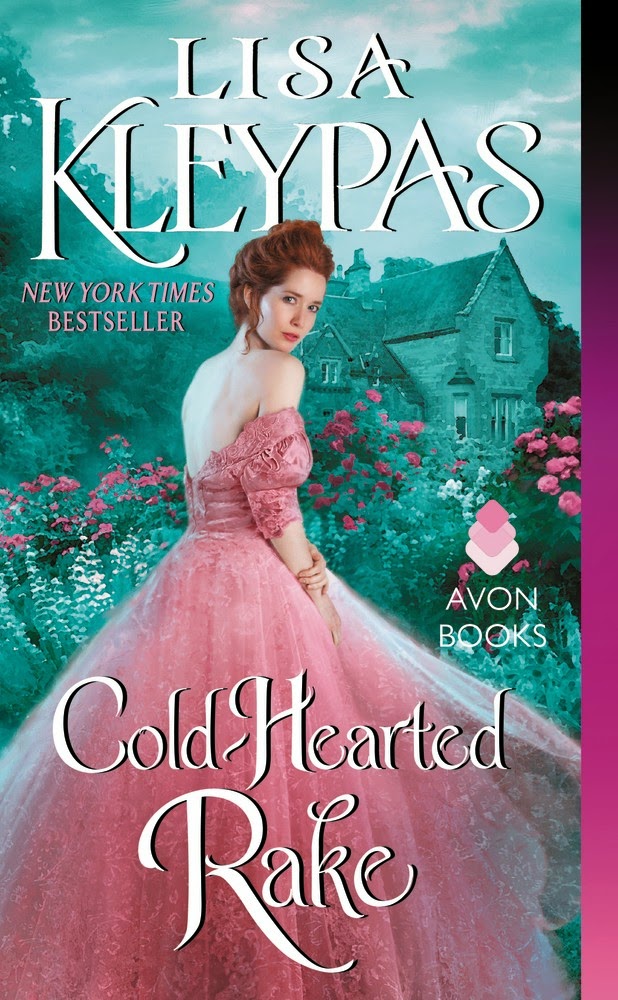
Review: COLD-HEARTED RAKE by Lisa Kleypas

cold hearted rake lisa kleypas

Devon Ravenel is not pleased when he inherits the estate of his cousin, the Earl of Trenear. For one thing, the house itself is falling apart, the estate is mired in debt, and it's not producing enough income to keep it afloat. For another thing, Devon and his brother made a pact as children to never take on any responsibility whatsoever. But when Devon goes to the estate to look into selling it off, he comes across his cousin's widow and despite his best intentions finds himself accepting the burdens of the earldom, most especially those of taking care of Trenear's countess.

Lisa Kleypas is the author whose books got me into romances, so when I heard she was releasing her first historical romance since 2010's Love in the Afternoon, I was pretty durned excited. But also anxious, because historical romance hasn't really been doing anything for me lately. I'm happy to report that while Cold-Hearted Rake wasn't a perfect book, it was fun and entertaining and mostly unputdownable–exactly the type of novel I hope for when I pick up something by Kleypas.

The beginning of Cold-Hearted Rake was a bit rough (side note: the title is annoying and inaccurate. Devon hardly came across as a cold-hearted rake; he was way too fiscally responsible. Also, the term "rake" kinda makes me roll my eyes). The romance between Devon and Kathleen felt predictable and forced, and I think it remained the weakest part of the novel even after it improved.

Fortunately, Devon and Kathleen didn't spend that much time together during the course of the novel, which left plenty of time for the more entertaining stories of Devon's brother, Weston, and the three Ravenel sisters, Pandora, Cassandra, and Helen, getting into hijinks. These are awesome characters, and Kleypas can really tell a great story when she puts her mind to it.

I also suspect Kleypas has been binge watching way too much PBS in recent years, because there's definitely a Masterpiece Classic vibe going on with this series. Devon's attitude reminded me of Matthew's in the first season of Downton Abbey, particularly when Grantham says to him (re: the estate), "You don't love it yet, but you will," and Matthew's like, "ERMERGAWD these people are so backward and stuck in the past and this house is wildly impractical WHY."

But even more than that, Winterbourne (Devon's friend who owns a department store in London) is so obviously modeled after Mouret, the owner of The Ladies' Paradise, or maybe Henry Selfridge from Mr. Selfridge. Either way, he's like, *smolder smolder smolder* *issues* I can't wait to find out what historical miniseries Kleypas rips off in the third book!

Anyway, it was nice to read a historical romance that was a well-told story with fun characters, that didn't bore me to death and I didn't want to set on fire. So the bar's set pretty high over here! Seriously, though, Cold-Hearted Rake isn't Kleypas' best book, but it stands up on its own pretty well. I've already preordered Marrying Winterbourne. CANNOT WAIT.


Discus this post with me on Twitter, FaceBook, Google+ or in the comments below.

Wednesday, December 2, 2015

Review: THE KILL ARTIST by Daniel Silva


the kill artist

I've been a fan of Daniel Silva's Gabriel Allon series ever since reading The English Girl, and since then I've been making my way–backwards, mind–through the series. I kind of stalled out on The Messenger, but I did really want to read the first Gabriel Allon book, The Kill Artist, out of sheer curiosity. It was a unique experience.

If you've read any of the more recent Allon novels, you know there's a kind of formula to how these stories work: Gabriel Allon, superstar art restorer and retired Israeli assassin, is approached by a spy organization–sometimes Mossad, sometimes not–to take care of a situation ONLY HE can resolve. Reluctantly, Allon agrees. Relying on his vast international network of friends and frenemies, Allon eventually saves the girl and the day.

The Kill Artist is not like that. Oh, Allon is an art restorer dragged into hunting down a terrorist and assassin by his old boss and father figure, Ari Shamron, but that's about where the similarities end.

First of all, the book feels a little dated. The Kill Artist was published in 2000, before September 11th, and it shows. I wouldn't say the terrorists seem quaint, but they're definitely old school, and the attitudes of the spy organizations and the world are completely different. Little things like what we would consider extremely lax airport security, or open borders, really underscores how long ago this book was written. The US is generally dismissive of the possibility of terrorist attacks, and interagency cooperation? You must be kidding.

Secondly, The Kill Artist isn't really about Gabriel Allon at all, it's about the Jewish diaspora in Europe and how it forms its own unique intelligence network. Silva's point seems to be that Israel may be a country, but it's one that represents an entire people of many different nationalities, a huge advantage on the intelligence front.

Finally, Allon is not a hero in The Kill Artist. He doesn't save the girl, he doesn't find the terrorist OR kill him, and his character is not admirable. He's really kind of a useless jerk, actually.

What surprised me most in The Kill Artist were revelations concerning Allon and his first wife, Leah. In every Allon book we learn that Allon's car was bombed in Vienna many years ago, in retaliation for his assassination of members of Black September. Allon was not in the car at the time, but his son and Leah were, and afterward his son died while his wife went mad with grief.

spoilers
Yeah, the rest of this review is going to have a ton of spoilers.

What we learn in The Kill Artist is that shortly before the explosion, Allon slept with one of his field agents, and the reason only Leah and his son were in the car was because she'd stormed out after she found out about it. She was leaving him, in other words (good for her).

A Gabriel Allon who sleeps with another woman he's in love with while his wife is in a mental hospital and can't even remember him is one thing; ishy, but you can't blame the guy. Having casual sex with his coworker in exotic locales while his wife is at home with their kid is whole different deal, one I would not have expected from his character.

As for The Other Woman herself, Sarah Halevy, I found her purpose in the book to be pretty annoying. It makes no sense that she's a famous supermodel because if she is, WOULDN'T PEOPLE RECOGNIZE HER? The only reason for it I could see was to make us feel less bad about Allon sleeping with her. She's the most beautiful supermodel in the world! How could he be expected to pass that up? Riiiiiiiiiight.

Usually by the end of a Gabriel Allon novel, I like and respect his character, but that was impossible to do by the end of The Kill Artist. It's quite a cynical novel, and doesn't exactly sync up with what I've come to know of the main characters. I'm not sure I would recommend it to newbies of the series, but I'm glad I read it.


Discus this post with me on Twitter, FaceBook, Google+ or in the comments below.

Wednesday, November 18, 2015

Book Streaming Service Review: PLAYSTER

playster

I was provided with a free week of Playster for review purposes. Although I could have gotten a whole month free just by signing up on my own, so the monetary value of this is questionable. Either way, all biases and opinions are my own.

I've never been one for subscription streaming. I am subscribed to Hulu, so I can watch The Mindy Project, and Amazon Prime, though I mainly have that for the free shipping and not for the movies, etc. But I've never been tempted by book subscriptions like Scribd or Oyster, for several reasons:


  1. I'm poor. Sad but true.
  2. Most of the books I read I get for free (see point 1). The vast majority of them are from my local library, and a few are ARCs or gifts/loans from friends. If I can get most of everything I want to read at the library, why would I pay for a book subscription service?
  3. I feel like subscription services generally do not have the books I want to read. That may not be true, but the ones I've looked into mostly have lit fic and best sellers. That makes sense from a business standpoint, but my jam is quirky romance, YA, cozy mysteries, and spy novels.
  4. I don't read enough to justify paying a monthly fee. I usually average only one book a week. To my mind, I'd have to go through three or four books a week (which I used to do... ah, childhood) to make signing up for most subscription services a good deal.


All of which is a long way to go about saying that I am not well-versed in subscription services, and my opinion on Playster should be taken as one who is a noobie in this market. That said, I was pretty impressed with it.

Playster, in case you hadn't guessed, is a new subscription service. It's not just for books, but audiobooks, movies, TV shows, games, and music as well. The monthly charge for all services is $24.95/month, which is pretty steep compared to Amazon Prime or Hulu–but, you could also argue you get more services through Playster. Alternately, you have the option to subscribe to just one of the services–for example, books–for $9.95/month.

I have to say I was pleasantly surprised by the wide variety of books and audiobooks available on Playster. I found exactly the audiobook I wanted to listen to, and there were plenty of YA, mystery, thriller, and romance novels, some I'd never even heard of. So, not completely dominated by best sellers.

My favorite part of Playster's service was actually the audiobook section (I didn't have an opportunity to look at the games, video, or music, so I can't tell you how those were). Audiobooks aren't included on Amazon Prime, and many of the audiobooks from my library are only playable on Overdrive, which is a giant pain in the ass. Playster's audiobooks were easily streamable from Chrome, which was a simpler way to listen than through Audible, even. So that definitely elevated its value as a service for me.

One thing about Playster that kind of confused me was that the app wasn't available yet. I could sign into it on a browser using my Mac and iPad (although I wasn't able to sign in on my iPhone, don't know why), and reading books through Chrome on iPad wasn't any more onerous than reading books through Kindle's app; but it still felt strange not to have a dedicated app. So if you do decide to try Playster you might want to hold off until the app is ready.

Another point of concern I noted while scrolling through the books was a lack of diversity–not in genre, but in authors. I was able to find one author who was a POC, but that was after a concentrated search on my part. I would definitely recommend Playster make more of an effort to include and feature books by a more diverse group of authors in the future.

Anyway, those were my impressions. If Playster is worth the monthly fee is up to the individual, of course, and to be completely honest I'm going to stick to the library. But for those of you who use (or canceled, for that matter) Scribd, Playster might be worth checking out.


Discus this post with me on Twitter, FaceBook, Google+ or in the comments below.

Thursday, November 5, 2015

Review: THE MARVELS by Brian Selznick

the marvels

Who are the Marvels? I'm glad you asked. The Marvels are a family of actors, ruling over the Royal Theater in London across generations, until one them decides he doesn't like acting. Did he and his family survive the burning of the famous theater? Meanwhile, in the 1990s, a young boy named Joseph runs away from school to the home of his uncle, who lives in a mysterious house frozen in time. How are the Marvels and Joseph's uncle connected? With the help of an odd new friend named Frankie, Joseph aims to find out before his uncle sends him back to boarding school.

I loved Wonderstruck and The Invention of Hugo Cabret, so when The Marvels came out I was pretty durned excited. As always, Selznick combines art and story in The Marvels in a way that's not-quite graphic novel, nor quite illustrated text. However, unlike in his previous two books, I didn't feel like the art was well integrated with the secondary narrative (or at all, really), and the story was kinda boring.

The first half of The Marvels is really a GIGAAAAAAANNNNNNNNTIC, image-only prologue about the family the Marvels: who their founder was (a lone 18th-century shipwreck survivor named Billy) and their looong history with the theater. Y'all know how I feel about prologues, especially prologues disguising themselves as actual beginnings of a book, but this part of the book didn't annoy me *because* it was a prologue.

No, what annoyed me was the complete lack of anything resembling a story or character development. The art was fantastic, of course (Selznick can really tell a story through images; he should take up film directing), but it was basically like a giant book of begats. You know, the part of the Bible where it's all like, "This guy married this woman and begat so and so, he begat so and so, and then he begat another blah blah blah, and blah blah blah married what's-her-face and begat yada yada," and it goes on and on and on. The first half of The Marvels was really exactly like that: Billy Marvel adopted whomever (I forgot his name, something theatrical), and he married an actress and they had a baby, then that baby grew up and slept with some woman, and they had a baby, then THAT baby, miracle of miracles, also got married and had a baby, and I'm like:

bored
(Except not actually, because unlike Mrs. Hudson my parents are very strict about in-home firearm discharge.)


The second half of the book is pretty much all text, like a regular book, and has an actual plot. So, plus side! At first it's also a pretty good story: there are Questions, like what happened to Joseph's friend at boarding school, who is this weird kid running around chasing after a dog constantly, and why does his uncle live in a house that looks like the Victorian family it really belongs to just stepped out of a holiday party to go caroling?

Yes, these are intriguing questions. If only the answers to them were half as interesting. If I was a middle-grade reader the case might have been different, but as it was I found myself pretty bored and skimming to get to the end. There is a twist, but I felt like it made the book lamer rather twisty and interesting.

The Marvels isn't awful, but compared to Selznick's other novels it felt uninspired and rushed. I don't know why he didn't break up all those damn begats, but he should have; that would have helped a lot. Or, you know, just write a novel using words! That would have worked too. Either way, I think this book misses the mark.


Discus this post with me on Twitter, FaceBook, Google+ or in the comments below.

Wednesday, September 2, 2015

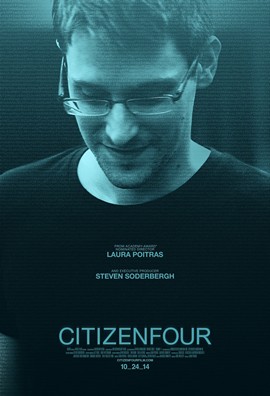
Movie Review: CITIZENFOUR


Originally released: 2014
Starring: Edward Snowden, Glenn Greenwald, Ewen MacAskill
Directed by: Laura Poitras
Based on: real life.

In January of 2013, Laura Poitras received an encrypted email from someone codenamed Citizenfour, who claimed to have documents proving a whole host of illegal spying was being perpetrated by the NSA, in violation of the US Constitution, domestically and abroad. Most of Citizenfour takes place over eight days in a Hong Kong hotel room, as the now-infamous whistleblower Edward Snowden divvied up NSA documents to different journalists and prepared for the shit storm that was about to be his life.

citizenfour


I had high expectations for Citizenfour, mainly because of Anachronist's review but also because it won the Academy Award for Best Documentary this year. I came away with mixed feelings on it. Is it an important documentary? Yes. But I was frustrated by the lack of concrete information.

My biggest issue with Citizenfour is that from the start, Snowden says he doesn't want this to be about him, he wants it to be about the information. Yet Poitras made a film that's basically all about him! And not just about him, but apparently designed to make him look as attractive and noble as possible. Do I admire Snowden? Yes. Do I think emphasizing the sacrifices he made in regards to his family and friends is important? Sure. Do I need the scenes where Snowden is swathed in white robes, all lithe and willowy and peering into the black screen of his laptop as if receiving messages from the great beyond? NOPE.

Furthermore, the information on NSA spying that Poitras is presumably supposed to be conveying in Citizenfour is vague at best. If you want to learn what was in the documents Snowden handed to journalists, and about the events leading up to it, best seek out Frontline's United States of Secrets and give Citizenfour a skip–or at least watch the former before the latter so you're already familiar with the context. And we're only fed the barest tidbits of information on the NSA spying. At the very least Poitras could have kept the camera on Snowden while he explained to Greenwald how to encrypt his emails ("It sounds really difficult but it's actually very easy") and then we would have actually learned something useful!

That kind of ties in to a small beef I have with all the reporting I've seen about the NSA spying, not just Poitras'. People say that Americans don't care the government is spying on them, but I don't think that's true. I think we just don't know what we're supposed to do about it, aside from living off the grid, and that's not going to happen. Keeping your information private online is overwhelming enough without throwing Big Brother into the mix. I'm not saying what Greenwald and the other journalists are doing isn't important and heroic in its own right, but I always get the impression their audience is other political journalists. Aside from concrete examples, like the US listening to every conversation on Angela Merkel's phone, this is not easily digestible information to the average person who just wants to play Candy Crush and check their Facebook timeline, you know what I mean?

Other thoughts:

  • I wonder how Snowden feels taking refuge in Russia, a country not exactly known for its human rights and free speech policies. The ironies of life are manifold, my darlings.
  • The connection between corporations and the government that's come out of the NSA's "program," if you want to call it that, is pretty chilling. To quote my American history prof, corporations will eat their own children if it means they get short-term profit out of it. Now, apparently, there's little to no line between corporations and the government. What a great combo.
  • I wonder if checking this movie out from the library puts me on the NSA's watch list. But then I was probably already on it for being a liberal independent who works in a gun store.
  • I didn't completely buy Snowden's explanation for why he decided to become a whistleblower. It seemed a little too simplistic and obvious. I wonder if the real reason was that he wanted to be like Marcus Yallow from the Cory Doctorow books (a copy of Homeland is prominently displayed next to Snowden's laptop–seriously, could this guy get any more adorkable??) but he didn't want to say that because he realized that was too geeky, even for him, so he went with, um, free communication and exchange of ideas is important and stuff. Yeah. That's it.


If there's one thing I came away with after watching Citizenfour, is that Snowden is a smart motherfucking cookie. I mean, I already knew that on some level, but Citizenfour really crystallizes it. If he'd just released all those documents online, he'd probably be rotting in a hole in prison somewhere like Bradley Manning. Instead he methodically planned out every aspect of the situation and sequence of events that he could in order to minimize the negative effects on the people involved–not just himself, but his friends, family, and reporters. Having the journalists vet the information instead of himself, in particular, was brilliant, and might be the only thing that allows him to return to the US someday (should he wish to). I do appreciate people who are thorough planners. He was also lucky, but mainly he was smart.

While I don't think Citizenfour succeeds as well as it could have in informing people about NSA spying, it is an important movie to watch, especially with an election coming up. This is definitely the most important issue of our time, and as a film designed to make people give a fuck, Citizenfour succeeds.


Discus this post with me on Twitter, FaceBook, Google+ or in the comments below.

Tuesday, August 4, 2015

Movie Review: MR HOLMES


Originally released: 2015
Starring: Sir Ian McKellen, Laura Linney, Milo Parker, Hattie Morahan
Directed by: Bill Condon
Based on: A Slight Trick of the Mind by Mitch Cullin

In post-WWII Britain, a 93-year-old Sherlock Holmes is losing his wits, because oldness. Desperate to remember the case that made him quit detecting forever, he travels to Japan to find a cure for his failing mental faculties. But the only thing that really helps is spending time with his bitchy housekeeper's son, Roger.

mr holmes movie poster


As I mentioned in my Sunday Snapshot, Mr. Holmes is all over the place. It jumps from 1947 Britain to 1920-ish Britain, to Japan, and back again, and the transitions can be rather abrupt. As a fan of all things Sherlockian, I did not find this movie enjoyable, although it did have some interesting ideas.

I don't think Mr. Holmes betrays the Sherlock canon, but there are several points where I feel it went it wrong. First of all, there's no Watson, nor any Watson character–the story is told through Sherlock's eyes. BIG mistake. I love Sherlock, but there's no way he can be a sympathetic everyman. That's Watson's (or Mary Russell's, or whomever's) job. Holmes' job is to be weird and not boring.

Secondly, the mystery element is miniscule. I was expecting way more detecting than whatever the hell else was going on in this movie. And while I enjoyed the mystery, there were moments when it was head-slappingly stupid. There was a sequence where Holmes followed a woman through London and his only method of subterfuge was to peek around the edges of pillars and the like. While wearing a top hat and a three-piece suit and tails, no less, as if he's going to the Ritz! Wasn't Holmes supposed to be a master of disguise? C'mon, movie makers. Try harder.

I also found it ironic that Holmes complained Watson's books were penny dreadfuls with ridiculous plots when Mr. Holmes has more inconsistencies than any of Conan Doyle's works. For example (these are spoilerific, just FYI):


  • If he needs a brain/energy boost, why doesn't Holmes just take cocaine instead of traveling all the way to Japan for prickly ash?
  • I'm supposed to believe that Holmes, or anyone really, would let some random lady move in with them after knowing her for less than hour? Right. Totally. Not.
  • Holmes feels guilty for killing said woman, as if he failed to warn her about a bus veering down the road or something, but she didn't just die. She made the choice to kill herself. He was like, "Hey, don't kill yourself, you have a lot to live for," and she was like, "Oh, you're right, I won't," and then she decided to just go ahead and do it anyway. If anyone should feel bad, it should be her Awful Person husband. I find it very difficult to believe Holmes would feel so guilty about this that he'd give up detecting, even if the two of them shared some sort of instantaneous metaphysical connection. Which I think is improbable.
  • Throughout the whole movie there's a "mystery" about what's killing Holmes' bees. Then Roger gets stung and Holmes is like, "Oh, it must be wasps!" THE WASP NEST IS LITERALLY RIGHT OUTSIDE THE HOUSE. Like three feet, and it's freaking huge. He didn't notice a bunch of wasps flying around when he was out there ALL THE TIME?
  • The oddest thing in this movie is when Holmes writes to Mr. Umezaki to tell him that his father didn't just abandon him and his mother, but decided to become an asset for Mycroft and the War Office, where he served with distinction. This is, presumably, a fiction on Holmes' part meant to make Umezaki feel better. But would thinking your father left you to spy for the Allies who just dropped two atomic bombs on your country *really* make anyone feel better? "Your dad betrayed his country. Hope this helps!"


Visually, the Japan sections of the movie were the most striking, but they had zippo to do with anything else in the plot. Their main purpose was to underscore what I think of as the ungrieved-for dead–a term from Anne Roiphe's memoir Art and Madness that she uses to describe the zeitgeist that infused post-War America.

And everywhere in Mr. Holmes there are dead people, from Glass Harmonica Woman's dead kids, to the woman herself, to the housekeeper's dead husband (whom she talks about at length on randomly and apropos of nothing, e.g. Housekeeper: "Your dad wanted to join the RAF instead of working on cars." Roger: "Sorry I said you could barely read." Cool talk, bro?), to dead Watson and Mycroft. Holmes' challenge is just to remember them and acknowledge their loss.

The final scene of Mr. Holmes seems to draw a loose parallel between the woman who committed suicide and the dropping of the atomic bomb on Hiroshima, as well as Holmes' subsumed guilt over the act and deliberate (or perhaps self-preservational) amnesia. An interesting theme to explore, but why use Sherlock Holmes to do it? That's what really confuses me about this story. Holmes is a symbol of Victorian London. Why is he being employed as a stand-in for the War Generation? I honestly have no idea, but I think pairing Holmes with this theme was misplaced and did not serve either the character or the story. It would have been much more poignant and believable if he'd been an average old guy.

I will say on the positive side that Ian McKellen, Laura Linney, and Milo Parker were fantastic in this. McKellen really has that old man face nailed down. I was also relieved Holmes didn't die at the end–at least the filmmakers knew not to do that much.


Discus this post with me on Twitter, FaceBook, Google+ or in the comments below.

Monday, April 27, 2015

Movie Review: THE IMITATION GAME


Originally released: 2014
Starring: Benedict Cumberbatch, Keira Knightley, Matthew Goode
Directed by: Morten Tyldum
Based on: (loosely) Alan Turing: The Enigma by Andrew Hodges

Guest review by Anachronist from Portable Pieces of Thought!

the imitation game


Synopsis:

Based on the real life story of legendary cryptanalyst Alan Turing, the film portrays the nail-biting race against time to break the code of Enigma.

During the winter of 1952, British authorities entered the home of mathematician, cryptanalyst and war hero Alan Turing (Benedict Cumberbatch) to investigate a reported burglary. They instead ended up arresting Turing himself on charges of 'gross indecency', an accusation that would lead to his devastating conviction for the criminal offense of homosexuality - little did officials know, they were actually incriminating the pioneer of modern-day computing. Famously leading a motley group of scholars, linguists, chess champions and intelligence officers, he was credited with cracking the so-called unbreakable codes of Germany's World War II Enigma machine.

My impressions:

It is one of these movies which seem to be aimed at ignorant people – the less you know about the historical Bletchley Park and breaking the code of the German encryption machine the more you will enjoy it. Some might call it easy entertainment I call it a dumbed-down, run-of-the-mill hogwash, at least when it comes to the historicity.

I grant it – the director had several good ideas. One of them was showing how in times of war ordinary people were forced to play God, deciding whether others should live or die. What is better: to doom the whole nation or the crews of several ships? How to measure the value of life? Few psychopaths enjoyed that insane power but the majority of ‘normal’ people, caught in it, were left scarred and disgusted by themselves permanently because the answer to such a dilemma is never clear or easy.

mark strong
Mark Strong enjoying a doorframe.


Another highlight was the fate of Alan Turing, played brilliantly by Cumberbatch - it proved again that if you know how to count, count on yourself only, your country won’t move a finger unless they need you very badly. What else? Mark Strong, playing the all-powerful MI6 director leaned against door frames in a very compelling manner. Oh, and I must add that children-actors in the flashbacks to Turing’s boarding school years (Alex Lawther and Jack Bannon) were wonderful. Now I can return back to carping and let me assure you, I hardly know where to start.

keira knightly


Should I bash the director for casting Keira Knightley, a lady whose facial expressions remind me strongly of Tom Marvolo Riddle a.k.a Lord Voldemort, the main baddie from Harry Potter books? As long as she doesn’t smile she looks lovely but when she smiles she sneers, there is no kinder word for it. Anyway she made Joan Clarke look shallow and vapid. Or maybe I should focus on the fact that this movie, set in a place where the majority of employees, about 75% or more, were women still somehow failed to pass the famous Bechdel test? When the movie Joan Clarke finally talks to one of her female colleagues in a pub they talk of course about men *rolleye*. Serious matters are just for their male counterparts. You see? Spoiled for choice, that’s what I am.

turing's cohorts


Turing's one-dimensional cohort of cryptographers was a compilation of cliches without one interesting feature (you get the cocky, handsome one, the nerdy, antisocial one, the intelligent, delusional Russian spy etc, etc). The screenwriter’s decision to employ a time-shifting structure contributed heavily to the film's been-there-done-that atmosphere, while the inclusion of needless obstacles within the narrative's back half served little purpose other than to pad out the already a bit overlong running time.

bletchly park codebreakers
Photo of actual codebreakers working at Bletchley Park.


Now the main lead. Turing was a brilliant mathematician, a crucial figure in the theorization and engineering of digital computing; and the biggest brain in Bletchley Park’s Hut #8, the unit in Britain’s World War II intelligence hub that succeeded in breaking the German’s Enigma code, thus shortening the war by as much as two years, give or take, and saving as many as twenty-million lives, perhaps more. Still the movie shows not enough of his thinking and reasoning, it focuses on his quarrels and romance with Clarke. Overall I felt the movie sentimentalized and simplified Turing, who, as far as I know, sometimes wished he was a machine and probably preferred the company of his digital creatures to any of his many lovers, whether casual or serious. That there is no sign of any of these lovers in the film is another failing – there are just empty accusations and an unbelievable confession, heard by a deus-ex-machina police detective (Rory Kinnear). How could the director dumbed down Turing so much? Had his character really told the detective what he did at Bletchley, he would have been guilty of a crime far more serious than homosexuality. He would have committed high treason for violating the Official Secrets Act. It was still a hanging offense.

In 1952 Turing was convicted of engaging in homosexual acts, for which he was sentenced to chemical castration (the option he preferred to two years in prison). As a result not only were his brain and body messed up by high dosages of estrogen, he also was barred from the government funding he needed to continue his life’s work on artificial intelligence. His death, just a few days before his forty-second birthday, from arsenic poisoning was most likely a suicide although possibly an accident or even an assassination. Instead of exploring the mystery of that tragic event the director decided to show a pointless, stunted investigation which led nowhere and a pair of cops whose role was to emphasize British prejudices.

Final verdict:

As much as I wanted to suspend my disbelief and take pleasure in the actors’ brilliance, I found The Imitation Game lacking credibility on every level. The historical accuracy was nowhere to be seen and the big emotional revelations at the story's conclusion fell completely flat. Pity.


Discus this post with me on Twitter, FaceBook, Google+ or in the comments below.

Monday, March 23, 2015

Review: THE SCULPTOR by Scott McCloud

the sculptor cover

David Smith is having the weirdest, worstest birthday ever. He just got fired, he's about to be kicked out of his apartment, he's flat broke, and it looks like his dreams of becoming a successful sculptor are about to die a cruel death. Then he runs into his Uncle Harry. Problem: Uncle Harry's dead. Instead, David's talking to the Grim Reaper, who offers him a deal he can't refuse. David will receive the ability to magically manipulate any material with his bare hands, a dream for the down-on-his-luck artist. The catch is, if he accepts the offer, he'll die in 200 days. David agrees eagerly, only to find out that success and ability don't necessarily go hand-in-hand, and 200 days isn't nearly long enough when you're in love.

Scott McCloud is undoubtedly considered an expert on the subject of comics–his book, Understanding Comics, is the go-to comic book about comics, or so I've heard–but The Sculptor is his first graphic novel. I have to agree with Neil Gaiman that it's the best graphic novel I've read in years. But it's also cynical as shit and gives Hamlet a run for its money in depressing endings.

It would be a little too much to call The Sculptor masterful, but it is REALLY well-done, and it's definitely something you should read, especially if you're a fan of Bryan Lee O'Malley. McCloud and O'Malley share a gift for telling a visual story in a very clear, yet expressive way. There are no wasted lines or panels in The Sculptor: everything on the page is drawn economically and is well-composed, with an understanding of how to use negative space for visual impact. As someone who tends to gets headaches reading graphic novels that are visually cluttered, I absolutely loved McCloud's drawing style.

david the sculptor scott mccloud
David discovers his new powers.


The story is very well-told, too, and it's meaty. McCloud takes the typical art historical tale of the hero-genius and turns it on its head, questioning why we create art, why we buy it, why we lionize it, and what the definition of success should be. I loved that David's sculpture develops over the course of the novel. I have to admit, when I saw his first sculptures, I thought they were borderline terrible. But by the end of the book he's actually doing things that are very original and interesting.

That said, I'm not sure The Sculptor is really about art per se. It's more about ego and legacy and forming connections. As in some of the greatest heroic journeys, David has to be stripped of absolutely everything, even his promises to himself, before he can recreate himself and change his life.

I also loved the main female character, Meg. Talk about a fully-realized female character. Even though her role in the book is basically as David's love interest, she has her own things going on and a complex backstory with a believable, unidealized personality that McCloud does a fantastic job of expressing both visually and through dialog.

the sculptor scott mccloud
David checks out his competition for an important art prize.


I would absolutely give The Sculptor five stars and list it as one of my favorite books... if it wasn't for the ending. Look, The Sculptor's obviously going to be a tragedy, that's clear very early in the novel. But the cynicism of the conclusion and the way it played out completely blindsided me. Life has no meaning and we all die and there's no afterlife. Oh, and no one gives a fuck about art and nothing matters. I've felt more cheerful after watching Romeo & Juliet. I'm not saying McCloud should have changed the ending–it made sense with the story–just that I can't fully get behind something that unrelentingly cynical.

I still think The Sculptor is very much worth reading, though. And you've been warned about the ending, so you can prep with some whiskey to brace yourself.


Discus this post with me on Twitter, FaceBook, Google+ or in the comments below.

Saturday, January 17, 2015

Review: QUEENPIN by Megan Abbott

queenpin megan abbott

On the surface, a young woman appears to be a good girl: going to school to be a secretary, not sleeping around, taking care of her dad. But on the inside, she craves danger, action, excitement. And when her dad gets her a job at a casino, the world of bookies, gangsters, liars, and gamblers pulls her in. Soon she catches the eye of Gloria Denton, a cash handler for the big boys. Gloria offers her everything a woman could ask for–a swank apartment in the ritzy part of town, fabulous clothes, jewelry, fancy dinners out, cocktails every night, and a job making the rounds of every casino and track in town. But is Gloria her fairy godmother, or her evil stepmother?

I've seen Queenpin around the blahgs a few times over the years and always wanted to read it, but it wasn't until I saw Jessica's post on neo-noir over at Book Riot that I decided to take the plunge. I'm so glad I did! Queenpin is not what I usually read at all–it's hard-core noir. No one in this book is a hero, everyone betrays everyone else, and there's no redemption for the main character. I don't think I've ever read a novel this dark and cynical of my own volition. But at the same time, Queenpin tells a completely gripping story with fantastic, gritty writing that totally sucked me in and invaded my dreams.

In a lot of ways Queenpin reminds me of Rebecca by Daphne du Maurier: our narrator is an unnamed, relatively innocent young girl who becomes fascinated, perhaps even obsessed, with a femme fatale who seems to represent everything a woman should be and everything she's not. "A woman of 36, dressed in black satin with a string of pearls," is how the heroine of Rebecca puts it, except I suspect Gloria is considerably older than 36.

In a few respects Gloria is a mother figure to the heroine, but really there's something more possessive and vaguely sexual about their relationship than a typical mother/daughter dynamic. When the heroine starts sleeping with Vic, a gambling addict, she acts more like a wife trying to hide her lover from her husband than a woman who's dating a guy her boss (or mom, for that matter) would find inappropriate. At one point Gloria tells her, "You're mine. Whoever put those marks on you might as well have put marks on me."

Which brings me to the major difference between Rebecca and Queenpin (aside from, you know, setting and genre and themes. Most things, really): there's no prince charming. Vic has all the charm of Maxim de Winter, but he's without a doubt a complete loser and a terrible person. Yet you can totally understand why the heroine goes for him–it's all about lust, and their scenes together are probably some of the hottest, yet-not-in-any-way-graphic scenes I've ever come across in a book. You can FEEL how they're using each other and it's compelling stuff. Sex, drugs, and rock n roll, baby. The heroine wants it all, and she wants it now, and that kind of greed fits perfectly into her relationship with Vic.

Obviously things do not end well for Vic and our nameless narrator. A gambling addict and a woman who collects gambling profits for gangsters? Yeah, that's a great combo. But the fact that he's the completely wrong person is part of his appeal to the narrator, too.

I'll be honest: as things went from bad to worse in Queenpin, the book started giving me nightmares. What happened to Vic in particular, even though he had it coming (everyone gets what was coming to them in this novel, and seeing as how they're all awful, it's nothing good), was just horrible horrible. Yet I think that speaks more to the intensity of the book than any gratuitous violence in it–I never once considered abandoning it. Like the heroine, I was hooked on the story and determined to follow the actions of these characters to their inevitable conclusion, no matter how bad it got.

Basically, Queenpin is REALLY good. If you want a noir novel with a feminine twist, you can't go wrong with this one. Raymond Chandler couldn't have written a better crime novel. I am definitely going to dig into more of Megan Abbott's noir fiction... although I may wait awhile for the aftereffects of Queenpin to wear off before I do.


Discus this post with me on Twitter, FaceBook, Google+ or in the comments below.

Saturday, January 10, 2015

Should You Get a Kindle Voyage?

kindle voyage shelfie

If you like tech stuff, and you like to read, chances are you have an ereader of some sort. Aside from my phone and iPad, I've had a Kindle Paperwhite for the last two years and loved it. However, this year Amazon came out with an improved ereader, the Kindle Voyage, that I super duper wanted and got for Christmas. Yay!

So, the question is: If you're thinking of replacing your older Kindle with the Kindle Voyage, or looking to get a dedicated ereading device (as opposed to just using your phone), is the Voyage worth it? I'm here to break it down for you!

Features


On the surface, the differences between the Kindle Voyage and Paperwhite seem minor:

  • There's no "ridge" between the frame and the screen
  • You can now set the backlight to auto-adjust
  • There are buttons on the side that can turn pages in addition to the touch screen
  • The screen itself is much "crisper" (300 ppi as opposed to the Paperwhite's 212, whatever that means)
  • And it's slightly smaller and noticeably lighter (6.4 x 4.5", versus the Paperwhite's 6.7 x 4.6")


In practice, however, these small changes on the Voyage make a big difference! I love having the buttons on the side in case I'm holding it with my left hand, and I like not having to think about adjusting the lighting every time I move from indoors to outdoors or a bright room to a darker room. The smooth surface of the screen makes it much easier to turn pages via the touch screen, the lightness of the Voyage means it's super easy to carry around, and Amazon has done a good job of nearly eliminating the "etch-a-sketch effect" that was a hallmark of the early Kindles and Nooks.

The browser–which you can use to buy or borrow books via Amazon–is also VASTLY improved from the Paperwhite's. It runs quickly and smoothly and makes for a better buying experience. With the Paperwhite I would put it down to download books over my phone before I'd use its built-in browser.

Covers


As I've mentioned before, covers are a BFD for me. I loved both the classic Kindle and Paperwhite's covers. LOVED them. For the Kindle Voyage, on the other hand... well, it's been a bit of a journey.

ACcase Smart Shell Kindle Voyage cover


The first cover I bought was the ACcase Smart Shell Case. The color was very pretty, but the surface was extremely slippery, and there was a slight gap between the front of the cover and the Kindle. However, once I started reading with the cover flipped back, the slipperiness wasn't a problem and I liked the feel of it in my hands.

flintie protective leather cover for kindle voyage


However, I was somewhat unsatisfied and pretty sure there HAD to be a better cover out there. Which is why I decided to purchase another cover, the Flintie Protective Leather Cover. This one was not slippery. Yay! However, it felt cheap and dinky, and there was a much more significant gap between the cover on this one and the screen of the Kindle than there was with the ACcase cover. I DON'T LIKE GAPS. I used this cover for about an hour before switching back to the first one.

origami kindle voyage cover
No gaps!

And then I finally broke down and bought the Amazon-designed Voyage cover, which they call the Origami. The biggest negative with this one is it's expensive, like fifty freakin dollars (compared to the first two, which were around twelve dollars each). Uhg. BUT. But! It's also fantastic. The surface of the cover is pleasantly grippy and not slippery, the front locks securely in place to both the Kindle screen and the back of the cover using magnets, and I love the origami feature that allows you to fold the cover and prop up the Kindle for easy reading while eating or cooking.

So basically: the Amazon-designed cover is once again totally worth the price. If you're being particularly frugal for some reason, though, the ACcase is a not-completely-sucky alternative.

Minor Annoyances


The Kindle Voyage also comes with some minor, possibly-to-become-major-PITA annoyances that are worth mentioning.

First and foremost, I don't know if this just my device or what, but the thing in the lower left-hand corner that tells you where you're at in the book is IMPOSSIBLE TO CHANGE. On the Paperwhite, it's easy to tap and switch between what page you're on, how many minutes you have left in the chapter, how many in the book, etc. Yes, that info's usually wrong, but hey. I like to stay misinformed.

On the Voyage I can't even do that! If I tap on it nothing happens, unless I tap on the top to get the summary view, then return to the page view and THEN tap. I can see this sending me into Hulk Mode on a bad day.

Also the auto-adjust feature, while nice, is overly sensitive. One minor tilt of the screen can send the screen into bright light or no light mode. However, I can turn off the auto-adjust if it ever gets to be too annoying.

Those are really my only complaints so far.

Conclusion


Purchasing the Voyage as a replacement for an older Kindle or as a dedicated ereader is definitely worth it! The changes to the device make using it feel much more intuitive and require less "thinking" on the reader's part than any of the previous Kindles. So far I'm definitely happy with it.


Discus this post with me on Twitter, FaceBook, Google+ or in the comments below.

LinkWithin

Related Posts Plugin for WordPress, Blogger...