Showing posts with label reading. Show all posts

Wednesday, January 13, 2016

In Support of Reading Series Backwards

going backwards

About a year ago, I wrote about the various ways one can read a book series, and that my favorite way to read a long-running series was backwards. Reactions to this methodology ranged from "crazy pants" to "no."

But really, guys. Reading a series backwards is the way to go (unless you start in the middle, then I would go progressively forward and THEN backwards, but let's just focus on starting with the most recent book and working backwards for now).

My appreciation for reading series backwards started with the Vicky Bliss series, which I partially blame for convincing me art history was a viable career option. I first read Night Train to Memphis when I was in fifth or sixth grade, and I LOVED it. I think to this day it's probably my most re-read book. It's the last in the Vicky Bliss series, so I set about reading the other books.

I can't swear in what order I read the books–the great thing about Elizabeth Peters novels is you don't have to read them in any order–but I do know I read the first book last, and it was a big disappointment. I'm not saying the last book was the best in the series, but if I'd read the first book first, I wouldn't have read the series at all.

Or take the Walt Longmire series, where the first book I read, Hell is Empty, was actually seventh in the series. I let my mom talk me into going back and starting with book one, and now I've completely run out of steam on reading the series (this happens to me a lot with series). I have exhausted all the fucks I have to give, and I could have spent those on the newer books instead of the older ones.

Recently, I read Dinner Most Deadly, a delightful book in Sheri Cobb South's John Pickett Mysteries series. One of the things I loved about it was that it wasn't immediately apparent what was going on. If I had known, however, it would have been all too obvious, and obviously less interesting for it. After starting the book immediately preceding it, Family Plot, I think Dinner Most Deadly was the first time South let her characters really take control of the book. I probably won't read any of the earlier books in the series, although I'm more than ready to read the next one!

The point is, reading a series backwards has many beneficial elements. You should try it!


Discus this post with me on Twitter, FaceBook, Google+ or in the comments below.

Sunday, February 22, 2015

Five of My Auto-Buy Authors (TSS)

The other day Colette from A Buckeye Girl Reads mentioned that she couldn't think of more than three authors that are on her auto-buy list. In case the title's not self-explanatory, auto-buy authors are authors whose work she will automatically buy, no matter what the book's about.

This made me realize I don't have a bunch of authors on my auto-buy list now, either. I *used* to have dozens of auto-buy authors. I'd even visit their websites on a weekly basis so I could check to see when their next book was coming out. I would keep track of all the upcoming releases in a spreadsheet and stop by Barnes & Noble every Tuesday to pick up my new books (remember when new books were only and always released on a Tuesday? Why was that?). And if the book I was anticipating wasn't there, I was PISSED.

But now, like Colette, it takes some thinking for me to come up with my auto-buy authors. I definitely have them, but my buying habits have changed so much that I don't really keep track of them anymore. Instead of having to go looking for when their next book is coming out, they email/tweet/facebook me about it. Instead of making a special trip to the bookstore, now I can download their new book within seconds with one-click.

Also, the authors that are on my auto-buy list have changed dramatically. Most of the authors I used to keep track of have moved on to different genres I'm not that into (Christina Dodd, Lisa Kleypas), settled into a long-running series I have no interest in (Patricia Briggs, Gaelen Foley), or simply stopped writing.

However, there are definitely new (new to me anyway) authors whose books I will absolutely buy, even if they're priced outrageously. Here are my top five; who are some of your auto-buys?


laura florand

Laura Florand
Florand wrote several of my favorite reads in 2014. Even when I don't fall completely in love with one of her novels, I know that they're going to be romantic, emotional, and escapist stories with a fairy tale vibe. I simply love her books.

daniel silva


Daniel Silva
At this point I'm so invested in the Gabriel Allon series that's there's no question of me reading the latest book, which should be out in early July. Speaking of, I'm still waiting for Gabriel to take down ISIS.

lh cosway


LH Cosway
This is a perfect example of one book making me a fan of an author for life. I read Painted Faces several years ago, but Cosway didn't make it onto my auto-buy list until I read Still Life with Strings last year. I know with Cosway that I'm going to get unique characters and a non-formulaic story. I also love her writing style.

craig johnson


Craig Johnson
This is cheating somewhat, because I've actually never bought one of Johnson's books yet. I'm still trying to catch up on the series, and my mom owns all his books, so I just read those. But I definitely consider Johnson a must-read author and his Walt Longmire series is very much worth buying in hardcover.

bryan lee o'malley


Bryan Lee O'Malley
Even though I was a bit disappointed in Seconds, it was one of the few books that I pre-ordered in actual book form in 2014. Actually, scratch that–it was the ONLY book I pre-ordered, in ebook or paper. O'Malley won me over with his brilliant Lost at Sea and the crazy-fun Scott Pilgrim series. I will happily fork over whatever money I have for his next graphic novel. All he needs to do is write faster.

Bonus authors:
Rebecca Rogers Maher, Megan Whalen Turner, Dan Brown (yes I will read every book he puts out), Stephenie Meyer, and JK Rowling (of course).


So that's my top five. I'm surprised by how many men are on it! Used to be one in every one hundred books I read were by a man. I also find it interesting that two of the authors on this list self-publish. Obviously it's not just my buying habits but my reading habits that have changed in the last few years.

Discus this post with me on Twitter, FaceBook, Google+ or in the comments below.

Sunday, February 2, 2014

TSS—Books About Books

harry potter reading tom riddle's diary

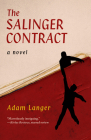
After finishing The Salinger Contract by Adam Langer, I was reminded of how much I adore books about books. I mean, reading a book while reading about books??? So meta.

One of the more interesting themes to me in books about books is books are usually presented as dangerous. They tend to lead people to places they never intended to go, take over their lives, or unleash evil onto the world. I think this is a reflection of the fact that you never know what a book is going to be until you start reading it. Every unread book represents unlimited possibility, and that can be scary.

Another theme I discovered while compiling this list: a lot of books about books have really long and tortured titles.

Here are a few books about books that I've read. Are there any books about books that you've enjoyed? Share 'em in the comments!

harry potter and the chamber of secrets cover
Harry Potter and the Chamber of Secrets by JK Rowling

Chamber of Secrets is my favorite of all the Harry Potter books, mainly because it's about a book. But also because it has a hilarious Valentine's Day scene that makes me rotflmao every. single. time.

(Actually, now that I think about it, Order of the Phoenix, which is my second-favorite Harry Potter book, also has a hilarious Valentine's Day scene. Hm.)

Incidentally, if you missed it on Twitter yesterday, in an interview with The Sun Times, JK Rowling said she wished she'd hooked Harry and Hermione up rather than Ron and Hermione.


salinger contract cover
The Salinger Contract by Adam Langer 

A thriller about a millionaire who spends his money commissioning writers to pen books just for him ("What else am I going to spend my money on?"). But then he, like, DOES THINGS with them.


discovery of witches cover
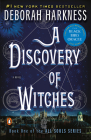
A Discovery of Witches by Deborah Harkness

A witch and historian recalls a manuscript from the depths of the Bodleian Library, only to discover that the manuscript is so magic much evil, and she's the only person who's been able to recall it since it disappeared hundreds of years ago.


the thirteenth tale cover
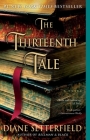
The Thirteenth Tale by Diane Setterfield

A bookish person is hired by a reclusive, famous writer to tell her life story.

Not every book about books is a good book. I actually did not like this novel. At all. I tried to read it several times; the last time was for a book club I was in with Colette from A Buckeye Girl Reads. We were both just like, "Yeahhh. Nope."


jonathan strange & mr norrell cover
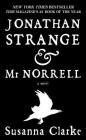
Jonathan Strange & Mr. Norrell by Susanna Clarke

Goodreads tells me this a book about a book, but I just seriously do not remember. I think I tried to erase this book from my mind.


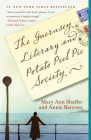
guernsey literary and potato peel society cover
The Guernsey Literary and Potato Peel Society by Mary Ann Shaffer and Annie Barrows

This is another book that I read for Colette's book club. Unlike The Thirteenth Tale, though, I very much enjoyed it. It's about people who use books to survive the German occupation in WWII.


Discus this post with me on Twitter, FaceBook, Google+ or in the comments below.

Tuesday, April 2, 2013

The Phantom Versus Erik

i am the night

Nymeth had a post a few weeks ago asking if there were any books you love that make you feel like you were part of a secret club with other people who love that book. At the time I drew a bland, but later I realized I kind of feel that way about The Phantom of the Opera by Gaston Leroux.

For one thing, only people who've read the book know who Erik is. For another, I believe that Erik is one of the best characters in literature, but the qualities that make him fascinating never translate to the musical or film adaptations.

The first difference between Erik and "the Phantom" can be seen in their names. Erik is a specific person, a genius who invented ventriloquism, designed a sultan's palace, and entertained a sadistic princess. The Phantom is an idea, a terror that shadows the Opera's rafters and subterranean labyrinths.

The Phantom is clever, mischievous, and threatening. Erik is a psychopathic and terrifying.

Erik also inspires ALL THE FEELS. Pity and admiration, love, fascination, disgust, and horror. The Phantom, while fascinating, doesn't engender the same reaction. I mean, I feel sorry for the poor guy, but it's kind of his own fault.

When it comes to the Phantom and Christine... it's sad, but was she really going to live beneath the Paris Opera with him? No. With Erik, it's more complex. Yeah, he's kind of a psycho and unattractive; but he also clearly loves Christine, putting her happiness above his own. In the end, Erik is a hero while the Phantom is a figure of tragedy.

Do you know Erik?


Discus this post with me on Twitter, FaceBook, Google+ or in the comments below.

Wednesday, March 13, 2013

What Would Jane Austen Do: Smellovision Edition

what would jane austen do?

One of the cheesiest things I encounter in romance novels are descriptions of how the characters smell. It always throws me straight out of the story.

The problem with scent descriptions is that they're usually utterly meaningless and add nothing to the book. They're like unnecessary clothing descriptions, but with a 100% higher chance of grossing me out. Sure, scent is part of REAL LIFE. But this isn't real life, this is a book. A book where I cannot smell any of the shit you're cooking. So unless that smell you smell is adding something the story, let's file it under Do Not Need to Know.

Examples of scent descriptions with comments par moi:

  • "He smelled of paper and printer ink." Aha! This guy clearly works in an office. What a clever way to convey that information.
  • "He smelled of gingerbread cookies with a hint of lemon." First of all, YUM. Second of all, is he some sort of baker? Can I snack on him? I want to know more!
  • "He leaned forward, and she caught a whiff of manly essence." Ooookay WHAT. WHAT DOES THAT EVEN MEAN? Because when I think of manly essence I think about how guys are stinky and sweaty and gross and I do NOT want that in a romance novel, TYVM. And furthermore, WHAT DOES THAT MEAN? Seriously, do you even know what you're saying right there, or is just the lazy person's way of trying to convince me this guy's attractive without coming up with anything that's even remotely attractive about him other than his MANLY yet STRANGELY NONSPECIFIC animal MUSK.


If scent descriptions were mostly of the first two examples' variety, I wouldn't have a major problem with them. Unfortunately, they're usually of the last variety, and quite honestly it's getting to ridiculous levels at this point.

Question: what did Mr. Darcy smell like? Did Lizzie, at any point in P&P, mention Darcy's manly essence? Or what about Mr. Rochester in Jane Eyre? The answer is, no. You don't know what either of these iconic romantic heroes smelled like because the authors didn't mention it, and THANK GOD FOR THAT.

Here's my basic argument: scents may be a part of memory and sexual attraction, but they're not romantic. Ergo, if scent is in my romance novel, it should be there to convey specific information, and not be couched in ridiculous sex-scene-style metaphors of the manly essences and fragrant gardens, you feel me? Would you say a guy smelled like manly essence to your girlfriends? No, they would laugh in your face. So don't type it into your novel. And when in doubt, ask yourself: would Jane Austen do this? If the answer is no, take a good long look in the mirror and then DON'T DO IT. Please.


Further Reading:


Discus this post with me on Twitter, FaceBook, or in the comments below.

Friday, March 8, 2013

It's Not Your Mother's Book, But Are You Your Mother?

mom issues

Random pet peeve time! One marketing line I hate is "It's not your mother's romance novel." Here's why:

1. Way to be outdated, publishers. I don't know if you've noticed this (I say that to be polite; you clearly haven't), but my generation isn't as anti-parental, never-trust-anyone-over-thirty as the Baby Boomers were. You see how we tend to bring back their fashions and listen to their music and all that? So unless you're trying to sell to Baby Boomers with that phrase--and, if you are, fair enough--that might not be the best marketing tactic.

2. Romance novels aren't cell phones. They haven't really evolved all THAT much in the last forty years, so I'm not sure what the quantifiable difference between one generation's romance novel and another's would look like. And don't say Fifty Shades, because my mom was way more into that book than I was.

3. I like old books.

4. My mom and I basically read the same books.

5. This whole generalized mother issues thing is coming from a sexist and stereotyped place, you do know that? I had a professor in college who was always saying offensive things (he had tenure), and one of the things he told us once was that women are terrified of becoming their mothers, even though they ALWAYS do, and that was the secret to understanding female psychology. Obviously he was a Freudian. But the point is, that's a gross oversimplification of a complex familial relationship; and helloooooo Freud lived a hundred years ago and knew shit-all about women to begin with. So maybe we could stop using these ideas as the baseline for thinking about and relating to women. I'm not going to magically turn into my mother anymore than my body will magically repel rape sperm.


What marketing phrases get on your nerves?


Discus this post with me on Twitter, FaceBook, or in the comments below.

Friday, March 1, 2013

Why I Don't Read Literary Fiction: A Case Study

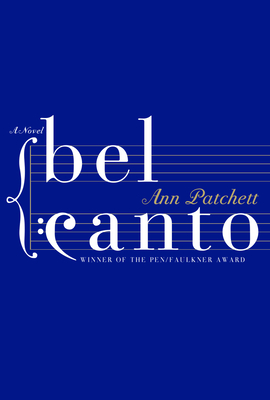
bel canto cover

I started Bel Canto at the beginning of February and I'm not here to say it isn't amazing. There's a quote on the cover of my copy that says it's "its own universe," and that is a completely accurate statement. When you're reading it, you're completely immersed in the world of the book. Ann Patchett's writing style is lyrical and beautiful, and it's a really really good novel.

So then why do I have such trouble picking it up again after I put it down?

It's not because there's no plot, because there is a plot; and it's not because the story's boring because how can a story about people being held hostage be boring? It's not boring. I just feel no investment in the outcome of this situation and have no curiosity about what will happen next.

I seriously think there's something about my brain that only responds to genre novels. Like I'm really only interested in genre novels, have been ever since I was a kid, and if a book doesn't fit into a certain genre I don't even know how to approach it. What's a story even supposed to be about if it doesn't fit into genre? That's the question.

Maybe I'm just not used to dealing with literary fiction and I need patience to work through Bel Canto. It would probably be worth it; but it's a library book, so I might not finish before it's due. Clearly I don't have a lot of motivation here.


Is there a type of book that you struggle with?


Discus this post with me on Twitter, FaceBook, or in the comments below.

Sunday, February 24, 2013

TSS: The Germanic Horde

wwi anti-german propaganda

Have you ever watched old movies and noticed that the Germans are always the bad guys? If you're like me, you probably thought that was because of WWII; but actually the stereotype goes back much farther than that. There's one thing you can count on when you're reading Edwardian (c. 1900-1910) novels, and that's that everyone with a German accent is evil. This is true even of books that predate WWI by more than a decade. England viewed war with Germany as inevitable for more than a generation before it finally broke out in 1914, likely since the Franco-Prussian War in 1870, but possibly even as far back at the 1860s. The Franco-Prussian War, where Prussia defeated France handily in a matter of weeks and completely destroyed their military confidence, is likely the most important war no one has ever heard of; it led to the unification of the German states and set the stage for the debilitating Treaty of Versailles, in which France exacted long-waited revenge for losing the Franco-Prussian War.

Anyway, here is a list of books I've read recently where the Germans were evol:

Riddle of the Sands by Erskine Childers: A bourgeois employee of the Home Office goes on what he thinks will be a pleasure cruise around the Frisian Islands, only to discover a German plot to invade England through the North Sea. This is a great book!

Princess Maritza by Percy James Brebner: There is a name for these types of books and I totally forgot what it is. Basically it's like Prisoner of Zenda by Anthony Hope: some British guy goes to a small Germanic state to save the woman he loves. This book was pretty bad, and it had a whole bunch of paranoia about how Germans want to take over the world.

The After House by Mary Roberts Rinehart: I already told you guys the German is always the bad guy, right? Not to spoil anything, of course.

The Land That Time Forgot by Edgar Rice Burroughs: Bowen J. Tyler is trying to get a group of German and American sailors to work together so they can reach port, but someone keeps sabotaging the submarine. GUESS WHO IT IS.

The Green Rust by Edgar Wallace: This is probably the most hilarious case of Hun paranoia I've come across yet. Van Heerden is an evol German doctor, but he's not actually German--he's Dutch and was just born near the German border. I guess that's enough! Ahahaa.

Still, it does get slightly tiresome when EVERY German character turns out to be evil. Like really, people? You didn't get tired of that cliche after two or three or ten years? Drives me crazy.


Further Reading:


Discus this post with me on Twitter, FaceBook, or in the comments below.

Saturday, February 9, 2013

The First Rule of Currently Reading is Don't Talk About What You're Currently Reading

fight club gif

Has this ever happened to you:

You start a book, and you're really enjoying it. Soon someone asks you about it, and you're all like, "Yeah, I'm really liking this book so far! Blah blah blah."

No sooner do you go to pick up the book again than you realize you're not enjoying it anymore. In fact, you hate the book! It's boring and you're going to DNF it!

Sometimes I really think reading books is like being in a relationship (I come up with a lot of relationship metaphors). And one of the most important rules of a relationship is don't blab about your relationship, and especially don't blab about how AWESOME your relationship is. I swear every celebrity couple I've seen do this has gotten a divorce. Do you ever see Tom Hanks discussing his marriage? No, and he's still married. Meanwhile, Heidi Klum and Seal went on Oprah to brag about how they're the perfect couple, and now they're divorced. Sure, that's random anecdotal evidence, but still.

Aside from the don't blab about your relationship rule, saying how much you're enjoying a book when you've only just started it is kind of like inviting Murphy's Law of Book Reading into your life. I never talk about the books I'm writing until I'm completely done with them for this very reason. Why don't I follow that rule with books I'm reading? Maybe I should. Maybe I should create a secret laboratory where I read books and don't tell anyone what I think about them until I'm finished. HAHA like that's going to happen. Still, it might be a good idea.

Do you like to talk about what you're currently reading?


Discus this post with me on Twitter, FaceBook, or in the comments below.

Monday, February 4, 2013

Amateur Sleuths

amateur sleuths

Amateur sleuths--people who have no formal training, yet somehow solve mysteries--are a standard of the mystery genre. From very intelligent people who consult for free, like Sherlock Holmes and Peter Wimsey, to people whose only qualification is a good eye for human nature like Miss Marple, there are amateur sleuths all over mystery fiction.

For a long time I just assumed this was A Thing That Happens In Books But Doesn't Happen In Real Life, like I don't know, zombies? Instalove? We all know These Things happen in books, so I never thought much about it. But then I started reading classic mystery novels, and for some reason they made me think maybe amateur sleuthing was a real thing. For example, in The Man In Lower Ten by Mary Roberts Rinehart, there's a character whose hobby is solving crimes according to the philosophy of Arthur Conan-Doyle. And this is treated as an acceptable, relatively normal diversion (incidentally, hobbyist sleuths are also common in Alfred Hitchcock movies). This is basically when I seriously started to wonder if amateur sleuths actually existed.

There are organizations of people who are not detectives and solve crime (the Vidocq Society, for example), and amateur detectives often solves mysteries when it comes to missing persons cases or other crimes the police don't have the resources or background to investigate. There's even a "how to be an amateur detective" page on the interwebs.

Amateur sleuthing is actually probably a lot more common than you'd think, but by far the most common hobbyist detectives are... wait for it... mystery writers! Yes, Castle and Murder, She Wrote might not be as far off the mark as you'd think. Mary Roberts Rinehart herself was asked to consult on several unsolved cases by both police and victims. I'm not aware of any convictions or appeals happening as a result of her investigations, but she did "solve" many of these crimes by writing books about them. Lois Duncan of I Know What You Did Last Summer fame investigated the murder of her own daughter, and John Grisham was sued over his amateur detective activities, which involved obtaining confidential documents without permission (so badass). Other common modes of employ for amateur detectives, both on- and off-the-page, are lawyer, insurance investigator, and someone who works in a research field (i.e., librarian, archivist, historian, etc.).

So while the recurrent amateur sleuth may largely exist in the mind of mystery writers, sometimes they do make it off the page and into real life, especially when it comes to their creators!

Do you know of any real-life instances of amateur sleuthing?


Further Reading:


Discus this post with me on Twitter, FaceBook, or in the comments below.

Wednesday, January 30, 2013

Turn of the Century Salon

turn of the century salon

I just heard this morning from Becca at Lost In Books about a Turn of the Century Salon (kind of like The Sunday Salon, but about novels published between 1880-1930) hosted at November's Autumn. Naturally I can't pass up the opportunity to participate and I hope you will, too. Not pass on it, I mean.

ANYwhoooo, the opening month of January has some questions for participants to use to introduce themselves. Hi, my name is Tasha and...

What Classics have you read from the 1880s-1930s? What did you think of them?

I manage a classics book blog (called The Project Gutenberg Project), so a lot. Listing every book I've read from the turn of the century would be too much, but here are some highlights from last year:

  • The Man Who Thursday by GK Chesterton (1910)-Definitely recommend! One of my favorite reads of the year.
  • The Wonderful Wizard of Oz by Frank L. Baum (1900)-Delightful story. Not as streamlined as the movie, but very much worth the read.
  • The Circular Study by Anna Katharine Green (1900)-AKG is crazy, y'all. I would say she was the Dan Brown of her time, but I don't want to insult Dan Brown.
  • Mystery at Geneva: An Improbable Tale of Singular Happenings by Dame Rose Macaulay (1922)-This is a really odd book that at first seems like a mystery/spy thriller, but is actually a pretext for Macaulay to make fun politics, the news media, and gender roles. It's 80% total irony and has a really strange twist at the end that totally blindsided me. I actually enjoyed it, though I can see why it's a "forgotten classic."
  • Scaramouche by Rafael Sabatini (1921)-Another one of my favorite reads of 2012. I love everything about this book. French Revolution! Sword fights! Theater people! Twisty twists! I really don't know what to say if you haven't read this book.
  • The Fortieth Door by Mary Hastings Bradley (1920)-This is an adventure/love story set in Egypt starring the dashing American archaeologist Jack Ryder and a Turkish virgin named Aimée. So just to recap: adventure, Egypt, archaeology, forbidden romance. It's a must-read.
  • Beasts, Men, and Gods by Ferdinand Ossendowski (1922)-The memoir of a man during the Bolshevik Revolution who tries to escape to American by traveling through Siberia and China, only to be forced to detour through Mongolia. I'm not a huge fan of memoirs as a rule, but this one was incredible and amazing. This is one of the books I keep telling people to read and they never do. Missing out!
  • A Strange Manuscript Found in a Copper Cylinder by James De Mille (1888)-This is a very strange book, probably the strangest book I read all year--and I read some pretty odd books, let me tell you. Anyway, I hated it. Much better to go with The Land That Time Forgot.
  • The Mary Frances Cookbook by Jane Eayre Fryer (1912)-This is a children's cookbook that combines recipes with a story. IT IS THE CUTEST THING EVER. Seriously, the illustrations are precious and the story is really heartwarming. Plus now I know how to cook a steak, Edwardian-style! Yeehaw! Let me just get my wood-burning stove started up...
  • The Man in Lower Ten by Mary Roberts Rinehart (1906)-This is another one of my favorite reads last year. It's a mystery about a man suspected of murder, but he didn't do it. So he has to find out who did! I loved all the characters and had a blast reading this book. It's soooo much fun.
  • The Riddle of the Sands by Erskine Childers (1903)-A spy novel set in the Frisian Island (north coast of Germany). Totally awesome characters, slightly claustrophobic atmosphere, and a really fun, fast read. Fun fact: Winston Churchill used this book as a model for actual British military actions.
  • The Prisoner of Zenda by Anthony Hope (1894)-Okay, I didn't read this last year, but I have to include it because it's one of my favorite books of all time. There's romance, adventure, a great villain, mistaken identity and a castle. Definitely another must-read, only must-readier than any of these other books, mkay?


Wow, that's way too many novels. Sorry, went a little overboard there. Let's move on to another question, shall we?


Which authors do you love?

So far my favorite turn-of-the century authors are Mary Roberts Rinehart, Rafael Sabatini, and Anthony Hope. And I guess Anna Katharine Green, since I keep reading her even though I think her books are CRAZY. If you have recommendations based on that, let me know!


Which authors do you hope to learn more about?

This year I'm planning to read Joseph Vance by William de Morgan (on Melody's recommendation), and I'd like to read more classic mysteries (that's my thing). I'd really like to learn more about/read more books by Mary Roberts Rinehart, Dorothy L. Sayers, Agatha Christie, Rafael Sabatini, Anthony Hope, and I'd like to read books by more female writers in general.


I am definitely looking forward to this salon and learning more from the other bloggers participating!


Further reading:


Discus this post with me on Twitter, FaceBook, or in the comments below.

Monday, January 14, 2013

When Series Jump the Shark

jumping the shark

Some series end too soon and never fulfill their potential. Other series go on so long at some point they just go overboard and you have to dump them.

In US parlance (and maybe other places as well?), "jumping the shark" means a series has completely lost you. It comes from Happy Days where Fonzie literally jumps a shark. I guess this was lame; Happy Days was way before my time. Point is, I think we've all come across a series where we were kind of teetering on the edge of giving up (or not), and then something happened and we were DONE. Toss that book on the floor and move on to something else.

Behold! A short list of scenes where long-running series jumped the shark for me:

  • When Anita Blake and Richard slept together in Blue Moon. I was never that into Richard, but the way Anita and Richard hooked up in Blue Moon totally put me off. It was like the Anita Blake series was just becoming an agent for vicarious sexual thrills... OH WAIT, it was.
  • We find out Yuki Cross and Kaname Kuran are brother and sister in Vampire Knight. Incest is one of those things that's guaranteed to make me lose interest in a story, even if I'm enjoying said story, which was the case here. I just can't buy into it. And it's too icky.
  • Acheron by Sherrilyn Kenyon. Kenyon stated that she foresaw Acheron's book as being the last of the Dark Hunters series, but moved it up because fans wanted his story soooo much. Um, who's the writer here, Kenyon or "the fans"? Anyway, I liked Ash's book, and after I finished it I had no more questions about the series. So I guess it was a good ending (even though the Dark Hunter series and its plethora of spin-off continues).


What scenes jumped the shark for you in a series?

Thursday, January 10, 2013

Austentatious Bad Boys

george wickham
Consider yourself smirked. Among other things.

Alfred Hitchcock once said "The more successful the villain, the more successful the picture," an axiom that is equally true for many books. Jane Austen, on the other hand, never really had any Hitchcockian-style villains in her novels; but she did write several bad boy characters who make the books they're in that much better.

stay away from teenage girls gif

Personally, my two favorites are Wickham and Willoughby. If you're a fan of bad boys, Wickham has many laudable qualities: one, he's an officer. That means he wears a fancy uniform (hot), he's automatically dashing, and he moves around a lot--the perfect answer to any woman's escapist fantasies. He's also super-smirky, and as we all know from reading Fifty Shades of Grey, women can't resist The Smirk. Oh no. If only he'd stop running off with teenage girls and plying them with his wicked ways.

dominic cooper as willoughby
Is it hot in here suddenly? *fans self*

Right now I'm reading Sense & Sensibility for Reading with Analysis' Jane Austen January, and I have to say that I LOVE Willoughby. Unlike Wickham, Willoughby is über-romantic, like Heathcliff come to life! Who would blame Marianne for falling for his I'm-so-into-you schtick? Not me. His OKCupid profile probably reads, "I like long walks, collecting locks of your hair, and I'll write you a song." I'd be all over that. I bet he even quotes poetry. *swoon*

Even his name sounds romantic, like a sigh of longing echoing across the moors. "Willoughby! Caw, caw!" Honestly, the fact that he's a playa playa doesn't really cut down on the appeal that much. I mean, is he really that different from the sainted Edward, other than the fact that Edward is not at all charming or interesting? They both snatch locks of hair, mislead the Dashwood sisters, form secret engagements, cause a scandal, and lose all their money. Taken from that perspective, Willoughby is really the better bet. Right? Right, guys?


Who's your favorite Austen bad boy?


Tuesday, January 8, 2013

Books Characters from Downton Abbey Should Read

ethel reading

Lady Mary--Pride & Prejudice by Jane Austen
Mary should have no problem connecting to the story of sisters who need to marry or find themselves penniless and homeless. She could also stand to think a bit about being too proud.

Mr. Bates--Psycho by Robert Bloch
If nothing else he'll finally figure out why The Bates Motel is a really bad idea.

Thomas--The Prince by Machiavelli
He's going to need all the help he can get if he keeps up the feud he has going with O'Brien.

Edith--Miss Pettigrew Lives for a Day by Winifred Watson
Hopefully Edith would find this ugly duckling story inspiring--as long as she doesn't take it too far (she totally would). Alternate read would be Stranger In My Arms by Lisa Kleypas if that Canadian "Patrick" guy comes back.

Carson--The House of Mirth by Edith Wharton
You know Carson's really a romantic at heart, but his sense of social hierarchy and propriety probably makes him a bit of pessimist. Enter Edith Wharton!


What books would you recommend for Downton characters?

Sunday, December 23, 2012

TSS-Some Bookish Trends I Hope Will Die 2013

Jamie Oliver drooling over fifty shades of grey
Even Jamie Oliver liked Fifty Shades of Grey!


I was toodling around the internet last week, as I do, and I ran across a post titled "Five Trends I Hope Will Die in 2013". I think it was about celebrities or something, but I can't find the original article. Sorry! Anyway, I thought it would be fun to do a similar list about books.


  • Fifty Shades-alike covers--Okay, I get that this is a marketing thing, but the cover wasn't that great to being with and I don't think Fifty Shades was a success based on its cover. So can we please stop creating lookalike covers for every contemporary novel with sex in it?
  • Drama llama--Remember at the beginning of 2012 when every week some author would fly off the handle and attack a reviewer, or write a post about how reviews "should" be written online (favorably, of course)? And then there was the GR Bully site (created by, ironically, bullies). Wouldn't it be weird if nothing like that happened in 2013? Just imagine how easy it would be to enjoy reading! 
  • Consolidating publishers--Not that I know anything about the publishing industry aside from observation, but in the long term I think the merging of the bigger publishing companies (e.g., Random Penguin) will wind up hurting the Big 6 5 4. To me it seems like the big publishers' problems lie in being slow to adapt to a changing market. Turning themselves into bigger companies is NOT going to help that; publishing is becoming more decentralized and personally I'd like to see more publishers and more variety in the market--that's not self-pub'd--not less. But of course breaking into smaller companies is not only more expensive in the short term, but more difficult to manage.


What are some bookish trends you hope not to see in 2013?

Friday, November 30, 2012

Ode to DNFs

nope

To all the books I tried to read
Only to abandon with varying speed
Maybe I was hasty, maybe I was rash
Maybe you got really good in the second half

It wasn't you, it was me. Okay I'm being wry
But I promise I did try
I wasn't in the mood, I don't like prologues
Whatever the reason, they were good ones

I'm sure there are others who appreciate
A slow-moving novel with twists that aren't great
Clothing descriptions that last forever
And circular conversations about the weather

A closed book is like a mystery
You don't know if it's good or crummy
So many books, so little left on the meter
I'd rather take a chance the next book will be better

Friday, November 16, 2012

Tasha's Random Book Awards

random choice awards gif

In honor of GoodReads Choice Awards and Amazon's Top Books of 2012, most of which I haven't even heard of, let alone read, I decided to start my own random voting awards!

How were these books selected to be semi-(actually actual) finalists of the contest? No idea. But even if I knew, I probably wouldn't tell you. You see, it's a complicated algorithm that you couldn't possibly understand because it makes no sense. That's also why most of these books weren't published in 2012 or even fit into their designated categories. Just go with it! Vote in the embedded survey below, or click here to take survey.

And remember, every time you add a random write-in, a reading angel gets its wings.

Create your free online surveys with SurveyMonkey, the world's leading questionnaire tool.

Wednesday, November 14, 2012

The Definitive Version

i feel as if i know you

Right now I'm "reading" (actually listening to) The Wizard of Oz, read by Anne Hathaway on audiobook. I love Hathaway and am enjoying the story, but it's pretty clear she was influenced by the movie. To be fair, the book and the movie are pretty similar so far; but even the way Hathaway does the voices seems to imitate the way the characters were portrayed in the film.

This isn't a bad thing, but it's interesting to me how certain versions of a story become the one everyone's familiar with, and later interpretations kind of have to be in conversation with that version in order to be relevant. For example, The Phantom of the Opera is one of my favorite books of all time, and in my mind the book and the musical are two separate entities. But when I first think of Phantom, admittedly my thoughts turn to the Andrew Lloyd-Weber musical. That was the prism through which I approached the novel. So it was super-interesting for me to watch a silent movie version of The Phantom of the Opera starring Lon Chaney--which, unlike every other version of The Phantom I'd seen, was clearly in conversation with the book, NOT the musical. I'm not saying it was the best version, just that it had a very different sensibility from the contemporary adaptations I'd seen.

What about books like Dracula, or Sherlock Holmes, two of the most adapted novels/characters in literature AND cinema, not to mention plays? When I was reading Dracula, I personally couldn't help but think of the 1992 movie Bram Stoker's Dracula, and picturing Jonathan Harker as Keanu Reeves, Mina as Winona Ryder, etc. That movie is actually pretty faithful to the book (probably why I couldn't help but associate the two), but I don't think it's the definitive version, just the one I'm most familiar with. I'm not sure there's an adaptation that has become the "definitive version" of Sherlock Holmes, either, although I enjoy the hell out of nearly all the Sherlockiana I come across. No matter how good it is, it still feels either derivative of or in conversation with the original stories.

In both of these cases, the original versions are still what sets the standard for the characters and the story. But why is that? Why have Oz and Phantom been superseded by a movie and a musical, respectively, while Sherlock and Dracula still rely so heavily on the original text? Is it the quality of the books? I don't think so; as I said, Phantom is one of my favorite novels, and Dracula... well, it has its moments, but it's not the best thing I've ever read. I also don't think the quality of the adaptions have anything to do with it, since there are some truly kick-ass Sherlock adaptations.

Maybe it has more to do with the fan base. Sherlock Holmes fans still go to 221B Baker Street and read the original stories, while Phantom fans (Phantomites?) identify more strongly with the musical.

Have you ever come across an adaptation that overshadowed the original work? What do you think makes something a "definitive version"?


Monday, November 5, 2012

Mina Harker and Dr. Seward: So In Love.

mina harker and dr seward
Warning: there is going to be a lot of capslocksia going on in this post.

Sometimes, when I'm reading a book or watching a TV show, my brain gets really bored. As a result, I start inventing storylines in my head--and, since this is me we're talking about, the stories usually have something to do with a secret romance between two characters.

Some people call this shipping (for more about shipping and what it is, read "To Ship or Not To Ship" at Bookalico.us). I call it LOGIC. Or at least in this case I do.

See, lately I've been listening to Dracula on audiobook (it was free), and I swear to Gott--as Van Helsing would put it--that Mina Harker and Doctor Seward are in love. THEY ARE SO CUTE TOGETHER, YOU GUYS!!! Yet I can't find anything on the internet about their secret, burning romance. What the fridge? It's totally obvious.

Don't believe me? Here is my recap of how they fell in love, which seriously reads almost exactly like the start of a romantic comedy:


Meet-cute: Paddington Station. Mina recognizes Dr. Seward immediately from her friend's description of him. He blushes. She blushes. They go to the lunatic asylum where he lives for some reason (because he's crazy?). He's so excited he has to record his thoughts about their meeting IMMEDIATELY.

Mina knocks on the door.

*gasp* "Here she is!" (Seward literally says this--okay maybe not the gasp. But he's obviously P R E T T Y jazzed.)

And they fell in love: Mina walks in, wondering to whom Dr. Seward is talking, but he's alone. He really is crazy! No, he's just recording in his "diary," which happens to be a phonograph. Mina's all, "You keep a diary? I keep a diary!" (And for the same reason--to improve themselves. RME These two already clearly belong together.)

Mina's account:
I felt quite excited over it, and blurted out, "Why, this beats even shorthand! May I hear it say something?" 
"Certainly," he replied with alacrity, and stood up to put it in train for speaking. [Gawd they are so cute.] Then he paused, and a troubled look overspread his face. 
"The fact is," he began awkwardly, "I only keep my diary in it, and as it is entirely, almost entirely, about my cases it may be awkward, that is, I mean…" He stopped, and I tried to help him out of his embarrassment. 
"You helped to attend dear Lucy at the end. Let me hear how she died, for all that I know of her, I shall be very grateful. She was very, very dear to me." 
To my surprise, he answered, with a horrorstruck look in his face, "Tell you of her death? Not for the wide world!" 
"Why not?" I asked, for some grave, terrible feeling was coming over me. 
Again he paused, and I could see that he was trying to invent an excuse. At length, he stammered out, "You see, I do not know how to pick out any particular part of the diary." 
Even while he was speaking an idea dawned upon him, and he said with unconscious simplicity, in a different voice, and with the naivete of a child, "that's quite true, upon my honour. Honest Indian!" [Seward, you are so awkward. Adorbs.] 
I could not but smile, at which he grimaced. "I gave myself away that time!" he said. "But do you know that, although I have kept the diary for months past, it never once struck me how I was going to find any particular part of it in case I wanted to look it up?"

Don't worry, Seward. Mina won't just type up your diary for you, she'll index it according to patient, symptoms and illness.

Which brings me to another reason why Mina and Dr. Seward are in love: they need each other! Mina is so bored with Jonathan she's memorized the train schedules on his commute "just in case he's in a hurry." JESUS, MINA. Memorizing the schedule for your own commute is one thing, but another person's?! I'm guessing Jonathan is able to tell time, get a freaking grip. Dr. Seward, on the other hand, needs someone to help him with his research and, um, you know, play with his phonograph. His work is much more interesting than Jonathan's, and he doesn't commute--he lives at the asylum!

Anyway, Mina and Seward exchange diaries, which is like the cutest thing ever, and Seward gets so wrapped up in Mina's he almost forgets to eat. And Mina gets so wrapped up in Seward's diary she cries and tells him,
That is a wonderful machine, but it is cruelly true. It told me, in its very tones, the anguish of your heart.... See, I have tried to be useful. I have copied out the words on my typewriter, and none other need now hear your heart beat, as I did.
Aww. She can hear his heart beat.

Adjectives Mina uses to describe Seward: noble, good, thoughtful. Adjectives Dr. Seward uses to describe Mina: sweet, a brilliant mind, pretty, courageous. GAH HE'S SO IN LOVE. Dr. Seward also never refers to Mina as a child, unlike SOME people I could name (coughJonathancough).

After a few days at the lunatic asylum, Dr. Seward remarks that having Mina there has made it feel like a home for the first time ever. So cozy (too bad Jonathan Wet Blanket Extraordinaire is there). Then she decides to talk to Renfield, I forget why, and Seward--who's in the room to make sure she's safe--observes, "She came into the room with an easy gracefulness which would at once command the respect of any lunatic."

OHHHHHHH MAH GAWSH coming from Dr. Seward that's like a love poem! He might as well have said, "She walks in beauty, like the night." Even Renfield notices. He's all like, "Wait, are you two going out?"

You see? They're totally in love. So Jonathan's going to die at the end of Dracula and Dr. Seward and Mina are going to get married, right? Right guys?


Have you ever shipped any characters in classic novels?

Sunday, October 28, 2012

TSS: NaNoWriMo, DNFs, Kindle Paperwhite

nanowrimo badge

Hello, my bookish cabbages! Usually I do a "deep thoughts" post for Sundays, but there are a bunch of little things I want to mention this week, none of which have anything to do with the other, except as they pertain to this blog and my reading!

National Novel Writing Month

I'm participating in NaNoWriMo again this year. If you don't know what NaNoWriMo is, it's this super-fun thing where people try to write a 50k word novel (or more, if you're ambitious) in a single month. Last year was my first year participating, and I started writing with absolutely no idea where I was going. This year I have three stories plotted out, and I'm having a bit of trouble choosing between them, so I thought it would be fun to ask you all for help! If you would be kind enough to vote on the story you'd most like to see written, I'd really appreciate it. Just use the form embedded below or go to the survey's webpage. I've included blurbs for each of the stories in the survey.

Create your free online surveys with SurveyMonkey, the world's leading questionnaire tool.

If history is anything to go by, I'm not going to be posting much during November because I'll be focusing on NaNo. Instead, I'm planning to cross-post some reviews from my other blogs here, and vice versa, once a week, plus new posts as I'm able to do them.

Reading

In book news, my reading has not been going at all well lately. I did manage to finish a book this week, but I nearly DNF'd it, and now I have NOTHING to say about it; or at least, what I do have to say seems very confused and my review is utter nonsense. All of my other last three books have been DNFs, too. I don't know if this has anything to do with my insomnia problems lately (it seems like changes in the seasons make it more and more difficult for me to sleep every year), but I end up reading very late at night and getting bored and annoyed. I mean, if I WANT to sleep, and I CAN'T sleep, the least I could be is entertained. BUT NO. The books I pick up are either really stupid or boring or I just don't care. That's probably the insomnia talking, of course, but it doesn't change how I feel about it.

So basically I've been watching a lot of movies.

Shiny Pigeon!

kindle paperwhite

In other exciting news, I got a Kindle Paperwhite for my birthday (that was three weeks ago... slow shipping). Yay! I only got it yesterday and haven't even had a chance to read a book on it yet, but so far it's very cool. I love the cover and the ability to adjust the light, and the words are much sharper than on my keyboard kindle. The device is slow in processing highlights and typing, but at least the touch screen seems to be more accurate and sensitive than the Nook's touch screen. I'm kind of excited to use the glow screen during my next bout of insomnia!


That's the major news for this week. What's going on in your reading world?

LinkWithin

Related Posts Plugin for WordPress, Blogger...