Sunday, January 30, 2011

The Glove

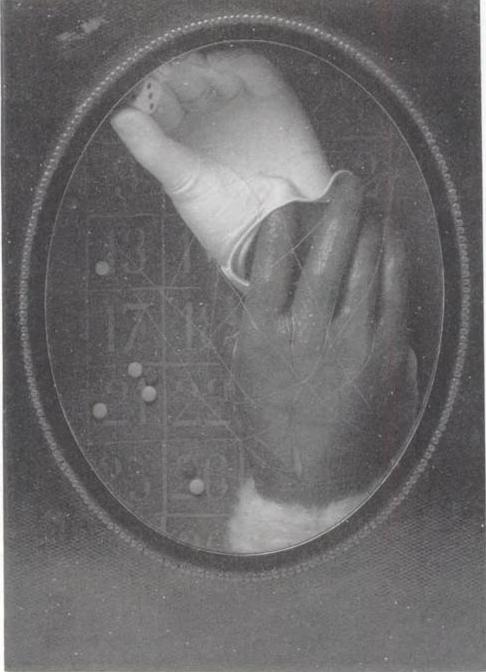
object by valentine hugo
Valentine Hugo, Objet

Have you ever noticed how gloves play a role in romance novels?  I was reading The Iron Duke by Meljean Brook the other day, and there's a great scene with the hero and heroine involving her glove (to hear me read the whole passage, click here):
Satin slid in a warm caress over her elbow, her forearm....  His expression changed as he continued to pull.  First registering surprise, as if he hadn't realized the glove extended past her wrist.  Then an emotion hard and sharp as the long glove slowly gave way.  It's white length finally dangled from his fingers, and to Mina seemed as intimate as if he held her stocking.... she felt exposed.  Stripped.

There are also memorable scenes involving gloves in Lord of Scoundrels by Loretta Chase, and (if I remember correctly) The Age of Innocence.  In Little Women, one of the signs Laurie's tutor is in love with Meg is that he keeps her glove.  So why are gloves charged with this sexual connotation?  It's not just because it's a piece of clothing and removing reveals a slice of skin--there's nothing inherently erotic about hands.  Gloves, however, do have a certain sexual symbolism. 

The surrealists believed an empty glove was an uncanny object because it had no life or anima where one expected to find it; it was like an empty piece of skin, without any soul.  A worn glove, however, is just the opposite:  the wearer gives it life, fills it with their own essence simply by slipping their hand inside.  It's a metaphor for the alchemical combination of male and female, and for the sexual act of creation.

A glove being worn also has a symbiotic relationship to the wearer.  In The Iron Duke, Trahaearn, the hero, is surprised by the nature of Mina's glove, just as he is surprised by her nature as well.  This is why taking off a glove is symbolically more sexual than putting it on--by taking off the heroine's glove, the hero inserts himself into her defenses.  In order to regain the power to animate, the heroine now needs the hero.  As Freud psychoanalyzed in one dream, the glove is basically analogous to the person who wears it, and the hero has taken possession of it.  That's not to say possession of a glove equates to possession of the heroine; but rather, the hero taking possession of the glove is a symbol of his desire (or vice-versa, although it doesn't usually work that way).

A visual demonstration of this idea is found in Objet by Valentine Hugo.  Valentine was the granddaughter of Victor Hugo, and had a huge crush on "the pope of surrealism," André Breton.  In Objet, she tried to attract his notice by engaging two gloves in a game of chance--i.e., love.  A love poem to Breton also accompanied the piece.  The tension in the piece comes from a central question--would the "male" glove (which looks remarkably similar to the description of Trahaearn's glove in The Iron Duke) succeed in breaching the female's defenses?  The answer was no--Breton was just not that into her.

With the main characters of these romance novels, however, the answer is a never-surprising yes.  Can you think of any other scenes where gloves play a symbolic role in novels or art?


Powered by ScribeFire.

Saturday, January 29, 2011

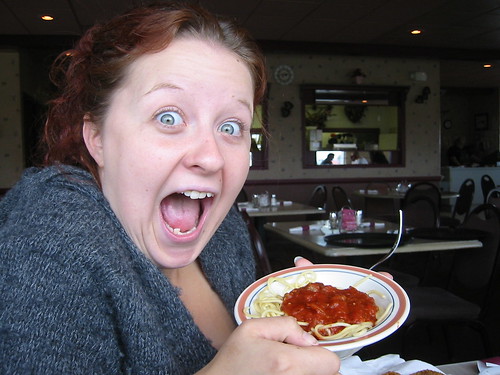
Unseelie Spaghetti

spaghetti monster
Image from silver marquis


Ingredients:
  • olive oil
  • 2 anchovy fillets
  • 3 cloves garlic, finely chopped
  • hot pepper flakes (as much as you like)
  • 1 cup white wine (or amayl)
  • 14 oz canned tomatoes
  • chopped parsley (amayl)
  • 1-2 tbsp butter
  • 1/2 lb spaghetti
Directions:
  • Get the pasta going by setting a pot of water to boil; follow package directions.
  • Drizzle 4 tablespoons oil into a thick-bottomed pot (I use a wok).
  • Set to medium heat and put anchovies in; mash down with wooden spoon until they melt into the oil, all while thinking about how the gray fillets wiggling in the hot oil kind of resemble Unseelie flesh as described in the Fever books by Karen Marie Moning.
  • After about a minute, hurriedly put in garlic and hot pepper flakes so that you don't get so grossed out you have to scrap dinner and go out. Lower heat to meduim-low.
  • Once garlic is soft, add white wine and briefly raise heat so it boils down.
  • Add tomatoes, lower heat to medium-low again and stir. Add salt and pepper to taste.
  • Once done, drain pasta and put back in pot to mix with butter and most of the parsley. Add a few spoonfuls of sauce and mix with spaghetti, too.
  • Put pasta in bowl and spoon over sauce; sprinkle some of the leftover parsley on top. Eat while reading Shadowfever.


Powered by ScribeFire.

Friday, January 28, 2011

Wednesday, January 26, 2011

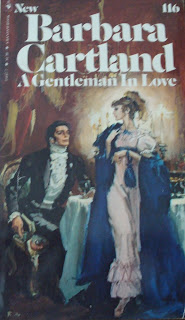
A Gentleman in Love by Barbara Cartland

in love cover

Sometimes I get strange ideas into my head.  For example, during the holidays I was talking to someone about romances, and mentioned Barbara Cartland used to put fake historical facts into her novels so she'd know who was being lazy and just copying her books (the answer was, of course, everyone).  While I was thinking about that, I realized I'd never read a Cartland novel, and resolved to correct this.  So off I went to paperbackswap.com to order a random Cartland novel.

So now I've read one.  And all I have to say is, we've come a long way baby.

Okay, I lied, that's not all I have to say.  This book was awful.  A perfect storm of bad writing, cliches, and info dumping, all tied together in a curiously flat tone.  If this book had a narrator, it'd be the guy from the Visine commercials.

The premise is pretty basic:  the Earl of HELLington (rake alert! rake alert!) decides he needs a wife, but is put off by the boring prospect of listening to women talk.  Then he meets a Milliner with a beautiful voice, and like Prince Erik with Ariel, falls in love.  Little does he know that the Milliner is actually the daughter of an earl living in reduced circumstances.  Maybe if he had known, he wouldn't have stalked her; but I think he probably still would have.

The plotting in this novel is actually fairly decent, but the methodology is just all wonky.  Cartland does this thing with her female characters where their speech is hampered by many dots between their words.  For example:  "Thank you . . . My Lord.  I am . . . of course . . . grateful."  No, she hasn't just run a marathon; she's conducting a business transaction.  And I don't mean that kind of business.  There's absolutely no reason for her to sound like she's about to pass out, so why is Cartland putting all those dots between her words?  After awhile, I realized it was because she's talking to a man and feels the need to space out her words like she's speaking to someone who doesn't know English.  Or maybe the dots are the literary equivalent of beeps and she's actually saying, "Thank you bleeping My Lord.  I am bleeping of course bleeping grateful."  Wait, that doesn't make sense.  ANYway, it was just odd.

I did like how Cartland put her characters in the social context of the time period--with Prinny and Byron and all the usual suspects--but as I said, the tone of the book is strangely dry.  It seems to suck all the entertainment value out of story.  I honestly don't think there's any reason to read Cartland with good romances out there.


Powered by ScribeFire.

Tuesday, January 25, 2011

The Diamond of Drury Lane by Julia Golding

diamond cover

Setting: 1790s London

Stereotypes: There are several typified characters: a tempestuous Italian musical director, an idealistic youth, and a street bully.

Major Likes: The narrator's voice and the historical detail

Major Dislike: Felt a little spastic with everything going; not too bad, though.


Review

Cat Royal, a perspicacious orphan with a gift for getting into scrapes, grew up in the Royal Theater on Drury Lane.  She has the theater manager for a father, the costume mistress for a mother, and stage managers, conductors, musicians, players, prompters, and playwrights for aunts, uncles, and friends.  One day she overhears the theater's manager talk about hiding a diamond in the building; sworn to secrecy, she accidentally lets the story of hidden treasure slip to Pedro, an African violinist.  With Pedro drumming up schemes to get rich and Billy "Boil" Shepard threatening to kill her, Cat has her hands full enough for any 12-year-old.  But she also has to rescue and protect the diamond, and write a novel for the delight of a duke, all while saving her friends in the theater.

This is a quick-moving, quick-witted tale that's brimming with historical atmosphere.  You get a wonderful sense of what 18th-century London must have been like; and I have to say, despite all the talk of the lack of equal rights and political freedom, it sounds like a blast!  Cat is intelligent and funny, and in the course of the novel manages to interact with all sorts of interesting characters, from Covent Garden gang leaders--Billy--to ducal heirs and political cartoonists.  Even though the audience of the novel is definitely middle-grade, I never once felt my attention waning from the story, which is full of action if not of plot.

Speaking of the plot, that's really the only issue I had with the book.  The hidden diamond story wasn't much of one; and even though all the side adventures eventually led back around to it, I thought the conclusion was anti-climatic considering everything else that was going on (all of which was much more interesting).  This is a minor quibble, however; I was having too much fun reading the story to analyze it that much.

middle passage

One thing I personally found very interesting was Billy Boil, the street tough who is Cat's mortal enemy.  I picked up The Diamond of Drury Lane after reading a free novella on my Kindle titled Middle Passage, a Cat Royal story that takes place two years after Diamond.  Let's just say Billy undergoes a dramatic transformation in the ensuing two years, and as of right now I have no idea how to reconcile the Billy of Middle Passage with the one in Diamond--although I think I can see inklings of what will happen.  Either way, I'm definitely intrigued and looking forward to reading the next Cat Royal book!

This is a very light, fun novel.  There is a lot of information and stuff going on, but at the same time it's one of those books where your mind can wander while you're reading it and you'll still be able to figure out what's going on.  I think this is a perfect read for kids in the 7-11 age range, and pretty damn entertaining for adults, as well.  Recommended!


Powered by ScribeFire.

Sunday, January 23, 2011

Gankutsuou, or The Count of Monte Cristo


Vengeance, baby!  This animé adaptation of The Count of Monte Cristo by Alexandre Dumas takes the book out of Napoleonic France and turns it into a space opera where Mercédès and Fernand's son, Albert, is the hero of the tale.

Albert is visiting the wild planet of Luna with his friend, Franz, during Carnivale.  One night he meets the mysterious Comte de Monte-Cristo, a man who looks like Gary Oldman from Dracula, only blue and less attractive, if that's possible.  The comte is flamboyant and mysterious, and seems to possess questionable moral judgment, something Franz picks up on immediately.  Albert, however, is smitten; and after the comte "saves" him from the gangster Luigi Vampa, they form a bond that will lead to the comte's entré into Parisian high society--and treason, insanity, heartbreak, incest, and murder for the families of Albert and his friends.

luna scene

The look of this animé is amazing--and sometimes way over the top.  Patterns cover every surface of the characters' clothes and the visuals are a confusing mix of Edwardian, modern, and futuristic.  For example, old-timey cars mix with motorcycles and spaceships pulled by horses as if they were carriages.  I didn't mind the inconsistency, but it can be jarring and overwhelming, and beautiful at the same time.

It's clear the animators have a love of 19th-century Paris, although it's la Belle Epoque Paris and not the Paris we see in the original novel.  Streetside cafés, the opera, music by Debussy and Rachmaninoff, art nouveau decor, and country house parties give the series a romantic feel and certainly made me like it more.

As for the story, however, I had several problems with it.  For one, it's way too long.  For another, there's a reason Dumas made the Count the hero of the book--Albert is boring, and his incessant whining about one thing or another got on my nerves.  We have to listen to Albert's trials and tribulations, which for the most part run along the lines of, "Waaa!  No one respects me!  Why are you treating me like a kid??"  I couldn't connect to him and many of his actions, especially at the end, were completely nonsensical.  Meanwhile, what we're really interested in is the Count and the clockwork-like unfolding of his vengeance.

Also, the animé tweaked the story so that it was super-depressing.  The series gets heavy.  A lot of shit happens to Albert that would be enough to make anyone have an emotional breakdown, and the middle seriously bummed me out.  Everyone either dies or goes insane--and unlike in the book where it seems inevitable, here it feels manufactured and too convenient.  They all deserve it, but not from the perspective of Albert, our hero. 

In addition, the Comte doesn't get his full revenge (I'm still confused as to what happened with Baron Danglars), even though he crosses lines he never did in the book; and there was a feeling of things left unresolved in favor of an expedient ending.  Which is ridiculous, because this series is twelve freaking hours long.  It starts with an opera, and ends like an opera, with all the characters running back and forth across a stage-like backdrop and screaming, sobbing, and dying.  Whereas The Count of Monte Cristo leaves us with a sense of redemption, Gankutsuou takes a lower road and turns the count into a tragic figure.

Of course, from the perspective of Albert, there is a "happy" ending; but since I didn't really care about Albert that didn't help much.

I'm not sure I can recommend Gankutsuou.  Visually it is stunning, and might be worth a watch just for that; but for people who have read and loved the original novel, I'm not sure it's worth it.  It's not compulsively watchable--I had to force myself to keep up with it--and can be frustrating to watch.  I did enjoy the creative tweaks to the story, but in the end the heart of the novel was changed too much for me to like it.

Certainly an interesting adaptation of the novel, though.


Powered by ScribeFire.

Bloggiesta Day 3

pedro

Yesterday I did not get much done for Bloggiesta at all.  Basically I wrote one post and agonized over a few other posts without writing anything, and then I did homework and made nachos.  And I also made another vlog.  So hopefully today something will be written!

Updated goals:

  • Finish writing all my half-written posts.
  • Do the copyright mini-challenge from the last Bloggiesta. (I didn't exactly do this, but I did update my copyright notifications, so calling it good.)
  • Do the mini-challenges for this Bloggiesta (including my own).
  • Hang out on twitter and chat with everyone. (In progress)
  • Finish the bottle of champagne in my fridge. (Did not finish!  I only managed to drink half before I started feeling ill.)
  • Update review policy.
There you go.  Pretty much no change from yesterday.  And I better get a move on, because Downton Abbey and Johnny Cash in Folsom are both on tonight and will require at least 60% of my attention!


Powered by ScribeFire.

LinkWithin

Related Posts Plugin for WordPress, Blogger...