Showing posts with label daniel silva. Show all posts

Wednesday, December 2, 2015

Review: THE KILL ARTIST by Daniel Silva


the kill artist

I've been a fan of Daniel Silva's Gabriel Allon series ever since reading The English Girl, and since then I've been making my way–backwards, mind–through the series. I kind of stalled out on The Messenger, but I did really want to read the first Gabriel Allon book, The Kill Artist, out of sheer curiosity. It was a unique experience.

If you've read any of the more recent Allon novels, you know there's a kind of formula to how these stories work: Gabriel Allon, superstar art restorer and retired Israeli assassin, is approached by a spy organization–sometimes Mossad, sometimes not–to take care of a situation ONLY HE can resolve. Reluctantly, Allon agrees. Relying on his vast international network of friends and frenemies, Allon eventually saves the girl and the day.

The Kill Artist is not like that. Oh, Allon is an art restorer dragged into hunting down a terrorist and assassin by his old boss and father figure, Ari Shamron, but that's about where the similarities end.

First of all, the book feels a little dated. The Kill Artist was published in 2000, before September 11th, and it shows. I wouldn't say the terrorists seem quaint, but they're definitely old school, and the attitudes of the spy organizations and the world are completely different. Little things like what we would consider extremely lax airport security, or open borders, really underscores how long ago this book was written. The US is generally dismissive of the possibility of terrorist attacks, and interagency cooperation? You must be kidding.

Secondly, The Kill Artist isn't really about Gabriel Allon at all, it's about the Jewish diaspora in Europe and how it forms its own unique intelligence network. Silva's point seems to be that Israel may be a country, but it's one that represents an entire people of many different nationalities, a huge advantage on the intelligence front.

Finally, Allon is not a hero in The Kill Artist. He doesn't save the girl, he doesn't find the terrorist OR kill him, and his character is not admirable. He's really kind of a useless jerk, actually.

What surprised me most in The Kill Artist were revelations concerning Allon and his first wife, Leah. In every Allon book we learn that Allon's car was bombed in Vienna many years ago, in retaliation for his assassination of members of Black September. Allon was not in the car at the time, but his son and Leah were, and afterward his son died while his wife went mad with grief.

spoilers
Yeah, the rest of this review is going to have a ton of spoilers.

What we learn in The Kill Artist is that shortly before the explosion, Allon slept with one of his field agents, and the reason only Leah and his son were in the car was because she'd stormed out after she found out about it. She was leaving him, in other words (good for her).

A Gabriel Allon who sleeps with another woman he's in love with while his wife is in a mental hospital and can't even remember him is one thing; ishy, but you can't blame the guy. Having casual sex with his coworker in exotic locales while his wife is at home with their kid is whole different deal, one I would not have expected from his character.

As for The Other Woman herself, Sarah Halevy, I found her purpose in the book to be pretty annoying. It makes no sense that she's a famous supermodel because if she is, WOULDN'T PEOPLE RECOGNIZE HER? The only reason for it I could see was to make us feel less bad about Allon sleeping with her. She's the most beautiful supermodel in the world! How could he be expected to pass that up? Riiiiiiiiiight.

Usually by the end of a Gabriel Allon novel, I like and respect his character, but that was impossible to do by the end of The Kill Artist. It's quite a cynical novel, and doesn't exactly sync up with what I've come to know of the main characters. I'm not sure I would recommend it to newbies of the series, but I'm glad I read it.


Discus this post with me on Twitter, FaceBook, Google+ or in the comments below.

Saturday, May 23, 2015

Upcoming Releases I Am Actually Super Excited About

Once upon a time, I kept a very detailed spreadsheet of upcoming releases, which I updated on a weekly basis. Nowadays, I'm the complete opposite–unless I happen to see a new release announcement on Facebook or Twitter, I exist in a fog where book releases do not register on my radar at all.

As I've said before, there aren't a lot of authors on my auto-buy list anymore. Even for authors I do consider "auto-buy," by the time I figure out they have a new release out it's usually at the library (unless they self-publish of course), so I borrow it there. If I love it, then I can buy it to add to my collection. If not, no loss on my end.

But! There are a couple of books I'm super excited about coming out later this year. What are they? *drumroll*

the english spy daniel silva
The English Spy by Daniel Silva (June 30th)–Silva's one of my auto-buy authors. I loved The English Girl, and The English Spy's title suggests this book will focus more on Christopher, one of the secondary characters populating the world of super agent Gabriel Allon. That's a good thing, because the book after The English Girl, The Heist, languished a bit.

In other news, I really hope Gabriel destroys Isis.


oblivion by kelly creagh
Oblivion by Kelly Creagh (July 28)–I read Nevermore, the first book in this trilogy, wayyyyyyyy back in 2010 and loved it. It was like if Snape and Lily actually hooked up at Hogwarts. The second book, Enshadowed, was meh and skimmable. But! I love Creagh's writing style and I want to find out what happens with Varen and Isobel next, and I've waited far too long for this book to get it from the library.


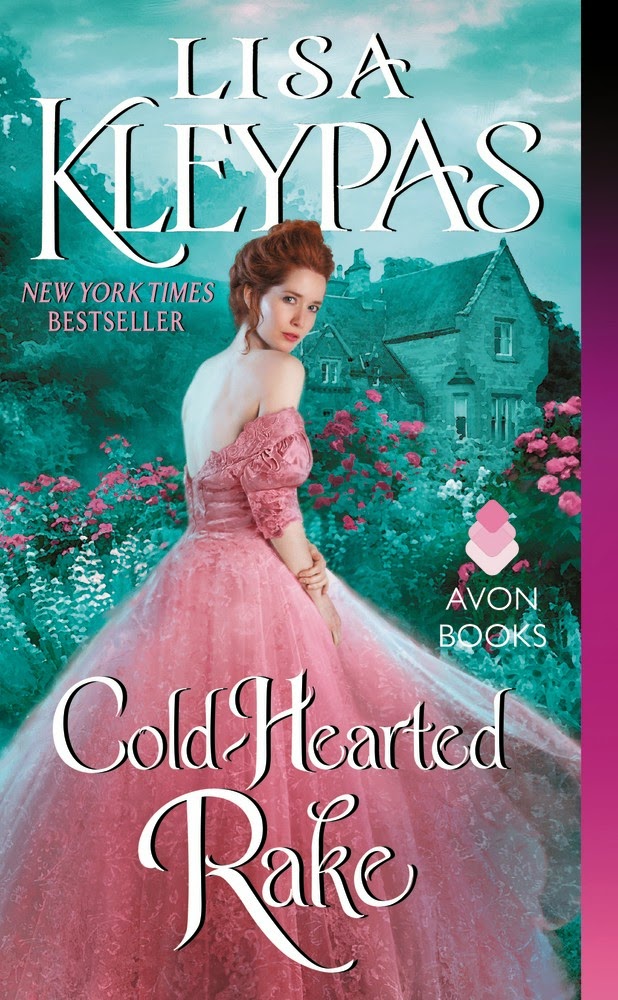
cold hearted rake lisa kleypas
Cold-Hearted Rake by Lisa Kleypas (October 27)–A new historical novel by Lisa Kleypas! Dreams really do come true! I've been kinda off historical romance for a while, but Kleypas still has my loyalty. Perhaps because she hasn't published a historical since 2010, when I was still reading them, but anyway. Excitement! (And thanks to Colette from A Buckeye Girl Reads for giving me the heads up about this one.)


Okay, so I know that's only three books, but for me it's a lot. What are some upcoming releases that are on your radar?


Discus this post with me on Twitter, FaceBook, Google+ or in the comments below.

Monday, September 15, 2014

Two Gabriel Allon Novels by Daniel Silva: THE HEIST and PRINCE OF FIRE

As most of you probably know by now, I'm a big fan of Daniel Silva's work. It all started with 2013's The English Girl, one of the best thrillers I've ever read. After finishing that novel, I decided to dig into Silva's backlist and, unintentionally, started reading the Gabriel Allon series backward. But recently I broke with that trend and skipped both ahead and backward, reading Silva's latest—The Heist—and 2006's Prince of Fire practically back-to-back.

Unfortunately I wasn't terribly impressed with either of them.

For those of you who aren't familiar, Silva's series follows the adventures and misadventures of Gabriel Allon, the greatest spy of all the times. Born to a Holocaust survivor, Allon was recruited by the Mossad after the 1972 Olympic Games in Munich. His job: hunt down the members of Black September and assassinate them. Allon, who originally wanted to be an artist, couldn't paint original pieces afterward and instead became an art restorer—an art restorer frequently called in by the Mossad to take care of shit-head terrorists because HE'S THE ONLY SPY IN ISRAEL. Or something.

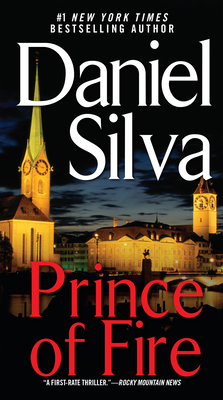
prince of fire cover


In Prince of Fire, Allon is restoring an important altarpiece in Venice, when he's called back to Israel. His information has been leaked, possibly to the son of one of the Black September men he assassinated. Even worse, the man gunning for Gabriel has figured out where his wife, Leah, is hidden.

Bridget from Portable Pieces of Thoughts told me I should read Prince of Fire next, and I can kind of see why. This is the book where Allon's core team is formed, and so far the only one I've read where Leah plays a big role in the action. Honestly, the way Leah is treated in this book infuriated me. See, Leah keeps reliving the same day—the day her and Gabriel's son died in a car bomb explosion—over and over. Why? Maybe it's because she's hopped up on meds and doesn't do anything but stare out an asylum window all day, who knows! Meanwhile, Gabriel is cavorting with his nubile young lover, Chiara, half a continent away in Venice. Channeling Mr. Rochester much there, buddy?

That's bad enough, but then Leah actually leaves the asylum for a while. And she actually starts getting better! Imagine that. Like, she starts interacting with her world some more and pulling herself out of her fugue states. At least until Gabriel gets ahold of her and sticks her back in another asylum. This is one kidnapping where I was rooting for the bad guys to get away with it.

And don't even get me started on Chiara, who is beyond annoying in this book. If the guy you're in love with is 1. married, 2. promised to marry you, and yet still 3. isn't divorcing his first wife, then there's a problem. The fact that Gabriel pulled the "Leah needs me right now," card quite frankly boggles my mind. At least Chiara left him, although I could have done without the tearful goodbye and Gabriel's attitude of self-sacrificing nobility.

grumpy clint eastwood
Uhg. Get off my lawn.


After finishing Prince of Fire, I resolved to not dig into Silva's backlist any farther, except maybe to read the first Gabriel Allon novel. The books are just getting to be too annoying.

I was, however, still really looking forward to reading Silva's latest release, The Heist. Silva's novels have gotten progressively better over time, so if the trend continued The Heist was shaping up to be completely amazeballs.

Obviously my expectations were really high. Too high.

the heist cover


In The Heist, Gabriel is back in Venice, once again restoring something. Art restorers gonna restore. He's waiting for Chiara to give birth and for Uzi's term as Boss Guy of Israeli Intelligence (I don't know the official name) to end so that he can take over. It's like a mini-vacation, if you will. And then the Boss Guy of the Carabinieri Art Squad (again, don't know the official name, but you get the idea) shows up and "asks" Gabriel to look into the mysterious death of an art collector. Gabriel can't get one moment to himself, I tell ye, NOT ONE MOMENT.

Anywho, after walking around the crime scene for, like, thirty seconds, Gabriel figures out Fancy Art Collector Guy (again, not the official title) was actually and very unsurprisingly Stolen Art Smuggler Guy. And the game is afoot. Will this all tie into a Middle-East terrorist plot to blow something up? This is a Gabriel Allon novel, soooooooo: probably, yes.

The Heist wasn't a bad novel by any means, but so much of it felt like a retread. The use-an-art-smuggling-ring-to-find-terrorists element was extremely reminiscent of the same device Silva employed in The Fallen Angel. Gabriel uses a Muslim woman to gain access to terrorist bank accounts, just like he did in Portrait of a Spy, and said woman is kidnapped, just like she was in Portrait of a Spy (running tally of women kidnapped in this series so far: 4). Even minor characters from The English Girl make a reappearance. And yes, I did like those characters in The English Girl, but there's no reason for them to be in The Heist. Like Christopher Keller literally has nothing to do; I kind of even forgot he was there.

To be fair, I thought Silva executed all these elements more skillfully in The Heist than he did in his previous novels, but it felt a tad phoned in. The Heist had no anima, no oomph. Bridget told me that Silva had trouble finishing the book and only did so because of pressure from his publisher, which if true would explain a lot. Even with the lack of inspiration, however, Silva is still on top of current politics in the region, and what he has to say is still extraordinarily relevant. It's just not terribly new.

The Heist is a novel where the main character is waiting—waiting for his new life as a father and Intelligence Director Guy (I should really look these titles up) to begin and his old life as Broody Super Secret Agent Man to end. Accordingly, it feels like the author is waiting, too. Hopefully whatever Silva is waiting for will happen between now and his next book.


Discus this post with me on Twitter, FaceBook, Google+ or in the comments below.

Monday, March 24, 2014

Review: PORTRAIT OF A SPY by Daniel Silva

portrait of a spy cover

Gabriel Allon is RETIRED, dammit, and living in Cornwall when jihadists launch coordinated suicide bombings in major cities all across Europe. After running across one said jihadist in London and trying—and failing—to kill him, Gabriel is politely deported to the US, where the CIA demands his help. They want Gabriel to search out the mastermind behind the attacks, and Gabriel agrees. But will his perfectly laid plans survive the vagaries of American politics? I think we all know the answer to that question.

Things I learned from this book:

  • There are over 200,000 people working for the CIA, not counting independent contractors. Holy cow, people! With that kind of staff, it shouldn't be too hard to get a job there, right? Call me, Langley (NSA, you can keep your dirty nose out of my blog).
  • Somewhat related: 'Merica is the worst secret-keeper in the world. We're like that gossipy neighbor you only tell things to if you want the entire block to know about your biznas.
  • US "intelligence" policies when it comes to the Middle East could use a liiiiiiitle work. Example: the CIA director says to Gabriel, "We recruited this one Muslim imam who was all peace-this and harmony-that to spy on jihadist cells for us, and then it turned out he was a jihadist all along! Do you believe that shit?" Gabriel: "Ummmmm, no comment."


Bullet points aside, I thought Portrait of a Spy told a great story, probably the best story of the three Gabriel Allon novels I've read so far. It also reads "lighter," if that makes sense. I had the feeling like I was eating candy during this book: tasty and fun, but not very filling. Maybe I'm just getting used to Daniel Silva's writing style, or maybe the subject matter isn't as heavy or serious as in The English Girl or The Fallen Angel, but either way it seemed like an easy read.

I pretty much had no problems with this book aside from the one that's a major spoiler, so if you care avert your eyes.

In Portrait of Spy, Gabriel uses the daughter of a billionaire who supported jihadists to gain access to their bank accounts. You know pretty early on in the novel that she's going to die (because defiant women are killed, that's just the way it be), but the way she died really annoyed me. Instead of being outright murdered by her misogynist oppressors, she leaps in front of an AK-47 to save Gabriel's life. I'm aware that Silva was comparing her martyrdom, which proves to be genuinely inspiring, to that of the jihadists who blow themselves up (JWBTU? There has to be an acronym for that, the CIA loves acronyms) for essentially their own glory. But a self-sacrificing martyr seemed a little much. Actually the whole situation with her helping out the Mossad seemed a BIT unlikely, even if she did grow up in France and was a feminist, but whatever.

Other than that, Portrait of a Spy was a really good read. I think I'm starting to burn out on reading the series backward, though, even though it's been an interesting experience so far. There's a very brief mention of a character here who plays a major role in The English Girl, something I'd never have noticed or remembered if I'd read all the books in order (and which makes me wonder just how far in advance Silva plots these novels out). I do have book ten on my Kindle, but after I finish that one I might go to the first novel and read the books in proper order like a normal person. Wait... NORMAL? What am I thinking?


Discus this post with me on Twitter, FaceBook, Google+ or in the comments below.
Saturday, February 8, 2014

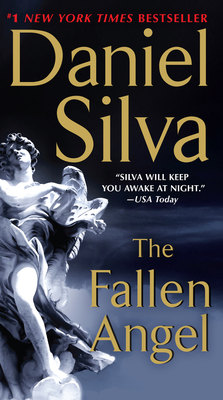
Review: FALLEN ANGEL by Daniel Silva

fallen angel cover

Gabriel Allon, the most famous retired spy in the world, is restoring a Caravaggio for the Vatican Museums when a museum employee is found dead, an apparent suicide, in St. Peter's Basilica (there's blasphemy for you). Luigi Donati, the Pope's secretary, asks Gabriel to look into the matter on the DL, and Gabriel agrees even though Luigi obviously knows more than he's telling. Soon Gabriel isn't just investigating a woman's death, but an art crime ring, the mafia, Hezbollah, and sundry threats against Israel.

Fallen Angel is the novel preceding immediately preceding The English Girl. I didn't know this when I started it, and I didn't mean to read this series backwards, but apparently it's happening. In any case, I wasn't as impressed with Fallen Angel as I was with The English Girl, although the novel was still entertaining and I'm increasingly fascinated by the character of Gabriel Allon.

Fallen Angel has the same basic structure as The English Girl: the story starts with a very specific, localized mystery, then expands to international threats. I loved the beginning of the book—it had the flavor of a Dan Brown novel, only really smart and well-written. I thought Fallen Angel was going to be all about art crime and I was super excited! (Side note: I always thought it would be awesome to be part of the FBI Art Crime Team.)

Unfortunately, I started having trouble with Fallen Angel in the transition from Rome and the art crime mystery to Allon and his team moving against Hezbollah. There basically was no logical transition, it was just like, "Oh Hezbollah's behind everything somehow (???), and we have to stop them RIGHT NOW!" I am still unclear as to what exactly one had to do with the other, and how the characters arrived at this conclusion. Because the change was so abrupt, I was thrown out of the story. It felt like the Rome section of the book and everything else belonged in two separate novels. Good novels, mind you, but narratively they didn't fit together.

I also found myself very annoyed with Chiara, Allon's second wife. She wasn't in The English Girl much, and apparently that was all for the best, because in Fallen Angel I found her to be whiny, clingy, and a bit pointless. The scene that really made me roll my eyes was when she nobly waited in the hotel room while Gabriel bounced off to assassinate terrorists, and strained to hear the sound of sirens so she'd know he was alive. Because that was what Gabriel told her to do. EYE ROLL.

Even when Chiara was annoying me or the story was jumping around, though, Allon was such a compelling character that there was no way I would have even considered not finishing this book. And the climax in Jerusalem was perfectly done: intense, suspenseful, and completely over the top—but in a really fantastic way.

Bottom line: this is a very solid, intelligent thriller; it just doesn't have the epic scope that The English Girl does. It's quieter, less ambitious. Allon is a man haunted by his past in every city he visits, not so much fallen as trapped in Purgatory, but Fallen Angel isn't the novel that gives him a new start.

I will definitely be continuing with the series and am looking forward to spending more time Gabriel Allon.


Discus this post with me on Twitter, FaceBook, Google+ or in the comments below.
Friday, November 29, 2013

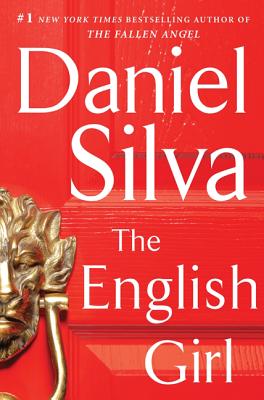
Review: THE ENGLISH GIRL by Daniel Silva

the english girl cover

Harper sent me a copy of The English Girl for review consideration, which did not influence my review in any way.

Infamous Israeli intelligence agent Gabriel Allon is enjoying his retirement from the spy business by dedicating himself to art restoration. But when an old friend in MI-5 calls in a favor, Gabriel agrees to go on the search for a missing English girl—technically woman—who just happens to be the Prime Minister's secret mistress. Will Gabriel be able to save the girl and find her mysterious kidnapper, a man who supposedly doesn't exist?

I think this is probably the best modern (as in, not in the public domain) spy/thriller novel I've ever read. Admittedly I don't read a lot of them, mainly because they tend to bore me out of my pie holes (I'm writing this during Thanksgiving... mmmm, pie). I managed to get through Mission to Paris, I'm not entirely sure how, and I can drag myself through a Dan Brown novel (with much whining about how long it is along the way), but that's about it. Even though it's in the same genre, however, The English Girl doesn't seem comparable to those books—it blows Mission to Paris and any other spy/thriller novel I've come across out of the water in terms of storytelling, writing, and characterization.

In the beginning, The English Girl feels slightly reminiscent of the TV show Scandal. The UK Prime Minister is being threatened with the publication of his affair if he doesn't give in to the kidnappers' demands, so he does what any powerful politician would: calls in the fixers to try and cover it up. As the story progresses, however, the problem evolves from something very specific and localized—find the girl and rescue her—into something with huge consequences for the British Isles and all of Europe. That probably sounds over-the-top, but it's not entirely unbelievable, and at least one of the things Daniel Silva mentions as a potential threat to Israel in The English Girl has recently come to pass.

But The English Girl has more than solid research and plausibility to back it up; for one thing, Silva is a really good writer. There's an almost a poetic use of repetition in the novel that reminds me a bit of Charles Dickens or the chorus of a Greek tragedy. It's the use of ideas and phrases to underscore cycles within the story, rather than the repetition of plot points just because you might not have gotten it the first time. I never once felt like Silva was talking down to his readers or assuming they're idiots—Allon is smart, and there were a few times where he was a few steps ahead of me. Finally, even though Silva's writing style is by no means humorous or light-hearted, there's an underlying wit to the novel that I loved. There are some great one-liners in The English Girl, mostly coming from Gabriel. Here are just a few of my favorites:

Hamdi... had been posing as a playwright, and Gabriel had given him a death worthy of his literary pretensions.

"Jews don't camp, Keller. The last time the Jews went camping, they spent forty years wandering in the desert."

"We have a saying in our service, Graham. We believe that a career without scandal is not a proper career at all."
"We're British," Seymour answered. "We don't have sayings, and we don't like scandals."

The English Girl is also a surprisingly emotional novel, something I've personally never encountered in a spy/thriller like this before. The director of Israeli intelligence accuses Gabriel of making emotional decisions, and it's true: even though he's a trained assassin, he's not some sort of automaton. He acts out of love, anger, and fear exactly as any normal person would, despite his far-from-normal life. But then the same is true for the other characters in the book, too, and the fact that there are personal feelings and motivations driving the characters and tying them together is one of the major reasons why I like the book so much.

I also enjoyed Christopher Keller, or "the Englishman," who serves as a foil to Gabriel. Unlike Gabriel, Keller behaves more like the trained assassins one encounters in movies and novels—a tough, cold-blooded, emotionless killer. But Gabriel doesn't buy his act, just like Keller doesn't buy into his old man routine, and watching the two of them work together is pretty entertaining.

Women also play a strong role in the novel, although it's an indirect one. The English Girl depicts, by and large, a man's game in a man's world, but those men have self-identities and beliefs that are shaped by their mothers, sisters, wives, and female friends. Again, this is an example of the emotional nature of the novel and how well-drawn the characters are. I'd hardly call The English Girl a feminist novel, but it does acknowledge the importance of women to men, and not just as some sort of sidekick or sexual object.

Finally, I liked how Silva took a standard thriller plot and turned it into something epic by taking Gabriel on a journey through the Underworld (metaphorically speaking, of course). He goes into hell and it's "white, pure white," to quote North & South. The English Girl isn't just an entertaining story, it's a book that's about something—resurrection, second chances, and accepting who you are and your place in the world.

Not that the novel was absolutely perfect, of course—Part Three was a much-too-long epilog, and there were some things that were left hanging or answered. But overall I not only enjoyed reading The English Girl, but was super-impressed with it. I am definitely going to be digging into Silva's backlist in 2014!


Discus this post with me on Twitter, FaceBook, Google+ or in the comments below.

LinkWithin

Related Posts Plugin for WordPress, Blogger...