Showing posts with label literary fiction. Show all posts

Saturday, May 6, 2017

9 Reasons The Vegetarian Will Change the Way You Think About Everything

the vegetarian by han kang

(Note: As Chrisbookarama pointed out, The Vegetarian cries out for a clickbaity title. So I used a link bait title generator to come up with one.)

A few days late, but still here! As you might know, I hosted a readalong of The Vegetarian by Han Kang for Book Bloggers International last month. Here are the discussion questions and my responses. Feel free to participate in the discussion yourself if you've read the book!

Questions:


First of all! What did you think of the book in general?

Well, I wouldn't say I enjoyed it, but then I'm pretty sure that's not its purpose. It's kind of a South Korean version of The Yellow Wallpaper. It wasn't an easy read, but it did make me think.

We never get to hear directly from Yeong-hye except in brief snippets of dream and memory. Why do you think the author tells her story through the lens of other people? Do you think this is effective?

I think Kang wanted to avoid giving the reader any illusions about Yeong-hye's agency (she has none) or choice. The book as a whole really makes one question how much choice any of us have. Like you may think you have control over your own body, your decisions of what you eat every day, who you marry, and so on, but how much of that is free will and how much of it is an attempt to fit into the role and circumstances you were born into?

Yeong-hye says she stopped eating meat because she had a dream. What do you think the dream was actually about?

I think the dream was about how much she wanted to get rid of her Objectively Awful Person (TM) husband, and she realized she could either kill him or reject violence completely. Hence the veganism.

Vegetarianism and fasting has been used as a form of social protest in the past, particularly among women (see, for example, "The Awakened Instinct: Vegetarianism and the Women's Suffrage Movement in Britain" by Leah Leneman and The Sexual Politics of Meat by Carol J Adams). Do you think this is what Yeong-hye is doing? Is she refusing to eat meat in order to stick it to the goddamn patriarchy?

In a way, yes, although I don't think she sees it like that because her actions are driven by her subconscious, not logic. She just got so SICK OF IT, she had a mental break. And as my Anthropology 101 professor once said, "Our culture dictates how we break."

As the story goes on, Yeong-hye seems to be transforming into a plant herself (or at least wanting to). Is this an art-imitating-life situation?

Her hubby certainly treated her like a plant. Like, "I got this plant because it looked okay and I thought it wouldn't be high maintenance, and for a while it grew just fine as far as I could tell. Then it started withering up so I decided to get rid of it."

He's a prince, ladies.

Yeong-hye's brother-in-law may seem more sympathetic to her than her husband, but is he?

Uhg, what a perv. He obviously views himself as better than his brother-in-law, but I doubt he sees Yeong-hye or his wife as people any more than Yeong-hye's husband did. There's also a part where he says he just assumes her silence is consent. Um, no.

There's a surprising amount of violence, both psychological and physical, in this book. Why do you think that is?

Yes. One would expect a book about a vegetarian to be violence-free, but nope! I think it's a response to the conformity of the society. People can't act out or express their emotions, so anger and fear and other negative feelings get pushed deeper and deeper inside until a person can't take it anymore and then it explodes out of them in unhealthy ways.

There's a part of the book where Yeong-hye says she felt like the dream that made her turn vegetarian came from her stomach. "The face is inside my stomach. It rose up from inside my stomach." I found that interesting because the gut is called the "second brain," and it responds to a lot of the stimuli in our brains that we don't want to deal with.

I also think part of it has to do with certain social contracts that accept violence as a way life, which exist in all cultures. Extreme examples would be slavery, or war. The killing of animals for meat is also an act of violence, one we accept because we're taught we have the right–maybe even the responsibility–to eat meat. But whether that's true or not doesn't make the members of a society any less complicit in the violence perpetuated by that act.

There are a lot of themes in the novel: obsession, dreams, conformity and acting "normal," choosing to act morally and choosing not to. Which of these themes stood out for you the most?

I would say each part of the book focuses on one theme more than the others. Part 1 was about conformity and Yeong-hye's rebellion against society and her husband's and family's expectations. Part 2 was more about obsession and allowing it to overtake your life to the point where right and wrong don't matter as long as you can make your fantasies a reality. Part 3... well, that one was a little muddy for me. I would say normality and how there's no such thing as "normal," but I don't think Part 3 was as well-realized as the previous two parts of the book.

Finally, what did you think of the ending? Does it negate the previous sections of the book?

To be honest, when I first read it I hated the ending. I thought the point of Yeong-hye's story was that she wasn't crazy, people just thought she was because she was rebelling against a false construct wherein she had to put up with raw deal she never agreed to. But the ending implied Yeong-hye was certifiably insane. So if that was the case, her family was right and choosing not to eat meat was the act of someone with "hints at hysteria, delusion, weak nerves and so on".

However, later I read this review of The Vegetarian, where the writer suggests that maybe Yeong-hye's gradual starvation is a form of sallekhana, a fast to the death practiced by Jains in order to "extricate... the devotee from the endless cycles of violence in which we are embedded." That sounds like it fits into the themes of the book better than just making Yeong-hye crazy. But it's hard to say for sure if that was Kang's intention.


Have you read The Vegetarian? What did you think?


Discus this post with me on Twitter, FaceBook, Google+ or in the comments below.

Monday, June 29, 2015

6 Foodie Books You Should Definitely NOT Read While Hungry

Portions of this post originally appeared on Book Riot. I received copies of All For You and Mastering the Art of French Cooking for review consideration. For more on my review policies, please see my Full Disclosure page.


what did you eat yesterday fumi yoshinaga
What Did You Eat Yesterday? by Fumi Yoshinaga

Shiro Kakei is a lawyer, but he's not one of these lawyers who work sixty hours a week and spend their lives at their desks. No, Shiro happily takes the most boring cases so he can put in his eight hours and go home, where he throws himself into his true passion: cooking!

I was expecting a light, entertaining slice-of-life story with What Did You Eat Yesterday?, but it was much better and more powerful than I thought it would be. First of all, for being printed in black and white, the food looked and sounded crazy delicious. This was my face the entire time I was reading:

yum gif


Also, the recipes are kind of inspiring. As soon as I finished this manga, I started making side dishes for breakfast and dinner, trying to use up what we had in the fridge. I didn't consciously decide to start doing this, incidentally, it just seemed to happen naturally as an extension of reading the book. I have to agree with Shiro's boyfriend, Kenji, that adding side dishes makes the meal more satisfying. I began to feel so much healthier. Add to that Yoshinaga's beautiful, delicate drawings, awesome characters, and vignettes on how food can express love, carry memories, and is more than just following a recipe but also about using what you have and shopping for the best ingredients, and there really is nothing not to like about this manga.

Verdict: Definitely buy. In fact, after I returned What Did You Eat Yesterday? to the library, I bought a copy for myself, I loved it soooo much.


mystery writers of america cookbook
The Mystery Writers of America Cookbook, ed. by Kate White

Death and food go together like sun and shade. Why? No one knows, except maybe Hannibal Lecter. In this cookbook, some of the greatest mystery writers in America (Scott Turow, Louise Penny, Mary Higgins Clark, Charlaine Harris, James Patterson, etc.) share their favorite recipes, from family standards to food straight out of their books.

For some crazy reason I decided to start reading this while I was waiting for dinner. Bad decision, or worst decision? The recipes were so good I started ROTFDMAO (rolling on the floor drooling my ass off). But even if you don't like to cook, this book is filled with entertaining stories and essays from mystery authors. I cried at Richard Castle's "pancakes are love," declaration, laughed at Nelson DeMille's Male Chauvinist Pigs in the Blanket recipe, and loved Lorenzo Carcaterra's story about Grandma Maria's Pasta Puttanesca. Lee Child closes the book out admirably with an essay on The Right Way to make coffee. The chapter on side dishes is pretty weak, but this is America we're talking about.

Verdict: Buy. Actually, this is another book I bought after borrowing from the library. Good ol library!


all for you laura florand
All For You by Laura Florand

Sassy and cute Célie is chef to one of the best chocolatiers in Paris, but her life wasn't always truffles and ganache. She grew up in the banlieue dreaming of marrying her brother's bestie, Joss, until he abandoned her to join the Foreign Legion. Now he's back, acting like nothing ever changed, and Célie has all the feels.

I've never been one of those people who get hungry or crave chocolate while reading a Laura Florand novel, although I do find her food descriptions to be fascinating and on fleek. Maybe it has to do with the fact that I can't eat chocolate, who knows. But with this book, I not only started craving chocolate, I had an entire dream about drinking hot chocolate, the one chocolate treat I really, really miss indulging in. It's kind of strange, considering that All For You is probably one of Florand's less food-centric novels. But then again, it did give me all the warm fuzzies. It's sweet and comforting and just what you need to lift your spirits, kind of like a cup of hot chocolate in book format.

Verdict: Buy.


The following books were ones I wanted to include in the above Buy, Borrow, Bypass, but life and work got in the way and I wasn't able to finish them before the deadline. However, I do still want to review them, so here they are!


taste test kelly fiore
Taste Test by Kelly Fiore

Nora is a small-town girl who grew up working in her dad's barbeque joint, but her dreams are much bigger than that. When she gets the chance to be on Taste Test, her favorite cooking competition show, she leaves District 11 her dad and BFF, Billy, to compete in an arena against kids from across the country. Only one can survive win the chance to study cooking in Paris. The problem is, can Nora trust the other contestants, particularly the infuriating and arrogant Christian Van Lorten?

In case you can't tell by the summary, this book reminded me a bit of The Hunger Games. Too bad that title was already taken, it would have been much better than Taste Test. Anywho, this was a really fun, quick read. I loooooooooove books where the two main characters fight all the time. Nora had a few moments where I thought her behavior was unreasonable or annoying, and the ending left almost everything completely unresolved, but the bottom line is this is the kind of book you can kick back and read in an afternoon when you're after some lighthearted entertainment. As for the food, all but one of the recipes were dumped in at the end, and none of them sounded particularly appetizing or easy to make. I wouldn't call this a book NOT to read while hungry.

Verdict: Buy or borrow.


the red notebook antoine laurain
The Red Notebook by Antoine Laurain

Laurent Letellier owns Le Cahier Rouge, a Parian bookstore. One day he stumbles upon an abandoned purse in the street and becomes obsessed with finding its owner after reading all the personal secrets she's written down in her little red notebook. She owns a red notebook, he owns a bookstore called The Red Notebook–clearly these two are meant to be together. But will they ever meet?

This is a charming, short novel in a similar vein to the movie Amélie, although not as fantastical and twee. It sounds like it could go into creeper territory but it really doesn't. I loved how there were a bunch of jokes you would probably only get if you spoke French–the name of Laurent's shop, for example; or the name of his daughter's cat, Putin, which can mean everything from damn to fuck depending on intonation (or the name of the Russian president, for that matter). Actually, now that I think about it, double meaning in names is kind of a theme in this book. As for why The Red Notebook is on this list, it's surprisingly chock full of delectable descriptions of food and drinking and eating, from pot-au-feu to hachis Parmentier. And if you don't know what either of those dishes are, don't worry–googling photos of them is half the fun. I started craving French food like whoa.

Verdict: Buy or borrow, but definitely read.


mastering the art of french eating ann mah
Mastering the Art of French Eating by Ann Mah

Francophile Ann Mah thought her dreams had come true when her hubby got a job in Paris. But just a few weeks after the big move, he had to go to the Middle East for a year, leaving Mah lonely and bored until this food writer finally had a lightbulb moment: she could write about French food! Using Mastering the Art of French Cooking as a travel guide, Mah set out to discover the stories "behind" the famous regional dishes of France.

Another day, another foodie memoir inspired by Julia Child. I mean, I get that she's a BFD to a whole generation of cooks and foodies, but it's getting to be a bit cliché at this point. I admit I had trouble getting into Mastering the Art of French Eating. I probably should have known better, seeing as how memoirs are not my thing, but I was expecting a lot more food in this book. Instead, it's mainly about Mah's struggles living as an expat–not just in Paris, but in other parts of the world (her hubby's in the diplomatic service). Which is fine, but I'm not super interested. I also thought the choices for and execution of Mah's quest were pretty damn lame. For Paris–the first chapter in the book no less–what dish does she choose? Steak and frites. Really? Out of all the dishes she could have written about? Giant snooze. In another chapter, Mah highlights two famous andouillette recipes of Troyes, but she doesn't even try them! At that point this book lost me. I will say, however, that the recipes at the back of each chapter sound tasty and I totally want to try them.

Verdict: Bypass, or borrow for the recipes.


Discus this post with me on Twitter, FaceBook, Google+ or in the comments below.

Monday, July 21, 2014

4 Mini Book Reviews

neanderthal seeks human cover

Hi there one and all! I'm at Book Riot today reviewing four books for Buy, Borrow, Bypass:

  • Neanderthal Seeks Human by Penny Reid
  • Waking the Merrow by Heather Rigney
  • Patricia Brent, Spinster by Herbert Jenkins
  • Beautiful Ruins by Jess Walter


All of these books deserve longer, more thoughtful reviews, which I hopefully will be able to write soon. But since I recently took on another job (for those of you keeping track at home, that's three jobs), time is a bit at a premium nowadays, so I can make no promises.

If you've read any of these books, let me know what you thought here or over at Book Riot!


Discus this post with me on Twitter, FaceBook, Google+ or in the comments below.

Friday, March 1, 2013

Why I Don't Read Literary Fiction: A Case Study

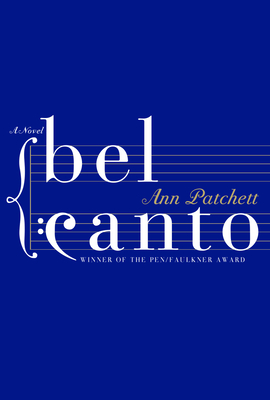
bel canto cover

I started Bel Canto at the beginning of February and I'm not here to say it isn't amazing. There's a quote on the cover of my copy that says it's "its own universe," and that is a completely accurate statement. When you're reading it, you're completely immersed in the world of the book. Ann Patchett's writing style is lyrical and beautiful, and it's a really really good novel.

So then why do I have such trouble picking it up again after I put it down?

It's not because there's no plot, because there is a plot; and it's not because the story's boring because how can a story about people being held hostage be boring? It's not boring. I just feel no investment in the outcome of this situation and have no curiosity about what will happen next.

I seriously think there's something about my brain that only responds to genre novels. Like I'm really only interested in genre novels, have been ever since I was a kid, and if a book doesn't fit into a certain genre I don't even know how to approach it. What's a story even supposed to be about if it doesn't fit into genre? That's the question.

Maybe I'm just not used to dealing with literary fiction and I need patience to work through Bel Canto. It would probably be worth it; but it's a library book, so I might not finish before it's due. Clearly I don't have a lot of motivation here.


Is there a type of book that you struggle with?


Discus this post with me on Twitter, FaceBook, or in the comments below.

LinkWithin

Related Posts Plugin for WordPress, Blogger...