Showing posts with label historical. Show all posts

Wednesday, December 16, 2015

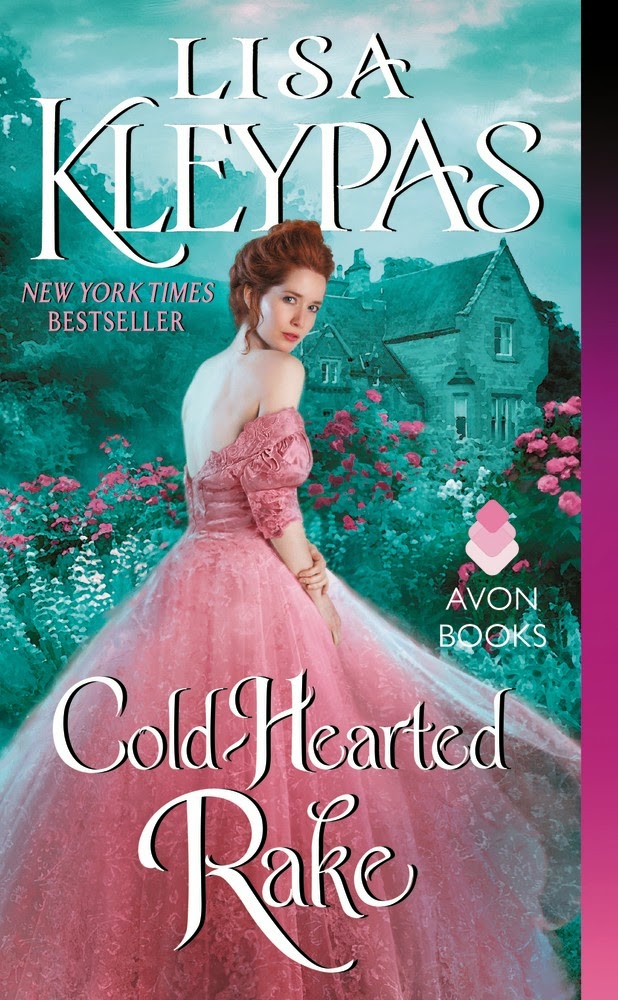
Review: COLD-HEARTED RAKE by Lisa Kleypas

cold hearted rake lisa kleypas

Devon Ravenel is not pleased when he inherits the estate of his cousin, the Earl of Trenear. For one thing, the house itself is falling apart, the estate is mired in debt, and it's not producing enough income to keep it afloat. For another thing, Devon and his brother made a pact as children to never take on any responsibility whatsoever. But when Devon goes to the estate to look into selling it off, he comes across his cousin's widow and despite his best intentions finds himself accepting the burdens of the earldom, most especially those of taking care of Trenear's countess.

Lisa Kleypas is the author whose books got me into romances, so when I heard she was releasing her first historical romance since 2010's Love in the Afternoon, I was pretty durned excited. But also anxious, because historical romance hasn't really been doing anything for me lately. I'm happy to report that while Cold-Hearted Rake wasn't a perfect book, it was fun and entertaining and mostly unputdownable–exactly the type of novel I hope for when I pick up something by Kleypas.

The beginning of Cold-Hearted Rake was a bit rough (side note: the title is annoying and inaccurate. Devon hardly came across as a cold-hearted rake; he was way too fiscally responsible. Also, the term "rake" kinda makes me roll my eyes). The romance between Devon and Kathleen felt predictable and forced, and I think it remained the weakest part of the novel even after it improved.

Fortunately, Devon and Kathleen didn't spend that much time together during the course of the novel, which left plenty of time for the more entertaining stories of Devon's brother, Weston, and the three Ravenel sisters, Pandora, Cassandra, and Helen, getting into hijinks. These are awesome characters, and Kleypas can really tell a great story when she puts her mind to it.

I also suspect Kleypas has been binge watching way too much PBS in recent years, because there's definitely a Masterpiece Classic vibe going on with this series. Devon's attitude reminded me of Matthew's in the first season of Downton Abbey, particularly when Grantham says to him (re: the estate), "You don't love it yet, but you will," and Matthew's like, "ERMERGAWD these people are so backward and stuck in the past and this house is wildly impractical WHY."

But even more than that, Winterbourne (Devon's friend who owns a department store in London) is so obviously modeled after Mouret, the owner of The Ladies' Paradise, or maybe Henry Selfridge from Mr. Selfridge. Either way, he's like, *smolder smolder smolder* *issues* I can't wait to find out what historical miniseries Kleypas rips off in the third book!

Anyway, it was nice to read a historical romance that was a well-told story with fun characters, that didn't bore me to death and I didn't want to set on fire. So the bar's set pretty high over here! Seriously, though, Cold-Hearted Rake isn't Kleypas' best book, but it stands up on its own pretty well. I've already preordered Marrying Winterbourne. CANNOT WAIT.


Discus this post with me on Twitter, FaceBook, Google+ or in the comments below.

Monday, August 24, 2015

Review: BANQUET OF LIES by Michelle Diener

banquet of lies

Guest review by Anachronist of Portable Pieces of Thought.

Synopsis (from Goodreads):

A Secret Treaty and a Secret Life
LONDON, 1812: Giselle Barrington is living a double life, juggling the duties of chef with those of spy catcher. She must identify her father’s savage killer before the shadowy man finds her and uncovers the explosive political document her father entrusted to her safekeeping.
Posing as a French cook in the home of Lord Aldridge, Giselle is surrounded by unlikely allies and vicious enemies. In the streets where she once walked freely among polite society, she now hides in plain sight, learning the hard lessons of class distinction and negotiating the delicate balance between servant and master.
Lord Aldridge’s insatiable curiosity about his mysterious new chef blurs the line between civic duty and outright desire. Carefully watching Giselle’s every move, he undertakes a mission to figure out who she really is—and, in the process, plunges her straight into the heart of danger when her only hope for survival is to remain invisible.

My impressions:

I might surprise you with this statement but historical romances written by Michelle Diener have several serious assets. Firstly, as far as I know, every one of them is based around a Regency historical event, be it the assassination of the British Prime Minister, a French plot to bleed British gold out of the country or, as it was this time, a secret change of alliances between Russia and France in the middle of the Napoleonic wars. As a result (and secondly) the characters have something more to do than to attend parties, woo the people they fancy and defeat their romantic rivals. In my humble opinion it makes the reading far more enjoyable.

I also appreciate the fact that Diener’s romantic heroines are usually independent, intelligent women who usually have a set of interesting skills apart from just being pretty. In the case of Gigi, the female lead of Banquet of Lies, it was her cooking skills, especially when it comes to gourmet French cuisine. I admit I warmed up to her from the first chapter and I wasn’t surprised Lord Aldridge, her male love interest, was so taken with her instantly. Insta-cooking-love is far more palatable than any other kind of infatuation and the girl in question could cook and bake like an angel (or rather like a three-star Michelin chef) – who wouldn’t love to have such a wife/husband/partner?

Let me also say that the lack of any explicit sex scenes actually improved my reading experience: mainly because I wasn’t ‘treated’ by different artificially ‘historical’ terms describing male and female sexual organs *shudders*; I also found it closer to the beginning of the 19th century’s standards.

Still there were problems which decreased my reading pleasure.

It grated a bit that, despite well-rounded characterizations I appreciated and enjoyed so much, all main characters were just obnoxiously handsome and/OR pretty (I bet you can be handsome and pretty at the same time, right?). I am really sick and tired with a message most of romantic fiction books try to convey: esthetics means EVERYTHING; if you are nice to look at you’ll be loved, happy and successful. Alternatively you might be an illegitimate daughter of a whore, with the whole street of potential candidates for fatherhood, or a thieving son of a gangster but, as long as you look nice people will give you second, third or even fourth chance. SO. NOT. TRUE.

nope gif


My other issue concerned the way these Regency lords and ladies thought and behaved in this one. It was so strange to find out all of them had a quite modern mindset, not influenced by religion or any other prejudices so typical for those times. It reminded me of the fact that in Persuasion by Jane Austen, a Regency novel written actually in Regency times by a Regency author, it was a quite important issue for Anne Elliot, the main heroine, that her cousin who courted her for some time dared travel on Sunday and didn’t attend church. Well, in Ms. Diener’s Regency novels virtually nobody attends church or thinks about religion at all – go figure.

look at your life look at your choices gif


What's more? Here is a quite juicy tidbit: after Giselle Barrington's diplomat father is murdered at the beginning of the story, Giselle, a young girl, travels from Sweden to England with all her bags and whatnots completely unattended. Mind you nobody seems to care or notice that a respectable miss goes on such a long distance trip without a chaperone, a maid or a male relative in tow. What's even stranger, none of the super-duper kick-ass-and-kill-on-the-spot spymasters in this book has ever heard of ship manifests, let alone checked one to find out whether the girl actually left the countr. Hmmm...let me quote here Mr. Eastwood who expresses my feelings the best:

get off my lawn gif


Oh, and as I've already started to complain: I would love to learn more about Mr Edgars who had such a potential (underdeveloped unfortunately) that he could have overshadowed both bland Aldridge and the rest of secondary characters...

The cover: somehow bland. Show me your face, pretty lady, and then show me your cooking, not just your tits...ehem, bosom...

Final verdict:

Despite its shortcomings one of better historical romance novels I’ve stumbled across. If you like Regency England, secret plots, secret services and no-nonsense heroines you might want to try this one.


Discus this post with me on Twitter, FaceBook, Google+ or in the comments below.

Tuesday, May 12, 2015

New Author Crush: KJ Charles

tell me about your crush gurl


Last year, I totally fell in love with Laura Florand's novels. This year, I think KJ Charles is going to be my new book crush.

I first heard about KJ Charles at Portable Pieces of Thought. I bought The Magpie Lord a short time after reading rameau's review, then promptly forgot about it, even after Anachronist offered to loan me the second book in the series. The Magpie Lord would probably still be sitting unread on my Kindle if it hadn't been for a listicle on m/m romance writers I agreed to write for Book Riot. I found myself racking my brain for a scifi-fantasy m/m title, scrolling through my endless list of ebooks, when I happened across The Magpie Lord and remembered how much Anachronist enjoyed it.

Basically, The Magpie Lord is like Jonathan Strange and Mr Norrell, only sexy, entertaining, NOT 600 pages too long, and with a romantic subplot that didn't make me want to shoot someone.

the magpie lord
The novella is set in an alternate-universe Victorian England, where magic exists, albeit not in the open. While cleaning out his family estate, the newly anointed Lord Crane, Lucien Vaudrey, falls under a vicious curse, and the only person who can help him is "practitioner" (read: magician) Stephen Day. Once Day cures Lucien, however, the nature of the curse leads him to suspect it was meant not just for Lucien, but his entire family. Meaning his father and brother might have been the victims of a magical killer.

The Magpie Lord was a really fun, fast, and delightful read. I loved Lucien and his bestie, Merrick, and the fact that they had an extensive and very exotic backstory set in China. Lucien is your basic rake, but he's a rake whose actions are grounded in a personal history and are more about independence than rebellion. Stephen was also a great character, with a complex history involving Lucien's family. I loved that his sense of justice was more important to him than personal grudges. Not to mention that his historical crush on the first Lord Crane (aka the eponymous Magpie Lord) was kind of adorkable.

The ending felt rushed and too conveniently resolved, but for the most part The Magpie Lord was a really good book. I bought the second book in the series as soon as I finished it! (Kindle's really kind of evil when it comes to that.)

After I completed The Magpie Lord, I was going through Charles' Amazon page and ran across Think of England. Unlike Charles' Charm of Magpies series, this is a historical novella set in Edwardian England. Former army captain Archie Curtis gets himself invited to a house party at a remote country estate, all so he can poke into the affairs of the house's owner, whom he suspects sold defective weapons to the army. While at the house party, he meets Daniel da Silva, an effeminate poet who is clearly Up To Something.

think of england
COUNTRY HOUSE MYSTERY YOU GUYYYYYS. I was in the mood for a nice historical romp so I immediately downloaded Think of England, and I'm super glad I did. Despite containing the most awkward felattio scene I've ever come across, this book is absolutely fantastic. Again, I loved the characters. Daniel reminded me of a cross between Oscar Wilde and Ambrose from I've Come to Stay, both of whom I adore, needless to say. The female characters were also really sharp and completely awesome.

But my favorite thing about this book is how Charles references and roots Think of England in Edwardian adventure novels. Both H. Rider Haggard and E. Phillips Oppenheim are mentioned by the characters. Archie's uncle was the inspiration for Haggard's Allan Quatermain, and Archie finds himself thinking that if this was an Oppenheim novel, Daniel would be the villain. And he's totally right–in fact, the set-up for the book (obscure country house, no good being done there) was reminiscent of Oppenheim's The Great Impersonation. I love it when books are in conversation with other books, and Think of England definitely is. For a history and book geek, it was a definite bonus.

After I finished Think of England, Anachronist told me I should read Non-Stop Till Tokyo, because she knows I can't resist books set in Japan. Non-Stop Till Tokyo is very different from the previous books by Charles listed here. For one, it's a contemporary thriller. For another, I would never describe it as "fun, fast, and delightful" like I would the previous two books. Not that it isn't good, but it is different in tone and pace.

non-stop till tokyo
Kerry Ekdahl's life is spent in the shadows: she lives and works in Tokyo illegally as a "hostess" (kind of a low-rent geisha, providing company to lonely, workaholic salarymen at a bar), and as far as family and roots go, she has none besides her friends. In a single night, Kerry's precariously peaceful existence is torn apart when her least-favorite co-worker sets her up to take the blame for the murder of a yakuza boss. Now Kerry has to find his briefcase to save herself and her friends.

My favorite thing about Non-Stop Till Tokyo were the descriptions of Japan. They were highly detailed and, as in Ink by Amanda Sun, it's clear Charles has spent extensive time in Japan and is very familiar with its language and culture. The picture she painted of Japan here was probably the best I've ever come across in a novel.

That said, while I enjoyed the book, there were times when it felt like it would never end. There were always things happening, and maybe that was the problem–too many challenges, not enough down time? In any case, the pacing was a little off.

The tone is also much darker and more cynical than Think of England or The Magpie Lord. Kerry's involvement with the Yakuza has some very real, very nasty consequences for herself and her friends. Even with a "happy ending," this isn't the type of book where the protagonists skip into the sunset scott free.

The other thing that really hooked me when Anachronist told me about Non-Stop Till Tokyo was that the hero was a former sumo wrestler! Fun fact: sumo wrestling is one of the few sports I will watch on TV. While I liked Chanko and thought his and Kerry's interactions were fun, but to be honest I didn't feel any romantic chemistry between them at all. That part of the book felt a bit forced, perhaps because Chanko's personality wasn't very detailed. He was basically a fat, grumpy bastard with a short temper who beat people up. He had the whole knight-in-shining-armor thing going on, but it seemed like Kerry won his trust over too quickly. (It would have actually been fun if he'd double-crossed her later in novel, but I'm not the one writing the book here, so.)

It was also kind of hard to picture Non-Stop Till Tokyo set in 2014–who puts information on a CD anymore? It felt like Charles had written this in the 1990s when people were still confused over what the Internet could do. Although I certainly wouldn't say no to a sequel of Non-Stop Till Tokyo–the possibility of which Charles left wide open–it's probably my least-favorite of the KJ Charles books I've read so far.

I'd definitely recommend Think of England if you're considering trying one of Charles' books, or The Magpie Lord if you're in the mood for some historical fantasy. Non-Stop Till Tokyo is also good, and a must-read if you're a sucker for books set in Japan like I am, but it's probably skippable if romantic suspense isn't your jam.

Do you have any new author crushes you'd recommend?


Discus this post with me on Twitter, FaceBook, Google+ or in the comments below.

Friday, February 20, 2015

Review: THE SECRET OF PEMBROOKE PARK by Julie Klassen

pembrooke park

I received a copy of this book via Netgalley for the purposes of this review.

After a bad investment, the Fosters find themselves looking to downsize with a small home in the country. But they can't find a property that's both affordable and large enough for the entire family, until a lawyer appears offering them the lease of a large estate called Pembrooke Park ("With two o's"), for an amount they can't refuse. Yet questions surround the property, such as: Who is leasing it to them? Why was it abandoned twenty years ago? And are the rumors of murder and hidden treasure true?

I decided to read The Secret of Pembrooke Park for several reasons: one, I know a few people who love Julie Klassen's books, and I've been meaning to try them for a while. And two, it was pitched to me as inspired by Northanger Abbey. Because of that, I feel like The Secret of Pembrooke Park invites comparisons to Northanger Abbey; unfortunately it doesn't fare very favorably in that comparison. If you're looking for something fun and romantic along the lines of Northanger, you're going to be disappointed. Unfortunately, if you're looking for something along the lines of a traditional Gothic romance with Pembrooke, I feel like you're also going to be disappointed.

Although there are definitely parts of The Secret of Pembrooke Park that feel very Northanger Abbey-ish–specifically William Chapman, the handsome and charming (though of course not as charming as Henry Tilney; that would be impossible) local curate–The Secret of Pembrooke Park is fundamentally different in execution and tone from Northanger Abbey for the very fact that it takes itself about 200% more seriously than Northanger Abbey does. Northanger Abbey was a parody of the Gothic genre; Pembrooke Park is not. There's very little humor or self-awareness of how the story operates as a Gothic novel in these pages. There's a lot of Gothic-y stuff going on, definitely, but none of it really comes together. Just a few plot elements off the top of my head:


  • Creepy doll house with decapitated dolls lying around. Good start, but the doll thing is quickly abandoned and forgotten about.
  • Missing portrait of the mistress of the house.
  • Hidden treasure.
  • Pool of blood found on the night the family abandoned the mansion.
  • Secret room.
  • Stolen brooches?
  • Long-lost Pembrookes returning.
  • Unknown figure in a hooded green cloak wandering about. Is it the ghost of Clive Pembrooke?! Is Clive Pembrooke the guy who owned the house before the Fosters moved in, or was that the other Pembrooke everyone keeps talking about? And why do we care about that guy? Confusing.
  • Random journal entries mailed to Abigail for no apparent reason.
  • Coded messages.
  • A grumpy caretaker who clearly knows more than he's admitting.
  • A lazy and suspicious manservant.
  • A slutty sister bringing shame to the family name.
  • Lost heiresses.
  • Missing family bible.


It's a lot to take in. I wouldn't have minded if it was all to a purpose, but it felt more like Klassen was making it up as she went along, throwing a bunch "spooky" stuff out there in the hopes it would stick, without considering how to make the most of the strongest elements. Catherine's suspicion of General Tilney when she first arrived at Northanger Abbey was more chilling than all of the stuff in this book combined, and she made all of it up in her own head!

As for the love story, I was not into it. It's kind of hard to feel invested in a relationship arc when there are three men chasing after the heroine and, as far as I can tell, they are interchangeable to her. It was impossible to tell what Abigail's feelings for the guys were, beyond "a flutter of attraction." Whenever any of them came on to her, she just kind of stood there and passively accepted what they did to her, no matter who it was. I would have liked for her to demonstrate some feeling or personal preference, by perhaps throwing herself at William, but she never did. It was very frustrating.

In fact, as the book went on I grew more and more annoyed with Abigail in general. We're TOLD she's practical and knows her own mind, but her behavior doesn't really bear that out. Actually, her behavior doesn't bear much of anything out–I've encountered ghosts in literature with more personality. She's devoid of any goals or personal motivation, and feelings...? Hard to say. By the time I finished The Secret of Pembrooke Park, I found myself convinced a cup of weak tea would have been as interesting a heroine as Abigail.

I will say Klassen's writing style is charming, and that was enough to keep me engaged for the first half of the book. But no writing style is enough to make me overlook the last twenty percent of The Secret of Pembrooke Park, where instead of letting the numerous plot points that went nowhere just hang there, each and every single one is laboriously explained through an endless series of expositional monologues. I'd rather be left to wonder–and that's another frustrating thing about The Secret of Pembrooke Park. There are moments when a genuine mystery or something of interest pops up (William snooping on his tour of the house, for example), but these elements are either immediately revealed as harmless (William was just curious) or dropped in favor of something else. Klassen shines when writing about everyday society–balls, going to church, Abigail's sister's behavior in London–but when it comes to building a sense of mystery, not so much.

Basically, I enjoyed the first part of The Secret of Pembrooke Park, but by the end I was more than a little annoyed. If you would like to give the book a try yourself, however, there's a tour-wide giveaway! Three lucky winners will receive one trade paperback or eBook copy of The Secret of Pembrooke Park, and one grand prize winner will receive one copy of all eight of Julie’s novels: Lady of Milkweed Manor, The Apothecary's Daughter, The Silent Governess, The Girl in the Gatehouse, The Maid of Fairbourne Hall, The Tutor’s Daughter, The Dancing Master, and The Secret of Pembrooke Park, one DVD of Northanger Abbey (2007 [love this production]) and a Jane Austen Action Figure.

secret of pembrooke park tour prizes


To enter the giveaway contest, simply leave a comment on any or all of the blog stops on The Secret of Pembrooke Park Blog Tour starting February 16, 2015 through 11:59 pm PT, March 9, 2015. Winners will be drawn at random from all of the comments and announced on Julie Klassen’s website on March 16, 2015. Winners have until March 22, 2015 to claim their prize. The giveaway contest is open to residents of the US, UK, and Canada. Digital books will be sent through Amazon or Barnes & Noble. Good luck to all!

And here's a list of the other blog stops. I'm sure most of these readers liked The Secret of Pembrooke Park better than I did, so don't hesitate to check out their reviews if you'd like some second opinions:


Thanks to Laurel Ann and Bethany House for inviting me to be part of the blog tour!


Discus this post with me on Twitter, FaceBook, Google+ or in the comments below.
Friday, January 2, 2015

Review: THE DEVIL'S GRIN by Annelie Wendeberg

the devil's grin cover

By day, Dr. Anton Kronberg is one of the leading bacteriologists in the world. By night, Anton becomes Anna, a nurse living in the worst slum in London. Since women are barred from practicing medicine, Anna pretends to be a man so she can pursue her passion for science. No one's ever seen through her disguise–no one except the famous consulting detective, Sherlock Holmes. Now Anna and Sherlock must work together to solve the mysterious death of a man found floating in the Thames. Was it disease, or murrrrrderrrrr? I'm guessing the latter.

I have mixed feelings on The Devil's Grin. The story moves very fast, I loved Anna, and the mystery was somewhat chilling. But there seemed to be a lot of gaps in logical storytelling, and by the end I found myself wondering why Sherlock was included in the book at all (aside from marketing, of course).

I'm always a little hesitant going into crossdressing stories like this because they tend not to resonate with me (one word: Yentl. Uhg), but actually the crossdressing was one of the least-problematic aspects of the book. What did bother me was that Wendeberg took what started off as a very interesting character and turned her into something over-the-top and cartoonish. So not only is Anna a crossdressing, famous scientist, she runs through the woods barefoot like a little gazelle and swims in lakes on the moors. Naked. At night. In my head, I was picturing those drawings by (male, naturally) explorers of Indian women swinging from trees bare-breasted. Realism! Anna also exposes her naked self to Sherlock. Cuz, you know, why would a Victorian female who spends most of her life hiding the fact that she's a woman have body issues, AMIRITE?

The investigation also didn't seem like it progressed logically–or, to be more specific, the solution to the problem that Anna came up with didn't seem like a good default option. SPOILERS AHEAD, YE'VE BEEN WAAARNED: When Anna and Sherlock discover that the murder victim came from an asylum where they're performing medical experiments on their patients, Anna's solution is to:

  1. get a grant to study the diseases they're experimenting with; 
  2. become the world's leading expert on said diseases; 
  3. lure them into asking her to work with them (see: become an expert); 
  4. gain their trust; and finally, 
  5. expose their activities. 

This, she says, is the ONLY WAY TO STOP THEM. What? Huhn? There are a lot of assumptions running through that plan. What if she doesn't get the grant? What if they move on to other diseases by the time she's an expert? Meanwhile, there are a bunch of people still being experimented on and dying! Why didn't she and Sherlock do what they ended up doing anyway and just call the police to raid the asylum? Sure, they found a few more of the people working behind the scenes to run the experiments by following Anna's plan, but they probably could have discovered all that just as easily through other investigative methods. I would have expected Sherlock to be more dedicated to the principle of Occam's razor.

And speaking of Sherlock: let's be honest, the only reason I decided to read this book was because Sherlock Holmes was in it. Yet I wasn't very impressed by his role in the story. He never actually investigates anything–indeed, he doesn't seem to think there *is* anything to investigate (to be fair, he's mostly right). And the "romance" between him and Anna made me roll my eyes. Part of the Sherlock canon is that he's asexual. I'm not opposed to breaking the canon, but if you're going to do it you have to do it in a convincing way–like in the Mary Russell series, for example. Here it just felt rushed and uninformed. Wendeberg could have given Holmes another name and made him just another detective, and I never would have identified him as based on Sherlock Holmes.

This all makes it sound like I hated The Devil's Grin (additional question: what is the meaning of this title?), but I actually didn't. It was an overall enjoyable read with some weird moments. And honestly, I'm not sure I would have enjoyed it as much if it HADN'T had those WTF moments. Without them I might have (probably) gotten bored. Also, how many books do you read with crossdressing female detectives? Not a bunch!

Since this is a fairly original book and a very fast read, I'm willing to forgive a lot. I'll probably wind up reading the second book in this series (against my better judgment, what there is of it). If Sherlockian books about Victorian lady scientists who don't put up with any crap are of interest to you, definitely give The Devil's Grin a shot.


Discus this post with me on Twitter, FaceBook, Google+ or in the comments below.

Saturday, December 14, 2013

Review: THE PERILOUS LIFE OF JADE YEO by Zen Cho

perilous life of jade yeo cover

Jade Yeo is making a meager living as a writer in 1920s London, when one of her reviews catches the attention of famous author Sebastian Hardie. Hardie is handsome, clearly into her, and also married. On the other side of the aisle is Jade's sweet and dependable editor, Ravi. Will Jade give in to temptation and curiosity, or will she follow her heart? And how does she make a living writing only two articles a month, that's what I want to know.

There is one major thing I like about The Perilous Life of Jade Yeo, and that's that it depicts a multicultural, historical London. Do you know how rare this is, people?? The novella's worth picking up just for that. Jade is from Malay (former English colony and modern-day Malaysia—thanks for that info, Google), Ravi is from India, and Sebastian is English. Not only are the characters from different places, but they have different sets of beliefs that influence their actions. For example, where Jade grew up it's normal for men to have several wives, and that definitely influences her interactions with Sebastian. The Perilous Life of Jade Yeo does an excellent job of showing how people can struggle to communicate when they're drawing from different cultural frames of reference.

I also kind of liked the tone of the novella, which is very Austen-esque. It's a comedy of manners, only instead of being set in the Regency era it's set in the 1920s. Most of the "action" consists of conversations in drawing- and ballrooms, and the characters are concerned with all the things someone in Austen's world would be: marriage, reputation, people's character, and so on. Zen Cho reinforces the Austen atmosphere with clever references to classics like Pride & Prejudice, Jane Eyre, and even The Yellow Room, so I think that's what the author was going for.

All that being said, to say I enjoyed this book would be—well, not exactly a lie, but not really the truth, either (warning: I'm about to get spoilerish). The Perilous Life Jade Yeo isn't that perilous; in fact, it's pretty predictable. Within the first few pages we know that 1. Ravi is Jade's true love, and 2. she's going to sleep with Sebastian. And we all know what happens when an unmarried heroine has sex in a novel.

boom! pregnant
Don't have sex, kids!

By the time the pregnancy went down I had pretty much lost all interest in the story, but even before that the novella moved very slowly. It only took a few hours to read, yet those hours felt like they were multiplying like rabbits in a cage.

Furthermore, the story isn't really a romance—it's a chick lit novella that's more about Jade coming of age than falling in love, the latter of which was a complete afterthought. I would be fine with that—and the fact that it all hinges on her losing her virginity—if there was a strong emotional evolution on Jade's part, but there isn't. She treats her affair with Sebastian very clinically from the beginning, even going so far as to describe, in completely unnecessary detail, his penis (was this an attempt on the author's part to prove that Jade has seen a penis? "I have seen the promised land, ladies! And it looks like 'a bulging cylinder of pink flesh,'" etc. etc. I'll spare you all the several paragraphs worth of commentary). I can understand if Cho wanted to keep Jade from falling for Sebastian so she doesn't seem like an idiot, but there's a reason why Lizzie falls for Wickham in P&P—so she can realize she was being an idiot! Unlike with Lizzie Bennet, there's no change in Jade from the beginning of her story to the end other than she gets pregnant. And even that's not a big deal, since Sebastian's wife is 100% okey dokey with him fathering children with another woman, and Ravi is 100% fine with his wife giving birth to another man's kid and then raising said kid. Hugs all around you guys!

Wait. You know what? Never mind, this IS a romance novel. Jade was turned into a woman by Sebastian's magical penis. MY BAD. Carry on.


Discus this post with me on Twitter, FaceBook, Google+ or in the comments below.

Thursday, September 12, 2013

Excerpt of HIGHLANDER'S HOPE by Collette Cameron

highlanders hope cover

About Highlander's Hope:

Not a day has gone by that Ewan McTavish, the Viscount Sethwick, hasn't dreamed of the beauty he danced with two years ago. He's determined to win her heart and make her his own. Heiress Yvette Stapleton is certain of one thing; marriage is risky and, therefore, to be avoided. At first, she doesn't recognize the dangerously handsome man who rescues her from assailants on London's docks, but Lord Sethwick's passionate kisses soon have her reconsidering her cynical views on matrimony. On a mission to stop a War Office traitor, Ewan draws Yvette into deadly international intrigue. To protect her, he exploits Scottish law, declaring her his lawful wife--without benefit of a ceremony. Yvette is furious upon discovering the irregular marriage is legally binding, though she never said, "I do." Will Ewan's manipulation cost him her newfound love?

Excerpt:

Peeking at the nobleman from beneath her lashes, Yvette reached to straighten her bonnet. It hung askew off the side of her head, like a giant drooping peony. She shoved it back into place but the moment she removed her hand, it flopped over once more.

The stranger's unrestrained laughter filled the carriage.

“Oh, bother it all.” Yvette's patience with both her rescuer and the silly bonnet were at an end. She had no choice but to remove the dratted thing to reaffix it. Several strands of hair tumbled to her shoulders when she removed the cap from her head. Suppressing a shriek of annoyance, she placed the hat beside her. She then set about securing the wayward curls. Pinning the last strand in place, her eyes met those of her companion.

She stilled, as did the world around her. The air hung suspended in her lungs. Her eyes widened in disbelief, her stunned gaze riveted on his face. “You exist?” Her voice was husky with awe.

Raising an ebony eyebrow, a flicker of humor softened the nobleman's features. “So it would appear.”

A voice, deep and dark, caressed Yvette's heightened senses. She stared. Her gaze roved across his handsome features returning, as if compelled by some unseen force, to his eyes.

Those eyes. Fringed by thick lashes, the mesmerizing turquoise pools gazing back at her sent her senses reeling in recognition. Her mouth dropped open. No, it couldn't be.

“Am I dreaming?” Giving a quick shake of her head, she lowered her eyelids for a moment. Lud, but she was befuddled. "Who are you?


Buy Highlander's Hope on Amazon.com.


 Where to find Collette Cameron:

Friday, July 12, 2013

Rock Stars and Rakes: Two Novellas

I've been reading a lot of novellas lately, because that seems like all I have the attention span for at the moment, and these are two of the most memorable. I don't think either warrants a full review, but as a pairing? Why not.


the scandalous dissolute no good mr wright cover

The Scandalous, Dissolute, No-Good Mr. Wright by Tessa Dare


Eliza would love to go to balls and parties like her sisters, but her dad has decided she's a troublemaker and must wait until all of them are married before she can make her debut. In the meantime, she meets Harry Wright, a rakehell who likes to encourage her to misbehave. Is it possible these two crazy kids will get together???

This is the first book I've read by Tessa Dare, and I really enjoyed her voice. It was light-hearted and fun and clever, kind of like Julia Quinn but better (I've never been a big Quinn fan, for what it's worth). That being said, I did have a few problems with this novella.

First (and most) of all, The Scandalous, Dissolute, No-Good Mr. Wright (hereafter known as TSDNGMW, because carpal tunnel) has a prologue. In a novella??? Are you freaking kidding me? What in the name of... ::deep breaths:: Naturally it's not labeled as a prologue, and normally the subsequent rage I would feel over this fact would make me immediately DNF a book; so I think it's a testament to Dare's writing style that I was able to keep reading and not get too upset about it. Somewhat. I tried not to think about it and that almost worked.

The thing with the prologue (yes, I'm going to keep harping on it) was that 1. I could tell while I was reading it that it was a prologue, just because it had that tone of "Oh, I need to capture the reader's attention with a super-intense meet-cute scene;" and 2. the prologue was substantially better than the rest of the book. WHICH IS WHY I FREAKING HATE PROLOGUES. I'm not going to pretend I understand the psychology of writing prologues, because begin at the beginning is like the number one rule of storytelling, but it seems as if prologues are always either different (read: better) stories from the actual novel OR they're just boring and pointless infodumps. And when it comes to the former, one really should be bringing one's A-game that way for the entire book.

That's not to say the rest of TSDNGMW was bad, though. It was still very entertaining and Eliza and Harry had insane chemistry. I also liked how Harry's true character was gradually revealed, although I felt like more could have been done with the story of Eliza's supposed indiscretion. The ending was kind of sappy, hard to believe and didn't gel well with the rest of the book. The heir to a dukedom is going to join the army as a PRIVATE? Yeah, right. That stretches the bounds of credibility even for a romance novel.

Nevertheless, like I said, I did enjoy Dare's writing style and would be willing to read another book by her. As long as it didn't have a prologue.


one hit wonder cover


One Hit Wonder by Elyssa Patrick


Jane is the personal assistant to Damon Suarez (there's an attractive name), a singer who peaked as a teenager with his single hit song. Now in his 30's, Suarez is still living the life: performing in concerts, hanging out with groupies, and perpetually planning his big come-back. Then Jane throws him for a loop when she gives her two weeks notice. He has no idea that Jane is quitting because she's hopelessly in love with him. Will these two crazy kids get together before Jane gathers up her resume and leaves?

russel brand
Visual approximation of Damon Suarez.

One Hit Wonder was kind of hokey and cheesy, but what really bothered me about it was Damon. Imagine if Russel Brand and David Cassidy had a baby with the fashion sense of Rod Stewart and you have a pretty good idea of what Damon is like. Why is this attractive? I don't know. It was kind of a train wreck. Also: why is a one-hit-wonder teen idol considered a "rock star" in this scenario? I'm sorry, but no. If you're going to title your series "Rock Stars in Love," you need to have actual ROCK STARS as your heroes. Not pop stars, not rappers (although I would totally read a book with a rapper hero), not jazz musicians, not folksy singer-song writers, but ACTUAL. ROCK. STARS.

So my sensibilities were offended on that account. Other than that, the romance was kind of meh, the dancing sounded almost as embarrassing as the clothes, and I swear the author mentioned Damon had brown eyes like eighty-five times. I did like the sex scenes, though. wink wink, nudge nudge

Despite my problems with this novella, I would like to read one of Elyssa Patrick's full-length novels, more because I love rock star heroes than because I was terribly enamoured of her writing style. Just as long as the novels have actual rock stars.


Discus this post with me on Twitter, FaceBook, Google+ or in the comments below.

Monday, June 3, 2013

Review: WICKED AT HEART by Danelle Harmon

wicked at heart cover

Lady Gwyneth is a do-gooder widow who has decided she will reform Britain's prison ships and set the Americans impressed by the British Navy free! Ammurika thanks you, Lady Gwyn. But the ship she wants to reform is run by the wicked Marquis of Morninghall, an evil bastard who isn't about to be intimidated by her. Naturally, Lady Gwyn finds him infuriating in a v e r y intriguing way. Will these two crazy kids get together?

So. This book had a lot problems, I'm not going to lie. But for some reason I got a freaking kick out of it.

First of all, the problems. The dialog is super-anachronistic. I had to laugh when Morninghall said, "What is this, question and answer time?" And the characters say things like, "Jeez, Toby!" Gosh golly gee willikers! This is the 1810s, not the 1920s. There are other things that don't make historical sense, too, like the fact that Gwyn--the widow of an earl--and her sister don't seem to have any servants and do everything themselves, including making tea. If Gwyn has a moral imperative against employing servants, fine, but that needs to be mentioned. Also, the way she boarded the ship wasn't accurate: she climbed the ladder up the side of the ship! No lady would do that; they'd sit in a sling and the sailors would haul them up. Women's fashions weren't especially friendly to climbing ladders back then.

Also, the book goes on for way too long. There's a subplot involving a Robin Hood-type character called the Black Wolf who rescues people from the prison ship, and Danelle Harmon spends unnecessary time filling us in on the tangential characters connected to that, including 1. the escapees, 2. the accomplices, and 3. the prison guards who are arseholes. Just skim over those bits. I give you permission.

Of course, as I've said before, historical inaccuracies in novels usually don't bother me unless they're so egregious they throw me completely out of the story. So, despite allllll those problems, I kind of loved this book. Like this is the most enjoyable historical romance I've read in a long while. Morninghall (whose first name, naturally, is Damon) is sort of a cliche, but I found myself fascinated by him. When Wicked at Heart first starts, it appears that he's having a heart attack, but his friend doesn't seem terribly concerned. What is wrong with this guy? Is he high-strung? A hypochondriac? Epileptic? I had no idea, but I was concerned.

Gwyn is very likable, too. She's pushy and unreasonable, but not annoying, and her and Morninghall's relationship developed in an unusual way. So even if the characters were a bit cliche, the romance wasn't. At first they fight all the time (I'm a total sucker for novels where the hero and heroine fight), but they definitely have chemistry. The turnover from loathing to love was a little abrupt, but whatever, I'm willing to go along with it.

Furthermore, it's pretty obvious from the start of the novel who the Black Wolf is, but Harmon does a great job of double-blinding the reader as to how or why. And how many books do you read that are set on board a prison ship? It's not the romantic setting, but I thought it gave the book a lot of atmosphere, not to mention it was a great backdrop for the characters. There's Morninghall, ruling over a prison ship like Hades in the Underworld; and then there's Gwyn, with a bright cottage and garden on shore. Heavy on the symbolism, yes, but it worked for me.

Wicked at Heart may not be a perfect novel, but you know what? It was a fun read and quite frankly that's saying a lot from me in regard to romances these days.


Discus this post with me on Twitter, FaceBook, Google+ or in the comments below.

Friday, May 3, 2013

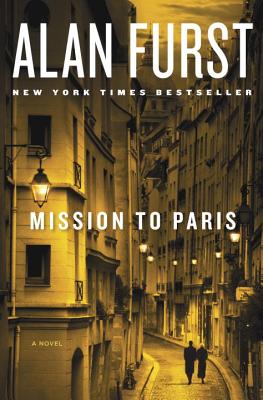
Review: MISSION TO PARIS by Alan Furst

mission to paris cover

An Austrian-born Hollywood star named Frederic Stahl is traded to a movie studio in Paris to make a film called Après le Guerre. This proves to be ironic, seeing as how it's 1938 and a second World War is clearly on the horizon and a-comin' this way. Since he's famous (Nazis love movies, as we all know from Inglourious Basterds) and Austria is now officially part of Nazi Germany, Frederic is courted by several Nazis in Paris, becoming gradually more annoyed with their bullying tactics until he decides to help the American embassy spy on them. When the Nazis find out, they go from intimidation to outright threats. Will Frederic and his German émigré girlfriend get out of Europe alive AND manage to finish filming their movie? Either way, the show must go on!

I picked up Mission to Paris after several people recommended Alan Furst to me in my post about spy novels that have romantic subplots. The novel really has everything: Paris. Hollywood glamor. Movie-making. Spies. Kristallnacht. Snow-bound European castles with doughty, eccentric counts. Romance. And let's not forget those insensitive Nazis!

So how could I not like it, right? And I did like it. As a historical novel, Mission to Paris is 100% awesome. I really felt like I was in pre-War Paris: dining at Maxim's, noshing on Lebanese food, living in a relatively constant state of paranoia while everyone carries on with their daily business. I actually learned quite a bit about World War Two and how the Nazis overthrew the French government, and I was not expecting this novel to be historically illuminating in the least, so that was neat. I also loved the details Furst included about the process of getting a movie made and how precarious and drawn-out production is.

I also loved Stahl, who manages to embody Old Hollywood Glamor and the practical side of acting and being well-known all at the same time. He's living the life, but he doesn't let it inflate his ego. I might have found this a bit unbelievable, actually, but he is the hero of the novel.

Furst's writing style is worth a mention, as well—I found it to be quite stylized and at first difficult to get into. But that quickly passed and I appreciated how his writing style helped to make Mission to Paris a world unto itself.

So yes, I liked Mission to Paris and I think it's a good book. But I didn't love it, and I had trouble connecting with it on any level except intellectually. First of all, the story is very steady and the climaxes aren't moments of super-high tension, more like: And then this happened. Secondly, this is a very male-centric book. It would not pass the Bechdel Test. And even though I liked the central male character, I was BOTHERED. I admit I loved the romance when it first showed up about halfway through the book, but it was difficult to maintain an emotional engagement with that part of the story when woman z didn't seem to be appreciably different from casual sex partners x and y.

Still, I think I enjoyed this book more than my prejudice against novels where the male lead casually thinks, "He wanted to fuck her," will allow me to admit to myself (I'm looking at you, Casino Royale). I do plan on reading more books by Furst in the future—I would love to check out Spies of Warsaw, which was adapted into a mini-series with David Tenant and which I also found very one-note until I rewatched it out of boredom and was suddenly like "BEST SHOW EVER SO INTO." So maybe I should just reread Mission to Paris and see if I don't appreciate it more on the second go-around.


Discus this post with me on Twitter, FaceBook, Google+ or in the comments below.

Tuesday, March 26, 2013

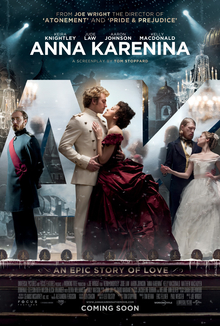
Movie Review: ANNA KARENINA


Originally released: 2012
Starring: Keira Knightly, Jude Law, Aaron Taylor-Johnson
Directed by: Joe Wright
Based on: the book of the same name by Leo Tolstoy

Anna is married to this guy named Aleksei, who is honestly kind of a prick. When she goes to Moscow to visit her brother, she runs into dashing cavalry officer, Count Vronsky. It's love at first sight! But Anna's a married woman and tells Vronsky to leave her alone. Instead, he stalks her for the next hour, and then Anna's hubby is all, "You're behaving improperly BLAH BLAH BLAH." So Anna figures if people are just assuming she's sleeping with Vronsky, she might as well sleep with him! And Vronsky bangs the brains right out of her head.

This version of Anna Karenina takes place almost entirely in a theater and is extremely stylized. It's a little strange at first; during the opening scene I was like, "What is this and why am I watching it?" But then I was totally sucked in and the theater setting seemed to work naturally with the themes of the story. I felt that by making the staging obvious, the story was allowed to dominate and I didn't have to sit through the typical explanations of what's going on that would have slowed the pace of the movie. Plus, IT'S A METAPHOR DUDE. A beautiful Russian metaphor.

anna karenina poster

In addition to the gorgeous sets, you've got beautiful costume design (I found it really interesting that Anna wore black when she was "innocent" and white after she was a notorious adulterous--I thought that was a great way to demonstrate how appearances and reality never mesh with her) and perfect casting. I loved Matthew Macfadyen most especially, who plays Anna's brother, Oblonsky. He was hilarious! He was like Gaston's crazy uncle in Gigi, only Russian and married. It was great to see Macfadyen in a role where he wasn't being dour. I also loved Ruth Wilson as Princess Betsy. That is an awesome character!

As for Anna, I have SO MANY FEELS. For one, I LOVE her. I've seen other people call her selfish--and she is, especially at the end of the movie--but I also really admired her and thought that for most of the movie she was trying to make the best of a soul-sucking situation where she was miserable. But then on the other hand, I was also like, "Girrrrrrl, what were you thinking." I was totally with Anna up until right after she gave birth to her daughter. To me, this was the turning point in the movie, particularly when Aleksei asks her, "What do you want?" This is an honest question and deserves deep consideration, but I wasn't sure Anna knew what she wanted when she answered. She said she wanted Vronsky, but maybe she just wanted passion in her life. Of course, Aleksei's never going to give that to her; but on a practical level her decision to leave with Vronsky really made no sense. She loses everything for herself AND her child, and all she gains in return is him. Why would she choose Vronsky? And then the whole thing with them returning to Moscow and her INSISTING on trying to be accepted in society and going into a panic spiral when she's not... WHAT? Don't tell me you didn't see that coming, Anna. You had the guts to tell society to go fuck itself and I respected you for that; now have the balls to deal with the consequences. Basically I think Tolstoy fell in love with Anna as he was writing the book; but then he remembered he was trying to be moralizing, so he forced her to act in a way that made no sense in order to teach Team Vagina that if we cheat on our husbands, WE WILL DIE. PS, if you know of a 19th-century novel where the adulteress main character doesn't die, please let me know.

Aaron Taylor-Johnson as Vronsky
You know you want to lick that moustache.

Still, the central question of Anna Karenina seems to be, did Anna really love Vronsky? Not because if she did love Vronsky it would excuse her behavior, but because the message of the story is different depending on how you answer that question (I know we were spoon-fed a message about lust and all that, but I decided to ignore it). And honestly, I don't think it's a question that has a definitive answer. Personally, though, I believe Anna did love Vronsky, because unless he had some magical penis or something, I don't think Anna would give up her son just because she found a guy sexually attractive. Maybe her spiral into jealous crazy town was simply a result of her love not being shored up by faith and hope.

Anyway, even though I had some issues with the story itself, I thought Anna Karenina was a really, really good movie. I loved how stylized it was, while still being very emotional and focusing on the characters of the story. I haven't read the book, but I think this might be one of the best book-to-movie adaptations I've ever seen. I can't wait to watch it again.


Discus this post with me on Twitter, FaceBook, or in the comments below.

Saturday, January 26, 2013

Review: CAT'S CRADLE by Julia Golding

cat's cradle cover

After traveling through the British colonies in America and the Caribbean, orphan Cat Royal has returned to London only to discover that her long-lost family wants to get in touch with her. But are they looking for her, or for money? Cat decides to travel to Scotland to find out.

I'm beginning to think the quality of any Cat Royal book can be immediately ascertained by the cleverness of the "The Critics" section in the front matter of each book. For example, I loved loved LOVED Cat Among the Pigeons and Black Heart of Jamaica, and in both of those novels "The Critics" sections were so cute and hilarious I could barely contain myself. In Cat O' Nine Tails, however, "The Critics" section was really blah and uninteresting, kind of like that book! The same was true for Cat's Cradle, and therefor I had a sneaking suspicion it wouldn't be the best Julia Golding novel I'd ever read when I started it. I was right.

Cat's Cradle was basically really boring and felt episodic. I was glad Cat got to find her family, and I thought some of the locations she went to in this book were interesting (a fabric mill, for example); but it didn't feel like there was a central challenge or antagonist for her to overcome, and as a result the whole things felt really blah. Don't get me wrong, Cat's Cradle was still enjoyable, but as soon as I put it down I had NO desire to pick it back up again. Not even when I was bored out of my mind and actually in the mood to read something.

Another thing that was kind of disappointing about Cat's Cradle was the lack of Billy Boil. Billy, if you haven't read the series, is Cat's archnemesis who insists that they belong together. He's my FAVORITE character, and he's not involved in the story of Cat's Cradle at all. Frank (son of a duke who's super-fun and nice) and Syd (leader of the Covent Garden gang and Cat's bestie) are in the novel quite a bit, and they're great; but Cat just isn't Cat withouy Billy pushing her buttons. He's like the Fred to her Ginger! Now that I think of it, all of the books I've really liked in this series have featured Billy prominently.

I'm not ready to give up on the Cat Royal books, but Cat's Cradle was REALLY disappointing. About halfway through I realized I'd either have to DNF it or skim through it. Since I didn't want to DNF it, I skimmed, and it was still really hard to finish. I DO want the series to keep going, just because I love the characters so much--but I hope the next book is better, especially since I have to special order them from the UK.


Further Reading:


Discus this post with me on Twitter, FaceBook, or in the comments below.

Saturday, January 12, 2013

Review: THE IMPORTANCE OF BEING WICKED by Miranda Neville

importance of being wicked cover
Look, kids, another great cover from Miranda Neville! Joke. Just ignore it.

Although the Duke of Castleton and Caroline Townsend are of completely opposite dispositions--he, being proper and conventional; she, determined to live with no regard for society's rules--they both find themselves in similar financial straights due to the irresponsible behavior of other people. When Castleton sets out to court Caro's wealthy cousin, he finds himself attracted to the bohemian widow and is quickly drawn into her misadventures.

The Importance of Being Wicked has a lot of problems, but I ended up enjoying it anyway. Problem the first is some pretty dodgy history. If you're the type of person who's driven crazy by historical inaccuracies, just walk away right now. I already discussed the novel's questionable use of art here, but honestly that's the just the tip of the iceberg. Castleton is alternately addressed as "Your Grace" and "Duke" by the same people, sometimes within the same sentence (only social equals addressed dukes as "Duke," everyone else used "Your Grace;" it wasn't interchangeable); and the characters say things like, "Uhg," and "true blue" (which referred to one's political leanings, not the nature of one's character). Honestly I was a bit taken aback by the careless use of terms and disregard of historical context in this novel, considering that Miranda Neville's last two books were impressively researched--as far as I noticed, anyway--but fortunately I'm not one of those people who demand historical accuracy in order to enjoy a work of fiction. All right, I'll admit the whole Duke/Your Grace thing was a bit crazy-making, but not so much that I couldn't still enjoy the story.

Problem the second was the plot, if one can call it that. It was really thin and not enough to hold the book together. As a result The Importance of Being Wicked felt episodic, especially in the second half. There were a lot of threads going on in this story--the painting by Titian, financial hardship, the whole thing with Castleton's mother, Caro's pregnancy, etc.--that just sort of waved around in the wind and then ended without ever being tied together. The pacing of the story also slows way the heck down in the second half of the book; but then I'm of the once-they-get-married-let's-wrap-the-book-up school of thought.

Those problems aside, however, I really enjoyed The Importance of Being Wicked. I liked it a whole heck of a lot more than Confessions from an Arranged Marriage (post here), and I think the main reason was that I loved the two main characters. Was Caro a bit unbelievable as an eighteenth-century daughter of an earl? Yeah, but I still liked reading about her adventures and sympathized with her actions throughout the book. Castleton was also a fun character because he was so easily shocked by everything and, though he prided himself on being level-headed, spent an awful lot of time threatening to punch people in the face. He had me at the first K-O.

punch in the face gif

Also, I can forgive a lot in a romance novel as long as the hero and heroine have chemistry, and that was totally the case in The Importance of Being Wicked. I loved Castleton and Caro together and thought the way they fell in love was really delightful (I am, incidentally, a complete sucker for opposites attract romances, so that was basically a sure bet for me from the beginning). I also really appreciated the fact that neither Castleton nor Caro were ridiculously wealthy: usually in romance novels (I'm tempted to say ALL THE TIME WITHOUT ANY EXCEPTION, but I won't) the hero is rich. He can be ugly, he can be socially awkward, he can be a dishonest asshole, he can even smack the heroine around a bit or be not-a-peer, but he's ALWAYS rich. Not in this case! The fact that Castleton, who as a duke had huge financial responsibilities, was willing to marry Caro and take on her additional debt made The Importance of Being Wicked very unusual and added a sweetness and believability to their romance that I fell for completely.

Would I recommend The Importance of Being Wicked? Yes, although I can see where it might disappoint some people or just not be their cuppa. It's not a perfect book by any means, but I think if you're partial to romance there are enough things to like that outweigh the negatives. For the most part I had a great time reading it. Thank you to the publisher for providing me with a copy to review! And in the future please give Miranda Neville better covers.


Friday, December 21, 2012

Review: VIRGIN SLAVE, BARBARIAN KING by Louise Allen

virgin slave barbarian king cover


Rome is being sacked by barbarians, and patrician daughter Julia Livia is trying to escape her burning house when she's attacked by rioting citizens. Fortunately, she's save by the Goth (Visigoth? Barbarian? Are they the same?) leader Wulfric. Unfortunately, he decides she'd make a good slave and carts her off to his encampment. If the tent is a-rockin, don't come a-knockin.

I first heard about this book from Penny Watson at Penny Romances, who has a talent for convincing me to read really odd books. With Virgin Slave, Barbarian King however, I didn't require much convincing. For one, I am a total sucker for romances where a woman is taken captive. I think they're hilarious and a lot of the modern ones have really interesting twists on relationship power dynamics. For two, I love unusual settings, and the Fall of Rome is a very unusual setting for a romance!

For the most part, Virgin Slave, Barbarian King was good-ish. I loved the two main characters and found Wulfric particularly interesting. He's definitely an alpha male, which one would expect from this sort of romance, but's he's not a HULK SMASH sort of alpha male. He's really intelligent and calm, and actually a nice guy. Louise Allen does a great job of rounding out his character so that he seems like a normal guy and a romance hero at the same time.

I also thought Julia Livia was a well-drawn character. The story is really about her finding a home and a family, and I love stories like that. The secondary characters were all very sweet and likable (other than Julia's rival for Wulfric's affections) and I thought they rounded out the story nicely. Her conversion from wanting to escape to wanting to stay with the Goths was also believable.

That being said, the integration of the story and the romance just didn't happen for me. It seemed like all of a sudden Julia and Wulfric were in love for no reason other than this is a romance novel, so they have to fall in love. I didn't get a lot of chemistry between them. I also felt like the sense of the historical setting wasn't really there. I kind of need more than how they heated their water and what plates they used in order to frame a time and place in my mind, you know what I mean? As a result the book came off as a little generic.

The ending also made NO SENSE. Okay, so you want a distressing haircutting incident--I got that in the first quarter of the book. But why would the character in question cut off their hair if they weren't going to live in Rome, hmm? Makes no sense. Don't just go around cutting off people's hair for no good reason. Not cool.

ANYway. Despite these minor annoyances, I honestly think Virgin Slave, Barbarian King is worth a buy, especially if you like unusual settings and characters. While it isn't a perfect romance, it does twist the expectations of a typical romance novel in a very interesting and refreshing way. Louise Allen is definitely an author worth watching, I think!

Saturday, November 3, 2012

Movie Review: BEL AMI


Originally released: 2012
Starring: Robert Pattinson, Uma Thurman, Christina Ricci, Kristin Scott Thomas
Directed by: Declan Donnellan and Nick Ormerod
Based on: the novel of the same name by Guy de Maupassant

Georges is a poor young hoofer in 1890s Paris looking to make his mark. After meeting an old army buddy, he gets involved with a group of snooty bourgeoisie and a bunch of women who all want to hit that. His male colleagues hate him and treat him like a pussy, but that's probably because he keeps sleeping with their wives. Don't worry, though, Georges isn't just a hot piece of ass--he has a ridiculously complex Plan to get money so that he never has to watch cockroaches crawl around his apartment again.

I first heard about Bel Ami from Anachronist at Books as Portable Pieces of Thought, and it sounded so incredibly stupid that I seriously HAD to watch it. Bel Ami actually wasn't THAT bad, though (I probably would have enjoyed it more if it was), despite the fact that it contained some of the most awkward sex scenes I've ever seen. The cinematography and set design was gorgeous, and the movie did have some semblance of a plot (even if it didn't seem like it did for at least the first hour). I also thought the gender roles in the film were pretty interesting. As for Robert Pattinson... eh.

robert pattinson making faces in bel ami

I mean, it's RPatt, so he basically spends forty percent of the movie staring and another forty smirking, which is pretty annoying. But he did make Georges sympathetic. I was honestly kind of rooting for the guy, but I'm not sure I was supposed to be. RPatt has said that Georges is amoral, but that doesn't really come across, especially in comparison to the other characters. He seems more of a bumbling idiot than a master manipulator, and he does care what at least one person thinks of him--his true love, Clothilde. I'm not sure if this is a failure on the screenwriter's part or RPatt's, but if you want someone who embodies a sexually objectified male, he does fit the bill.

Anyway, gender issues! Bel Ami reflects the fin-de-siècle paranoia about degeneration and indolence. Men should Do Things On Their Own and Not Rely On Women and all that good stuff. Except Georges basically gets everything from women, and has no intention of doing any work himself. His dad did that and it was for the birds! He'd rather make money on his back (to be fair, it's probably the only thing he's good at, and he is pretty). Georges basically takes on the role of a woman sleeping her way up to the top (à la Nana--post here--or Camille), but he's a dude. And it does get super-awkward sometimes.

bel ami poster

Meanwhile, there are a lot of strong female characters in this film, most especially Uma Thurman, who plays Georges' wife, Madeleine. She smokes, drinks, plots to manipulate political elections through the press, and has no intention of letting anyone besides herself wear the pants in their marriage (side note: all the female leads in this movie should send thank-you notes to the cinematographer and director, because they looked freaking gorgeous). Wow, so many awkward sex scenes between those two. Even the other women Georges hooks up with come on to him first. Does Bel Ami pass the Bechdel Test? No way. But it does show women as independent, intelligent, and powerful. I would like to say this is interpreted as a positive, but instead it's more of a sign that civilization is going to the dogs--or at the very least, people like Georges.

When it came to the twisty, Les Liaisons Dangereuses-type plot, however, I thought the film really faltered. We get only the vaguest sense of what's happening at the newspaper Georges work at, or the political and financial manipulations Madeleine is a part of; and frankly Georges' plan to get the better of everyone makes no sense. Does it really take that much effort to infatuate a teenager? There are also a bunch of things left unexplained or that seemed kind of pointless.

Even with the interesting gender role reversals, I would say unless you have a particular love for Maupassant or the setting (which I do), you can skip Bel Ami. It's only minimally entertaining and kind of leaves a bad taste in one's mouth.


Thursday, October 11, 2012

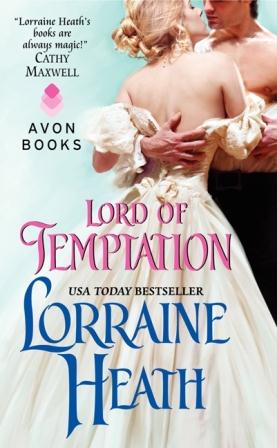
Review: LORD OF TEMPTATION by Lorraine Heath

lord of temptation cover

Anne wants to visit her fiance, Walter, in the Crimea, but her brothers won't let her. So she hires a ship on her own, captained by the dashing pirate Crimson Jack (actually he's just a normal merchant captain, but let's go with pirate. ACTUALLY actually, he's Lord Tristan Easton, but his title was stolen from him when he was a teenager, and he's no longer welcome in Society or vice versa). Soon he and Anne are PLAGUING one another with their beautiful and attractive selves, he being all impossible man!-ish, she being all proper. Tristan sets the price of the voyage at a kiss, but he may be the one to pay--with his heart. If only could give up his true mistress, the sea!

I have read and enjoyed Lorraine Heath's novels in the past. I can't remember what those novels were at the moment, but I know they exist. I love novels set on ships (and with pirates, although once again I must reiterate that Tristan isn't a pirate), so I thought Lord of Temptation would be a sure bet. It certainly has all the elements of a historical romance romp--historomaromp?--but they never came together for me.

It wasn't because of the writing style, although sentences like this drove me crazy:
He wished the fire in the grate was producing writhing flames into which he could stare contemplatively rather than into her eyes.
Hm, yes. I wish the sun was emanating spring-like rays in which I could twirl ecstatically rather than sit inside. I wish the stove was cooking delicious comestibles with which I could quench my appetite rather than just watching the Food Network. There are so many things insentient objects could be doing right now to make our lives easier!

No, that didn't really bother me. But what did bother me was that the settings were never fully utilized. There was no sense of the mechanics of running a ship--Tristan mostly acted like he was on holiday and could whatever he wanted--and very little description of Scutari once Anne and Tristan reached it. Then they go BACK TO ENGLAND, and despite the fact that it was kind of like in Pirates of the Caribbean when they go back to the island, I was actually looking forward to their return because I imagined the London haute ton would be a familiar enough setting that the characters would have a solid setting to move in and established characters to interact with. But despite the addition of some entertaining impediments--namely Anne's brothers and an obsessed fangirl for Tristan--this part of the novel seemed to drag. I feel like Heath didn't do enough research for Lord of Temptation and that it could have been set at any time, in any place, with the result being that it feels a little phoned in, particularly near the end.

lord tristan is an orange
Lord Tristan (visual approximation)

As for the characters, Heath did a good job of setting up Anne's motivation for going from a proper engaged lady to someone willing to risk her reputation and carry on an affair, which is something that doesn't always happen in historical romances. But at the same time, I really don't need THAT much convincing someone is willing to have sex. Furthermore, I don't get what Tristan's appeal was at all, other than physically. And as this is a book and I can't see him, his bulging biceps and bright blue eyes don't really work as convincing features of attractiveness. Aside from his love of oranges, and the fact that he smelled like oranges (he was an orange, basically), there were no consistently distinguishing features of his personality; it seemed to change from scene to scene.

There's another thing that really bothered me about Lord of Temptation: this book would not pass the Bechdel Test (quick run down of the Bechdel Test if you're not familiar: the story has 1. female characters who 2. talk to other female characters 3. about something other than men). There is one main female character, and that's Anne. The three other minor female characters get about five pages between them, and when they do talk to Anne, all they talk about are men and how she needs to get married. So you're writing a book with a decidedly female audience, and STILL the story is basically all about dicks? It's a giant dick party! And don't even get me started on the fact that Anne "has" to get married because, well, she just does! Otherwise she's totally useless! And then (spoiler alert) she gets married. Uhg. Just kill me and get it over with.

Anyway. Lord of Temptation wasn't one of those Heath novels that I REALLY liked, although honestly it was okay. It was a little cheesy and predictable, but it wasn't boring (most of the time), so that was a plus; and I did have fun imagining Lord Tristan as an orange.

Thank you to TLC Booktours and the publisher for sending me a copy of this book to review!


LinkWithin

Related Posts Plugin for WordPress, Blogger...