Showing posts with label paris. Show all posts

Monday, June 29, 2015

6 Foodie Books You Should Definitely NOT Read While Hungry

Portions of this post originally appeared on Book Riot. I received copies of All For You and Mastering the Art of French Cooking for review consideration. For more on my review policies, please see my Full Disclosure page.


what did you eat yesterday fumi yoshinaga
What Did You Eat Yesterday? by Fumi Yoshinaga

Shiro Kakei is a lawyer, but he's not one of these lawyers who work sixty hours a week and spend their lives at their desks. No, Shiro happily takes the most boring cases so he can put in his eight hours and go home, where he throws himself into his true passion: cooking!

I was expecting a light, entertaining slice-of-life story with What Did You Eat Yesterday?, but it was much better and more powerful than I thought it would be. First of all, for being printed in black and white, the food looked and sounded crazy delicious. This was my face the entire time I was reading:

yum gif


Also, the recipes are kind of inspiring. As soon as I finished this manga, I started making side dishes for breakfast and dinner, trying to use up what we had in the fridge. I didn't consciously decide to start doing this, incidentally, it just seemed to happen naturally as an extension of reading the book. I have to agree with Shiro's boyfriend, Kenji, that adding side dishes makes the meal more satisfying. I began to feel so much healthier. Add to that Yoshinaga's beautiful, delicate drawings, awesome characters, and vignettes on how food can express love, carry memories, and is more than just following a recipe but also about using what you have and shopping for the best ingredients, and there really is nothing not to like about this manga.

Verdict: Definitely buy. In fact, after I returned What Did You Eat Yesterday? to the library, I bought a copy for myself, I loved it soooo much.


mystery writers of america cookbook
The Mystery Writers of America Cookbook, ed. by Kate White

Death and food go together like sun and shade. Why? No one knows, except maybe Hannibal Lecter. In this cookbook, some of the greatest mystery writers in America (Scott Turow, Louise Penny, Mary Higgins Clark, Charlaine Harris, James Patterson, etc.) share their favorite recipes, from family standards to food straight out of their books.

For some crazy reason I decided to start reading this while I was waiting for dinner. Bad decision, or worst decision? The recipes were so good I started ROTFDMAO (rolling on the floor drooling my ass off). But even if you don't like to cook, this book is filled with entertaining stories and essays from mystery authors. I cried at Richard Castle's "pancakes are love," declaration, laughed at Nelson DeMille's Male Chauvinist Pigs in the Blanket recipe, and loved Lorenzo Carcaterra's story about Grandma Maria's Pasta Puttanesca. Lee Child closes the book out admirably with an essay on The Right Way to make coffee. The chapter on side dishes is pretty weak, but this is America we're talking about.

Verdict: Buy. Actually, this is another book I bought after borrowing from the library. Good ol library!


all for you laura florand
All For You by Laura Florand

Sassy and cute Célie is chef to one of the best chocolatiers in Paris, but her life wasn't always truffles and ganache. She grew up in the banlieue dreaming of marrying her brother's bestie, Joss, until he abandoned her to join the Foreign Legion. Now he's back, acting like nothing ever changed, and Célie has all the feels.

I've never been one of those people who get hungry or crave chocolate while reading a Laura Florand novel, although I do find her food descriptions to be fascinating and on fleek. Maybe it has to do with the fact that I can't eat chocolate, who knows. But with this book, I not only started craving chocolate, I had an entire dream about drinking hot chocolate, the one chocolate treat I really, really miss indulging in. It's kind of strange, considering that All For You is probably one of Florand's less food-centric novels. But then again, it did give me all the warm fuzzies. It's sweet and comforting and just what you need to lift your spirits, kind of like a cup of hot chocolate in book format.

Verdict: Buy.


The following books were ones I wanted to include in the above Buy, Borrow, Bypass, but life and work got in the way and I wasn't able to finish them before the deadline. However, I do still want to review them, so here they are!


taste test kelly fiore
Taste Test by Kelly Fiore

Nora is a small-town girl who grew up working in her dad's barbeque joint, but her dreams are much bigger than that. When she gets the chance to be on Taste Test, her favorite cooking competition show, she leaves District 11 her dad and BFF, Billy, to compete in an arena against kids from across the country. Only one can survive win the chance to study cooking in Paris. The problem is, can Nora trust the other contestants, particularly the infuriating and arrogant Christian Van Lorten?

In case you can't tell by the summary, this book reminded me a bit of The Hunger Games. Too bad that title was already taken, it would have been much better than Taste Test. Anywho, this was a really fun, quick read. I loooooooooove books where the two main characters fight all the time. Nora had a few moments where I thought her behavior was unreasonable or annoying, and the ending left almost everything completely unresolved, but the bottom line is this is the kind of book you can kick back and read in an afternoon when you're after some lighthearted entertainment. As for the food, all but one of the recipes were dumped in at the end, and none of them sounded particularly appetizing or easy to make. I wouldn't call this a book NOT to read while hungry.

Verdict: Buy or borrow.


the red notebook antoine laurain
The Red Notebook by Antoine Laurain

Laurent Letellier owns Le Cahier Rouge, a Parian bookstore. One day he stumbles upon an abandoned purse in the street and becomes obsessed with finding its owner after reading all the personal secrets she's written down in her little red notebook. She owns a red notebook, he owns a bookstore called The Red Notebook–clearly these two are meant to be together. But will they ever meet?

This is a charming, short novel in a similar vein to the movie Amélie, although not as fantastical and twee. It sounds like it could go into creeper territory but it really doesn't. I loved how there were a bunch of jokes you would probably only get if you spoke French–the name of Laurent's shop, for example; or the name of his daughter's cat, Putin, which can mean everything from damn to fuck depending on intonation (or the name of the Russian president, for that matter). Actually, now that I think about it, double meaning in names is kind of a theme in this book. As for why The Red Notebook is on this list, it's surprisingly chock full of delectable descriptions of food and drinking and eating, from pot-au-feu to hachis Parmentier. And if you don't know what either of those dishes are, don't worry–googling photos of them is half the fun. I started craving French food like whoa.

Verdict: Buy or borrow, but definitely read.


mastering the art of french eating ann mah
Mastering the Art of French Eating by Ann Mah

Francophile Ann Mah thought her dreams had come true when her hubby got a job in Paris. But just a few weeks after the big move, he had to go to the Middle East for a year, leaving Mah lonely and bored until this food writer finally had a lightbulb moment: she could write about French food! Using Mastering the Art of French Cooking as a travel guide, Mah set out to discover the stories "behind" the famous regional dishes of France.

Another day, another foodie memoir inspired by Julia Child. I mean, I get that she's a BFD to a whole generation of cooks and foodies, but it's getting to be a bit cliché at this point. I admit I had trouble getting into Mastering the Art of French Eating. I probably should have known better, seeing as how memoirs are not my thing, but I was expecting a lot more food in this book. Instead, it's mainly about Mah's struggles living as an expat–not just in Paris, but in other parts of the world (her hubby's in the diplomatic service). Which is fine, but I'm not super interested. I also thought the choices for and execution of Mah's quest were pretty damn lame. For Paris–the first chapter in the book no less–what dish does she choose? Steak and frites. Really? Out of all the dishes she could have written about? Giant snooze. In another chapter, Mah highlights two famous andouillette recipes of Troyes, but she doesn't even try them! At that point this book lost me. I will say, however, that the recipes at the back of each chapter sound tasty and I totally want to try them.

Verdict: Bypass, or borrow for the recipes.


Discus this post with me on Twitter, FaceBook, Google+ or in the comments below.

Monday, July 14, 2014

Dual Review: THE CHOCOLATE HEART & TEMPTATION by Laura Florand

the chocolate heart laura florand

Bonjour and happy Bastille Day! I hope you're all using the day we celebrate French Independence to the purpose for which it was created: an excuse to drink champagne!

In the meantime, me and my blogging buddy, Kelly from Reading with Analysis, thought Bastille Day would be the perfect day to talk about two paired novels from our favorite writer of Parisian romance, Laura Florand. I've made no secret of the fact that I adore Florand's novels--she specializes in delicious, emotional, and escapist novels featuring French dessert chefs in the City of Light. The Chocolate Heart and The Chocolate Temptation both center around the three Michelin-starred pastry kitchen of Luc Leroi (aka Luc the King) and Patrick Chevalier (a knight in shining armor?). Should you read these books? Um, yes. For more details on why, read our discussion on The Chocolate Heart here, and The Chocolate Temptation over at Kelly's blog.

Now, on to the discussion!

Book blurb, in case you're curious:

No one hates Paris--except Summer Corey. The moody winters. The artists and their ennui. The inescapable shadow of the Tour Eiffel. But things go from bad to worse when Summer stumbles into brooding, gorgeous chef pâtissier Luc Leroi and indecently propositions the hero of French cuisine...
Luc has scrambled up from a childhood panhandling in the Paris Métro to become the king of his city, and he has no patience for this spoiled princess, even if she does now own his restaurant. Who cares if she smiles with all the warmth of July? She doesn't eat dessert!
There is only one way to tempt her. A perfect, impossibly sweet seduction...


Tasha: Unlike the last few Laura Florand novels (The Chocolate Touch, The Chocolate Rose), this one isn’t based on the Beauty & the Beast fairy tale, but on the myth of Persephone and Hades, one of my favorites. In the original myth Persephone is chillaxing in a meadow with her girlfriends, when she’s suddenly kidnapped by Hades and taken into the Underworld. After months and months, Hades convinces/tricks her into eating a pomegranate, so that even after she escapes, she has to return to the Underworld for half the year. I thought the way Florand adapted the myth into a modern story set in Paris was really clever and seamless. What did you think?


Kelly: I had a difficult time settling into the story at first -- until I finally caught on to the Persephone thing and was able to appreciate the Florand’s take on the myth. The biggest change -- I thought -- (other than Luc/Hades not being a kidnapping villain) was that Summer isn’t really a tragic character. I mean, Persephone is totally tragic, right? She’s chilling with her ladies, and all of a sudden this crazy dude whisks her away to his underground kingdom, and she can’t eat anything… until finally she does, because hunger, you know? And then it’s her fault that she’s got to split her time between her home and Hades’, because -- what -- she should have been able to starve herself forever?


Tasha: OR she decided to let Hades *think* he tricked her into eating the pomegranate, when really she was like, “Hey, this is a great opportunity to move out of the house.”


Kelly: True, but even that doesn’t really give Persephone any agency. I mean, she could have been kidnapped by any Tom, Dick or Bacchus and just decided to make the best of it, but it still wasn’t her choice. Summer, on the other hand, while manipulated by her father into sojourning in Paris, makes choices and sets her own course. That was the change that I appreciated the most. She isn’t a victim of fate’s whim, like Persephone.


Tasha: No, but in the end she does give up her island and her job to live in the south of France with Luc. And that’s all his idea. And she was willing to move to Paris permanently just for him, too.


Kelly: True. I wish the move to the south of France had been her idea: a compromise.


Tasha: I agree. That’s actually what I was expecting to happen, since I read The Chocolate Temptation first.


Kelly: I still feel a bit ambivalent about The Chocolate Heart. I liked it, loved Luc’s gushy, mooshy hearts and loved all of Summer’s issues, and I particularly loved Patrick (because he’s awesome), but I had a slightly difficult time recommending it to other readers, because I knew certain things about it would needle them.  Summer’s a difficult character, and there are a lot of readers out there who have a hard time with difficult lady characters, specifically (but -- for some reason -- difficult dude characters are A-OK. I don’t get it.) Other folk might have a hard time with the poor rich girl thing.  And, while I liked so many things about the book (and while neither of those pet peeves bother me), I’m not convinced that the other parts of the book would end up satisfying every reader. Does that make sense?


Tasha: It does. I don’t think Summer was a difficult character at all—I think Florand did a good job of addressing the “poor little rich girl” thing while still making Summer sympathetic and making her issues valid. But there was a lot of rinse-wash-repeat when it came to the miscommunication between Luc and Summer, and I wasn’t down with the ending. It wasn’t as emotionally satisfying as I wanted it to be. For example, I would have really appreciated SEEING Luc meet his dad and come to terms with that.


Kelly: YES, to all of this.  (And a clarification: I don’t think Summer is actually a difficult character or a poor little rich girl, but I suspect that people who have those pet peeves have a lower tolerance for anything that hints at either of those traits, so they might perceive and be irritated by those traits, without a truly great romance/ending/story to make up for it.)  And maybe some of my irritation with the miscommunication is just a sign of my own reading issues and low tolerance for anything that hints at poor communication as a plot device.  (Except Shakespearean cross-purposes and mistaken identities are the best things ever.)


Tasha: No, I agree that the misunderstanding plot device didn’t quite work, mainly because it went on way too long. At some point it just became frustrating because Luc persisted in being a dick when he should really know better. It wasn’t as successful as the misunderstanding in The Chocolate Touch between Dom and Jaime (which was based more on cultural misunderstandings and always moved the characters forward).


Kelly: And, in The Chocolate Touch it never felt petty. But Luc and Summer frequently seemed petty, because the resolution to their difficulties is so obvious, and it’s obnoxious that they don’t get it.


Tasha: Yeah, just kiss already! Sheesh. That said, the dinner scene (though a bit contrived—I don’t know any chefs who personally feed the owners of their restaurant romantic dinners) was really romantic. I loved the creativity of the desserts. And, despite the problems I had with it, I still stayed up until 5 am for three nights in a row reading it, so.


Kelly: My favorite scene is the one where Summer cooks for Luc.


Tasha: I loved that one too!


Kelly: When I compare The Chocolate Heart to my idea of the average contemporary romance novel, I consider it a very good read, a good use of my time, a happy purchase. But when I compare it to other Laura Florand books (which is maybe not fair?) it just isn’t one of my favorites.  The Chocolate Thief, the other Florand book that -- to me -- has some issues, is a little bit more fun, and The Chocolate Kiss, which I tend to forget I’ve read, has some woo-woo stuff that I absolutely adore.  Heart, though it has a whole pile of scenes that I enjoyed, doesn’t really have anything that made my heart sing.


Tasha: It did make my heart sing and I’m totally glad I bought it, even at $10 for the ebook (outrageous), but I agree. It’s maybe not the best book to start out with the series.


Kelly: Unless you love heroines with family issues, heroes who communicate their mushy feelings through chocolate and also have family issues, and shit tons of miscommunication and angst. And you might!


Tasha: And if you love the Madeline books…

Kelly: Exactly. But, even if you don’t fall into any of those categories (I don’t), you’ll still really enjoy the book and be glad you purchased it, so that’s something.


Be sure to read the rest of our discussion at Reading with Analysis. And remember to buy that bottle of champagne!


Discus this post with me on Twitter, FaceBook, Google+ or in the comments below.

Thursday, June 5, 2014

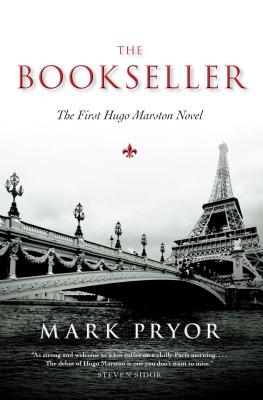
Review: THE BOOKSELLER by Mark Pryor

the bookseller cover

Hugo Marston is the head of security at the US Embassy in Paris and a bibliophile, which is how he comes to know Max, a bouquiniste—one of the people who sell used books from stalls along the Seine. While chatting with Max one wintry day, Hugo witnesses his old friend being kidnapped, but the police refuse to do anything or even believe Max is in danger. So Hugo takes matters into his own tentacles and decides to do some investing on his own time, with assistance from his CIA friend, Tom, and a beautiful Parisian journalist. Will he be able to discover why Max was taken and if he's still alive?

I am on a serious Paris kick lately—not intentionally, but maybe subconsciously. First there was The Chocolate Touch, Chocolate Thief, and Chocolate Heart by Laura Florand (I basically spent all of April reading Florand novels), and now The Bookseller. But this novel shows a very different Paris from the one in The Chocolate Touch or Thief—this is Paris' dark side, locked in gunmetal grey skies, where a person can disappear as if they never even existed. I kind of loved it. The Bookseller isn't a perfect novel, but it has a lot to recommend it.

First of all, this is the type of book that has everything you want in a noir-ish type mystery: mysterious women who may not be trustworthy, friends who drink too much and have their own agenda, hidden messages, Nazi hunters, gangs, lying cops, corruption, aristocrats, a smart-mouthed secretary, an American who wears cowboy boots. Add in a bunch of Agatha Christie references, a glimpse into the culture of bouquinistes (which I had never really thought about), and several books with incredible histories attached to them, and it would be pretty difficult to make me NOT like this novel.

The main character, Hugo, was also really well-drawn. He has an extensive history; at times The Bookseller felt like the second or third book in a series, not the third. And unlike many mystery heroes, Hugo is uniquely qualified to investigate a kidnapping on foreign soil—in addition to being head of security, he used to work for the FBI (or was it CIA? Anyway...), and he knows his way around guns and stuff, because 'Merica.

That being said, there were a lot of coincidences in this novel that were just too convenient and never explained, aside from being coincidences. Why does Tom just show up suddenly in Paris? Even if he did have a thing going in Marseilles—which sounds fishy—that's not exactly in the neighborhood. And the sexy reporter who hits on Hugo just HAPPENS to be tangentially involved in Max's disappearance? Mmmrkay.

But on the plus side, at least there was more to the investigation than just walking and talking, and you really can't beat the setting. The Bookseller is a very promising start to a series, a book about books, and I wouldn't be averse to reading the further adventures of Hugo. Definitely worth checking out!


Discus this post with me on Twitter, FaceBook, Google+ or in the comments below.

Thursday, April 24, 2014

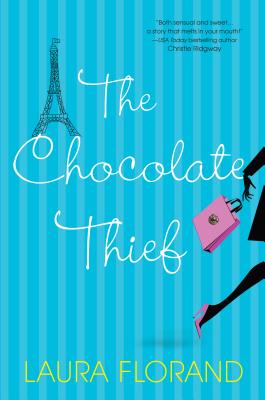
Review: THE CHOCOLATE THIEF by Laura Florand

chocolate thief cover

Cade Corey, the heir apparent to the multi-billion dollar business Corey Chocolate, dreams of creating the type of gourmet specialty chocolates that are made by the master chocolatiers of Paris. In particular, she's obsessed with the best chocolatier (according to the mayor and several influential critics), Sylvain Marquis. Unfortunately, Sylvain thinks her business offer is a joke and sneers her out of his salon. So Cade decides if she can't buy what she wants, she'll just have to steal it.

As you should all know by now, I loooooooved The Chocolate Touch. I didn't think The Chocolate Thief was as good as The Chocolate Touch, but it was still enjoyable.

Going into this book, I was worried it would be formulaic. Like with Glenna Finley—my mom has about 20 of her novels, all of which I read over the course of one summer, and if you've read one you've pretty much read them all. Fortunately for all of us, Laura Florand isn't Glenna Finley. While The Chocolate Thief does have the same charming, fairy tale atmosphere as The Chocolate Touch, it doesn't follow a specific fairy tale (or if it does it's not one I'm not familiar with), and both Sylvain and Cade are quite different, personality-wise, from Jaime and Dom. While The Chocolate Touch was an emotional story about trust and perception and healing, The Chocolate Thief is a coming-of-age journey. Cade has to come to terms with what she wants versus what's expected of her.

The Paris of The Chocolate Thief is also different from the one in The Chocolate Touch—more the Paris of the American tourist. Unlike Jolie, Cade hasn't spent months in the city by the time the story starts, and she has to adjust her romantic expectations of Paris with the reality, particularly the quirks of French culture that don't make sense to Americans. For example, why is it so difficult to get a French person to give out information? It's like pulling teeth sometimes. I just don't understand. Also: French showers are crazy.

My favorite culture clash scene was when Cade went to a cafe with a food blogger and tried to order milk and they refused to serve it to her, even though a cafe would obviously have milk. When she asks the food blogger (flogger?) why, he's just like, "I think he probably just doesn't want to give Americans ideas. You people are always asking for milk in cafés, and once you let someone get away with something like that, who knows where it might lead?" INDEED. I also liked Sylvain's point of view and how he's just like, "What is wrong with you Americans? Don't you know how to eat/drink/live/etc?" Apparently not.

Anyway. The main reason I didn't like The Chocolate Thief as much as The Chocolate Touch was because the story wasn't quite as strong. Things don't start to get really interesting until Cade decides to break into Sylvain's salon, and by then we're nearly halfway through the book! (Although I did love that everyone's reaction on hearing about this chocolate thief was, "That's hot," instead of total outrage. And that she turned into a chocolate Robin Hood.) The novel was also a tad episodic, with more of a chick lit sensibility than a romantic one. Chick lit is not my favorite genre.

Stilllllll, The Chocolate Thief is delightful and definitely a book you want to read if you're a foodie. Also, the sex scenes were really hot (just in case you wanted to know) and the ending with Sylvain's family party was really sweet. I highly recommend Florand's books!


Discus this post with me on Twitter, FaceBook, Google+ or in the comments below.
Sunday, March 30, 2014

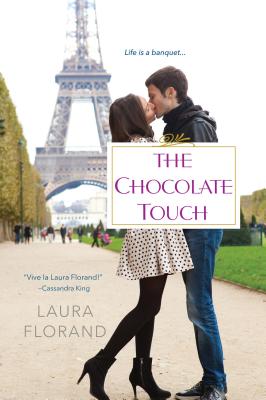
Review: THE CHOCOLATE TOUCH by Laura Florand

the chocolate touch cover

Dominique Richard is one of the best Master Chocolatiers in Paris (or actually THE best, if you ask him). But despite his beautiful salon lined with rose wallpaper and his charming staff, Dom's past makes him feel like a monster who will never deserve love. Then a mysterious woman starts showing up in his salon every day, a woman who clearly enjoys his chocolate. A lot. Dom wonders if she'll enjoy more of him than just his chocolate—IF YOU KNOW WHAT I MEAN—but will Dom and his lady of mystery ever be able to overcome their pasts in order to create a future together?

The Chocolate Touch is not the type of book I would normally pick up, but when Kelly from Reading With Analysis recommended it over Twitter, I decided give it a try. I'm so glad I did because I loooooooooved this novel. LOVED IT! I stayed up past five in the morning reading it. It's a very emotional (I love emotional books, they give my parched desert of a soul all the feels), romantic novel that captures both the tourist and local sides of Paris. And, the chocolate element isn't a gimmick to get you to buy the book—it's a major part of the story and plays a big role in all the characters' lives.

The Chocolate Touch is pretty obviously based off of the Beauty and the Beast fairy tale, although not slavishly so, just enough to give some framework to the story and characters. Dom was raised in the banlieue, one of the suburbs of Paris that's actually more like a ghetto. His home life was so miserable he started working at an abattoir, or slaughterhouse, as a teenager. Apparently slaughterhouses frequently employ child slave labor, even in so-called first world countries like the US and France, something I was completely ignorant of. With no family support and only a middle-school education, Dom worked his way out of the banlieue to become a Meilleur Ouvrier de France and the one of the most famous chocolatiers in the world.

So Dom is an admirable character. But he's also THE SWEETEST YOU GUYS. Like the scenes where he's working up the courage to talk to Jaime are too adorable and funny and awkward. And he quotes poetry! *swoooon* I'm a sucker for romance novels where poetry is quoted. J'adorée.

The other characters are really great, too. Jaime has a whole mess of secrets she takes her time telling Dom, including who she actually is. Normally the dragging out of this information would annoy me, but with Jaime I understood why she wouldn't want to talk about it. I also loved the minor characters: Jaime's curmudgeonly grandfather, so-called perfect sister, and Dom's sous-chocolatière, Célie, who reminded me of Colette from Ratatouille.

As The Chocolate Touch went on, I started to worry the story would descend into one of those annoying misunderstanding plots. You know, the ones where if the hero and heroine just had a freaking conversation all their problems would be solved. There are some big misunderstandings between Dom and Jaime, but they were more than just skin deep. They had to do with Dom and Jaime's perception of themselves, as well cultural and language issues.

Speaking of the culture and language, the city of the Paris and the French language were beautifully incorporated into the story. I absolutely loved how when Dom first hears Jaime's name he thinks she's saying, "J'aime," I love. TOO ADORABLE YOU GUYS. And Paris is perfectly captured in this novel, especially the street life and romance of the city. I also really liked the ending, even if it wasn't the traditional HEA, because I thought that was a very French way to settle into a serious relationship. If they had run off and gotten married, I wouldn't have found it very realistic, especially in the context of the book.

J'en raffolée, adorée, et aimée this book to itty bitty pieces. I want just want to cuddle it, it's such a delightful read. I definitely recommended this book to anyone who's a romantic, foodie, francophile, or all of the above. And now if you'll excuse me, I'm off to Paris to find my own chocolatier (I wish).


Discus this post with me on Twitter, FaceBook, Google+ or in the comments below.
Sunday, November 3, 2013

J'ai Deux Amours, Neither of Which Are These Books


I really need to stop reading every book that crosses my path and has the word "Paris" in the title, you guys.

In the past two weeks I've read two books that both take place in pre-War Paris (well, kinda). And they both kind of sucked, although for different reasons.

bones of paris cover

The first was The Bones of Paris by Laurie R. King. It follows the walking and talking of Harris Stuyvesant, an itinerant PI who's trying to find a missing girl in what the author continually reminds us is 1929 Paris. As in, "But hey, it's 1929 Paris!" The "twist" is that Harris slept with Pip before she disappeared. Quelle horreur, y'all. As he follows Pip's trail, he discovers artists are assholes, and one of them might have killed Pip.

Now, I didn't pick up this book JUST because it had the word Paris in the title; I was also intrigued because I like King's Mary Russell and Sherlock Holmes novels (or I did, until I DNF'd two in a row because they were boring me). Based on those books I expected better research and writing from King than I got in this novel. It was almost as if she got all her research from watching Midnight in Paris and Discovery Channel documentaries: everything from the historical characters to the bone-filled catacombs has been treaded and retreaded a thousand times. Even the scenes with Sylvia Beach (whom Harris naturally knows, because I'm sure she loved hanging out with aging private investigators) are so obviously based on those two photographs of her that are in every documentary about Paris in the 1920s. And naturally Picasso, Salvador Dalí, F. Scott Fitgerald, and Cole Porter all have to be mentioned. Come on, I can get this stuff from any book. I had to roll my eyes when it turned out Harris knew Ernest Hemingway, and Kiki de Montparnasse (but never even heard of the guy Kiki lived with for nearly a decade, Man Ray? Makes no sense).

The lack of original and unexpected story lines wouldn't have bothered me too much if King actually brought the city and society of Paris to life, but she didn't. There was a whole lot of tell and not show going on—some passages read distinctly guidebook-y—and while King might have been going for a crime noir type novel, the tone of the writing was too light to pull it off. I was also a little bothered by the way some of the surrealists, like Man Ray and Lee Miller, were portrayed. But to be fair, that's probably because of my background in art history.

In the end The Bones of Paris just wasn't interesting enough to hold my attention. I only read it for a few days, but it felt like WEEKS because nothing happened and I didn't give a damn if Harris found Pip or not. Or if he threw himself into the Seine, for that matter. The Bones of Paris was a DNF, and I think it will also be the last book I read by King.


midnight train to paris cover

The second novel, Midnight Train to Paris, was originally released as a Kindle serial and is about a journalist whose twin sister is kidnapped from a train along with two other women. Just so happens, 75 years earlier three other women were taken from the same train, at the same place and time. Coincidence?! Soon Jillian is traveling to Switzerland with her ex-luvarh (who used to be in the CIA but is now a private super-investigator) to find her sister and solve both kidnappings, in both time periods!

There is sooo much going on in this book: corrupt US senators, child abuse, murrrrder, betrayal, scandal (sounds like an ABC lineup), art, time travel, train mysteries, castles hidden in the mountains, insanity... LORDY LORDY. I have to admit that I enjoyed it a lot more than The Bones of Paris because there was stuff going on (what a concept), even though the writing was much worse. For example, the author took care to describe, in detail, the driving routes her characters took to get from one place to another, yet didn't bother to research average weather patterns in the Alps or what people wear when it's cold outside. Hint: it's generally more than a pencil skirt, heels, and a light jacket.

Nevertheless, I was having fun reading it. But about halfway through Midnight Train to Paris, I started to lose interest because there was a complete lack of plausibility. Not just the inconsistencies in clothing, but in the characters' behavior and the numerous incredible coincidences. I didn't care if Jillian and her cookie cutter hero got together, if her sister would survive, or even if Jill would. When the hero and heroine traveled back in time and the heroine started getting messages across space-time from her sister, it got to be too much. I skimmed to the end, so trust me when I say it only gets more ridiculous as the book goes on. Also, there are only about three pages that actually take place in Paris. You can definitely feel free to skip this pulpy mess of a novel.


Have you read any good books set in Paris lately?


Discus this post with me on Twitter, FaceBook, Google+ or in the comments below.
Saturday, February 4, 2012

Movie Review: MIDNIGHT IN PARIS


Originally released: 2011
Starring: Owen Wilson, Rachel McAdams, Kathy Bates, Adrien Brody, Marion Cotillard, Carla Bruni, Michael Sheen
Directed by: Woody Allen
Based on: Woody Allen's imaginings of the phrase "midnight in Paris."

Gil, a Hollywood writer and aspiring novelist, is in Paris with his fiancée. He loves the romance of Paris, but she cares more about following around her pedantic friends. From the start, it's pretty clear this relationship isn't going to go anywhere. Then, after trying to make his way to his hotel one night, Gil is pulled into an olde-timey car by a bunch of partiers and swept away to 1920s Paris, an era he idolizes.

car full of drunks

It would be more than fair to call Midnight In Paris a love letter to the City of Lights, but the portrait it paints is distinctly America's love affair with Paris, not Paris as she actually is. The places Gil visits with his fiancée are in every travel guide you can pick up, and the people he meets on his forays to the past are predominantly American ex-pats: Cole Porter, Josephine Baker, Ernest Hemingway, Man Ray, Gertrude Stein. This isn't a film that strives to shine a new light on Paris; it buffets you with every romantic stereotype of the city there is.

The best parts of Midnight In Paris are, of course, the scenes that take place in the 1920s. Gil goes to the coolest parties, meets everyone worth knowing, and gets writing advice from his idols. Who wouldn't love this scenario?

Of all the characters he meets in 1920s Paris, Ernest Hemingway was my absolute favorite. I literally gasped when he first appeared on-screen. Ernest freaking Hemingway! I hate the guy's books and even I would geek out if I got to drink with him. Plus, he gets the best lines in the entire film (Gertrude Stein gets a few good ones in, too), and talks just like you would imagine Hemingway would talk if he was reading one of his own books aloud. It's hilarious.

ernest hemingway

As for the other 1920s characters, like Dalí, Stein, and the Fitzgeralds, their personalities felt watered-down in order to be more palatable and attractive. But I was surprisingly okay with that. This movie is pure fantasy, after all, and doesn't make any claims toward historical (or contemporary, for that matter) accuracy.

There are two connected thematic threads running through Midnight In Paris: one is the fear of death (it IS a Woody Allen movie, after all). Hemingway says, "You'll never be a great writer if you fear dying. Do you?" "Yeah, I do. I would say it's my greatest fear," Gil replies. I would say his fear of FAILURE is more of what's keeping him from taking chances in his writing and his life, but whatever you say, Ernest.

The second theme is one of romanticizing the past. It seems ironic that someone whose greatest fear is death would idolize only dead writers, but it's also appropriate. As I said, Gil is more afraid of failure--of living--than he is of death. The lives of artists in the past is comforting to him because from the perspective of the present, it seems as if they knew more or less what they were doing. But they were just as in the dark and uncertain as we are.

Midnight In Paris is a good movie--it's perfectly paced, hits all the right notes, is gorgeously shot, and Owen Wilson is ideally cast as the lead. It's funny and romantic and whimsical. If you love Paris or literature, you HAVE to see this film.

Quotable Quotes:

Gil: I would like you to read my novel and get your opinion.
Hemingway: I hate it… If it's bad, I'll hate it because I hate bad writing. If it's good, then I'll be envious and hate it even more. You don't want the opinion of another writer.
________________________

Hemingway: If you're a writer, declare yourself the best writer! But you're not as long as I'm around.
________________________

Hemingway: It was a good book because it was an honest book, and that's what war does to men. There's nothing fine and noble about dying in the mud unless you die gracefully, and then it's not only noble but brave. [Makes no sense]
________________________


________________________

Gertrude Stein: The artist's job is not to succumb to despair but to find an antidote for the emptiness of existence. [LOVE this one]
________________________

Gil: You can fool me, but you CANNOT fool Ernest Hemingway! [LOL]

Friday, July 8, 2011

Movie Review: PARIS, JE T'AIME


18 vignettes highlight the different arrondissements (or neighborhoods) and people that make up one of the greatest cities in the world, Paris.

Here's the thing: I love Paris. I hate big cities, but Paris is the one big city I could live in. So when it comes to a movie like this, which is basically a love letter to a city I love, I'm a sure bet.

I'm not going to tell you what all 18 short films were about (for that you can go to wikipedia), but there were definitely some standouts:
  • "Quais de Seine" A young French man strikes up a friendship with a Muslim girl; a very optimistic and sweet film.
  • "Porte de Choisy" A hair product salesman pays a visit to a Chinese-run beauty salon. This film started off strange but ended up very fanciful and fun.
  • "Tour Eiffel" Two mimes fall in love. Why always the mimes??? Seriously.
  • "Faubourg Saint-Denis" A short film starring Natalie Portland, and one of the most visually interesting vignettes in the entire movie. The more I think about this one, the more I'm impressed with it.
  • "14e arrondissement" I liked this one because it reminded me of me! An American woman from Colorado visits Paris and describes in very s l o w French (which is how I speak it) what her visit was like. I just loved this one and it made me want to go back to Paris so badly I actually started crying, because I am a sap.
paris je taime poster

That's just five short films out of eighteen, but actually the majority of them are pretty good. A few are boring, and a few are like watching the drama team in high school (lots of shouting, dramatic statements, slapping, and--on my part--eye rolling), but the vast majority of them are 100% worth seeing.

That being said, when you watch them all in a row it gets to be exhausting. That's 18 different storylines in a two hour period! It felt way to long and even though I was enjoying it, after the first hour I wanted it to end. I'm glad I stuck with it, but personally I wish I had been able to view each short film one at a time over the course of several days.

There's not much to say beyond that other than, if you love Paris, this movie is definitely worth checking out.

paris in july gif I watched this movie as part of Paris In July, a month-long challenge hosted by Book Bath and Thyme for Tea. Check out Book Bath's blog for more details.

Thursday, June 2, 2011

Book Review: THE INVENTION OF HUGO CABRET by Brian Selznick

hugo cabret cover

Hugo Cabret is an orphan living by his wits in a train station in 1930s Paris. His most prized possession is a mostly-broken automaton, which he believes carries a secret message from his father. All he has to do is fix the machine and he will know what to do next. When he starts stealing repair parts from a toy shop, however, Hugo unknowingly sets in motion a revelation of secrets for the toy shop owner and his family.

I first heard about this book from Sandy at You've Gotta Read This, and immediately knew that, yes, I did have to read it. It's like a graphic novel in that it's told with both words and pictures, but this isn't set up as a comic--it's proto-cinematic, the pages surrounded by black as if you're sitting in a theater, and includes not only illustrations, but film stills and photographs. The introduction states, "I want you to picture yourself sitting in the darkness, like the beginning of a movie," and the book is kind of like reading a movie--which sounds very awkward, but totally works.

The story is absolutely charming and sweet, but also intense. In a lot of ways it reminded me of Amelie. It's all about magic and dreams, but in this case the magic comes to the characters through movies and machines such as clocks and wind-up toys. At one point Hugo says machines are always made for a specific purpose, which is why broken machines make him sad--they represent unfulfilled potential. Similarly, unseen movies created by the machine of the camera have lost their purpose to entertain and transport people to another world.

I really liked the inclusion of Georges Méliès into the book, too, mainly because I already knew a little bit about him from a class I took on Cinema and Painting. In film studies, Méliès is kind of a Big Deal. According to Natasha Staller (another Natasha, yay!), Picasso was influenced by Méliès when he created his first Cubist paintings. There was also an exhibit all about Cubism's relationship to early cinema at the Pace Wildenstein Gallery in 2007. If you check out this interview Charlie Rose conducted with the curators and skip to the 19 minute mark, you can get a quick tour of the exhibit and see some clips from Méliès' movies.

This is a great book I highly recommend, especially if you love movies. Even though it doesn't take a long time to read, it has a lot of heart and a tiny, perfect little twist at the end. Loved it!


, ,


Powered by ScribeFire.

Tuesday, April 12, 2011

DEN OF THIEVES by Julia Golding

den of thieves cover

Cat Royal is getting older, and everything around her is changing. People expect her to act like a young woman now, and sexual tensions are starting to arise in some of her formally platonic friendships. Meanwhile, Mr. Sheridan has made a deal to tear down the Theater Royal in order to build a new one, which means Cat is effectively homeless. With all her friends leaving London and her world topsy-turvey, for the first time in her life Cat is finding it difficult to land on her feet. Will she be able to recover her balance in Paris?

This another great Cat Royal book. I really do feel like I want to live in these novels. In this installment, Cat loses all confidence in herself and it's heartbreaking. I think just about everyone has that period of time in their lives (maybe more than one!) when they go from being a child to a teenager, and it seems like all the things you took for granted no longer seem certain--well, that's what happens to Cat in Den of Thieves, and she doesn't even have a lot to take for granted to begin with. Luckily, she's saved by her friends (once again), and travels to Paris, where we're introduced to a whole new set of characters who rule the Parisian underworld.

One thing I was less impressed with in this book was the setting. In the previous two novels, Diamond of Drury Lane and Cat Among the Pigeons, London was so richly evoked that I felt like I was really there. With Paris... not so much. It's really too bad, because I adore Paris and this time period, but the descriptions made it seem generic. Perhaps this was due to the fact that Cat kept saying it was similar to London--really, Cat?? Somehow I seriously doubt that.

However, the blah setting was more than made up for by one of the new characters, Jean-Francois Thiland, King of the Palais Royal Vagabonds. OMG, I heart him so hard!!!! J-F, as he likes to be called, is a Peter Pan-like character who is the "king" of a gang of thieves that claim the neighborhood around the Palais Royal as their territory. And if you're thinking the Palais Royal sounds awfully similar to the Theater Royal, it's not a coincidence--J-F and Cat are similar in more ways than one. J-F is a little sketchy, but also smart and fun and totally charming, and he can dance.... I really hope he shows up in the following books.

What with Cat out of London, we don't see a ton of the usual suspects in this book, not even of the friends who also happen to be in Paris: Pedro, Frank, Lizzie, and Johnny. We certainly don't see as much of Billy Boil, Cat's arch nemesis. Now, I know I said in my review of Cat Among the Pigeons that Billy was my favorite character, but then J-F came along and I just fell in love with him! I started thinking maybe J-F had taken Billy's place as favorite. BUT. Billy shows up in the final scene and it's ahMAYzing; best final scene in a book ever! And Billy is so awesome and he really is my favoritest character again.

I love these books and these characters so much! They're so much fun and I really encourage you all to read them. If you pick up Den of Thieves, don't forget to read the opinion of "The Critics" in the front or J-F's responses to readers' letters in the back, both of which are so freakin' cute I can barely contain myself. Just another example of why I love this series.

Musical Notes

"Ah Ça Ira" was one of the anthems of the French Revolution and appears in the book. Kind of an odd anthem for a revolution, if you ask me, but then I suppose Yankee Doodle Dandy doesn't make much sense, either.


Also, Cat appears in a ballet called La Fille Mal Gardée (loosely translated to "The Young Woman Who Needs Watching--no symbolism there, I'm sure), which was first performed in France in 1789 and is one of the oldest ballets still produced. This clip from the modern Bolshoi company is so charming I just have to include it.


Powered by ScribeFire.

Monday, March 21, 2011

THE SALON by Nick Bertozzi

the salon cover

Georges Braque is a typical starving artist in Paris, hoping to invent a new style of painting. After courting the favor of important avant-garde art collectors Gertrude and Leo Stein, he becomes embroiled in the salon--a group of the Stein's friends (including Pablo Picasso, Guillaume Apollinaire, Erik Satie, and Alice B. Toklas) who drink a special blue absinthe that allows them to enter paintings. Unfortunately, Gauguin's former mistress, Anna, has figured out a way to live in the paintings permanently, which has given her super-human strength; and now she's taking bloody revenge on the artists for being objectified, by ripping their heads off. Leo and Gertrude are certain they'll be next.

sample page

A part of me really loved this graphic novel--and yes, it was the art historian part. As soon as I saw Memory's review of it on Stella Matutina, I knew I had to read it. A good portion of my master's thesis involved the avant-garde in early twentieth-century Paris, including Apollinaire and Picasso, so it was soooo totally up my alley. That being said, the part of me that reads for pure entertainment value was disappointed. The only character with any personality in this novel was Picasso, and his motivations were pretty basic: food and sex. Everyone else seemed fairly interchangeable. The book feels edited down to the point of near-incomprehensibility, but at the same time it takes a looong time to read. The ending was kind of lame, and I didn't feel like I learned much of anything about this time period or the avant-garde.

But like I said, as a person who knows way too much about this shit, I did enjoy it. My favorite part of the novel was, surprisingly, Picasso. As some of you may know, I'm not a fan of Picasso. I think he's an overrated hack, in all honesty, so any book that presents Picasso as a lewd and unoriginal "little man" who fucks chickens (all true--okay, maybe the chicken part isn't) gets my vote. I actually warmed up to Picasso a bit while reading The Salon, just because he was so stupid. I also loved clever Apollinaire, even though he didn't get a lot of scenes, as a dashing bi-sexual playa playa.

Leo and Gertrude's storyline, on the other hand, seemed to go nowhere; nor was Georges Braque very interesting. This is unfortunate, since Braque's the hero of the story and the Steins are the main connection to Anna, the murderous blue woman.

gauguin's spirit of the dead watching
Paul Gauguin. Spirit of the Dead Watching, 1892.

Anna, meanwhile, was very interesting. In the graphic novel, Anna is the girl seen in paintings such Spirit of the Dead Watching--in real life, Gauguin's fourteen-year-old Tahitian wife, Tehura. In The Salon, he takes her to Paris, where they both become addicted to the blue absinthe that allows them to enter paintings. Anna starts to whore herself out for money to buy more of it. She becomes ill with a European disease (let's face it, probably syphilis) and dies, but Gauguin paints new bodies for them and they both become blue people living inside a paradise he painted. Only, Anna now hunts the streets of Paris, tearing the heads off of Gauguin's artist friends and collectors of his work.

This is why I say Anna is taking revenge for her objectification--Gauguin has taken away her humanity, literally regulated her to the status of a painted, sexual object forever. But not powerless--she takes control of Gauguin's blue image, trapping him inside his own painting, and kills those who would presume to possess her (interesting side note: the "spirit of the dead" that Gauguin referred to in the painting of Tehura was occasionally described as a blue spirit with sharp fangs). In that context, I found the conclusion of this sub-plot and how the salon winds up putting an end to Anna particularly interesting.

How does this all tie into Braque and Picasso and the invention of Cubism? It's not made explicit in the novel, but I think the move to non-representational art in the story is connected to Anna, in that little pieces of inanimate objects cannot come out of their paintings to attack you, as apparently Tahitian women can. Cubism is hailed in the novel as a new way of seeing whole objects in two-dimensional space, but it's also a safer representational method for the characters in the book--and crueler for their subjects. Picasso takes Gauguin's objectification of Anna to a new level and fucks her into oblivion until she's nothing more than disorganized facial features, an object unable to bite back, finally and truly relegated to two-dimensional space.

As for the art of the graphic novel itself, the panels mostly have two colors, and the change in them are used to signal different storylines. The colors are kind of garish, but it fits into the style of painting that was going on at the time (as you can see in Spirit of the Dead Watching, above). There are also some very elegant and well-done visual quotations from other famous paintings that made me smile, but didn't really play any significant role in the plot. If I were to be honest, I found myself missing the manga style of illustration, but c'est la vie.

The Salon has a lot of great ideas and is definitely worth checking out if you're interested in this time period. I do wish, however, that the characters were more fully realized and that the narrative flowed more smoothly. It has the feeling of an artistic vision that was restrained; I don't know if that's true or not, but I do have affection for this graphic novel and definitely appreciate what Nick Bertozzi was trying to create.

Musical Notes: Kathleen Edwards, "I Make the Dough, You Get the Glory"

Thursday, April 16, 2009

Paris Nocturne


"I have two loves: going to Paris and Paris." --Josephine Baker

Eyes open in the middle of the night, staring at the blurry image of the moon through the window. A sudden desire for walking along wide boulevards, exploring the Louvre, and taking hours to eat dinner grips me. Memories of sitting in a park sketching, the posh neighborhoods around the Arc de Triomphe, the winding medieval streets around the Paris Opéra, the not-so-posh outer arrondissements, eating pain au chocolate in the morning and being trapped in a McDonald's in the afternoon; drinking wine because it's cheaper than water, walking along the river at night amidst pink streetlights and embracing lovers. I could see the Louvre again, the Jacquemart-André along Boulevard Haussman, and the Musée d'Orsay. I could rummage through the mysterious book stores full of non-romance novels, finally settling on a French translation of Agatha Christie because I'm desperate. Perhaps while using my now-very-rusty French to ask for a good restaurant, I'll meet a man open to a flirtation... or several.

If I got up now, at 4 AM, and packed my bag, I could be there in 15 hours, possibly. Do I have the money for a plane ticket? A hotel room? Can I take the time off?

No. I close my eyes, trying to ignore the moonlight and the wanderlust and voice in my head telling me to go. It's not wanderlust so much as a desire for a single place, for the only city I've ever loved. A desire mostly put to rest, except apparently for unusual waking moments at 4 AM.


Powered by ScribeFire.


----------------
Now playing: Sarah Vaughan - April In Paris
via FoxyTunes

LinkWithin

Related Posts Plugin for WordPress, Blogger...