Showing posts with label booking through thursday. Show all posts

Sunday, February 28, 2010

TSS--Insufficient Reading

The Sunday Salon.com

From Booking Through Thursday:

I’ve seen this quotation in several places lately. It’s from Sven Birkerts’ ‘The Gutenberg Elegies: The Fate of Reading in an Electronic Age’:

“To read, when one does so of one’s own free will, is to make a volitional statement, to cast a vote; it is to posit an elsewhere and set off toward it. And like any traveling, reading is at once a movement and a comment of sorts about the place one has left. To open a book voluntarily is at some level to remark the insufficiency either of one’s life or one’s orientation toward it.”

To what extent does this describe you?


I know I'm really late with responding to this (as usual), but after considering it, I thought it was worth a post.  Then the post turned into a rant and I decided to make it my Sunday Salon post.

I think a bibliophile's first reaction to the above quote is probably defensive, especially in regards to the "insufficiency" portion.  After all, it's probably been assumed for most of us--at least by some people--that we read because we don't have a life, not because we enjoy it.  Of course that's bull, but it's still annoying. 

However, I don't think that's what Sven Birkerts is talking about at all.  I think he's saying that by opening a book and reading it, voluntarily and purely for our own enjoyment or edification, we're admitting we don't know everything there is to know.  Books open up another viewpoint to a reader (that's what I love about art, by the way--not just books but all art--that it gives you a chance to experience the world from another person's point of view), and by searching out that viewpoint and agreeing to go on the journey of the book with the writer, we're admitting that our own world view and experiences are insufficient for understanding the world or our own lives.  So I actually think that describes most readers to a tee, at least in the general sense.

That being said, I don't agree with the majority of Birkerts' ideas.  Robin from My Two Blessings wrote a great response to this quote where she actually read The Gutenberg Elegies and listed some of his main theses.  I recommend you go to her blog to read the whole thing, but suffice it to say that Birkerts thinks civilization is going the way of Babylon, and it's all because of reading electronically.  Language and historical perspective are all deteriorating because we're hooked on computers.

People who make claims like this strike me as elitist snobs.  Whatever issues you have with reading eBooks, being able to access them online has made learning, academia, and knowledge much more egalitarian.  Why are universities like Princeton and Yale famous?  It's not because they're "better schools" than any place else--a student will learn or not learn whatever they put their mind to no matter where they go.  It's because of their libraries.  Universities are repositories of knowledge because of their libraries, not because of their students or their professors.  The better the library, the better the school.  Now, however, you don't need to attend or teach at the big schools to access their libraries, because you can access them anywhere, online.  The "historical perspective" Birkerts values so highly is in all likelihood a historical pedagogy that he feels is being undermined by broader access to people who haven't jumped through the hoops of higher ed.  As Birkert says in an article in The Atlantic (side note:  isn't that magazine going bankrupt?), "The book is part of a system....  Literature—our great archive of human expression—is deeply contextual and historicized."  Yes, it is, especially when that context is provided by a system that just happens to favor those who are wealthy and of a particular race and gender. 

Furthermore, while I would agree that language is becoming less formalized (English, anyway, I don't know about other languages), that's not a result of the interwebs.  That's been happening since, oh, the eighteenth century???  To go along with our society as a whole becoming less formalized.  I wouldn't say I want to read an entire book in netspeak, but personally I don't have a problem with language changing.  It happens when people are using and engaging with words; get used to it.  Or better yet, celebrate it.  But trying to stop it is like sticking your finger in a dam.

People like Birkerts want to limit reading--he says you should only read "real" books.  I'm sure he also thinks you should only read "real" literature--as defined by him, of course.  It's just all rather restrictive, isn't it?  Yes, eBooks have their issues and problems, but they are just a format--it's what the format allows for that Birkerts objects to.  Although I'm sure he knows a lot about reading, I don't think crying the sky is falling because of Kindle is helping readers at all.

Powered by ScribeFire.

Thursday, January 7, 2010

Books--I Do Not Haz Them

lolcat


From Booking Through Thursday:

What books did you get for Christmas (or whichever holiday you may have celebrated last month)?


Do you usually ask for books on gift-giving occasions or do you prefer to buy them yourself?


I didn't get any books for Christmas, believe it or not--well, unless you count the lovely Sharon Shinn book I got in the Book Blogger Holiday Swap, of course, which I certainly do! But from my friends and family? No. I got a gift card to Barnes & Noble (too bad B&N's website sucks with the gift cards, eh?), but no books.

Actually, though, I rarely ask for books. First of all, I usually buy the books I really want right away. I don't want to wait for a book, omg no. And as I have a whole slew of them, it's really impossible for anyone in the family--including my mom, who swaps books with me all the time--to know what I have and don't have, or what I've read. So the smart bet is generally on just giving me a gift card.

Not that I don't appreciated book gifts, of course!

Friday, November 20, 2009

Instant classic: Harry Potter

harry potter

From Booking Through Thursday:

Do you think any current author is of the same caliber as Dickens, Austen, Bronte, or any of the classic authors? If so, who, and why do you think so? If not, why not? What books from this era might be read 100 years from now?

Interesting question.  Of course, to answer it we have to ask ourselves what the classic authors have that make their work survives.  Unfortunately, the answer to that question is really too variable to be able to predict--if we knew how classic novels came about, everyone would be writing and publishing them.  I'm sure there are a lot of writers of the same caliber, but are they likely to be remembered as a classic author in the future?  Sadly, the chances aren't great.  You don't just need talent at writing, but the right subject matter, the right place and time to be published, certain people to read and review your books to convince other people they're great, and so on and so forth. 

If I had to pick one work that people will be familiar with a hundred years from now, however, I would say the Harry Potter series by JK Rowling.  Not only has it sold millions of copies, is known world-wide, and has been translated in various media, but I believe it has two major elements that will keep it popular in the style of Sherlock Holmes and Lord of the Rings:
  1. It has its own, completely convincing reality that bleeds into our own world.  People still visit Sherlock Holmes' house on Baker Street.  There are people who actually speak Elvish, which kind of blows my mind (I have enough trouble learning living languages, never mind made-up ones).  Will people still be visiting Platform 9 3/4 in the future?  I'm going to say hell to the yeah.
  2. There's a timelessness about it that makes it appealing across generations.  Although Harry Potter certainly wasn't written inside a bubble (a lot of the storyline with Voldemort seemed reminiscent of WWII to me), it's not so bogged down in current events or pop culture that it will lose its relevance over time.  Quite the opposite, in fact--there's a universiality to the wizarding world and the story of Harry that allows the books to appeal to people from many different cultures, and of many different ages, right now.  I'm sure that will hold true in the future.

How about you--what books do you see people reading 100 years from now?


Powered by ScribeFire.

Thursday, June 11, 2009

Five people bought it at the university bookstore...

From Booking Through Thursday:

There are certain types of books that I more or less assume all readers read. (Novels, for example.)

But then there are books that only YOU read. Instructional manuals for fly-fishing. How-to books for spinning yarn. How to cook the perfect souffle. Rebuilding car engines in three easy steps. Dog training for dummies. Rewiring your house without electrocuting yourself. Tips on how to build a NASCAR course in your backyard. Stuff like that.

What niche books do YOU read?


I suppose the obvious answer in my case would be art history books.  I don't really read them for "fun," since I consider them a part of my job or schoolwork, but that doesn't mean I don't care if they're good or not, either.  Here are some of my favorites:

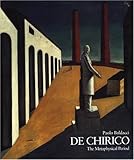
De Chirico by Paolo Baldacci

This book talks about every detail of Giorgio de Chirico's art and life during his Metaphysical Period (about 1912-17).  It is exhaustively researched, illustrated out the wazoo, and well-written.  The only quibble I have is that there's no index.  But I guess you can't have everything.


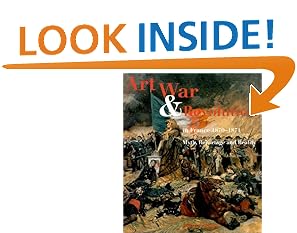
Art, War, & Revolution in France, 1870-1871:  Myth, Reportage, & Reality by John Milner

This is a fascinating book that tells story of l'annĂ©e terrible through the journals and letters of artists and writers.  The Terrible Year was one in which France lost the Franco-Prussian War; its major cities--especially Paris--were sieged by the Prussians; and when the government finally surrendered, there was the Commune, which was essentially a civil war.  About 30,000 people died in the Paris Commune alone.  This book is full of interesting, grotesque, and heartbreaking illustrations; as well as personal and political drama.  Really a great read.


Since I can already tell your eyes are glazing over, let's change the subject a bit, shall we?  I also love to read books about ancient beliefs or religious practices, as long as they're not too dry or archaeological (that cuts the field down by a whole bunch).  Arcana Mundi by Georg Luck looks like it's going to be as dry as a smoker's cough (are those dry?), but it's surprisingly readable and full of interesting things.  It's essentially a compendium of primary writings of the Greeks and Romans on witchcraft, daemonology (the topic of daemons alone is enough to make me start geeking out), divination, oracles, and the like, which Luck has gathered together and translated.  These aren't the Greek and Roman writers you expect to encounter!  These are men who are struggling with ideas of theology and morals, and who are as challenged by their faith as many are today.  Really fascinating, and a great read.


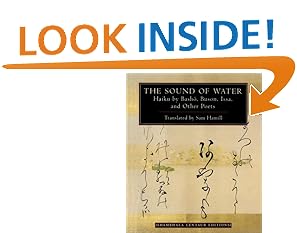
Finally, I love haiku.  I think it might be the only form of poetry I can stand for an extended period.  I also love to buy haiku books like this one that are illustrated.  That way I get poetry and images in one--can't be that.


Powered by ScribeFire.

Thursday, June 4, 2009

Books That Stick With You

From Booking Through Thursday:

This can be a quick one. Don’t take too long to think about it.
Fifteen books you’ve read that will always stick with you. First
fifteen you can recall in no more than 15 minutes.

Ready, set, go!

  1. Jane Eyre by Charlotte Bronte
  2. The Ivy Tree by Mary Stewart
  3. The Age of Innocence by Edith Wharton
  4. Bunnicula by James Howe
  5. The Night Train to Memphis by Elizabeth Peters
  6. The Ghost Wore Grey by Bruce Coville
  7. The Vampire Diaries by L. J. Smith
  8. Pride & Prejudice by Jane Austen (I can't believe it took me that long to think of it)
  9. Stranger in my Arms by Lisa Kleypas (first romance novel ever ^_^)
  10. Here Comes the Sun by Emily Loring
  11. The Alligator Song by Robert Tallon
  12. Archangel by Sharon Shinn
  13. In Cold Blood by Truman Capote
Annnnd my time's up. 


Powered by ScribeFire.

Thursday, May 21, 2009

The Eternal Sunshine of Spotless Reader's Mind?


Shop Indie Bookstores


From Booking Through Thursday:

What book would you love to be able to read again for the first time?

This seems like a very odd question to me, for some reason. Kind of like a virginity question--if you could get your virginity back, would you? Uh, no.

Why is reading a great book for the first time so special? I admit that I do have a strong attachment to the first books I read by certain authors; but since I so rarely re-read books (TBR Monster, om nom nom nom), I don't know... it just seems odd.

Nevertheless, I suppose there are some books I wouldn't mind reading over again as if it was the first time ("It feels like the first time, it feels like the very first time..." okay, I'll stop now). Jane Eyre, for example, so I could be re-surprised by the twist (actually, it took me about three re-reads to remember the twist; I always get so caught up in the story I forget it, and then I'm like, "Oh my god he has--wait, I remember that from last time" ^_^).


Shop Indie Bookstores


Another book I wouldn't mind re-virginizing myself for is Night Train to Memphis by Elizabeth Peters. I mentioned before that I have a fondness for the first book I read by certain authors--well, this was my first Peters book; and even though it's not her best book, it's my favorite because it got me totally hooked on her novels. I've read this book way too many times. This is also one of those books where I can clearly remember the time and place I was at when I was reading it, so it would be interesting to see if I would have the same reaction to it now as I did when I was, hmmm... thirteen-ish?


Shop Indie Bookstores

Some other books I wouldn't mind re-reading with fresh eyes would be The Ivy Tree by Mary Stewart (another book I've read way too many times) and The Secret Circle by L. J. Smith. But in my experience, a really good book gets better the more you read it--you notice new things about the characters and get more involved in the story. So I'm not sure that would erase a memory of reading a book, even if I could.


Powered by ScribeFire.

Thursday, May 14, 2009

The TBR Monster--OM NOM NOM NOM

From Booking Through Thursday:

Book Gluttony! Are your eyes bigger than your book belly? Do you have a
habit of buying up books far quicker than you could possibly read them?
Have you had to curb your book buying habits until you can catch up
with yourself? Or are you a controlled buyer, only purchasing books
when you have run out of things to read?

Well, let me put it this way.  This:


is my TBR "pile."  Except for the language textbooks, atlas, and three other books on the top shelf at the far left, I haven't read any of these.  And I keep borrowing more from the library.  So yes, I am a book glutton, and I have created a monster.

MOAR OM NOM NOM NOM NOM!


Powered by ScribeFire.

Saturday, May 9, 2009

Graphic Novels

From Booking Through Thursday:

Last Saturday (May 2nd) was Free Comic Book Day! In celebration of comics and graphic novels, some suggestions:

  • Do you read graphic novels/comics? Why do/don’t you enjoy them?
  • How would you describe the difference between “graphic novel” and “comic”? Is there a difference at all?
  • Say you have a friend who’s never encountered graphic novels. Recommend some titles you consider landmark/”canonical”.


Part of the reason I'm actually posting this is because I want to know if anyone who reads graphic novels on a regular basis has some recommendations.  As some of you might know, I only just started reading manga (vampire manga, to be specific), and I heart it.  So far I've only read Midnight Secretary (goody-two shoes secretary finds out her boss is a wampire, then they start sleeping together; now they're getting married and she still calls him "Mr. President."  Ugh!  How can he stand her?) and Vampire Knight (high school + a bunch of vampires + love triangle = fun).  They were both huge time sucker-uppers.  I think I might have actually found something more trashy than romance novels.

Next I planned on reading Vampire Hunter D.  This one is harder to find online, though, and it's not at the library.  Which means I'd probably have to buy it--that's not going to happen.


So I decided to try a regular comic book, instead.  Mainly I chose this one because it has a story based on a Sax Rohmer tale (this is an author I'm starting to become obsessed with).  It also has adapted stories from Alexandre Dumas, Arthur Conan Doyle, and Damon Runyon (he grew up in my hometown, so I have to read stuff by him).  So far the art isn't that great, which is a major let-down; but I do like the story, which is about a mysterious Ancient Egyptian Queen named "Hatasu" and her architect/advisor... wait for it... Sen-Mut.  Hmmmmm.


Powered by ScribeFire.

Sunday, May 3, 2009

Traumatic Reading

Au Booking Through Thursday:

Which is worse?

Finding a book you love and then hating everything else you try by that author, or

Reading a completely disappointing book by an author that you love?


The latter has happened to me too many times to count.  As I've mentioned before, I can hate just about anything if I'm in the right mood.  It also seems like some authors have split personalities, so sometimes they write books just up my alley, and other times they write books that to me seem laaaaaaame.


Sherrilyn Kenyon is one of those writers to me.  Actually, I can pretty much predict whether or not I'll like her latest book based on whether or not I liked the previous one:  it seems to alternate fairly regularly.  Since I'm used to it by now, I'm not really that upset when I don't like one of her books.


Then there are other authors that I usually just adore.  When they publish something I dislike, I get really upset.  For example, Sandy Hingston (who of course isn't writing anymore because she actually wrote books I liked) was one of my favorite writers.  But she wrote this one book, The Lover's Charm, that I absolutely hated.  So I wrote a scathing review of it on Amazon.  Then, one time I met her and I was like, "I've loved every single book you've ever written, you're my favorite writer eva!" etc. etc.; and she said, "Wasn't there one book of mine you didn't like?"  <----GASP!  How did she know???

So that's another example of why one should think about censoring one's remarks when writing book reviews.


Anyway, I think being disappointed by an author you love is worse than finding a book I love by someone and hating all of their other stuff.  You have more invested in an author you love--you get excited about their new release, you bump all the books in your TBR pile so you can read their new release next, etc.  You go out of your way to read their books, so if the book is disappointing, it's more of a let-down. 

I haven't had all that many authors write just one book that I liked, except perhaps Neil Gaiman.  I loved Neverwhere, but when I went to read Stardust, I hated it.  That was a bit of a let-down, I have to admit, especially since Stardust seemed like it would be right up my alley.  I have to admit I haven't picked up a Neil Gaiman novel since; whereas I did continue to buy books by Sandy Hingston--and Sherrilyn Kenyon--after their books disappointed me.  So maybe I'm actually wrong and finding a book I love, then hating everything else by that author, is more traumatic for me.  I just block those instances out of my mind and try to move on.


Powered by ScribeFire.

Monday, April 27, 2009

Symbol or Fraud

A painting is a symbol for the universe. Inside it,
each piece relates to the other. Each piece is only answerable to the
rest of that little world. So, probably in the total universe, there is
that kind of total harmony, but we get only little tastes of it.

~Corita Kent

The Chasseur in the Forest by Caspar David Friedrich

From Booking Through Thursday:

My husband is not an avid reader, and he used to get very frustrated in college when teachers would insist discussing symbolism in a literary work when there didn’t seem to him to be any. He felt that writers often just wrote the story for the story’s sake and other people read symbolism into it.

It does seem like modern fiction just “tells the story” without much symbolism. Is symbolism an older literary device, like excessive description, that is not used much any more? Do you think there was as much symbolism as English teachers seemed to think? What are some examples of symbolism from your reading?

First of, your husband isn't an avid reader? How does he live? (LOL--kidding) I definitely believe that writers in the past--and the not-too-distant one, at that--used symbolism deliberately in their novels all the time. That was the style, not just in writing but in the visual arts as well. For example, Caspar David Friedrich is probably the most well-known German Romantic painter. He painted what most people today think of as "pretty landscapes," but his paintings were more than just scenic views. They were full of symbolism, expressing Friedrich's religous, philosophic, and political viewpoints. A Chasseur in the Forest is a painting that's all about the Napoleonic Wars and the expulsion of French troops from Germany. The lone figure is a French dragoon lost in the impenetrable forest, which symbolizes Germany. His ultimate fate (and the fate of the French army), death, is represented by the black crow on the tree stump--a symbol often used by Friedrich for death. Other symbols Friedrich regularly employed were colors to represent God or theological ideas, ships to represent human souls, and ruined churches to represent death (Friedrich was kind of obsessed with the whole death thing).


Mademoiselle Lange as Danae by Anne-Louis Girodet

Friedrich wasn't the only artist to use symbolism in his work, and symbols weren't used to only represent religious concepts. When the newly-married courtesan Mademoiselle Lange didn't like the portrait Girodet painted of her, he replaced it and hung a painting of her as Danae in the Paris Salon, instead. Danae is a mythological figure often used in allegorical paintings depicting courtesans, because Jupiter lured her into making love to him by appearing in the form of a shower of gold coins (don't ask me how that works, it's just the story). In this painting, Girodet was not just implying that Mlle. Lange was a prostitute, selling herself for the gold owned by her rich (and old) husband, but that she was cuckolding him (see the huge cock on the left staring at Mlle Lange's genitals?) with a young and handsome actor--you can see his portrait in the Bacchanalian head underneath Danae's seat, with gold coins stuck in his eyes. There are loads of other symbols in this painting, all of which were immediately apparent to the Parisian public, and all of which were completely insulting to Mlle Lange, her husband, and her luvah.

How could all these symbols, which seem relatively obscure to us today, be readily apparent to people at the time? Because viewers in the 19th century were trained to read the symbols in painting, just as I'm sure they were trained to recognize them in literature. Now, I have been known to say that art historians make stuff up, I admit; but by that I mean that some of our educated speculation is backed up by less proof than other theories. I don't know much about literary theory, but I imagine it's the same way. English teachers don't just pull this stuff out of their ass; they rely on things like letters, contemporary criticism, rough drafts, and so on to give them clues as to what the writer intended when he or she wrote the work. Sometimes, admittedly, they take this a bit farther than hard, irrefutable proof would support; but that's the fun of it. If I wanted to justify my every idea with irrefutable proof, I'd become an archaeologist. Or a police... person.


Most people today, however, are not trained to recognize symbols (unless they're part of a completely anachronistic profession like me :P). That doesn't mean that modern literature still doesn't use symbols--Animal Farm is obviously not just a story about animals that live on a farm, and The Great Gatsby isn't so much a novel with a traditional story as it is an allegory or modern American myth. Both books are full of symbols, like the T. J. Eckleburg billboard that symbolizes the eyes of God looking into Tom's soul.

However, the proliferation of symbolism in literature--and really all the arts--is only a fraction of what it used to be. Why? Because we no longer view the world in a symbolic way. We don't see spirituality in nature as Ralph Waldo Emmerson did, God in the power of Niaga Falls as Thomas Cole did, or think witchcraft causes bad dreams. Our world today is one of realities (so-called) and science and facts, not of symbols, signs, and mystery; and neither, for the most part, is our literature. Perhaps it's anachronistic to force people to continue thinking in those terms when they study art or literature, but that is the way the people who created those works understood the world they lived in.


Powered by ScribeFire.

Friday, April 3, 2009

Library Love


From Booking Through Thursday:

I saw that National Library week is coming up in April, and that led
to some questions. How often do you use your public library and how do
you use it? Has the coffeehouse/bookstore replaced the library? Did you
go to the library as a child? Do you have any particular memories of
the library? Do you like sleek, modern, active libraries or the older,
darker, quiet, cozy libraries?

Our public library has actually just been completely remodeled. It is huge now, has a lot of computer terminals, and an art gallery. I am super-excited about it.

I love libraries. Free books??? Oh hell yeah. I seriously doubt that in the current economy (not to mention the fact that a lot of brick and mortar stores are closing now because of online sales and digital books) bookstores serve any threat whatsoever to libraries, especially as library collections become more digitized via Google Scholar. Libraries are really much more adaptable to the new technology because their purpose is to provide books and materials to the public in a simple, accessible, and free format. I think as bookstores start closing, libraries will take their place as meeting and hang-out places. Two of the public libraries in our public system already have full cafes, three have mini-coffee bars (basically a huge thermos of coffee or hot water), and even our university library has a coffee bar and bakery.

In a world of constantly shifting cultural touchstones, it's comforting to know that libraries are here for the duration.


Powered by ScribeFire.

Monday, March 30, 2009

So Bad It's Good

From Booking Through Thursday:

What’s the best ‘worst’ book you’ve ever read — the one you like despite some negative reviews or features?


Hollywood Kids is the only Jackie Collins book I've ever read, and it is trashy trashy trashy. But oh so fun. I'm not entirely sure why I picked it up--probably it was one of those bored-out-of-my-mind grocery store purchases--and in all honesty I don't recall the plot very clearly. I do remember it starts off with a bang and traces the lives of the young, rich, and beautiful in Hollywood's most glamorous settings. There are tons of plotlines going on (which naturally somehow tie together at the end), sex, mobsters, psycho killers, drugs, anorexia, classy hookers, star-crossed lovers, shootings... basically all the standard elements of pulp fiction. This book was pure trash, but it was thoroughly enjoyable trash that I couldn't put down. I loved it.


Powered by ScribeFire.

Friday, March 6, 2009

The Best Books Remain Unread

A question from Booking Through Thursday:


We've all seen the lists, we've all thought, "I should really read that someday," but for all of us, there are still books on "The List" that we haven't actually gotten around to reading. Even though we know they're fabulous. Even though we know that we'll like them. Or that we'll learn from them. Or just that they're supposed to be worthy. We just … haven't gotten around to them yet.


What's the best book that YOU haven't read yet?


I suppose everyone has books they feel they should read, for whatever reason; but there are always newer, funner books out there to read, so they never get to it. In all honesty, I usually don't feel the pressure to read a certain book… except for these books:


Byron, Don Juan

I bought this book at Barnes & Noble… one of my more foolish purchases. I had just read a great romance novel (Lord of Scoundrels by Loretta Chase) where this book played a major role, and I read a snippet and it seemed funny. Haha, not so much. Now I feel like I have to read the thing. Uhg.


Tanith Lee, Faces Under Water

Do you have a book lying around that you always take on vacation, thinking to yourself, "Surely, deprived of any other form of entertainment and absolutely desperate from boredom, I will read this novel"? But then you never read it because you do somehow manage to find something else to do (stare out the window) or read—the newspaper, for example. Or the map.


This book has accompanied me all over the US and Europe. No joke. It's been to Venice twice; it should have its own passport. I didn't take it on our last vacation, though, because I finally admitted to myself that I'm simply not going to start reading it on vacation.


It's not a bad book. The author, Tanith Lee, is a great science fiction writer that I've read several times before and really liked. My favorite book of hers is The Silver Metal Lover. I did manage to start this book, and it was actually pretty good. It's about a guy in a Venice-like setting who finds a dead body in the canal. I just had no idea what was going on, and I could tell it was going to be one of those books where I would have no idea what was going on most of the time. *sigh* I don't know, maybe it's just too smart for me.


I really need to read this book. Someday.


J.R.R. Tolkien, The Lord of the Rings

I know so many people who have read this series and loved it—my mother and little brother, just to start off with. I really should try to read it again. I did try once a few years ago, but the last thing I need in my life is a sixty-page treatise on hobbits. Where are the swords? Where's Viggo Mortensen? Hobbits are not sexy. Anyway, I got bored and said, "Nope, not going to go there," but there are times when I think I might be missing something.

Wednesday, March 4, 2009

Bookish Survey

Book Corner Wednesday | buckeyegirl31's Xanga Site - Weblog

What can I say... I really, really like books. I can't stop talking about them. So I love pointless quizes about what I love about books! Buckeyegirl31 pointed me to Booking Through Thursday (which, from what I've seen so far, looks like a really great website for you bibliophiles) and their book survey.

Hardcover? Or paperback?

Paperbacks are cheaper and much easier to carry around, so I prefer paperbacks. That being said, if I really like a book, I'll generally spend the money to re-buy it in hardcover.


Illustrations? Or just text?

Ha. Illustrations are way too distracting for me. When a book has illustrations, I spend most of my time staring at them and not reading. So I suppose I would prefer a book without illustrations… unless it's an art history book we're talking about, then I want as many illustrations as humanly possible.


First editions? Or you don't care?

This kind of thing isn't really on my radar, although I do really love old books. But I can look at them in a library. lol ;-)


Signed by the author? Or not?

Oooh, I love getting books signed by authors! It doesn't happen very often because, you know, I live in the middle of nowheres; but talking to writers is fun.

LinkWithin

Related Posts Plugin for WordPress, Blogger...