Showing posts with label adaptation. Show all posts

Friday, February 20, 2015

Review: THE SECRET OF PEMBROOKE PARK by Julie Klassen

pembrooke park

I received a copy of this book via Netgalley for the purposes of this review.

After a bad investment, the Fosters find themselves looking to downsize with a small home in the country. But they can't find a property that's both affordable and large enough for the entire family, until a lawyer appears offering them the lease of a large estate called Pembrooke Park ("With two o's"), for an amount they can't refuse. Yet questions surround the property, such as: Who is leasing it to them? Why was it abandoned twenty years ago? And are the rumors of murder and hidden treasure true?

I decided to read The Secret of Pembrooke Park for several reasons: one, I know a few people who love Julie Klassen's books, and I've been meaning to try them for a while. And two, it was pitched to me as inspired by Northanger Abbey. Because of that, I feel like The Secret of Pembrooke Park invites comparisons to Northanger Abbey; unfortunately it doesn't fare very favorably in that comparison. If you're looking for something fun and romantic along the lines of Northanger, you're going to be disappointed. Unfortunately, if you're looking for something along the lines of a traditional Gothic romance with Pembrooke, I feel like you're also going to be disappointed.

Although there are definitely parts of The Secret of Pembrooke Park that feel very Northanger Abbey-ish–specifically William Chapman, the handsome and charming (though of course not as charming as Henry Tilney; that would be impossible) local curate–The Secret of Pembrooke Park is fundamentally different in execution and tone from Northanger Abbey for the very fact that it takes itself about 200% more seriously than Northanger Abbey does. Northanger Abbey was a parody of the Gothic genre; Pembrooke Park is not. There's very little humor or self-awareness of how the story operates as a Gothic novel in these pages. There's a lot of Gothic-y stuff going on, definitely, but none of it really comes together. Just a few plot elements off the top of my head:


  • Creepy doll house with decapitated dolls lying around. Good start, but the doll thing is quickly abandoned and forgotten about.
  • Missing portrait of the mistress of the house.
  • Hidden treasure.
  • Pool of blood found on the night the family abandoned the mansion.
  • Secret room.
  • Stolen brooches?
  • Long-lost Pembrookes returning.
  • Unknown figure in a hooded green cloak wandering about. Is it the ghost of Clive Pembrooke?! Is Clive Pembrooke the guy who owned the house before the Fosters moved in, or was that the other Pembrooke everyone keeps talking about? And why do we care about that guy? Confusing.
  • Random journal entries mailed to Abigail for no apparent reason.
  • Coded messages.
  • A grumpy caretaker who clearly knows more than he's admitting.
  • A lazy and suspicious manservant.
  • A slutty sister bringing shame to the family name.
  • Lost heiresses.
  • Missing family bible.


It's a lot to take in. I wouldn't have minded if it was all to a purpose, but it felt more like Klassen was making it up as she went along, throwing a bunch "spooky" stuff out there in the hopes it would stick, without considering how to make the most of the strongest elements. Catherine's suspicion of General Tilney when she first arrived at Northanger Abbey was more chilling than all of the stuff in this book combined, and she made all of it up in her own head!

As for the love story, I was not into it. It's kind of hard to feel invested in a relationship arc when there are three men chasing after the heroine and, as far as I can tell, they are interchangeable to her. It was impossible to tell what Abigail's feelings for the guys were, beyond "a flutter of attraction." Whenever any of them came on to her, she just kind of stood there and passively accepted what they did to her, no matter who it was. I would have liked for her to demonstrate some feeling or personal preference, by perhaps throwing herself at William, but she never did. It was very frustrating.

In fact, as the book went on I grew more and more annoyed with Abigail in general. We're TOLD she's practical and knows her own mind, but her behavior doesn't really bear that out. Actually, her behavior doesn't bear much of anything out–I've encountered ghosts in literature with more personality. She's devoid of any goals or personal motivation, and feelings...? Hard to say. By the time I finished The Secret of Pembrooke Park, I found myself convinced a cup of weak tea would have been as interesting a heroine as Abigail.

I will say Klassen's writing style is charming, and that was enough to keep me engaged for the first half of the book. But no writing style is enough to make me overlook the last twenty percent of The Secret of Pembrooke Park, where instead of letting the numerous plot points that went nowhere just hang there, each and every single one is laboriously explained through an endless series of expositional monologues. I'd rather be left to wonder–and that's another frustrating thing about The Secret of Pembrooke Park. There are moments when a genuine mystery or something of interest pops up (William snooping on his tour of the house, for example), but these elements are either immediately revealed as harmless (William was just curious) or dropped in favor of something else. Klassen shines when writing about everyday society–balls, going to church, Abigail's sister's behavior in London–but when it comes to building a sense of mystery, not so much.

Basically, I enjoyed the first part of The Secret of Pembrooke Park, but by the end I was more than a little annoyed. If you would like to give the book a try yourself, however, there's a tour-wide giveaway! Three lucky winners will receive one trade paperback or eBook copy of The Secret of Pembrooke Park, and one grand prize winner will receive one copy of all eight of Julie’s novels: Lady of Milkweed Manor, The Apothecary's Daughter, The Silent Governess, The Girl in the Gatehouse, The Maid of Fairbourne Hall, The Tutor’s Daughter, The Dancing Master, and The Secret of Pembrooke Park, one DVD of Northanger Abbey (2007 [love this production]) and a Jane Austen Action Figure.

secret of pembrooke park tour prizes


To enter the giveaway contest, simply leave a comment on any or all of the blog stops on The Secret of Pembrooke Park Blog Tour starting February 16, 2015 through 11:59 pm PT, March 9, 2015. Winners will be drawn at random from all of the comments and announced on Julie Klassen’s website on March 16, 2015. Winners have until March 22, 2015 to claim their prize. The giveaway contest is open to residents of the US, UK, and Canada. Digital books will be sent through Amazon or Barnes & Noble. Good luck to all!

And here's a list of the other blog stops. I'm sure most of these readers liked The Secret of Pembrooke Park better than I did, so don't hesitate to check out their reviews if you'd like some second opinions:


Thanks to Laurel Ann and Bethany House for inviting me to be part of the blog tour!


Discus this post with me on Twitter, FaceBook, Google+ or in the comments below.

Sunday, December 9, 2012

Sunday Salon: It Was All a Dream

dorothy wakes up

At the end of The Wizard of Oz movie, Dorothy wakes up in her bedroom to find that the world of Oz was just a dream. Her subconscious substituted the characters and events from the real world to create a much more colorful fantasy world, but that's all it is--a fantasy.

I hate this ending. It's a total let-down. So I was quite happy to find out that the book the movie was based on, The Wonderful Wizard of Oz by L. Frank Baum (my review at PGP), doesn't have it. Dorothy does travel back to Kansas, but the land of Oz is just as "real" as Kansas (especially to Dorothy). And that isn't the only adaptation I've come across that does this: in The Nutcracker ballet, Clara wakes up on Christmas morning to find her journey to a castle with an enchanted prince was nothing but a dream. Depressing! Does this happen in the story Nutcracker and Mouse King by ETA Hoffman? Nope! Instead, Clara winds up traveling back to the prince's castle at the end (review here).

Obviously these are only two examples, but I have to wonder why the film and stage adaptions of these fantasy novels went that route. "Ooops, it was just a dream," is a TERRIBLE ENDING. Terrible! Personally I think it would make more sense for the world to remain a reality in the context of the story; but by saying it was just a dream, the adaptations kind of render what just happened irrelevant. It's not as if they didn't have an already-good ending at their disposal, yet they went out of their way to set the story firmly back in "reality."

One of my theories for this is that movies and plays are more "real" than books, in a physical sense. Everything that happens in a book happens in the reader's mind--which is one of the reasons two people can have such different experiences reading the same book. But movies and plays happen in real time and are experiences usually shared with a group of people in a theater. The objects on stage and in the movie take up actual space, and the characters are brought to life by real people. Maybe as a result, people who tell stories through plays and movies are more concerned with reality and making their movies "realistic." That still doesn't quite fit, though, because there are plenty of fantasy films that never reference reality of any sort.

Maybe it's because both Clara and Dorothy begin their stories in the "real" world, travel through a fantasy world, and then return to their normal lives, thus creating a permeable reality. Tchaikovsky and The Wizard Of Oz's studio didn't want to encourage escapist fantasies, which--fair enough. That's some dangerous stuff right there.

Can you think of any other book adaptations that turn a fantasy or adventure into a dream that didn't "really" happen? Why would anyone do that? Why?!


Thursday, February 2, 2012

Discussion: THE FLIGHT OF GEMMA HARDY by Margot Livesey

flight of gemma hardy cover

Today I'm discussing The Flight of Gemma Hardy by Margot Livesey with Colette from A Buckeye Girl Reads. This is part two. To read part one, please head over to Colette's blog, then come back! :)


Did you notice that whenever someone drove Gemma around, they braked for small animals?

Tasha: Yes. This book was filled so many random details. Maybe it's a symbol of something, but if so, I don't know what.

Colette: You are right, they always did break for small animals. I'm sure it was a metaphor for something. However when I read I don't look for metaphors, so when used in books they are always lost on me unless it's super obvious. There were a lot of random details in this book, and I'm sure they all were connected in some way that we are missing.

Tasha: I do read for metaphors and symbolism, and if the details represented anything, I think it was an unwillingness on Livesey's part to kill her "darlings." Perhaps she added extraneous detail because she wanted the novel to sound "Victorian" and didn't understand that the detail was there to make a point? I did like her writing style, but this book needed a lot more work and a heartless editor.


Birds are mentioned a lot throughout the book, what do you think they were trying to symbolize?

Colette: At first I thought the bird thing was there just to connect us to the original story of Jane Eyre. Now, though I'm thinking that it could have been a metaphor for how much Gemma changes... and the different birds mentioned show her changing from someone with little confidence to someone who is sure of herself. I thought birds were an odd hobby for a young girl to have in the era this book was in.

Tasha: I thought the birds were a symbol of Gemma's longing to be independent and an adult. That's probably why she and Sinclair reunited on the plane.


Why did you keep reading?

Tasha: lol Well, when I was in the first part, I was holding out hope the second part would be better, even though you warned me it wasn't. And at first I did really like second part, with the description of the Orkney's; but then it started to feel like it wasn't flowing naturally and things were just happening because they happened in the original Jane Eyre, you know what I mean? By then I wanted to finish it just so I could whinge about it, haha. ;)

Colette: I did love the Orkneys landscape. The descriptions were beautiful. I think you are right, the problem with the second half is that things were happening with the original version, only updated to match the time period of this book.


What did you think of the ending when Gemma goes to Iceland to reconnect with her mother's family?

Colette: I hated the ending. I liked her going to Iceland, but unlike in Jane Eyre, I didn't understand why her family couldn't contact her after her uncle died. Why not hire someone to do it? Why do think they had Gemma be from Iceland instead of England? I couldn't figure that out... except to have it be a reason for her aunt not liking her.

Tasha: The whole Iceland thing did seem pointless. For one, she was doing fine without her family, I didn't get why finding them was such a pressing issue she HAD TO STEAL MONEY FROM HER FRIENDS to go there (again, unlike Jane, Gemma's actions strike one as selfish at best and amoral at worst). For another, that wasn't much of a family; and even if she did find them, who cares? They live in frigging Iceland! This isn't going to make a significant difference to her life. Good luck making international calls, Miss I-don't-know-how-to-use-a-phone.


What did you think of the book overall?

Colette: This is one of those books that when reading reviews on GoodReads on I felt like I read a completely different book then everyone else did. I can't help but wonder if it's because I was expecting a little romance and didn't feel like that part of the book came through very well at all. Do you think that is why we, as romance lovers had such a hard time with this book?

Tasha: I think it's reasonable to expect some romance in a novel that advertises itself as a Jane Eyre adaptation, but the main reason I didn't like it was because of Gemma. Jane Eyre is about a woman who never compromises her ideals to make her life easier, but still gets what she wants. Gemma is like the female version of Meursault from The Stranger. She doesn't have ideals, she's just out to get everything she can for herself... and also the characterization was really weak.

Although Colette and I didn't hate The Flight of Gemma Hardy, it definitely didn't get better as it went on, and the ending was horrible. You'd be better served to spend your time reading or rereading Jane Eyre over this trying-too-hard-but-still-not-getting-it adaptation. We would like to thank the publisher for providing us with copies for review, though!

Tuesday, January 31, 2012

Jane Eyre Approximately

Team Edward  ROCHESTER

There haven't been a lot of Jane Eyre adaptations (thank god) when compared to other classic novels like Pride & Prejudice; but there are a few! Here are some I've personally come across:

jenna starborn cover
Jenna Starborn by Sharon Shinn
Sharon Shinn is one of my favorite authors, and Jane Eyre is one of my favorite books, so you can imagine my excitement when I heard about this novel. If you just read the summary and not the book itself, it might seem like Shinn did a good job of adapting Jane Eyre to a sci-fi setting; but in practice I didn't see what the point of Jenna Starborn was, because it was so similar to the original.

nine coaches waiting cover
Nine Coaches Waiting by Mary Stewart
This is probably one of the best adaptations I've read, although it still falls short of the original. One of the reasons it's good is that Stewart is a neogothic writer, so her writing style is already perfectly suited to an adaptation of Jane Eyre. Another point in her favor is that she definitely puts her own spin on the story and adapts it to a contemporary (at the time) setting.

rebecca cover
Rebecca by Daphne du Maurier
Du Maurier is another neogothic suspense novelist whose style is perfectly suited to putting her own twist on Jane Eyre. Rebecca is more of an "inspired by" than "copied after" adaptation. Like Stewart, du Maurier lets her own characters and setting move the story, not the original Jane Eyre.

Jane cover
Jane by April Lindner (review here)
In this version, Mr. Rochester is a rock star. It's very Jane Eyre-lite, but was enjoyable, if totally ridiculous.

Jane Slayre cover
Jane Slayre by Sherri Browning Erwin
I've seen this book around and have managed to avoid it. I suppose I could be persuaded to try it if someone told me it was good, but I haven't seen any reviews of it.

flight of gemma hardy cover
The Flight of Gemma Hardy by Margot Livesey
This is another novel where I'm not really sure what the point of writing it was. It's very similar to Jane Eyre in the plotting, but with none of the great characters and emotions that come with the original.


Have you read any adaptations of Jane Eyre?


Monday, December 12, 2011

Guest Review: PERSUADE ME by Juliet Archer

persuade me cover

Today we have a guest review from blogger and author Margay Leah Justice. The novel, Persuade Me, is an adaptation of Jane Austen's Persuasion and sounds quite excellent. Welcome, Margay!


I consider myself a romantic at heart. I like to watch romantic comedies, I get sappy at Happily Ever Afters, and I re-read tried and true romances to remind myself that they do exist – if only in the pages of beloved books. So it’s no surprise that I have a special affinity for Jane Austen. I love her stories, her affinity for recording the foibles of humans who dance the dance of love – and the idiosyncrasies of all the secondary players who make the heroes and heroines what they are. My one problem with Miss Austen is that she didn’t write enough stories! I feel like her main six are just a teaser – but oh, what a tease! So, to fill in the empty spaces left behind by what could have been had she written more, I like to read adaptations of her stories.

In my quest to get more of Jane Austen and the wonderful characters and worlds she created, I read just about every adaptation I can get my hands on. Some have been good, some not so much. But there’s a rare few that take my breath away and make me want to read them again. One of those stories is Persuade Me by Juliet Archer.

Persuade Me is a modern retelling of Persuasion and it has just enough quirks to make it original. The main characters, Anna and Rick, met and fell in love in France, but she, on the advice of an old family friend, broke it off, convinced it was a poor match, and then was whisked back to England by a father who can hardly bear the sight of her. Flash forward some years later and Anna has developed into a self-assured woman with a degree in Russian Literature and Rick is a marine biologist living in Australian who is making a splash in the world of literature having written a book with a somewhat provocative title. During his book tour – which inevitably leads him back to England – Rick crosses paths with Anna once again and the adventure begins.

I have to admit that Persuasion is one of my favorite Austen stories, so I was excited to read an adaptation of it. I don’t think it receives the attention Pride and Prejudice does, but it deserves it. This is such a classic story of lost love and second chances, ripe with likable characters and despicable ones and it translates well to modern times. In Ms. Archer’s hands, the story shines, taking on its own relevance and leading the reader by the hand through the story to the inevitable conclusion in such a way that, if one hadn’t read – or was even aware of – the original piece, it wouldn’t matter. They would still be enthralled by this story. Indeed after reading it, one might be encouraged to read the original to see how it compares.

I must admit that, sometimes, I’m hesitant to read adaptations because I’m afraid they won’t measure up to the original, but Persuade Me does not disappoint. It hits all the key points – the love story between Anna and Rick, the influence of the family friend, the despicable natures of Anna’s father and older sister, and the clingy, whiney nature of her younger sister – in the original, but does it in a way that makes it seem fresh. The idea of Rick being a biologist and writer rather than a captain is a stroke of genius. Anna being more self-reliant and not so much under the thumb of her family is a welcome relief. The book tour is a brilliant way to get all of the other key elements together and make it the author’s own. I had so much fun reading this book, I can’t wait to read it again. But first, I want to check out the first book in the Darcy and Friends series, The Importance of Being Emma.

Final verdict: Extremely enjoyable and I would recommend it to any Austen fan and anyone who just loves a darn good story.

A little more about it (from the author’s website):

Boy meets girl, falls in love and asks her to sail round the world with him. Girl loves boy - but listens to The Voice of Reason, an old family friend, and says no…

The words ‘forgive and forget’ are not in Rick Wentworth’s vocabulary. The word ‘regret’ is definitely in Anna Elliot’s.

When they meet again ten years later, he seems indifferent and intent on finding happiness elsewhere. Can she convince him that their lost love is worth a second chance?

Persuade Me, JA’s modern version of Persuasion, will be available in September 2011. In the meantime, you can read the prologue and first chapter here or feast your eyes on a certain Captain Wentworth.

JA says: Just as I felt Knightley needed updating for a 21st-century audience  in The Importance of Being Emma, I’ve given Anne Elliot similar treatment in Persuade Me. My Anna leads her own life and is financially independent of her father, although there’s enough baggage between them to fill an airport carousel! I’d love to know what you think of the extract - email me at juliet@julietarcher.com.

Thank you, Margay! That sounds like a great book.
Margay Leah Justice is the author of
Sloane Wolf, available at museituppublishing.com. You can also find her on FaceBook, Moonlight, Lace and Mayhem, Twitter, MySpace, and the Jane Austen Society Pages.


Sunday, October 23, 2011

Dewey's 24-Hour Readathon Mini-Challenge: READING ZOMBIES

dewey readathon button

By now you're probably all feeling more than a little tired. Maybe the words on the page, they aren't sense-making. The thoughts in your head, they're hard to form. Maybe you feel a bit like a zombie. And you know what that means: time to zombify your books!

zombie Shalvis

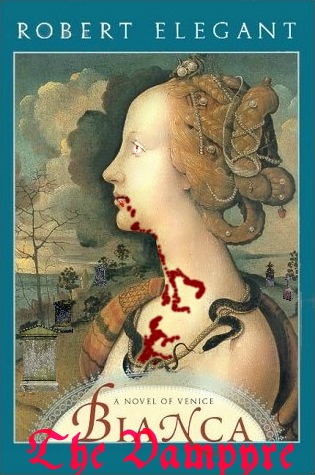
vampire bianca cover

For this challenge, I want you to take a book you've read during the Readathon and "zombify" or "vampirize" it in the style of Pride & Prejudice & Zombies. You can do this by either zombifying the cover, or providing a synopsis of the zombified adaptation. Then post it somewhere online where I can get to it and provide a permalink.

Zombifying Your Book Cover

The two images above are examples of covers I zombified using Picnik, a free online photo editing program. Simply upload a .jpg of the original cover and go to the featured effects tab to find tools to turn your cover into something spooky. Or you can use whatever editing program you prefer!

Adaptation Synopsis

Your second option is to write a summary for your zombie adaptation. Here's an example of an adaptation blurb for Persuasion by Jane Austen that I made up and put in my review of the novel:

Title: Devil's Persuasion

Sir Walter Elliot is really a demon, using the mirrors in his bedroom to travel to and from Hell.  His daughters, half-demon spawn, have succeeded in spreading discontent and misery throughout the county--all except for Anne, who has resisted the influence of her demon side for many years.  But will the demon remain quiet when Capt. Wentworth returns to Somersetshire?  Or will it emerge to wreak vengence on Anne's innocent cousins and anyone else who dares mess with her man??
As you can see, you don't have to use zombies! Any supernatural creature will do.


This mini-challenge will run until the end of the Readathon, hour 24. One person who posts by hour 24 will be chosen randomly by myself and win one of a select number of "zombied" classics from the Book Depository. This contest is open internationally.

To enter the contest: Fill out the form below or go here.

To share with others: Leave your permalink in the comments!

I'm looking forward to seeing what you creative reading zombies come up with. Have fun and good luck!

Thursday, February 17, 2011

The Princess and the Penis by RJ Silver

princess and penis cover

Princess Amalia is the sweetest princess in the world. Not only is she well-behaved and innocent, but she's unfailingly kind and she does good works to help the people of her kingdom. That's why, the king reasons, he has to keep her away from all men--to protect her. But one day a gigantic penis slips under his radar and wriggles its way into Amalia's bed.

When I saw this reviewed at Penelope's Romance Reviews, I was like, "No way is this good." But I downloaded it anyway because it was free. To my surprise, this book really was as good as Penelope said it was.

In this super-quick romance, The Penis goes from being a pain in Amalia's rump and her trying to get rid of it/him, to her thinking maybe it/he's not so bad after all, and finally to her escaping her boring fiance for "naps" with the penis. I never thought I'd root for a disembodied penis, but somehow Silver managed to imbue it/him with a heroic personality. There are also entertaining secondary characters, especially the Aunts.

Things I learned from this novella:
  • Don't try to keep your teenage children from dating penises.
  • Naps are good.
  • Always listen to Penelope.
  • Bigger is better.
With The Princess and the Penis, I was expecting something really... well, tawdry. Instead this is a fractured fairy tale that's definitely silly, but also surprisingly sweet. Add in a great ending and I think this is a short story every romance lover should add to their to-read list!


Powered by ScribeFire.

Thursday, November 11, 2010

Jane by April Lindner

jane cover

What if Mr. Rochester was a rock star?

Indeed.  What if.  What if Jane Eyre was never written?  Where would we go to for our innocent-jeune-fille-makes-rich-grizzled-old-guy-fall-in-love-with-her plots?

Jane is an adaptation of Jane Eyre set in the modern-day, with Mr. Rochester played by been-there-done-that rock star, Nico Rathburn.  Orphan Jane Moore is forced to drop out of Sarah Lawrence after her parents die, and lands a pretty posh job as a nanny to Rathburn's daughter.  I won't summarize the book any further, because if you're at all familiar with Jane Eyre, there's no need.  You already know what happens.

I've read a few adaptations of Jane Eyre that tried to be more original--Jenna Starborn by Sharon Shinn leaps immediately to mind.  That novel was set in the future, and Rochester's secret in the attic was much more creatively adapted to the setting.  Another adaptation that was pretty good was Mary Stewart's Nine Coaches Waiting, which was less literal and had the heroine falling in love with the mysterious son of the grizzled estate owner.  But even though Jenna Starborn and Nine Coaches might have been more clever, as a piece of pure romantic escapism I didn't enjoy them a quarter as much as I enjoyed Jane.

The novel is distilled into highlights of Jane Eyre, like a movie (in fact, I kept thinking it would make a better movie than a book), and moves along pretty quickly.  The estate is still called Thornfield, there's still a nice housekeeper and a suspicious resident of the uppermost floor, and the whole book feels a little anachronistic.  There may be cell phones and the internet, but there are no TVs and the internets is used just a time or two.  Jane herself doesn't feel like a modern teenager, and it's easy to forget that's what she is--especially the teenager part.  She hasn't heard of a major rock star and only listens to classical music?  I don't listen to hip-hop, but I still know who Jay-Z and Timbaland are, you know what I'm saying?  Plus she doesn't believably think or behave like a nineteen-year-old, even a mature one; she's got way too much perspective.

As for Nico Rathburn, he's not a carbon copy of the original Mr. Rochester.  He's much nicer and laid back, and pretty much an all-around good guy.  His "temper" is occasionally mentioned, but I didn't see much evidence of it in the story.  As I wrote in my musical notes for this book, as a musician I imagine he's based off Bruce Springsteen: there's a quote from "Factory" on the dedication page, and Nico's songs, like Springsteen's, have a lot of references to streets and night and the kind of workingman's romanticism you find the Boss' songs.  Personality-wise, however, he's nothing like Springsteen (or any other great musician I've ever heard of), which is probably all for the best--Springsteen's old as dirt, not to mention a pretty weird dude.  Nor could I imagine Nico as a serious drug addict, although that was supposed to be the awful thing in his past that made him all broody.  Again, for the purposes of the book, this was probably for the best: a realistic crazy ex-coke head musician would be a hard sell as a romantic hero (although potentially awesome!).

And don't even get me started on the hit-you-over-the-head nature->sex metaphors.  Lordy lordy.

That being said, I did wildly enjoy this book.  Maybe I'm just a sucker for these types of plots, but I thought Jane and Nico had a lot of chemistry, and the way Nico comes to rely on Jane as not only a girlfriend but a true friend was a little obvious but sweet. 

Jane Eyre is about a woman who becomes independent and socially mobile by remaining true to herself and defying expectations of what a woman should do or be.  Jane is a fairy tale about a girl who marries a prince that just happens to have a crazy woman living in his attic.  It's a quick read--I finished it in a day--that's perfect when you're craving Jane Eyre, but don't have the energy to get mired in the whole 19th-century rigmarole.  And it's way better than any movie adaptation I've seen so far.

So, I definitely recommended this book for Jane Eyre fans.  But if you haven't read Jane Eyre, please don't read Jane first--the original is still soooooo much better.


Powered by ScribeFire.

Thursday, October 14, 2010

The Lost Memoirs of Jane Austen by Syrie James

lost memoirs

The fact that Jane Austen never married apparently bothers a lot of people.  How could a woman who wrote about love so perceptively, who is still making readers fall in love with her characters centuries after the fact, have never loved herself?  But more importantly, if Jane Austen never loved, that means her novels were total fantasy.  We don't want to believe they are fantasy; we want to believe they were based in truth, and our own Mr. Darcy or Elizabeth Bennett (depending on your preferences) really is out there. 

This seems to be the impetus behind several retellings of Austen's life, including the movie Becoming Jane, which I only wish I could forget!  The Lost Memoirs of Jane Austen is very similar to Becoming Jane, unfortunately--not because it proposes that Tom Lefroy was Austen's true lost love, but in the way it completely white-washes Jane Austen herself and presents a very unconvincing and really rather lame romance.

I had high hopes for this book at the beginning.  The language is very Austen-esque and the author has clearly done her research on Jane Austen's life.  It starts off with Jane having to move from her life-long home in Hertfordshire to Bath with her parents.  Then her father dies, so she and her sister and her mother have to move again and rely on the charity of her family.  Eventually, she meets Mr. Ashford, who is a future baronet and very nice, and who likes to read novels!  And not just any novels, but the same girly novels Jane likes reading.  HOW WEIRD.

This book is very odd, because it seems to assume the reader knows nothing about Jane Austen or her books.  To give it an air of "authenticity," there are scholarly footnotes along the lines of, "Jane's near tumble from these steps... may have inspired Louisa Musgrove's treacherous fall from the Cobb in Jane Austen's Persuasion," or, "Jane Austen included an almost identical speech in Mansfield Park...".  No kidding!  I figured that out all on my own, and I haven't even read Mansfield Park.  Also, being passingly familiar with the Regency era through romance novels, I do know what a reticule and landau are and don't need to be told about it in the footnotes, thanks.

Even when not pointing them out with insipid footnoting, there are numerous other references here to Austen's novels.  In fact, there isn't a single character or scene in this book that doesn't come out of an Austen novel.  At one point Austen writes, "Little did I know that I was to meet Mr. Ashford again, and soon, in the most unexpected of circumstances."  I found myself thinking, "This is a Regency novel, honey; there are only so many ways for you two to meet!" (And in case you were wondering, yes, it was at a dinner party.)

I'm not against either faux scholarly footnotes or borrowing scenes and characters straight out of other books.  I really enjoyed the footnotes in Little Vampire Women, for example, and I loved how characters from Pride & Prejudice were used in Lost In Austen.  In both of those cases, however, the authors were very creative in the way they adapted the original writings to a new storyline.  It's not enough to just mash together the characters and plot--you have to put your own spin on it, or else what's the point of anyone reading it?  With Lost Memoirs, the way James referenced other Austen books was so literal there were absolutely zero surprises in the novel.

As for the character of Jane Austen herself, I have the same criticism of her in this book that I did in Becoming Jane:  she's not snarky enough to be Jane Austen.  Austen wasn't only smart, she was sharp as a knife: she could assess a person's character and then cut them to pieces at ten paces.  The only thing that kept her from doing so was a sympathy for human foibles.  "For what do we live, but to make sport for our neighbors, and laugh at them in our turn?" as Mr. Bennett says.  Austen was fascinated by people and what made them tick; she understood their silly eccentricities even as she made fun of them.  I didn't see any of that fascination or wit in this book.  There is one scene where Jane Austen tries to be clever, but it is reheheheally lame.

Finally, the romance is so stupid as to be incidental, and did not help to further the cause of true love, to say the least.  Ashford is very much like Edward from Sense and Sensibility, only more boring (if that is possible).  It's impossible to buy into him as a real character, and the conclusion of their "romance" left me cold.  If that is what we're supposed to believe Austen experienced in the romance department, then she truly did draw on her imagination for her love stories!

As you've probably guessed, I do not recommend this book.  If you don't know a single solitary thing about Jane Austen or her books, you might be surprised by this novel--but then why would you pick this book up?  The cover, however, is very pretty.


Powered by ScribeFire.

LinkWithin

Related Posts Plugin for WordPress, Blogger...