Tuesday, January 11, 2011

Preliminary Thoughts on Apollo's Angels

apollo's angels cover

I've only read the first chapter of Apollo's Angels by Jennifer Homans, but I wanted to record my thoughts on it now because 1. I'm still waiting for it to come in at the library, and who knows how long that will take; and 2. this is a long-butt book and, let's face it, the chances me of me ever reading the whole thing are pretty minimal.

Despite that, however, I want to assure you that this book is really excellent.  It covers the cultural history of ballet from its inception in the courts of the French monarchy, to the modern-day.  The writing style isn't informal--it is a piece of scholarly research--but it is readable and not at all boring.

If you want to get a better idea of what this book is about, Homans appeared on Charlie Rose a couple of weeks ago and gave a great interview where she summarized the origins of ballet and how she traced its history.  If you're at all interested in ballet, I highly recommend you check out the video here:


Now, onto the book.  As I mentioned, it's well-written and as far as I can tell (considering I couldn't read the footnotes in my Kindle sample), well-researched.  Before I picked this book up, the only thing I really knew about ballet was that the Ballet Russe has a long tradition of being tied to the avant-garde--ballerinas from the Ballet Russe appeared onstage during Dada performances, for example.  So I knew ballet had broader cultural ties than just dance, but I had no idea how extensive. 

As Homans touches on in the interview, the history of ballet is carried in the steps and bodies of the dancers themselves, passed on from teacher to student, and has very little in the way of textual history.  This undoubtedly contributes to its being overlooked by historians (including art historians), who are extremely book-centric. 

What I love about this book so far is that it involves two things I'm interested in and recently posted about:  perfection and labyrinths (don't you just love it when there's synchronicity in your reading?).  The title, Apollo's Angels, refers to the ballet dancer's two main goals:  to be the perfect embodiment of dance, as the god Apollo is; and to defy gravity, like an angel (also another perfect spiritual being).  The first known ballets were in the courts of 15th-century French kings, and typically involved the king himself as a performer.  The dances were performed in the round by one or two people, the steps following a set of geometric patterns that may echo the forms of the Chartres labyrinth.

I didn't go into it much in my review of Inception, because it didn't seem pertinent, but dancing is an important part of the labyrinthine myth and practice.  Ariadne uses a dance to make her way through the labyrinth; there's also a dance Trojan warriors performed to commemorate their fallen soldiers that Virgil identified as the dance of the labyrinth.  It was described as a very complex tracing of geometric patterns, which the Trojans performed either on foot or on horseback (fun fact: the ancient word for labyrinth is the same word used for Troy in early manuscripts; Trojan soldiers also had labyrinths painted onto their shields). 

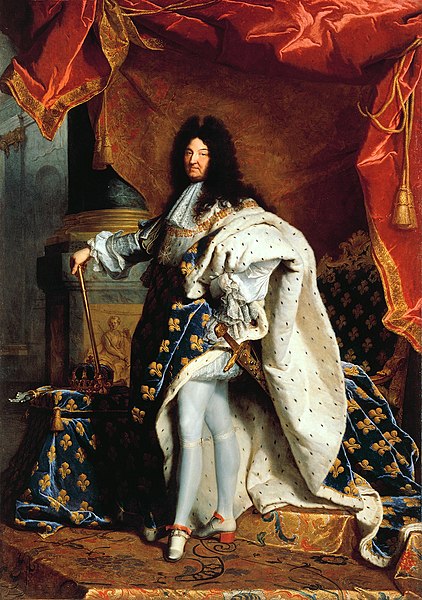
For the French kings, meanwhile, labyrinths are in some way connected with legitimacy--I'm not sure exactly how.  Here's what I do know: one, every French Gothic cathedral that has or had a labyrinth was the site of the crowing of a French monarch, starting with Clovis I who was baptized at Rheims.  Two, at least one French monarch recorded in his diary that Ariadne's golden thread passed on to him the right to rule.  And three, when the Church started to campaign for the removal of the "pagan" labyrinths in the fourteenth century, the kings of France did their best to support their continued use.  Apollo's Angels suggests that with the intermarriage of the French monarchy and Italian nobility, they began adopting the labyrinthine dance as a symbol of their rulership and abandoned the cathedral labyrinths as being too conspicuous and problematic.  Eventually ballet became the symbol of the whole court, but most especially of the king; Louis XIV often depicted himself in ballet pose in official portraits and participated in a night-long ballet after his coronation, at the end of which he danced as Apollo.

Anyway, whatever random connections one teases out of it, this is a really good, interesting book.  If you have any interest at all in the subject, I mos def recommend it.


Powered by ScribeFire.

Sunday, January 9, 2011

The Hourglass Door by Lisa Mangum

door cover

Setting: Some town in California (?). I think.

Stereotypes:  Sexy Italians are sexy. Why? See beginning of sentence.

Major like:  The connection with Leonardo da Vinci was awesome and took me completely by surprise.

Major dislike:  Too long.

Musical notes:  "You'll Be Coming Down" and "Living In the Future" by Bruce Springsteen


Review

Abby is starting her senior year with a pleasant but righteously boring boyfriend, one bestie and one frenemy, and the perfectly understandable desire to get away from all of them.  Then what should happen but her school's production of Much Ado About Nothing is interrupted by a handsome foreign exchange student from Italy named Dante.  Did I mention Abby's middle name is Beatrice?  By the laws of all literary allusions, these two have got to get together!  But what is up with Dante and his other Italian friends, Zo, V, Tony, and Leo?  And why does Dante keep insisting he's dangerous to Abby?

The main problem I had with this book was that it was just way too long.  Someone needed to heartlessly edit this down to about half its length, especially in the beginning.  Many of the scenes felt repetitive (especially the painful boyfriend scenes), and the majority of them didn't have anything to do with the central plot.  What does Much Ado About Nothing have to do with the plot of this book?  Not much.  Do I need to know, in detail, the questions on Emery College's application?  Yes, it's the awesomest college application in the history of the world; but no, I don't need to know about it.  And because the "love triangle" is so needlessly drawn-out, by the time I got a third of the way through the book I felt no chemistry between the characters and didn't care one way or the other if they got together.

There are a lot of interesting ideas to do with music, time, art, and literature floating through this novel, which is great.  Only problem:  the book isn't about music or art or theater or any of that stuff.  Instead of making the novel more interesting, all these ideas detract from the narrative tension of the story.  There are too many distracting things going on for really no good purpose.

I will say the book improved in the second half, when we finally learned what the plot was all about.  I loved the connection to Leonardo's inventions and was happy the author didn't go with a super-obvious Dante Alighieri connection.  But I still wasn't sure exactly what was going on, even to the end, and this was very frustrating.  At very least the author could make me think I knew what was going on, but no.  The "explanation" at the end was ridiculous and didn't explain anything.

The reason for this lack of concrete elucidation obviously has a reason, for hark! I see there's another book in this series.  Well, sorry, but all my patience was wasted with this one.  If enough time passes that I forget how frustrating reading this one was, I might pick it up, but right now... not so much.

Friday, January 7, 2011

Schnauzer Saturday

I love the weekly memes where people post cute pictures of their cats (Michelle at True Book Addict, Lenore at Presenting Lenore, and James at Book Chic).  But I don't have a cat!  I do, however, have a schnauzer (actually, she's my mom's schnauzer).  ANYway, since I have know a schnauzer, I thought to myself, why not do a schnauzer Saturday?

me and pearl

This is me and Pearl, our schnauzer, who really behaves more like a cat.  Schnauzers are the cutest dogs ever!

i heart schnauzers


Powered by ScribeFire.

Thursday, January 6, 2011

The Metropolis Case by Matthew Gallaway

met case jacket

Settings:  Pittsburgh, 1960s-1970s; New York City, 1960s-2002; Paris, 1840s-1870s; Vienna, 1860s; Munich, 1865

Stereotypes:  Women can't have a career and/or follow their dreams and have children (or even meaningful relationships); quitting your job is the only way to escape the existential malaise of modern life; casual sex and drug use is totally normal; school sucks.

Major likes:
  I think Gallaway has a good writing style; I really enjoyed the historic sections.

Major dislikes:  Incest; too many "stories" going on; there is really no plot.

Musical notes:  "Firework," by Katy Perry.  The line about a plastic bag is actually in the book!


Review

Tristan and Isolde is this really great opera about love and death, which all the characters in the book either sing in or see, and then they all either love or die.  Coincidence???

This novel is very difficult to summarize because there are a billion different characters (actually just four main ones--JUST. Haha!), and for three of them we're told their entire life story.  You're got Martin and Maria, who both grow up in 1970s Pittsburgh and then move to NYC; Anna, who's an operatic diva; and this Lucien character, who sings in the first production of Tristan and Isolde.  Like sand through an hourglass, these are the days of their lives.

This was a very difficult book to get into, mainly because it's way too jumpy.  Gallaway is a good writer, but every time he switched from one character's story to another's--which was every 5 pages--I was jerked out of the story.  And when I say story, I actually use that word very loosely, because this book has no plot.  All the characters are connected, but we get no clue as to how until about 150 pages in.  Even knowing how they are connected, their stories don't feel interconnected except in the most distant way because they still spend almost no time together to speak of.

My two favorite "lives" were Maria and Lucien, mainly because I can sympathize with really hating school.  I also really liked how Maria and Lucien's stories show the importance of parental support in the developing of a child's artistic talent--artistic geniuses are often presented as simply being born with talent, but there's usually a parent behind that talent who made sacrifices to support it.  As soon as Maria moved to New York City, however, I felt like she became a caricature.  We got a bunch of details about her sex life, yet next to zero info on how she must have busted her ass to be successful in her career; that was awesome (feel free to read that sarcastically).  It's nice to know that whatever a woman accomplishes in her life, she's always just a walking vagina.

As I read this book, I began to wonder what Gallaway's purpose in writing it was.  It definitely wasn't to entertain, because in all honesty it's not entertaining.  And I don't think it was to teach us anything about opera or music, because despite the blurb on the cover, Tristan and Isolde, and music in general, has very little to do with the entire book.  At first I thought he wanted to write a truly transformative piece of art wherein one would find the "opus metaphysicum of all art," as Nietzsche said about Tristan and Isolde (according to Wikipedia); however, upon further thought I decided Gallaway wanted to write something that would mark "the end of all romanticism," which is how Richard Strauss characterized T&I in his more forgiving moments.  If that's the case I would have to say Gallaway succeeded to a certain extent. 

This book is very unromantic.  There is an argument against the existence of God, and the characters live an Albert Camus-esque existence in which moral behavior falls to the impulses of the individual, which are primarily indulged.  Like Meursault with Marie, the characters may "fall in love," but these relationships seem underpinned by little more than sexual attraction, if that (none of the men Maria sleeps with are described in attractive terms); they don't seem to connect except in the most shallow way.  Even grief is called the grief for oneself, rather than for the person who died--in other words, all human actions and emotions are selfish.  As a result, the character's crying and carrying on when someone breaks up with them or someone dies seemed histrionic rather than genuine, and I had no patience with it.

I think this confusion between an existential nihilism on the part of the author and the desire to write something grand and operatic is the linchpin problem in this novel.  If all we're about is ourselves unto ourselves, then why should I care about death or tragedy?  These characters, I would argue, don't care and don't love, but they don't realize it.  When they try to connect to people or act as if they care, they feel like they're going through the motions; it's only when they're gripped in the malaise of boredom and total apathy that the book has a ring of authenticity.

I don't think I can recommend this novel; but then, I've always been more of the Claude Debussy persuasion (and definitely not nihilistic).  I think I can see what Gallaway was trying to accomplish with the book, but for me he fell short of pulling it together.  I would still like to thank TLC Book Tours for giving me a chance to review this book, though!

tlc booktours

I didn't enjoy this book, but you might. If it sounds interesting to you, enter the giveaway to win a copy from the publisher:

Wednesday, January 5, 2011

Too Many Books In the Kitchen

funny pictures of cats with captions

I got a Kindle for Christmas, and for some reason it's made me mad for downloading cookbooks.  Not only are cookbooks generally a lot cheaper in eBook format, but you can download a sample and see how you like them before you buy them.  This has been really useful for me as I can generally tell when a cookbook's going to be a pain in the ass from the introduction.  Here are a few that I've tried out so far:

cookbooks

I wanted a cookbook of "rustic" (re: simple) French recipes, so I tried out Provençal Cooking: Savoring the Simple Life in France by Mary Ann Caws.  She starts off talking about her perfect retirement in France, which was preceded by her perfect college days at Bryn Mawr, her perfect marriage, and her perfect children who spoke française at home because they're all just so special.  I kind of hate this woman, but I persevere in the belief that the recipes she gives us will in fact be simple and good.  And she is a pretty good writer.

I was also immediately interested in Urban Pantry: Tips and Recipes for a Thrifty, Sustainable, and Seasonal Kitchen by Amy Pennington and Della Chan.  All the things I could possibly want are right there in the title--thrifty, sustainable, and seasonal.  The book also promised tips on how to keep an apartment-style kitchen garden, which would be pretty great.  However, I knew I was going to have issues with this book in the "Stocking the Pantry" section, where the author lists four different types of flours, none of which I had ever heard of.  If I have to keep track of flour, I'll go crazy.  Straight up.  Also, the author calls people who stay at home cooking instead of going out to eat while they're in their 20's lame, which seems counterproductive to the selling of one's cookbook.  Then I skipped ahead to the recipe section and realized I had no interest in cooking any of the meals.  One of them was called "bones and beans."  Wow, yum.  That'll be awesome for our cannibalistic, dystopian future.  Here's a great idea for a pantry meal: spaghetti.  Moving on....

5 Ingredient Fix: Easy, Elegant, and Irresistible Meals by Claire Robinson is another book that I was instantly attracted to.  Five ingredients!  Sounds good to me.  But this book is odd.  Robinson begins the introduction by saying her philosophy centers on good, seasonal ingredients.  Okay!  But the book isn't organized by ingredient or season, so it seems to go against her "philosophy."  Furthermore, I was more than a little annoyed that she includes cocktail recipes in the book.  If I wanted cocktail recipes, I'd pick up a cocktail book, first of all; and second of all, how hard is it to make a cocktail with 5 ingredients?  Really.  Anyway, I'm not sure I want to buy this book and have yet to try any of the recipes.

One of the things I NEED in my life is bread.  Even if I eat A LOT, I don't feel full unless I have bread with a meal.  Bread is surprisingly expensive, however, and I feel I could save money if I made my own bread.  This is why I sampled Kneadlessly Simple: Fabulous, Fuss-Free, No-Knead Breads by Nancy Baggett (awesome name for a baker, btw).  At first I was impressed by the scientific tone of the introduction and the fact that I didn't have to knead bread, which is great because I have arms like noodles.  However, from mixing to the point where you actually put the bread in the oven is a 30+ hour process, which seems mighty long, and this was another book that required me to buy a bunch of different flours.

Then I was tooling around Amazon and spotted Artisan Bread in Five Minutes a Day by Jeff Hertzberg and Zoe Francois.  These bread recipes are also no-knead, can be stored in the fridge or freezer until you're ready to bake them, and truly require only five minutes (not counting rising and baking time, which is about 40 or so minutes).  The sample I downloaded also suggested I would not need to buy any special flour or ingredients unless I wanted to, and no special tools.  Hooray!  This is the book for me!  I bought the whole thing, only to realize they do require special tools and flours that weren't mentioned in the free sample.  Nuts.  However, this still seems like a very hassle-free way to bake bread, so I think I will persevere and give it a try anyway.  Whether it will be worth giving up the convenience of just buying bread from Panera on my way to and from school remains to be seen.


What are your favorite cookbooks?


Powered by ScribeFire.

Tuesday, January 4, 2011

Harlequin Manga

comic cover 1comic cover 2

Setting:  I honestly have no clue.

Stereotypes:
  Where to start?  Women are delicate, illogical, hormonal flowers.  The purpose of a woman's life is to marry and have kids.  A "true" woman is feminine.  Men are emotional idiots, yet bastions of calm and logic.

Major like:  Ummmmm....

Major dislike:  These books make no sense.


Have you ever wondered what a Harlequin romance novel would be like in manga form?  No?  Well, that's probably why these comics are free.

They're also probably free because they're terrible.  Seriously, they're bad.  There's no story flow to speak of, it's impossible to tell what's going on, and they're really sexist.

In The Cinderella Solution, Charlotte's best friend Gabe teases her for being unfeminine and says she will never be able to "find a man" and will die a dried-up and pitiful excuse for a woman.  In response, Charlotte bets him she will be married within a month.  Just as her girlfriends give her a make-over, Charlotte happens to run into a new neighbor, who just HAPPENS to be the most eligible bachelor in the universe!  They go out on a date and Gabe is jealous.  You can see where this is headed.

In Expecting the Boss's Baby, three millionaire bachelors who grew up in the same orphanage decide to do good works.  But then one of them, Michael, discovers his secretary Kate is preggers after they did some horizontal filing one night after work (the clue:  she's acting like a typical hormonal woman when normally she is very calm and logical--like a man).  Michael of course thought it was just a one-night stand, but now he realizes he feels very possessive and Kate must be his even though she keeps screaming at him and ordering him out of her house.  But that's just the hormones talking, y'all!

Both of these mangas are based on actual Harlequin romance novels, and it would be interesting to compare them and see if the wtf-is-this-crap increased or decreased in translation.  If only I had the patience for such a thing!  I know these are only samples of the mangas, but these samples give me absolutely no desire to shell out money for the whole books.  If the plots weren't ridiculous enough, the utter lack of logical flow in the story telling would have warned me off.

And yet... AND YET... I still kinda enjoyed them.  Even though I don't want to pay for them, I wouldn't be adverse to downloading more of the free editions.

Damn you, manga!!!!!  You make even the stupidest things addicting.  Gagh.

headdesk gif


Powered by ScribeFire.

Sunday, January 2, 2011

The Wicked House of Rohan by Anne Stuart

wicked house cover
Setting:  Venice, 1740

Stereotypes:  Venice is a den of sin; bored people are interesting; men are wicked but like their women angelic.

Major likes: The setting; it was a fun, quick read.

Major dislike:  The story had a lot of loose ends.


Oh the Rohans.  How are they wicked--let me count the ways.  One, they propose debauchery.  Two, they hang out with people of Questionable Moral Judgement.  Three, they refuse to be shocked by said debauchery (see reason one).  Four, they have the sexs.

Unemployed, friendless, and broke, Kathleen Strong is desperate enough to accept a shady job as governess to a Mr. Marblethorpe's sister in Venice.  But when she arrives at her new job, she discovers there is no governess job, she's actually the only living virgin in Venice over the age of 12 (because it's VENICE), and the gentleman is part of a club that wants to pop her cherry so they can feel like scandalous degenerates instead of utterly useless wastes of space.

BUT!  Enter the mysterious and lethargic Alastair Rohan, the most degenerate of all the degenerates.  The forming of the club and the deflowering of the virgin were both his ideas.  Now that he's laid eyes on Miss Strong, however, he feels possessive and thus would like to lay more than just eyes on her. 

And they fell in love.

This novella was actually fairly entertaining.  Although we never find out what exactly Kathleen did to piss off her former employers, causing them to strand her in a foreign country; or why Rohan's butler is being controlled by Marblethorpe; or what the source of Rohan's cynical ennui is.  We do at least discover that Alastair and Kathleen have a shared past.  The story clips along at a very brisk pace, and before you know it, it's over! 

As for the setting, it doesn't play that much into the story.  Venice is like the 18th-century version of Las Vegas:  what happens there stays there.  It's pretty over-the-top, actually, but then everything in this novella is.

As a promotion for Stuart's new Rohan series, The Wicked House of Rohan does its job: I am now definitely interested in checking out the first book in the series, Reckless.  Although I am bummed it doesn't take place in Venice.


3/6 books read


Powered by ScribeFire.

LinkWithin

Related Posts Plugin for WordPress, Blogger...