Showing posts with label movies. Show all posts

Wednesday, January 6, 2010

Two Classic Film Reviews

In an effort to obtain new visual stimulation the other night, I hied off to the library and rented two super-old movies:

the italian job

The Italian Job

Almost everyone has seen the remake of this with Mark Wahlberg, but the original, starring a very young Michael Caine (he looks exactly like he does now, by the way, which is weird), is less well-known and at the same time more critically praised. I have to say, though, I thought it kind of sucked. Basically this is a giant commercial for Mini Coopers, which face off against Italian Fiats. Spoiler alert: the Mini Coopers win. I might care if I was British, but since I'm not....

This movie is seriously silly, and the ending is abrupt to say the least. I'd say skip it unless you have an obsession with either Michael Caine or British engineering (side note: I couldn't help but notice the Mini Coopers didn't face off against German cars. I guess Mini Coops crushing BMW would be too unbelievable even for this film).


the maltese falcon

The Maltese Falcon

I know, this is a classic. But I have never seen the whole thing until last week. This movie was pretty good, although it had absolutely zip to do with the Maltese Falcon. Sam Spade (aka Humphrey Bogart, who is the awesome) is a PI in San Francisco along with his partner, Miles Archer. One day a woman who is supposedly really hot (personally I didn't see the appeal AT ALL) comes into the office asking them to follow some sketchy guy who's dating her sister. Archer calls it, then gets shot on the job. Sam isn't too broken up about this. Apparently Sam is a playa playa, since he was sleeping with Miles' wife and I'm guessing sleeps with the mystery woman client as well. Not that that has anything to do with the plot.

My favorite part of the movie was Peter Lorre as Joel Cairo. There's another actor who is the awesome! Why is he not in every movie I watch? He should be. The characters as a whole were wonderful; the plot was ridiculous/borderline indecipherable; and the extended metaphor about the Maltese Falcon being like love (the stuff that dreams are made of, etc. etc.) wasn't really convincing because the idea that Sam Spade is in love with crazy client bitch was laughable. But overall it was a good movie.

Thursday, August 13, 2009

The New Biographical Dictionary of Film

new biographical dictionary of film

I read this book as part of My Friend Amy's "Fifty Books for Our Times" Challenge.  You see, Newsweek recently published a very odd list called Fifty Books for Our Times, and Amy wound up challenging book bloggers to read one book from the list and ask--is this a book for our times?  And why?

The book I chose was the last on the list.  What was Newsweek's justification for picking this tome?

If you don't argue with Thomson on just about every other page, then you aren't paying attention. In a world where film criticism is dying, Thomson make a case for it-eloquently and adamantly.

Film criticism is dying?!  OMG!  Has Newsweek heard of the intranets? 

Based on Newsweek's two sentences, I was expecting this book to be a collection of critical film essays.  But then the book arrived and I was like, "Ohhhh, it's a biographical dictionary."  Art historians use biographical encylopedias (or dictionaries) as resources all the time when trying to trace works by obscure artists.  They usually have place and year of birth/death, major works, and where the artist studied. 

After realizing that, I revised my expectations and thought the book might be very facty and dry.  Not to mention that it's a huge tome--over 1000 pages of entries on actors, actresses, and directors (that's as long as the health care bill!), all listed alphabetically.  I'm sure you're wondering if I read this entire book cover-to-cover.  Uhm, yeah, sure I did.  And while I was at it, I read the dictionary and banged my head against a wall, too.

No, I didn't read the entire book.  But I did read entries on my favorite actors and directors and read some randomly-picked entries.  And what I discovered was that this book isn't dry reading, or a traditional biographical dictionary, but a collection of critical essays organized in an alphabetical format.

Thomson is a great writer, and stylistically his words are beautiful.  That being said, I'm not entirely sure what they mean.  Take, for example, this part of the entry on Luis Buñuel:

And long before Warhol's cinema, the lovers in L'Age d'Or engage us in the epic awkwardness that afflicts love.  Could a film have been banned so long if its power was not in the explosive mixture of style and sense?  Could Buñuel have kept himself from directing for so long if he did not view the medium serenely?  Could assigned projects make so little difference to the art of a director if that art was not within his images?  Could anyone so sustain an inquiry into imaginative life and an unaffected account of externals if he was not a great filmmaker?

Could you get to the freaking point?!?! 

Fortunately, Thomson does have a point, which he gets to eventually, that Buñuel's movies can only be interpreted as a response to bourgeois tradition.  Not exactly a brilliant point, but he did have one.

One of the things that really bothered me about this book is that Thomson is critical of everyone.  I know that as a film critic this is his job (maybe?), but can the guy ever be happy?  With John Cusak, he says, "... when is he going to be emphatically grown up?" and, "Can he look forty?"  With Meryl Streep, he calls her dour and too serious.  The list goes on.  Take, for example, this section from Sir Alfred Hitchcock's entry:  "I do not see how a man so fearful, and so chronically adept at conveying fear, can be judged as a profound artist....  There is an artistic timidity in Hitchcock that, having put the audience through it, must allow them to come to terms with the experience.  But his own personality is withdrawn, cold, insecure, and uncharitable."  He also calls North by Northwest "a brilliant view of a frivolous Cary Grant being sobered by feelings" which an interesting summary.  Yet when he criticizes Hitchcock's later films, mentioning that something like Frenzy is almost a parody of a Hitchcock movie, Thomson never even touches upon the fact that the illness of Hitchcock's beloved wife, Alma, undoubtedly has a strong affect on his later work.

More enjoyably, Thomson fills his entries with gossip, such as Angelica Huston's relationship with Jack Nicholson.  But then he spoils it by asking if she was intimidated by his and her father's, John Huston's, acting skills.  Like what the hell?  I think Thomson might be just a bit of a sexist.

So is this a book for "our times"?  I would say emphatically no.  Thomson's writing style is reminiscent of art criticism of the 1950's--if I had to guess, I would say he's probably a big fan of André Bazin.  His essays sound great, but they don't say much.  Not that they don't say anything, but his criticism isn't precise and clear.  A lot of times it also feels as if he's only criticizing actors or films just to have something interesting to say--Newsweek is definitely right that it's impossible not to mentally argue with him every other page, and the reason for this is because his criticisms do not feel entirely justified, or seem to come out of nowhere.

Furthermore, Thomson's essays on film reflect a very singular viewpoint:  that of a white male.  While reading this book, it feels like the theory and criticism of the 1970's and onward has completely passed Thomson by without much acknowledgement by the latter.

Don't get me wrong--this is probably the most entertaining dictionary ever written.  It's a good book, and one every film buff should definitely take a look at; because if you don't enjoy it, at the very least it'll give you something to think about.  But does it reflect our times, and do I think it will hold influence over future film criticism?  I don't think so.  If this is modern film criticism, then yeah, it is dead.  This book doens't reflect the work of Laura Mulvey's article on visual pleasure, Mary Ann Doane, or Slavoj Žižek, and it doesn't reflect the current theories and practices of film criticism.


Powered by ScribeFire.

Friday, July 24, 2009

Inner Story

From WCFQ:

If you were to write a book someday, what would it be about?
slavoki


Back in the day, I picked up The Artist's Way by Julia Cameron at the library.  Very interesting book, although looking back on it I'm not sure if it helped my creativity any.  Anyway, one of the things in that book that really stuck in my mind (or maybe it was the sequel, Vein of Gold, I can't remember which) was that Cameron had an exercise where you listed your favorite movies.  Then, in the back of the book, there was an index of movies with their dominant themes.  According to Cameron, people are attracted to movies that have themes they tend to think about a lot (DUH); so if you're a writer, you should write about the themes that you find in your favorite films.

So, what is my favorite movie, and what should I write about according to this woman?

thunderheart
Thunderheart

Thunderheart with Val Kilmer is my absolute favorite movie.  It's about a FBI agent who goes to South Dakota to investigate a murder on a reservation.  Coincidentally, the agent is half-Indian (and I'm going to assume he's Oglala Sioux, as well, although I don't think the movie ever says so explicity.  But it might and I just forgot); and despite the fact that the tribe on the reservation is initially wary of the by-the-book "Indian from Washington", he's swiftly accepted due to the influence of an old man who seems to be a sort of shaman for the tribe. 

What I love about this movie is that it makes you (or me, at least) believe that magic actually exists.  I also love the landscape in the movie and the idea that Kilmer's character crosses into another world when he enters the reservation.  Futhermore, I love that almost no one in the movie is what they appear to be--Kilmer looks like your average suit when the movie starts out, but by the end he's done a complete one-eighty and accepted his Sioux heritage.  Many other characters undergo a metamorphosis during the course of the movie, too, as does the landscape.


When I initially read this question--If you wrote a book, what would it be about?--my first instinct was to respond with magic, love, and how people are never what they appear to be at first glance.  Shocking how closely that matches up to Thunderheart's plotline!  The movie doesn't have a love story--not even as a subplot--but there is a theme of loving the land and one's heritage that runs through the film, so I suppose that counts.

What would you write about if you wrote a novel today?  Does it match up with your favorite movie?


Powered by ScribeFire.

Tuesday, July 21, 2009

Spellbound

Spellbound from Eyegate

This week for My Friend Amy's Summer of Hitchcock, we watched Spellbound.  The movie stars a very handsome-looking Gregory Peck and Ingrid Bergman, who has the weirdest hair ever.  It's not even like hair, it's like playdough she just pushes around her head.  She's the only female psychoanalyst at a mental institution in Vermont, and is a tad bit uptight.  But then Mr. Tall Dark and Handsome shows up, and she's like, Rawr!!!  I want me some o' that! 

Unfortunately, Gregory Peck's chacter--who is alternately known as Dr. Anthony Edwardes, John Brown, and John Valentine--is a freakin' psycho.  Or maybe that's fortunate, since Bergman (aka Constance) is a head doc.  It turns out Dr. Edwardes isn't really Dr. Edwardes, but a patient of his with amnesia.  And... Edwardes is dead!  And Peck might have murdered him! 

This movie was surprisingly sexy.  Constance traipses into "Edwardes" room in the middle of his first night at the mental institution (they have their doctors living there? Yay. Sound like a great job.), and she's all like, "I'm here because... of this book?"  And he's all like, "I know why you're here *smirk*," and then they start making out.  There's another scene when they're staying overnight at Dr. Alex Brulov's as a supposedly married couple, and he asks, "Have you ever...?"  And Bergman says, "No, of course not."  Then Peck says (you're probably getting a good idea of why I don't write novels right about now), "Well, I don't remember anything, so as far as I know I've never, either."  Huh.  Thanks for putting that in there, Hitchcock!  Nice to establish both parties are virgins right before... they decide he sleeps on the couch?!?!?  Wat?!

Dr. Brulov and Constance try to crack a head

My favorite character was Dr. Brulov, Constance's mentor.  Pointy facial hair for the win!  I also appreciated the fact that he told Constance she was acting like an idiot.  Finally, a sane character!  He also gets the best lines in the film.  For example, "Vomen make the best psychoanalysts--until they fall in lofe.  Then they make the best patients.  Hohohoho!"  Ahhh, psychoanalyst humor.

The one other really interesting thing about this movie is the dream sequence, which was designed by Salvador Dalí.  This was the first time Surrealism was exposed to a wide, general audience.  If you had never seen a Surrealist painting before, I guess the scene would be pretty shocking.  Personally I was kind of underwhelmed by it.  Dalí basically quotes from his previous paintings and doesn't really use a lot of imagination.  It was a little too quote-y for me.  The eyes, the shadows, the melty wheel... yawn. 

In case you've never seen this movie or need a refresher, here's the dream sequence:


Other than the romance, Dr. Alex, and the dream sequence, this movie was actually pretty boring.  I didn't really like the characters except for Burlov and Peck's yumminess; and the story didn't really grab me at all.  Not to mention that Edwardes'/Brown's/Valentine's psychological breakthrough was way too easy.  This movie was 100x better than The Birds, don't get me wrong; but I still wasn't as involved in it as I was with Psycho or Dial M for Murder.


Powered by ScribeFire.

Friday, July 17, 2009

Take a Chance Challenge: The Birds

the birds poster

I watched the movie and read the short story The Birds (by Daphne du Maurier) for Amy's Summer of Hitchcock; but I decided it also could satisfy the requirements for the tenth part of Jenner's Take a Chance Challenge at Find Your Next Book Here:

take a chance challenge

Movie/Book Comparison
Find a book that you haven't read that has a movie based on it that you haven't seen. Read the book and watch the movie within a few days of each other. Write about your reactions to both the book and the movie and compare the two.

I read the story by Daphne du Maurier first, online.  It was incredibly creepy and atmospheric.  It takes place in post-WWII England, in a small farming villiage.  The main character, Nat, is retired but has two young kids and works on a farm part-time. 

The short story begins with Nat's tiny cottage being attacked by birds in the middle of the night.  The next morning, he goes to the farm to see if anyone else was attacked, but they hear his story with disbelief and incredulity.  However, it soon turns out Nat wasn't the only one who was attacked.  As he hears on the radio, birds gathered and attacked all over the country, perhaps even all over the world. 

As Nat hunkers down with his family in their cottage and services start to disappear, a claustrophobic feeling invades the story.  It's not so much a horror story as it is a struggle for survival against a completely unexpected and unstoppable enemy.  Birds, which no really notices that much in their daily lives, have suddenly become kamikaze terrorists attacking anything human with no concern for their own well-being or safety.  There's also a sense that they're doing this under the control of some higher power, following the tides and grouping together to attack specific places--what that higher power might be is never said.

After reading the story, I had high expectations for the movie, but Hitchcock basically changed everything.  He kept a lot of the arresting visuals in the short story, such as the black cloud of birds rising on the horizon; but instead of post-war England, we find ourselves in 1960's San Francisco, in a... bird store?  Huh.  Basically, Tippi Hedren (aka Melanie) is some sort of hieress, and she spends the first half hour of the movie chasing down this gross lethario named Mitch to a tiny seaside town so she can give him some lovebirds he ordered for his sister's birthday.  Um, one, why; and two, if he ordered the birds for his sister, why didn't he pick them up himself or make sure he was at his apartment when they were delivered?  I mean, that is just incompetent, not to mention a painfully weak opening for a movie.  So the characters have pointless conversations for about an hour and a half (or that's how long it felt), and then finally birds attack, and I'm like, "Yay!  Finally!"

Basically, the movie was full of lulz.  It was way too long, the "plot" was ridiculous, Hedren kept lolling her head about when there were no birds around at all, and the script was just lame.  Even though I had fun with the fake birds, there were hardly any bird attacks in the movie at all until the very end.  Overall, I was pretty disappointed.

summer of hitchcock

Next week on Summer of Hitchcock, we're watching Spellbound.  So start polishing up your Dr. Freud accents, everyone!


Powered by ScribeFire.

Tuesday, June 30, 2009

Rear Window

Rear window poster

I'm pretty sure everyone, even those who haven't seen the film, know the plot to Rear Window: photographer Jeffries (or Jeff) is holed up in his apartment with a broken leg. To pass the time, he watches his neighbors, and one day he starts thinking a man across the way has murdered his wife.

This is one of Alfred Hitchcock's most famous films, and one of his most admired--for good reason. The screenplay is spot-on and the direction is amazing. You know that old adage, show don't tell? Well, ever since cinema first got started, filmmakers have been obsessed with playing to the strengths of the medium and telling--or rather showing--a narrative purely through visual movement. That obsession didn't change with the arrival of talkies; it only became commercially more difficult! Rear Window is able to tell stories about Jeff's neighbors using almost no talking at all, just by showing them going about their business. I think that's part of the reason this movie is such a filmmaker's film.

One of the things I really like about this movie--that no one else has talked about yet, anyway--are the references to marriage and relationships. Both Jeff's editor and nurse (the always-fun Thelma Ritter) mention marriage to him at the beginning of the film. This is to set up for the entrance of committophobe Jeff's gf, Grace Kelly... or Lisa. Whatever (like how many people remember her character's name at the end of the film? I'm just saying). But I also think the idea of relationships is central to the voyeuristic aspect of the movie. The dynamics of relationships are almost impossible to understand unless you're actually in the relationship. Have you ever wondered how two people can possibly stay together; or thought of two people as the perfect couple, only to find out they're cheating on each other?

grace kelly and james stewart

And speaking of, one of the things I've never gotten about this movie is the whole relationship between Jeff and Lisa. Note to Jeff: you have a beautiful, rich woman who is at least fifteen years younger than you are (may actually be more like twenty--yikes!) throwing herself at you. It's not going to get any better than that, buddy. Wake up and smell the roses. And why in the world is Lisa so into him, anyway? o.O I do like how sexually aggressive Grace Kelly is in this movie, though. Go, Grace!!!

Anywho, this is a really good movie. It's the type of film you can watch over and over and not really get bored because you always notice something different. That being said, it's not one of my favorite Hitchcock movies. *ducks* The whole relationship between Lisa and Jeff just bothers my brain. And I spend most of the movie thinking, "Why don't these people close their curtains?" and being more annoyed with the fact that Jeff isn't minding his own biznass than how the guy murdered his wife (which I'm always quite skeptical about). But then I'm from the West where we try to ignore the fact that we have neighbors--if we have them--so maybe that's part of my problem.

But either way, this is a really great, classic, entertaining film that everyone should see.


Next week on My Friend Amy's Summer of Hitchcock, we'll be watching Psycho!


Powered by ScribeFire.

Saturday, June 27, 2009

No Country for Old Men

No country for old men poster

In the open stretches of West Texas, an assassin hunts welder Llewelyn Moss, who is in possession of two million dollars worth of drug money.

This movie overall was very, very good.  I know it came out several years ago, but I only watched it last night with my brother.  Essentially the film is about three men--Llewelyn Moss (played by Josh Brolin, whom I had no idea was even in this movie), the Sheriff Ed Bell (Tommy Lee Jones), and the assassin and sociopathic killer, Anton Chigurh (Javier Bardem).  Moss appears on Chigurh's radar (some place you don't want to be) when he comes across a drug deal gone wrong and steals two million dollars.  A wealthy man involved in the deal hires Chigurh to retrieve the money and kill Moss.  Jones is the aging sheriff of the Texas town Moss lives in.

Anton Chigurh from No country for old men

Beyond being characters in the movie, it's clear that Moss, Chigurh, and Bell are symbols.  Chigurh is the Angel of Death, unstoppable and implacable.  Everyone who "sees" him has to die.  Moss represents the Youth response to death--basically, he thinks he can cheat death.  But Bell, much older and wiser, knows you can't cheat death.  So he simply tries to hide from it.

One thing I absolutely loved about this film was the landscape--it is exactly like the place I grew up in, before they started building suburbs everywhere.  It's endless vistas and far-distant mountains and absolute nothingness, and I love it.  In fact, my favorite movie of all time, Thunderheart, has a similarly invoked landscape and mood to it; and definitely brought a quality of nostalgia to movie, for me at least.

Something I did not like about the movie was that it was way too long.  Once Moss's storyline is concluded, the narrative of the film was pretty much over, and it needed to wrap up and finish.  But instead it goes on for another 40-ish minutes!  I started to get bored.  I know they kept the extra time in because it explains more of the symbolism, but come on.  Like I give a freaking frack about symbolism. 

Besides that, however, the first hour of the movie is a great, tense, cat-and-mouse story where the admirably intelligent and clever Moss tries to outwit the fiendishly dangerous Chigurh.  I would recommend this movie to just about anyone.


Powered by ScribeFire.

Monday, June 22, 2009

Dial M for Murrrrrrder

Dial M for Murder poster

On Sunday, I watched Dial M for Murder as part of My Friend Amy's Summer of Hitchcock.

I've actually seen this movie a few times before, and it's one of my favorite Hitchcock films. It's about a woman who is having an affair with an American mystery writer. Meanwhile, her husband, who is something of a ne'er-do-well, has decided to kill her. He hatches what he thinks is the perfect murder; but of course things happen that put all his carefully constructed plans to ruin.

This is not a mystery--we already know whodunnit before it's even done--but it does have a very Agatha Christie feel to it. I think that's because of the great characters and the claustrophobic feel of the film. Almost the entire movie takes place in the tiny flat that the Wendices call home. The setting can be mainly attributed to the fact that the movie was adapted from a play; but I also think it works to help tell the story and keep the narrative flowing. In the end, the resolution of the story rests on how one can get into the Wendices' flat.

The camera angles in this film are very interesting--there's always objects between the viewer and the actors. I didn't notice this too much until it was pointed out in the special features on the DVD, though. :) The reason was that Hitchcock originally shot this movie in 3-d, so he always shot with a foreground, middleground, and background, to enhance the viewers' sense of depth. Pretty ingenius if you ask me.

There are so many great actors in this film. By far my favorite is Ray Milland's performance as Tony, the homicidal husband. He's completely smarmy, but also weirdly charming. I also like the fact that he doesn't portray Tony as completely unfeeling; you can tell that he's not unaffected by the idea of his wife dying.

The other character I loved was the Inspector. He's smart, and he knows there's something fishy about the situation from the very first. It's so nice that a DI would care enough to follow up on a case even after it's been to trial. ;)

Some of the things I didn't like were that you never truly understand why Grace Kelly (aka Margot) married Tony in the first place. What was she smoking? They don't feel like much of a couple and there absolutely no chemistry between the two. Also, I'm not entirely sure that the Inspector's "proof" that Tony planned to kill his wife would stand up in court--but it's a great ending anyway.

Overall this is a great film that I would recommend to anyone who enjoys suspense or mystery movies.


Next up on Summer of Hitchcock is Rear Window. Feel free to join in!


Powered by ScribeFire.

Friday, April 3, 2009

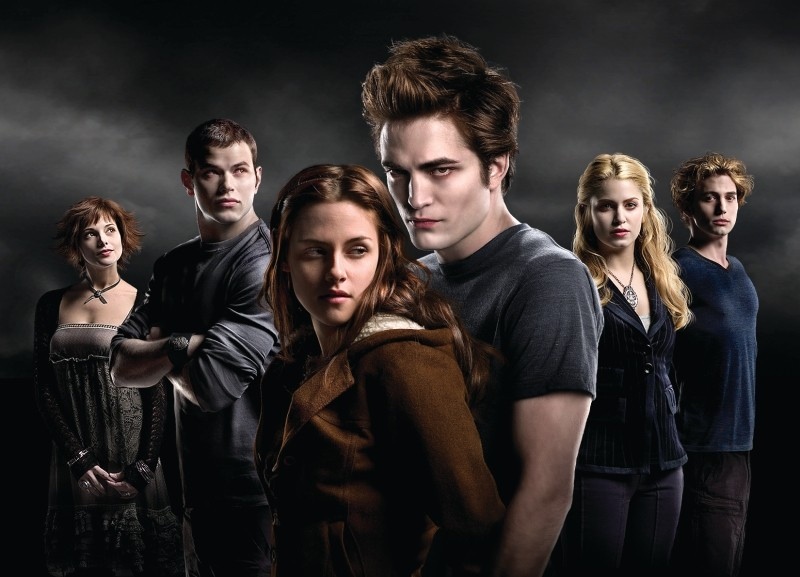
Twilight

Well, I finally saw it. I know you're happy for me.


I love this series (in book format) because of the characters. So I was pretty excited about the movie. Overall it was... okay. Kind of at the same level as Highlander for me. Not that I dislike Highlander. (I won't say how many times I've seen it, as that might discredit what little authority I have, but let's just say it's been more than once. Voluntarily.) But like Highlander, I think Twilight could have been a lot better.

In case you've been living in a cave and have no idea what I'm talking about, Highlander is about a group of immortals who cut one another's heads off and have an orgasmic-like "Quickening" in which they absorb the other immortal's power. Oh, you wanted to know about Twilight... that's about a shy human girl who falls in love with a vampire and I can't believe you didn't know that.

So the movie was pretty hilarious. I'm actually kind of bummed it was such a success, because this is exactly the kind of thing I'd enjoy torturing people with by recommending. ;) Kristen Stewart has "teenage angst" down to a science, I'll give her that. None of the teenagers look like actual teenagers, the special effects are terrible, and it's way too long.

But none of that really bothered me too much. What did really bother me was Robert Pattinson, aka Edward. He is not how I imagined Edward at all. Creepy stalker much? Lordy lordy who thought it was a good idea to cast him in this role? Actually, he reminded me of James Dean in Rebel Without a Cause--he would have been great in that movie! This one, not so much.

Uhg, seriously, what is up with that guy? Okay, message to RPatt: I know that for some guys (if you're a total pussy), playing Edward as he's supposed to be (re: a gentleman--you know what that is, right? RIGHT?) might be seen as a threat to one's masculine integrity. But if that's the case, the least you can do is play him with some dignity instead of going for the total creepazoid factor.

On to the special effects--HORRIBLE. I was so disappointed with Edward's sparkliness; it just looked like he was covered in sweat. I was really looking forward to the sparkly skin, too. And the running through the forest made me lawl.


And I think this is the perfect example of what is wrong with this movie (besides weirdo RPatt): the running through the trees was kind of cheesy even in the book, so why in the name of his holy Edwardness would you put it in your movie, especially when you clearly don't have the budget to do it anyway? Why not take all the good things from the book, throw out the not-so-great things, and then throw some imagination into the mix? There is a total lack of imagination in this movie. I mean, the vampires don't even have fangs. I want my vampires to have fangs, dammit! You followed ye olde rule of bad vampires dressing in ridiculously flamboyant outfits (that's where the term "vamp" comes from, fyi... not really), so why not the fangs?? Hmm? Why. Not. the Fangs.

So the movie was okay. I think I might need to watch it again, actually. Maybe it's better the second time around...? I'm glad I saw it, anyway.


Powered by ScribeFire.

LinkWithin

Related Posts Plugin for WordPress, Blogger...