Friday, December 30, 2011

What Was Exciting and Awesome In 2011?

lolcat

Looking back time! What did I write and think about the most this year?

Harry Potter!
Ah, Harry. Not only did I finish making my way through all the audiobooks, the final movie came out this year as well. Sadface. I gushed over Snape, wrote about HP's connection to WWII, completed surveys, and basically did all I could to break down, revive, and hold dear the series.

Twilight!
With Breaking Dawn, Part 1 coming out in November, naturally I came down with a touch of Twilight fever and reread New Moon, rewatched all the movies (Eclipse was actually pretty good, weirdly), and ate Twilight chocolate. Good times.

Photographs!
Wow, I read a lot of books about photography this year. Photographs of Yale and Detroit; photographs by George Hurrell, Emile Zola, and Man Ray; and a book about 19th-century western photography.

Jane Austen!
Okay, so maybe Jane Austen pops up frequently on my radar every year. But it seems like there was a lot of Austen-related articles and news and spin-offs this year, no?

Classic Hollywood!
I read about it, I watched it. I now know what the phrase pre-code means. I'm all up with it.

Drinking games!
I amused myself muchly this year by inventing drinking games, both for movies during Hitchfest and for books like The Magician King.

black swan
Caw, caw.

Ballet!
For some super-odd reason, this was the year of ballet for me. It all started when I saw Jennifer Homans, author of Apollo's Angels, on Charlie Rose. Then I read her book (well, actually just the first chapter, because that's all I could get for free on the Kindle). Then there was Black Swan, which I saw in the theaters; The Nutcracker that I wound up researching and then reading ETA Hoffmann's Nutcracker and Mouse King; I read The Ballerina, the Gymnast, and the Yoga Instructor; and I watched Mao's Last Dancer on TV. Why is ballet all of sudden the 'it' thing? And why am I watching movies about it? Do not know.


What was trending in your life this past year?

Wednesday, December 28, 2011

Audiobook Review: O JERUSALEM by Laurie R. King

o jerusalem cover

Dang, this book is long.

Mary Russell is the young partner-in-detection to the officially retired Sherlock Holmes. In the first Mary Russell "memoir," The Beekeeper's Apprentice, there is a small side note that she and Sherlock Holmes went to Palestine on a secret mission for the British government (and also to get out of the country) that's treated basically like this: "We went to Palestine for a year and it was kinda awesome and also the longest trip evar. Then we got back, yay!" O Jerusalem, the fourth book in the series, jumps back to that time period to tell us everything that went on during Russell's and Holmes' briefly-mentioned trip, to wit: they wander around Palestine for what isn't forty years but definitely feels like it; there are a lot of sheep; Sherlock Holmes gets almost-killed a bunch of times; and then they finally get to Jerusalem, where Russell starts geeking out and they stop a terrorist plot.

I can understand why Laurie R. King gave Russell's trip to Palestine its own book, because there was not way to do justice to it otherwise. As I mentioned before, this book is long. And meandery. It isn't quite that it doesn't have a plot, because it does; the reader just doesn't know what the plot is until maybe the final quarter of the book. They wander around and around with what appears to be no direction, and at some point it's like, "Just get to Jerusalem already!" Even worse, I listened to this on audio, which I really only do while cleaning or folding laundry, and thus it took me two months to finish.

I'm not going to say this book should have been shorter--mainly because I can't remember everything that went on at this point--but it does require a considerable amount of patience. It's well-researched and -written, as are all of King's novels; but I'm not a huge fan of "journey" books to begin with, and mystery books where the mystery is incidental outright annoy me most of the time, so I can't say I'm a huge fan right now.

What I did find really interesting, though, were the dynamics of Russell's and Holmes' relationship. Chronologically this is several years before they get married, before we even get a hint that their relationship is anything other than platonic. But in O Jerusalem, you definitely get the sense that the foundation of their marriage is being formed here, especially on the part of Holmes. It was more sentimental and sexual than I was expecting (not that, I'm sure, I would have interpreted it that way had I read the books in chronological rather than release order), and I think it's an awesome way to tell the story--to play with what we already know about the characters and add more layers to them that what would otherwise be there.

This probably won't be listed among my favorite Russell and Holmes books, but if you're already reading the series, naturally you want to read this one. If you're not reading the series, you're missing out on some great writing!

Tuesday, December 27, 2011

Book Review: THE THORN AND THE BLOSSOM by Theodora Goss

Proposed alternate title: It's Not Easy Being Green

thorn and blossom cover and illustration

Evelyn is an American studying at Oxford, when she decides to traipse down to Cornwall for a week. While there, she wanders into a used books shop and meets the handsome son of the store's owner, Brendan (this is my dream, by the way). But will they ever be able to get together after her vacation?

This book is marketed heavily for its binding, which is in an accordion style, with Brendan's story on one side and Evelyn's on the other. Hence the subtitle of "A Two-Sided Love Story" (fun fact: one-sided love stories are also called stalking). Plus, it's nicely illustrated and designed. Although the binding is an unusual idea, I wanted to read this book because of the story, not its packaging.

The story is based on Sir Gawain and the Green Knight (or at least a Cornish version of it), which I really enjoyed. I am totally down for any book that bases itself off Arthurian romances. You see, Evelyn and Brendan are locked in a 1000-year cycle of falling in love but never being together, thanks to a giantess' curse. The cyclical nature of these star-crossed lovers' relationship is reflected in the binding of the book. Clever, eh?

I started with Evelyn's story. Unfortunately, I didn't like her character at all and I thought her story was rather pointless. There were a lot of inconsistencies between what we're told about Evelyn and how she acts that don't make her believable. She's supposed to be in her last year at Oxford, so one would assume she's spent some time in England, but she acts like she's fresh off the boat. She's supposed to be studying literature, but on a week-long vacation by herself, she doesn't bring a single book. She writes poetry and sees fairies, but is supposed to be cynical. And so on.

As for character development, I didn't get anything from her. Emotionally, it felt like her story started and stopped in the exact same place (location-wise, it did, actually--that didn't help). Oh, girl's got problems, but those problems have nothing to do with Brendan. It was like at the beginning of Beauty and the Beast, where Belle sings, "Little town, full of little people, every day like the one before." Now imagine if Belle had stayed in the town and married Gaston, and you have an idea of my frustration with Evelyn. She's stupefyingly conventional and never seems to think through her decisions.

Thankfully, Brendan's story saved this book for me. Although he seemed like kind of a prat in Evelyn's side of the book, he clearly is the hero of this story and I felt like there were challenges he had to face during the course of the book that helped him grow emotionally and wind up in a place where he could achieve his dreams. It's interesting that even in books with "two sides" to the story, and ones written by women to boot, the female is still written as such a passive character. Not that Brendan is a particularly active character, of course, but at least he made conscious decisions and used his own judgment.

Although this book didn't blow me away, there's a lot packed into its eighty pages. It's definitely not your run-of-the-mill romance, either in the binding or the way the story is told. I would definitely recommend it if you're at all interested, especially if you happen to be an Anglophile or a medievalist.

Sunday, December 25, 2011

Obligatory Christmas Post with Haiku


I'd like to share a
few Christmas songs here
as I do every year.


Be sure to click on
the snowflake at the
bottom for extra wassail


Happy happy lot
Happy happy much
Happy holidays to you!

Friday, December 23, 2011

The Girl Who Slept

girl asleep
Johannes Vermeer, Girl Asleep, 1657

Have you ever noticed that women in romance novels sleep a lot? Naturally we all need sleep, but with something so ordinary it doesn't seem worth mentioning in a book unless there's a point, like going to the bathroom. So what's the point of all the sleeping? Tired writers? A zombified nation of near-catatonic workaholics who can only sympathize with people in a similar state of ennui? Or does it mean something?

While rereading New Moon last month, I couldn't help but notice that Bella kept passing out--or almost passing out--a lot. And not during entirely appropriate moments (like, you know, bed time), either. Of course, the story is based on Sleeping Beauty, so I figured that had something to do with it, and set the issue aside to think of it no more.

BUT THEN, since I was already thinking about it (despite my resolve not to), I kept noticing heroines in nearly every romance I picked up afterward had a similar problem! It seemed as soon as these women encountered an extremely tense, emotionally-wrought, or high stress environment, they decided they needed a nap because they were super duper tired. "Here I am, alone in the house of a rake who wants to ravish me. Snnnnooorrrrzzzzzzz." Really?

At first I guessed that it was some passive-aggressive way of avoiding conflict--kind of like how Scott Pilgrim runs off to the bathroom as soon as he's faced with a potentially awkward situation. But it seemed odd that so many heroines would fall asleep in different books and situations. "What purpose does this serve the story?" I wondered to myself (actually it went more like, "WHAT THE HEEEEEEECK?!?"). Reading about women who keep falling asleep isn't exactly exciting.

the nightmare
John Henry Fuseli, The Nightmare, 1781

It was an embarrassingly long time afterward that I remembered sleeping women in art history=SEX ALL OVER THE PLACE! Exclamation mark! The most famous example being Fuseli's wildly popular The Nightmare. Pointed toes, arched back, and expression of combined agony and bliss--that woman is totally having an organism. And what's being done to the horse behind that curtain? You don't know; and judging by its expression, I don't want to know.

Aside from the pulled-out chair and open doorway that suggests recently vacated company, Vermeer's Girl Asleep is, according to your friendly neighborhood symbologists, full of allegories for temptation, love, and intercourse. It also looks like there's someone under the table, and I don't think they're picking up silverware. IF YOU KNOW WHAT I MEAN.

In literature, too, a sleeping woman is often a symbol of passive sexuality--think of Sleeping Beauty and Snow White, for instance. Again, this is reflected in Twilight: there's a reason why the dynamics of Edward watching Bella sleep puts mamas' panties all in a twist. Or take the scene in New Moon when Jacob sneaks into Bella's room to tell her the Very Important Thing about him being a werewolf and she can barely keep her eyes open. Of course, the fact that she doesn't fall asleep while he's around could indicate that she's not as 'available' to him as he'd like her to be.

For hundreds of years, at the least, a sleeping woman has suggested a sexually available woman. Do I think romance novelists are deliberately using this imagery to make their heroines seem more sexualized? Perhaps--Meyer employs it very effectively--but I think at this point it's become such a part of our culture that we don't consciously take note of it, especially in contemporary-set novels. Most people aren't looking for allegories or subtext in books; if they were, it would make reading certain novels really uncomfortable (I'm looking at you, Lewis Carrol). Even if they aren't consciously aware of it, however, on some level it is clear that the heroine, while asleep, is more vulnerable to the hero. If she's dropping off to sleep, then obviously she trusts him.

elizabeth siddal
Elizabeth Siddal, 1860. Photo courtesy of lizziesiddal.com.

Have you ever noticed this narcoleptic heroine phenomenon? Do stories where the power dynamic is reversed and a woman observes a man who's sleeping have the same subtext?

Thursday, December 22, 2011

Guest Post by Becky R.: JUDGING A COVER BY ITS MAN-FLESH

sekrit identity

Our last guest post before the holidays is from Becky at One Literature Nut! A few weeks ago Becky casually made an observation about romance novel covers that I thought was pretty brilliant, and I begged asked her to write a post about it. I'll let her tell you about her theory and you can judge for yourselves!


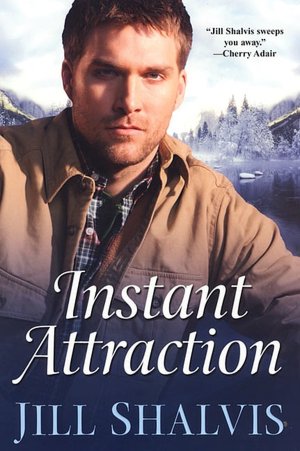
A couple of months ago, my good friend Tasha at Truth, Beauty, Freedom, and Books posted a great review of the romance novel Instant Attraction by Jill Shalvis. Having just come off a couple of quick contemporary romances myself, I thought it was interesting that the hero in the novel was a wounded soul. Here’s why that was interesting—the cover seemed to predict where we were headed. If our heroes could speak, here’s what I anticipate they might reveal to us:

Fully-Clothed Hero, Up Close:


"Hi. I’m a wounded soul. I’ve probably been through a terrible accident, been ditched by a woman, been a witness of a crime, or been emotionally shut down for years. Basically, someone close to me lets the girl know, and it melts her grown-girl, independent heart and allows her to wiggle into my world (take that as you will). I’m the quintessential softie that knows how to be a man’s man, but prefers to be a romantic bard at heart."

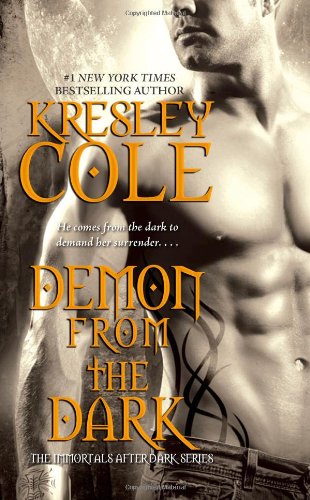
Partially-Clothed Hero, Up Close:


"I’m a bit trickier. Showing some man-flesh might just be showing my rugged, manly side to the world, but that’s not all to me. I still have a secret that keeps me aloof  and yet strangely appealing to women. Even though I might act like a jerk, I’m probably profanely dedicated to my woman (to the point of murder), and once I reveal that gut-jerking wound, the bond with my woman is eternal. Don’t mess with me!"

Fully-Clothed Hero with Fully or Partially-Clothed Heroine:


"Listen, girl. I’m not the type to 'need' to chase you. I can seem intimidating in my power suit or native dress, to the point of being unapproachable, but women throw themselves at me every day. I probably 'get around' quite a bit—just enough to make YOU think I’m the ultimate bad boy that you need to tame. I like to think that you don’t get me, and I’ll hold out to the very last second to let you know what I think. In fact, you better have some serious take charge brutishness of your own or powerful boardroom woman-power to catch my attention. No worries. Once I get that we both wear the 'pants' (so to say), I’ll be your bad boy that is secretly your good guy that you managed to tame."

Partially-Clothed Hero with Fully or Partially-Clothed Heroine:


"Nowadays, I don’t like to jerk a girl to my chest just to watch her heaving bosoms rage or flowing hair escape into the moonlight. Nope. Now I like to grab a girl to me to look her in the eyes to show her she has underestimated or misunderstood me on so many levels. Yes, I might look ruthless in my bare chest and jeans or ripped open shirt and kilt, but I’m a man-beast with some serious rage over some past wrong. Oh, and don’t call me a man-whore, because it’s probably pretty likely that I’m nowhere near that title—people just think I am. Unlock my wound, show me some nurturing, and my eyes (ahem, I mean hot bod) will be yours forever."


Of course we have some funny exceptions to these general, four heroes, but when you really take a look at the romance novels you’ve read recently, you might see some of these traits playing out. Gone is Fabio with his long hair, open shirt, and half-dressed vixen. Today we’re seeing more modern themes, paranormal characters, and strong female leads to match their men. It is kind of interesting though to see covers start to reveal even more about those leading men!

Which male lead is your favorite, and have you seen any covers to match their description?


Thank you so much, Becky! I love the phrase, 'unlock my wound,' someone should definitely put that on a cover! :)
You can find out more about Becky on her Twitter page as well as her blog.


Wednesday, December 21, 2011

Virtual Advent: NUTCRACKER AND MOUSE KING by ETA Hoffmann

the nutcracker
"She tossed her little coat on and flung open the door. Little Nutcracker was standing outside, with his bloody sword in his right hand and a wax candle in his left hand." Illustrations by Artus Scheiner, 1924.

It's not Christmas without The Nutcracker Ballet, which my mom makes me watch every year (the Mikhail Baryshnikov version). Although I do enjoy it now, when I was a kid I thought it was a little boring. For one, why is that girl all into a nutcracker? If I'd gotten that for a present at seven years old, I'd have been like, "What am I cracking again?" For another, once the nutcracker turns into a prince and things FINALLY start to get interesting, there's just a bunch of nonsensical dancing by people who are NOT the prince and princess for an hour and half. Plus, it has the type of ending I hate, where the girl wakes from the dream and says, "It was so real! And you were there, and you were there..." GAH.

I could say the ballet all makes sense these days, but honestly I feel the exact same way. I appreciate dancing and costumes more than I did when I was a kid, but my opinion of the plot is still pretty much what it was when I was seven. The Nutcracker is something that sounds great on paper--something that I always thought would make an awesome story--but in the end the ballet's never really about the story, so I'm disappointed.

I'd been under the impression for years that The Nutcracker was something Tchaikovsky had made-up; so imagine my surprise (and excitement) a few weeks ago when I learned that the ballet's actually based on a book! By famed Gothic writer ETA Hoffmann, written in 1816. I had never heard this before--or if I had, it didn't sink in--but naturally I immediately had to check it out and compare the two. I love it when the things I think will make a good book are actually books!

Pate Drosselmeier
"Indeed, the godfather was altogether a very artistic man, who even knew a thing or two about clocks..."

Tchaikovsky's ballet is actually pretty similar to Hoffmann's original story, although a simplified version (I have to say, he did an excellent job of adapting it). It's about a little girl who gets a nutcracker for Christmas, saves him from an evil mouse king, and travels with him to another land where everything is made of candy, including his marzipan castle. But Nutcracker and Mouse King is a more cleverly told story, less linear and less fantastical than the ballet. In tone it's closer to the magical realism of something like Pan's Labyrinth--the magic isn't confined to dreams, it exists in the waking world and can bite you pretty damn hard in the ass.

What makes the book creepy are two things: first of all, no one believes Marie about the Mouse King. She's on her own trying to protect herself and the nutcracker. Second of all, there's Pate Drosselmeier, who is a benevolent character in the ballet, but not so much in the book. It's not that he's necessarily bad, or good, but that no one knows WHAT he is. He makes mechanical toys for the kids, but they're so delicate and sophisticated the children can't really play with them (and don't really want to). He mocks Marie one second and tells her stories about the nutcracker the next. He's not entirely trustworthy, which is terrifying because he seems very powerful.

marie and the nutcracker
"Actually, Marie didn't want to leave the Christmas table, for she had discovered something that no one else had as yet noticed."

The scary factor didn't have too much of an impact on me as an adult reader, but what I did really like about the book version much more than the ballet is that Marie's interest in the nutcracker here seems logical: he's not a Christmas present, just something she notices and gloms onto in the weird way kids have. Her dad tells her specifically he's not her present, but it becomes clear fairly quickly that she's adopted him anyway. Once the nutcracker starts coming to life, he shows a great deal of personality, has sparkling eyes, fighting skillz, and a romantic streak. Who wouldn't like the little guy?

The other thing that really fascinated me in this novel was, weirdly, the glass cabinet. The glass cabinet has all of Herr Drosselmeier's "presents" to the kids on the top shelf, and Marie's and Fritz's toys on the two bottom shelves, and it's where the nutcracker lives. I loved this because, one, the German propensity to collect knickknacks and then put them into cabinets never ceases to amaze me. You should see my grandparents' house, for realz. And two, this reminded me that as a little kid I was totes obsessed with all the things that were in my mom's and grandparents' glass cabinets. I wasn't allowed to touch any of them, which was guaranteed to make me wonder WHY and really want to look at them. The glass cabinets seemed like chests of tiny treasures, full of mystery and possibility, which was the perfect tone to strike in this story.

Finally, I really liked that Hoffmann's tale had a happy ending. In the ballet, it's all a dream, and Marie has to resign herself to a normal life after living in a fairy tale castle, which is a total bummer. But in Nutcracker and Mouse King, it's all real--and like Ofelia in Pan's Labyrinth, at the end she gets to return to the fairy tale castle with her prince.

dream
"Soon, rising like clouds of mist, Marie watched the silvery gauzes, in which the princesses, the pageboys, and Nutcracker swam."

This is definitely a story written to be read aloud to kids, and perfectly evokes the magic of Christmas from a child's perspective. There's not a much of a line between fantasy and reality, and Hoffmann makes no effort to draw one. The translation in my version was a little hinky (not that I have any of Hoffmann's other work to compare it to, whether German or English; but I'm going to go out on a limb and say he at least knew how to use pronouns correctly), but it was still a delight to read and reminded me what it was like to be a kid on Christmas Eve, which is awesome. I definitely recommend this book for kids of all ages!


Musical notes: "The Nutcracker Suite," of course!


virtual advent button
This post is part of the 2011 Virtual Advent Tour. Check out the website for more postings.

LinkWithin

Related Posts Plugin for WordPress, Blogger...