Wednesday, December 9, 2009

Guest Post Plus Giveaway!!

book cover

Today, mystery writer Lucha Corpi is visiting to tell us about the heroine of her latest book, Death At Solstice. Here is the summary of the book from Amazon:

Chicana detective Gloria Damasco has a ''dark gift,'' an extrasensory prescience that underscores her investigations and compels her to solve numerous cases. This time, the recurring vision haunting her dreams contains two pairs of dark eyes watching her in the night, a phantom horse and rider, and the voice of a woman pleading for help. But most disquieting of all is Gloria's sensation of being trapped underwater, unable to free herself, unable to breathe.
When Gloria is asked to help the owners of the Oro Blanco winery in California's Shenandoah Valley, she finds herself on the road to the legendary Gold Country. And she can't help but wonder if the ever-more persistent visions might foreshadow this new case that involves the theft of a family heirloom, a pair of antique diamond and emerald earrings rumored to have belonged to Mexico's Empress Carlota.

Soon Gloria learns that there s more to the case than stolen jewelry. Mysterious accidents, threatening anonymous notes, the disappearance of a woman believed to be a saint, and a ghost horse thought to have belonged to notorious bandit Joaquin Murrieta are some of the pieces Gloria struggles to fit together. A woman's gruesome murder and the discovery of a group of young women from Mexico being held against their will in an abandoned house send Gloria on a fateful journey to a Witches' Sabbath to find the final pieces of the puzzle before someone else is killed.

Corpi weaves the rich cultural history of California's Gold Country with a suspenseful mystery in this latest installment in the Gloria Damasco Mystery series.

Lucha is a poet, novelist, and children's book author. Her art has always meant activism. As a woman, a Hispanic, an immigrant and a mother, she has always found herself breaking down barriers in both life and literature. In 1970, she received a National Endowment for the Arts Creative Writing Fellowship for poems later included in Palabras de mediodia / Noon Words (Fuego de Aztlán Publications, 1980; bilingual edition Arte Público Press, 2001). Her first collection of poems appeared in Fireflight: Three Latin American Poets (Oyes, 1976), and a third poetry collection followed: Variaciones sobre una tempestad / Variations on a Storm (Third Woman Press, 1990). In 1990, Corpi was twice honored: she was awarded a Creative Arts Fellowship in fiction by the City of Oakland, and she was named poet laureate at Indian University Northwest. She was a tenured teacher in the Oakland Public Schools Neighborhood Centers Program for over 30 years.

Lucha is kind enough to describe how Gloria Demasco's psychic abilities came about. BUT, before you read any of the post, go to Book-lover Carol to read part one!

lucha corpi

Gloria Demasco, Private Investigator & Clairvoyant
Part II


In time, I learned from Gloria that she had a dark gift, a psychic power, whatever that meant, because she wouldn’t tell me anything else about her dark powers. Was she a kind of fortuneteller? Palm reader, perhaps? Maybe a sorceress, a witch. Was she a New Age or Old Age psychic? There was so much to research. And I dove into the psychic pool head first.

I began to attend psychic fairs, séances, mid-summer and mid-winter solstice celebrations, Sabbaths, had my fortune read countless times, my aura cleansed at least twice, had regressions to at least four past lives, attempted astral projections but my spirit could never manage to stay air-bound long enough to soar freely. Every time I attempted it I remembered the wild windsock specter and plummeted straight to the ground, opening my eyes just before I hit the ground.

At every séance, Sabbath, solstice celebration and psychic encounter, I asked for a receipt. At home, I put all of the receipts in a Mexican basket together with the rest of my tax receipts and documents. I had to justify my research expenses. And they were legitimate research tax deductions for a writer, or so I thought until the IRS decided to audit my 1990 tax return two years after the facts. By that time, Eulogy had been published. The two tax auditors chuckled when I handed them each a copy of the book as proof that indeed my delving into the mantic arts was a legitimate endeavor for a writer who respected her art and wanted to be factual. Two weeks later, I was summoned back to their office, given back the books they had indeed read and loved but couldn’t keep. Their keeping the copies of my novel could be misconstrued as bribery, and they could lose their jobs. I owed the IRS nothing.

Long before my dive into the IRS audit, I had already found out, as I wrote the novel, that Gloria Damasco was a clairvoyant. In each of the novels, she tries to explain to herself and to the rest of us what her dark gift is all about. In Death at Solstice, her latest adventure, she says:

… Prior to the night before, I had never been able to save anyone whose life, in my visions, was fated to end. It bothered me no end to see what fatal blow destiny had in store for someone yet be unable to prevent it. But that was the nature of this dark gift, this extrasensory prescience in me—la otra.

Most people did not understand what clairvoyance was. My visions weren’t a tidied bunch of related scenes laid out, like a classic story, in a linear narrative. They varied from images to smells and sounds that bombarded my dreams. My subconscious somehow sorted them out and stored them until, if ever, I worked on a related case.

Talking with some of my poet friends over the years, I realized that poets, without being aware of it, also went through a similar process as mine. All the incongruent elements of a poem were already present at various levels of consciousness or the subconscious. In the poet’s case, the outcome was the poem. In mine, the results were not so easily discernible, not even for me.

Although at times I still doubted the legitimacy of my dark gift, I seldom allowed myself not to act on a vision. I pushed myself to do the necessary legwork to solve its cryptic warnings, regardless of its outcome. It was the only way to keep my twin psyches in check, my split spirit in harmony.

Gloria’s reason is forever running interference. She is always trying to prove to herself that she indeed possesses a dark gift. She is compelled by her visions to take a case, but she solves it by following and analyzing clues, using her powers of deduction, as any normal P.I. would, to bring the criminal to justice.

I do my share of legwork too, by doing my research so she has everything she needs to solve the case ready at a moment’s notice.

That is my job.

I am Lucha Corpi, Gloria Damasco’s writer.


Giveaway!

The publisher is offering one copy of Death At Solstice for a lucky reader. To enter, just comment on this post. Make sure you enter a valid e-mail address with your comment, as that's how I will be notifying the winner. The winner will be chosen via a random number generator, and the contest will close at midnight, December 15th.

ETA: The publisher needs to send the books out by Monday, so I will have to close the contest on December 11th at 6 PM, mountain time. I apologize for the error.

In addition, Lucha Corpi is offering her entire mystery series to one lucky reader who comments on all of her blog posts in this book tour. Here is the list of Lucha's stops:


Nov 30 Richard Unloaded Questions about writing
Dec 1 Mayra Calvani Latino Book Examiner When did she begin writing
Dec 2 Terri Behind Brown Eyes What is her inspiration
Dec 3 Lara Rios Julia Amante Author's thoughts on her previous books
Dec 4 Ana The Sol Within Indept and soul-searching answers
Dec 7 Misa Chasing Heroes Author's seeking Heroes
Dec 8 Monie Reading With Monie What are her writing achievements
Dec 9 Carol Book-lover Carol Part One: How Series came to be
Dec 10 Tasha Heidenkind's Hideaway Part Two: How Series came to be
Dec 11 Nilki Musings Author writes on her theories of writing

Angel Month Wrap-Up

angel button

Angels really are everywhere these days, as I discovered during my month-long angel reading blitz.  I read four books:
I thought reading four books might force me to read a fifth in order to break a tie, but it didn't happen--angels are not the new vampires.  Go back to your lives, citizens.

During the course of reading these novels, I think I've discovered angel books are already developing their own tropes.  One of the major ones is the angel being a total jerk, but the woman unable to resist his attraction.  You know that movie Angel and the Badman?  Well, in most of these books the angel is the badman.  In fact, I don't think any of these books has an angel that is completely good, and most of them are outright bad.  Is it because good=boring?  Or is it symbolic of how corrupted humanity is?

Overall, I enjoyed Angel Month.  But I think I'm going to be avoiding any more angel books for a while--I'm totally burned out on them at this point.


Powered by ScribeFire.

Tuesday, December 8, 2009

Angel's Blood

angels blood cover

Angels' Blood by Nalini Singh

This urban fantasy/romance is a cornucopia of popular supernatural creatures, with vampires, vampire hunters, angels, and even zombies--yes, my friends, zombies! It does a good job of setting up a new series, although I can't say entirely liked it. Or rather, I liked a part of it and hated another part.

Elena is a vampire hunter extraordinaire. She and her colleagues chase down runaway vampires for angels, who Make vampires in return for 100 years of servitude. When vamps try to jump their parole, Elena tracks them, tags 'em, and carts them back to the hoosegow, much like a female version of Dog the Bounty Hunter.

Then the Archangel of New York City, Raphael, requests her services. He wants Elena to lead him to another archangel, Uram, who's gone a wee bit on the wrong side of bat-shit insane. Despite the ginormous amount of money he's paying her, Elena isn't really happy about this because 1. archangels are scary; and 2. she's certain either Raphael or Uram will kill her before the job's over. But you can't say no to the Godfather Archangel, especially when he's all sexy-like.

The beginning of Angels' Blood kind of pissed me off. Admittedly, Hush, Hush used up all of the little patience I have for the jerk-angel-and-the-woman-who-is-inexplicably-attracted-to-him trope; but even more annoying was Elena denying she was attracted to Raphael, even though it was obvious that she was. (Note to rom heroines: just because you're attracted to someone does not mean you have to bang them. I'm just throwing that idea out there.) One of the reasons why I hate that sort of thing in romance novels is that reinforces the idea that when women say no--which Elena did plenty of in the first half of this book--they really mean yes--which she really did. And that is bull.

Around the halfway-point, both stalker Raphael and trigger-happy Elena (seriously, I don't think this woman should be issued firearms) reallllly started to annoy me. However, at that point in the book the relationship shifted to become more equal, and I began to enjoy it a lot more. Of course, Raphael has no personality, and I have no idea why he's even attracted to Elena beyond the point that she's fiesty, but at least he was no longer a total douche. Plus, the hunt for Uram FINALLY got underway (yes, halfway through the book), so the story became much more exciting.

In fact, Angels' Blood improved exponentially in the second half, to the point that I actually truly liked it by the end. I think it does a great job of setting up the next book in the series, which I'm definitely looking forward to reading. So although I had plenty of problems with it, it did end up being a satisfying book.

And now for the twenty-dollar question:

angel button<----Actual picture of Uram?

Angels--iz they the new vampires?

I'm going have to go with a draw on this one.

On one hand:
  • The angels in this book have wings. That's always a plus--pretty wings, too.
  • These angels have some pretty cool powers. My favorite was angel dust. If you try it, you'll like it. They can also create zombies and vampires, throw fireballs, and manipulate human minds.
On the other hand:
  • I'm still not entirely clear on how the angel world works in this book. They're the rulers of the earth, okay--but how exactly do they rule? Is it governmental, do they own a bunch of real estate, what? There were definitely some gaps in the world building.
  • For most of the book, the angels didn't seem angelic to me. They're just basically vampires with wings. As I kept reading, I got more used to it, but one expects angels to be counterpoints to vampires and not really one-and-the-same. Plus, if they're mostly cool because they're like vampires, have angels really replaced vamps as the new supernatural creature of the moment? No, not really.

Final score:
vampires, 2 1/2; angels 1 1/2

Which means vampires win!!!!!! Yeah!

vamps win with shiny teeth

Other opinions:

Literary Escapism
Loves Vampires
Angieville
Babbling About Books, and More
Dear Author
Musings of a Bibliophile
Royal Reviews
The Book Smugglers
Tracy’s Place
Urban Fantasy Land
Scooper Speaks
Lurv A La Mode
Stacy's Place On Earth
Did I miss yours? Please let me know in the comments!


Powered by ScribeFire.

Monday, December 7, 2009

Last Angelic Links

angel button

I haz been derelict in putting up my angelic links lately.  Since Angel Month is wrapping up quicker than you can spit (so to speak), I better get on the ball.

  • KMont at Lurv A La Mode has a great post on the appeal of supernatural creatures.  Although it's mostly about vampires, she does touch upon how angels in YA books all seem to be creepy jerks.  It's definitely given me something to think about for my concluding post.
  • Just in case you didn't know, angels are STILL the new thing in publishing.  It's nice that I'm staying current.
  • Aimee from My Fluttering Heart has a new challenge called Horns and Halos, where you can read all the angel or demon books you want!  Check it out (I also really like her challenge buttons).
  • The Story Siren reviews Evidence of Angels by Suza Scalora and Francesca Lia Block.  Not sure what it's about, but it has a brilliant cover.
  • as i was saying tackles Twilight and Hush, Hush in a head-to-head comparison.  It's not exactly a deeply probing review, but I found it interesting that it says both Edward and Patch wanted to kill the heroines in the books.  Sorry, but I do not find Patch's and Edward's actions comparable at all--Patch plotted to murder Nora for his own benefit; Edward was afraid he was going to kill Bella in a fit of vampiric hunger beyond his control, so he ran off into the forest.  Which one would you rather deal with?

Remember, kids, when you click on a link, an angel gets its wings.


Powered by ScribeFire.

Sunday, December 6, 2009

Angel Appeal

angel button

What is the appeal of the angel in modern fiction?  Is it the same as for other paranormal heroes like vampires and werewolves?  Are angels, as themselves, attractive at all, or do they need to be modified into more visceral creatures to be sexy?

Like vampires, angels are usually immortal, with amazing powers.  Unlike vampires, however, their traditional mythos has them as helpers to humanity--or, more specifically, as messengers.  In fact, the very word angel means messenger.  Although angels are figures in Christian, Judaic, and Islamic (re: monotheistic) religions, they originated in Sumerian, Babylonian, and Ancient Egyptian culture.  Good angels serve as liasons between god[s] and humanity; fallen angels try to misdirect humans.  Because angels can go between worlds, they seem to be equal part spirit and flesh--beings of light and "man of god."  Exactly how much they mingle with humans is up for debate, but they don't feed off humanity like vampires do.

Vampires are children of the earth--hungry for both sex and power, they have no ability to move on, to ascend.  With vampires, immortality does sound like a drag.  They represent what humanity most fears that it truly is.

Angels, on the other hand, are the ideal, icons of what humanity can be.  Or at least that's their traditional symbolism.

The problem with "angels being the new vampires" is that, instead of providing a counterpoint to vampires, they seem to be becoming vampires.  Hungry for power and sex, their existence is rarely connected to a higher power; and they're at the very least conflicted and hardly ever good.  What does this say about our current culture?  Do we love bad boys so much we can't work up an interest in anything else?  Or is hope and spirituality so fantastical it seems safer to adapt angels to a familiar vampiric narrative?

With these "new" angels comes new tropes that have already infiltrated genre fiction--but more about that when I write my concluding post to Angel Month!

What do you think is the appeal of angels in fiction?  Can they really replace vampires?


Powered by ScribeFire.

Wednesday, December 2, 2009

Hush, Hush

hush hush cover

Hush, Hush by Becca Fitzpatrick*

After reading all the reviews for this book, I was almost scared to open it up.  Let me be completely up-front about it:  every criticism you read about Hush, Hush is totally valid.  This is not a romance.  Patch is an unattractive jerk.  The heroine's actions sometimes don't make any sense, and the plot is pretty weak.  That being said, though, I enjoyed the pure silliness of it and pretty much lawled my way through the entire book.

Nora Grey is a tightly wound, goal-oriented high school student who may or may not remind me of myself at that age.  One day her biology teacher decides to make everyone switch seats.  Instead of partnering with her bestie, Vee, she's put next to Patch Cipriano.  Nora senses he's dangerous--oh, so dangerous--but somehow fails to detect the fact that he's also a jerk.  She's attracted to him and she just can't help it!  Then weird things start happening to her and she blames them all on Patch.

This is not a terribly well-plotted book, although of all the Twilight wannabes I've read (Need, Ruined--stay away from YA books with one-word titles, kids!), this is the best.  It all hinges on the question of what Patch is--of course, one can guess he's a fallen angel based just on the cover.  But why?  And what does he want with Nora?  My desire to find out is what kept me reading the book, even though Nora's wishy-washy protestations of being unattracted to Patch started to become repetitive and the book dragged in the middle.  The ending was absolutely ridiculous and I do NOT believe Patch is in love with Nora.

I could go on with other holes in the plot and characterizations, but I'm not going to.  Because, despite everything that's wrong with Hush, Hush, I honestly enjoyed it.  Of course, my expectations were pretty low--but there was something very entertaining about watching Patch push all of Nora's buttons and drive her to distraction.  I also thought Nora's various adventures were funny, and for the most part I loved Vee.  This is not an angsty, romantic novel at all--it's a farce.  And I had a really good time reading it.

And now let's get to the throw-down:

angel button

Angels--are they the new vampires?

Hahaha!  PLEASE.  No.  Edward Cullen could kick Patch's ass.

First of all:  Patch?  That name sounds like one of those silly aliases Shaun makes up for Gus on Psych.  I cannot take any guy seriously who is named Patch.

Secondly:  Is Patch trying to attract or repel Nora?  Because if it's the former, he's going about it in the most roundabout and nonsensical way imaginable (note to any males who might stumble upon this book:  this is not the way to get girls to go out with you.  DO NOT EMULATE if you want to have sex at any point in the near future).  If I was her, I would have punched him in the face at least twenty times before the first half of the book was up.  But then I don't have her problem where I'm entranced by rock-hard abs (okay, I lie--I actually do have that problem, but I resist it!  Usually).  If I had to describe what Patch looks like in my head, I'd say middle-aged used car salesman.  A sweaty one, with a wide girth, a lot of gold jewelry, and hairy knuckles.

Thirdly:  As an angel, Patch and the other winged ones in this book are just lame.  Their major powers are that they're immortal, they can make humans see anything they want them to, and they can talk to people in their heads.  Exactly how this helps angels, fallen or otherwise, do whatever it is they're supposed to be doing on earth, I don't know.  The mythology of these angels is pretty unclear--there are Grigori and Nephilim, just like in The Fallen; but there are also archangels, guardian angels, angels of death, and fallen angels (or maybe fallen angels are Grigori).  What exactly is the hierarchy of angels?  What are their jobs?  What powers do they have, and what are their limitations?  What sort of god controls the angels, if there even is a god?  I cannot tell you any of this stuff, because it's not discussed in the book.  They're just angels who influence people for their own reasons!

Oh, and these angels don't have wings.  Or they do, but they can't be seen.  To which I say... WTF???  No wings? Why don't you just have vampires without fangs, or samurai with swords?

The angels in Hush, Hush are basically the most unimpressive angels I've encountered so far in my scientific study.  At least the angels in Covet were either amusing or hawt; these angels don't even have that going for them.

Score so far:  vampires, 2; angels, 1

Next up in my über-scientific study:  Angel's Blood by Nalini Singh

Other Opinions:
Babbling About Books, And More! (KB posed a very good question in her review:  why is this book titled titled Hush, Hush?  There is nothing to connect it to the story at all.  Well, I think I've found the answer--it was inspired by Til Tuesday's Voices Carry!)
Lurv A La Mode
Lost In Books
Galleysmith
Books and Movies
J. Kaye's Book Blog
The Book Zombie
A Novel Menagerie
Book-a-rama
Fyrefly's Book Blog
Violet Crush
My Two Blessings
The Story Siren
Wordsmithonia
These are just the reviews that I remember coming across in my reader!  There are literally pages upon pages of them that you can read at The Book Blogs Search Engine.

*This is an Amazon Associates link.  Patch will lick your face if you click on it.


Powered by ScribeFire.

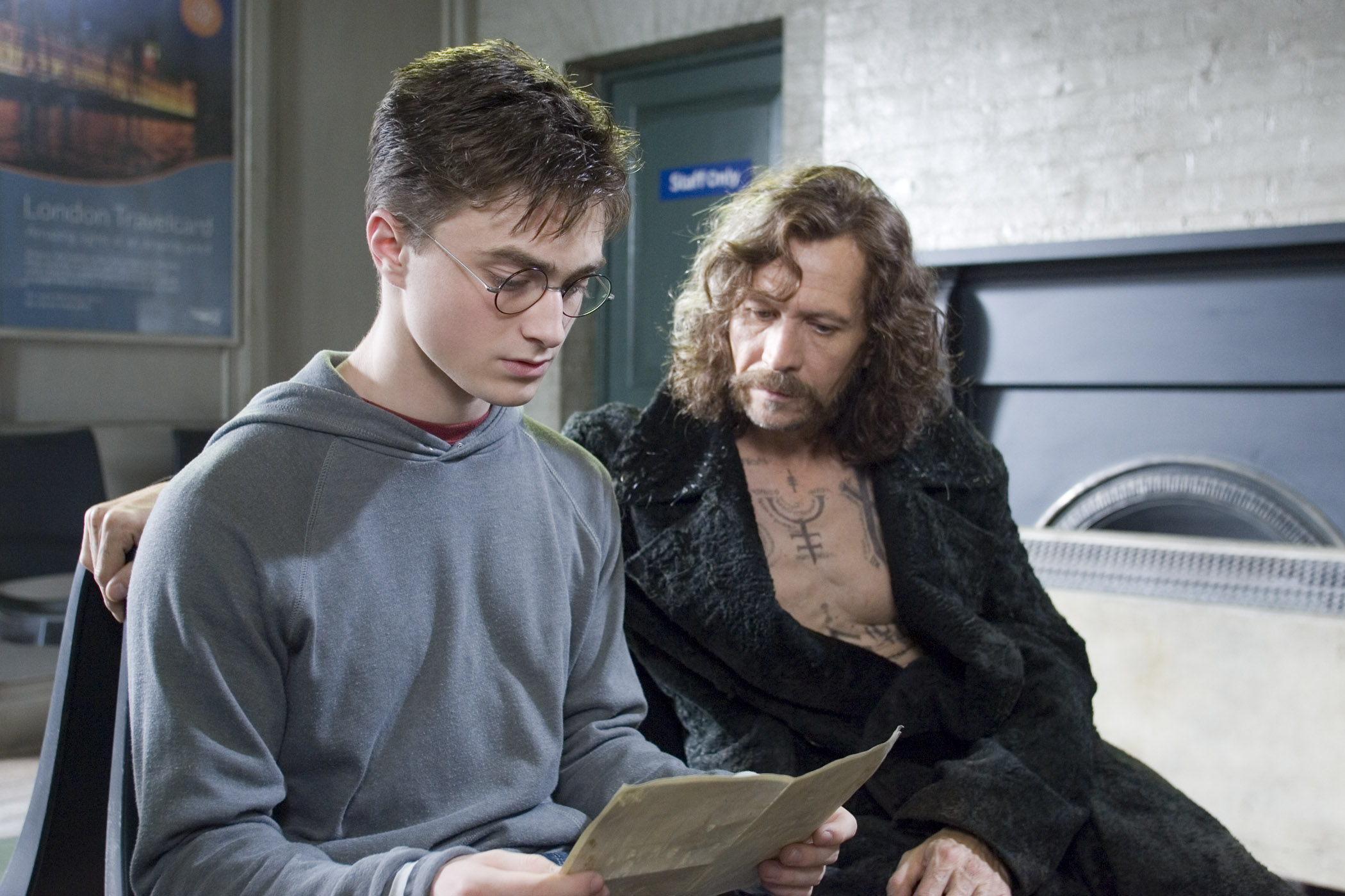
Harry Potter and the Review of Unnecessarily In-Depth Analysis

Pris of Azkaban cover

Harry Potter and the Prisoner of Azkaban by JK Rowling*

Source:  My little brother for the book; the library for the audiobook (I alternated between the two).

I've had issues with Harry Potter and the Prisoner of Azkaban ever since I first read it.  I know it is some people's (coughsandycough) favorite Harry Potter book, but I didn't like it.  Unfortunately, I wasn't blogging when I first read it, so for the life of me I can't remember why.  I mean, two of the smexiest men in the entire series, Sirius Black and Severus Snape, have major roles in this one; and then there's Lupin, who is just lovable like a little puppy.  The storytelling brilliant; and despite the fact that this isn't the middle book, it is book upon which the entire series seems to hinge.  So why didn't I like it?  And would a reread change my mind?

By the third Harry Potter book, the formula for the series has already been established:  Harry goes to Hogwarts and Voldemort finds some sneaky way to attack him; but in the end Harry escapes and Voldy is defeated.  Yet Prisoner doesn't follow this formula at all.  Of all the books, this is the only one where Voldemort isn't a direct threat.  Furthermore, Harry doesn't defeat or conquer anything in this book--we expect him to, and we certainly want him to, but in the end he only does what he can.  And that isn't enough to stop Voldy from gaining power and becoming a major pain in everyone's rear end.  In fact, one could argue it's because of Harry that Voldemort can return to his physical form (although we don't know that until the later books).

So that was one source of my discontent:  my expectations were unmet.  I never really felt Harry was in much danger from Sirius, and there wasn't a big smack-down scene at the end.  But I think my reaction to Prisoner went a little deeper than that due to the two themes running through the novel.

The first is that nothing is as it seems.  That's not unique to Prisoner, of course--how could you even have a wizarding world where things were just as they appeared, after all?--but I think it runs the strongest through Prisoner out of the seven books.  It all starts when Harry goes to Hogwarts, expecting a safe haven, but instead finds it riddled with Dementors.  Enemies turn out to be friends, friends to out to be enemies; the all-powerful Snape turns out to be nothing more than a bitter nerd; and Harry gets the first hint that his parents, his father in particular, might not have been what he imagines.  There were so many change-ups and fake-outs in this book that it made me wonder if anything can be trusted in these books.  The wizarding world is no longer a comforting--if occasionally hazardous, but always quaint--place to be anymore.

Then there's the issue of time.  I didn't even realize this could be considered a theme of the book until I reread it, because we don't know about Hermione's secret until the very end.  But it's definitely spread out through the entire novel--Lupin, Sirius, Peter Pettigrew, and Snape all have the past coming back to haunt them; the "threat" to Harry is one based entirely upon the past as opposed to anything that's happened in the present; and because of the Dementors, Harry relives something he experienced but can't even remember!  The frustrating thing is, even though Harry and Hermione can go back in time, they still can't seem to change the past, even if said past needs to be righted--they can't restore Sirius' good name or give him his life back.  I supposed even in the wizarding world there is an expiration date on do-overs.

I must take a moment to gush about how much I love Harry.  I've mentioned this before, but the majority of heroes are so white-bread--I know this is because they need to be an "every man" type, but as a result they have no personality.  Harry, on the other hand, does appeal to practically everyone, but has his own complete personality.  There are times that I really bleed for him (metaphorically speaking, of course) in these books, but most especially in this one.  Can you imagine listening to your parents be killed over and over?  And the scene where Harry chases the Dementors off of Sirius and himself and then realizes that he's his dad, makes me cry every time.  Like, I'm seriously getting teary-eyed right now thinking about it.  So obviously it's time to move on.

After rereading Harry Potter and the Prisoner of Azkaban, I still can't say it's my favorite Harry Potter.  But neither can I remember exactly what I disliked about on the first reading, either.  This is the book where everything changes--when you suddenly realize this isn't just a series of children's books, and there's a whole mess of stuff going on in this world that you don't know about.  Yet.  In other words, this book is deep, man.


Random things I find suspicious:

Dumbledore:  A secret--I usually find Dumbledore suspicious.  Maybe it connects to my Santa aversion because of his long, white beard, but there's a moment in every single Harry Potter book where I become convinced he's colluding with Voldemort.  In this book, I have to wonder how exactly Dumbledore knew Harry and Hermione should turn back time to save Buckbeak and Sirius.  It's like he knew what was happening before it even happened--while it was happening!  HOW DID HE KNOW????  And why did he expressly tell Harry not to interfere with the whole losing-of-Peter-Pettigrew debacle, hmmmmmmmm?

Crookshanks:  The cat can freaking READ.  That is not right.  That cat has got to be more than cat, I'm telling you.

harry potter challenge button

I read this book as part of The Harry Potter Reading Challenge hosted by GalleySmith, which is turning out to be the greatest challenge OF MY LIFE. 


I'm curious... how many people out there consider Prisoner of Azkaban their favorite Harry Potter?

*The bad news: this is an Amazon Associates link.  The good news: well, there is no good news.


Powered by ScribeFire.

LinkWithin

Related Posts Plugin for WordPress, Blogger...