Showing posts with label sunday salon. Show all posts

Sunday, February 22, 2015

Five of My Auto-Buy Authors (TSS)

The other day Colette from A Buckeye Girl Reads mentioned that she couldn't think of more than three authors that are on her auto-buy list. In case the title's not self-explanatory, auto-buy authors are authors whose work she will automatically buy, no matter what the book's about.

This made me realize I don't have a bunch of authors on my auto-buy list now, either. I *used* to have dozens of auto-buy authors. I'd even visit their websites on a weekly basis so I could check to see when their next book was coming out. I would keep track of all the upcoming releases in a spreadsheet and stop by Barnes & Noble every Tuesday to pick up my new books (remember when new books were only and always released on a Tuesday? Why was that?). And if the book I was anticipating wasn't there, I was PISSED.

But now, like Colette, it takes some thinking for me to come up with my auto-buy authors. I definitely have them, but my buying habits have changed so much that I don't really keep track of them anymore. Instead of having to go looking for when their next book is coming out, they email/tweet/facebook me about it. Instead of making a special trip to the bookstore, now I can download their new book within seconds with one-click.

Also, the authors that are on my auto-buy list have changed dramatically. Most of the authors I used to keep track of have moved on to different genres I'm not that into (Christina Dodd, Lisa Kleypas), settled into a long-running series I have no interest in (Patricia Briggs, Gaelen Foley), or simply stopped writing.

However, there are definitely new (new to me anyway) authors whose books I will absolutely buy, even if they're priced outrageously. Here are my top five; who are some of your auto-buys?


laura florand

Laura Florand
Florand wrote several of my favorite reads in 2014. Even when I don't fall completely in love with one of her novels, I know that they're going to be romantic, emotional, and escapist stories with a fairy tale vibe. I simply love her books.

daniel silva


Daniel Silva
At this point I'm so invested in the Gabriel Allon series that's there's no question of me reading the latest book, which should be out in early July. Speaking of, I'm still waiting for Gabriel to take down ISIS.

lh cosway


LH Cosway
This is a perfect example of one book making me a fan of an author for life. I read Painted Faces several years ago, but Cosway didn't make it onto my auto-buy list until I read Still Life with Strings last year. I know with Cosway that I'm going to get unique characters and a non-formulaic story. I also love her writing style.

craig johnson


Craig Johnson
This is cheating somewhat, because I've actually never bought one of Johnson's books yet. I'm still trying to catch up on the series, and my mom owns all his books, so I just read those. But I definitely consider Johnson a must-read author and his Walt Longmire series is very much worth buying in hardcover.

bryan lee o'malley


Bryan Lee O'Malley
Even though I was a bit disappointed in Seconds, it was one of the few books that I pre-ordered in actual book form in 2014. Actually, scratch that–it was the ONLY book I pre-ordered, in ebook or paper. O'Malley won me over with his brilliant Lost at Sea and the crazy-fun Scott Pilgrim series. I will happily fork over whatever money I have for his next graphic novel. All he needs to do is write faster.

Bonus authors:
Rebecca Rogers Maher, Megan Whalen Turner, Dan Brown (yes I will read every book he puts out), Stephenie Meyer, and JK Rowling (of course).


So that's my top five. I'm surprised by how many men are on it! Used to be one in every one hundred books I read were by a man. I also find it interesting that two of the authors on this list self-publish. Obviously it's not just my buying habits but my reading habits that have changed in the last few years.

Discus this post with me on Twitter, FaceBook, Google+ or in the comments below.

Sunday, February 2, 2014

TSS—Books About Books

harry potter reading tom riddle's diary

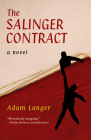
After finishing The Salinger Contract by Adam Langer, I was reminded of how much I adore books about books. I mean, reading a book while reading about books??? So meta.

One of the more interesting themes to me in books about books is books are usually presented as dangerous. They tend to lead people to places they never intended to go, take over their lives, or unleash evil onto the world. I think this is a reflection of the fact that you never know what a book is going to be until you start reading it. Every unread book represents unlimited possibility, and that can be scary.

Another theme I discovered while compiling this list: a lot of books about books have really long and tortured titles.

Here are a few books about books that I've read. Are there any books about books that you've enjoyed? Share 'em in the comments!

harry potter and the chamber of secrets cover
Harry Potter and the Chamber of Secrets by JK Rowling

Chamber of Secrets is my favorite of all the Harry Potter books, mainly because it's about a book. But also because it has a hilarious Valentine's Day scene that makes me rotflmao every. single. time.

(Actually, now that I think about it, Order of the Phoenix, which is my second-favorite Harry Potter book, also has a hilarious Valentine's Day scene. Hm.)

Incidentally, if you missed it on Twitter yesterday, in an interview with The Sun Times, JK Rowling said she wished she'd hooked Harry and Hermione up rather than Ron and Hermione.


salinger contract cover
The Salinger Contract by Adam Langer 

A thriller about a millionaire who spends his money commissioning writers to pen books just for him ("What else am I going to spend my money on?"). But then he, like, DOES THINGS with them.


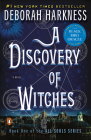
discovery of witches cover
A Discovery of Witches by Deborah Harkness

A witch and historian recalls a manuscript from the depths of the Bodleian Library, only to discover that the manuscript is so magic much evil, and she's the only person who's been able to recall it since it disappeared hundreds of years ago.


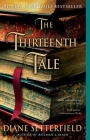
the thirteenth tale cover
The Thirteenth Tale by Diane Setterfield

A bookish person is hired by a reclusive, famous writer to tell her life story.

Not every book about books is a good book. I actually did not like this novel. At all. I tried to read it several times; the last time was for a book club I was in with Colette from A Buckeye Girl Reads. We were both just like, "Yeahhh. Nope."


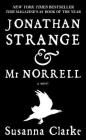
jonathan strange & mr norrell cover
Jonathan Strange & Mr. Norrell by Susanna Clarke

Goodreads tells me this a book about a book, but I just seriously do not remember. I think I tried to erase this book from my mind.


guernsey literary and potato peel society cover
The Guernsey Literary and Potato Peel Society by Mary Ann Shaffer and Annie Barrows

This is another book that I read for Colette's book club. Unlike The Thirteenth Tale, though, I very much enjoyed it. It's about people who use books to survive the German occupation in WWII.


Discus this post with me on Twitter, FaceBook, Google+ or in the comments below.

Sunday, March 10, 2013

TSS-Happy Middle Name Day!

that's not my name


Hello, Saloners! Did you know it's National Middle Name Day? Did you know there was such a thing as Middle Name Day? Well, now you do. In honor of Middle Name Day, I thought I'd list some interesting author middle names (most of which I found on TV Tropes, which has a mind-boggingly extensive list).


  • CS Lewis' initials stood for Clive Staples. He went by Jack.
  • Lewis' buddy JRR Tolkien's full name was John Ronald Reuel, pronounced Raoul. Surprisingly hot for Tolkien. Of course, he went by Ron.
  • The famous poet Rainer Maria Rilke's full name was Rene Karl Wilhelm Johann Josef Maria Rilke.
  • Erich Maria Remarque, author of All Quiet on the Western Front, legally changed his name. Originally it was Erich Paul Remark.
  • Arthur Conan-Doyle's middle name was Ignatius.


Book characters can have unusual middle names, too:

  • Lord Peter Wimsey's middle name is Death. This is actually a legitimate surname, although most people who have it usually spell it like the Belgian town of de'Ath.
  • The Wizard of Oz's original name was, "Oscar Zoroaster Phadrig Isaac Norman Henkle Emmannuel Ambroise Diggs, Diggs being the last name because he [Oz's father] could think of no more to go before it... When I grew up I just called myself O. Z., because the other initials were P-I-N-H-E-A-D; and that spelled 'pinhead,' which was a reflection on my intelligence."
  • Bertie Wooster's middle name is Wilberforce, which he finds very embarrassing.
  • JK Rowling doesn't have a middle name, but she does give her characters middle names. A reader once asked her if Nymphadora Tonks hated her first name so much, why didn't she go by her middle name instead of Tonks. Rowling replied her middle name was Vulpecula, which Tonks hated even more than Nymphadora.


For more odd middle names:


Do you have a middle name? Mine is Kersten (pronounced care-stin, because it's German). My mom told me she got it from a calendar of saints' feast days, although I've been told by several people there is no saint named Kersten. Also, my mom is Lutheran, so where did she find a saints' calendar? In any case, I like it.


Discus this post with me on Twitter, FaceBook, or in the comments below.

Sunday, February 24, 2013

TSS: The Germanic Horde

wwi anti-german propaganda

Have you ever watched old movies and noticed that the Germans are always the bad guys? If you're like me, you probably thought that was because of WWII; but actually the stereotype goes back much farther than that. There's one thing you can count on when you're reading Edwardian (c. 1900-1910) novels, and that's that everyone with a German accent is evil. This is true even of books that predate WWI by more than a decade. England viewed war with Germany as inevitable for more than a generation before it finally broke out in 1914, likely since the Franco-Prussian War in 1870, but possibly even as far back at the 1860s. The Franco-Prussian War, where Prussia defeated France handily in a matter of weeks and completely destroyed their military confidence, is likely the most important war no one has ever heard of; it led to the unification of the German states and set the stage for the debilitating Treaty of Versailles, in which France exacted long-waited revenge for losing the Franco-Prussian War.

Anyway, here is a list of books I've read recently where the Germans were evol:

Riddle of the Sands by Erskine Childers: A bourgeois employee of the Home Office goes on what he thinks will be a pleasure cruise around the Frisian Islands, only to discover a German plot to invade England through the North Sea. This is a great book!

Princess Maritza by Percy James Brebner: There is a name for these types of books and I totally forgot what it is. Basically it's like Prisoner of Zenda by Anthony Hope: some British guy goes to a small Germanic state to save the woman he loves. This book was pretty bad, and it had a whole bunch of paranoia about how Germans want to take over the world.

The After House by Mary Roberts Rinehart: I already told you guys the German is always the bad guy, right? Not to spoil anything, of course.

The Land That Time Forgot by Edgar Rice Burroughs: Bowen J. Tyler is trying to get a group of German and American sailors to work together so they can reach port, but someone keeps sabotaging the submarine. GUESS WHO IT IS.

The Green Rust by Edgar Wallace: This is probably the most hilarious case of Hun paranoia I've come across yet. Van Heerden is an evol German doctor, but he's not actually German--he's Dutch and was just born near the German border. I guess that's enough! Ahahaa.

Still, it does get slightly tiresome when EVERY German character turns out to be evil. Like really, people? You didn't get tired of that cliche after two or three or ten years? Drives me crazy.


Further Reading:


Discus this post with me on Twitter, FaceBook, or in the comments below.

Sunday, February 17, 2013

TSS-Back to Our Regularly Scheduled Programming

moving

Sorry for the not-radio silence this past week; I went on a trip to pick up all my stuff from storage and move it into more storage. The good news is I have all my books now and more bookshelves! There's just something satisfying about setting books into an empty bookcase, isn't there? My brother, who just turned 20, is also moving into his own place, so there are SO MANY FEELINGS going on right now. Luckily he's only like 10 miles away.

Also, since my parents are letting me use their storage for a while, I figured I could clear out some space in my room to create a reading nook, which I blogged about here before. I was planning on doing that on Saturday, but I OD'd on moving and just didn't feel like it. I will eventually, though.

In other news, I started a new blog called Nowhere Bites, because if there's one thing I need it's another blog. It's dedicated to small town and rural area restaurants. I actually had the idea for Nowhere Bites years ago but didn't know how to put it together. After finishing the road trip on Thursday, though, I just decided to go for it! I hope people will contribute their favorite restaurants, since it will be hard impossible for me to visit places all over the country (and possibly the world? I wouldn't be averse to going world-wide) to write about.

As for reading, my dad agreed to listen to about six hours total of The Night Circus audiobook on the drive to and from the storage place. Dang, that's a long book. He thought it was funny the word "proper" was used so often (I wouldn't have noticed if he hadn't pointed it out). I also started Bel Canto before I left and still haven't passed the fifty page mark; too much stuff going on. I have issues concentrating on reading when I'm not settled. Who knows, I might get to fifty pages and decide it's boring. It's really good so far, though.

Did I miss any important bloggy things while I was away? What was your week like?


Further Reading:


Discus this post with me on Twitter, FaceBook, or in the comments below.

Sunday, December 30, 2012

TSS-The Most End-iful Time of the Year

secret santa

Hello, everyone! I hope you all had a nice holiday and that you're ready to celebrate the end of the year. If you were thinking of reading during New Year's Eve, Jenn from Picky Girl is hosting a NYE Readathon that you should sign up for! I'll be participating so will Becky from One Literature Nut and our friend, brut cuvée.

I feel like 2012 was a really good reading year for me. I started the year off with a great book that blended mystery and romance--The Madness of Lord Ian Mackenzie by Jennifer Ashley (review here)--and I just finished an AWESOME classic spy novel called The Man Who Was Thursday by GK Chesterton. My review for The Man Who Was Thursday will be posted in January on The Project Gutenberg Project, but I can say right now that I definitely think it's a novel everyone should read, especially if you like stories that are quirky and clever. If you're looking for a classic to read for a Readathon, The Man Who Was Thursday would be perfect--it's about 200 pages, funny, entertaining, creepy, mysterious, and it goes by really fast.

Aside from The Madness of Lord Ian Mackenzie (review here) and The Man Who Was Thursday, some of my most favorite books of 2012 were Scaramouche by Rafael Sabatini (review at PGP), The Man in Lower Ten by Mary Roberts Rinehart (review at PGP), The Daughter of Time by Josephine Tey (review here), and The Amorous Education of Celia Seaton by Miranda Neville (review here).

This has turned into the Year of Reading Mysteries for me. I knew it would when I blew my 2011 Christmas gift card entirely on mysteries at B&N. Mysteries were the first genre I loved as a kid and I definitely returned to the fold this year, especially when it comes to classic mysteries. Last year I read so few mysteries they didn't even show up on that little pie chart thing on GoodReads; this year, I read the first detective mysteries ever written, The Dupin Mysteries by Edgar Allan Poe; some Sherlock Holmes stories, Agatha Christie's first novel, reread a few favorites by Barbara Michaels, and many others.

As for blogging, I started two new blogs (Liquid Persuasion and The Project Gutenberg Project), which is kind of crazy considering that in December of last year I honestly wasn't sure Truth, Beauty, Freedom, and Books would survive 2012. The new blogs have offered me different creative outlets and new things to learn about, though, so I think branching beyond the single blog was a good idea.

Next year, I'd like to focus more on recent releases here. I fell really behind on that in 2012 (I think I can count on one hand the number of books I read that were released this past year), and I'd like to actually post reviews of books in the same month they're released in 2013, as well as peruse NetGalley for upcoming releases. We'll see how that goes--it's nearly January already and I have no idea what's coming out next month.

That's why I need your help! Since I'm planning on to focus on new releases next year, please recommend some upcoming books--fiction or non-fiction--you think I should put on my TBR list. And I hope you all have a great new year!

What were some of your favorite books in 2012, and what are you looking forward to in 2013?


Sunday, December 23, 2012

TSS-Some Bookish Trends I Hope Will Die 2013

Jamie Oliver drooling over fifty shades of grey
Even Jamie Oliver liked Fifty Shades of Grey!


I was toodling around the internet last week, as I do, and I ran across a post titled "Five Trends I Hope Will Die in 2013". I think it was about celebrities or something, but I can't find the original article. Sorry! Anyway, I thought it would be fun to do a similar list about books.


  • Fifty Shades-alike covers--Okay, I get that this is a marketing thing, but the cover wasn't that great to being with and I don't think Fifty Shades was a success based on its cover. So can we please stop creating lookalike covers for every contemporary novel with sex in it?
  • Drama llama--Remember at the beginning of 2012 when every week some author would fly off the handle and attack a reviewer, or write a post about how reviews "should" be written online (favorably, of course)? And then there was the GR Bully site (created by, ironically, bullies). Wouldn't it be weird if nothing like that happened in 2013? Just imagine how easy it would be to enjoy reading! 
  • Consolidating publishers--Not that I know anything about the publishing industry aside from observation, but in the long term I think the merging of the bigger publishing companies (e.g., Random Penguin) will wind up hurting the Big 6 5 4. To me it seems like the big publishers' problems lie in being slow to adapt to a changing market. Turning themselves into bigger companies is NOT going to help that; publishing is becoming more decentralized and personally I'd like to see more publishers and more variety in the market--that's not self-pub'd--not less. But of course breaking into smaller companies is not only more expensive in the short term, but more difficult to manage.


What are some bookish trends you hope not to see in 2013?

Sunday, December 9, 2012

Sunday Salon: It Was All a Dream

dorothy wakes up

At the end of The Wizard of Oz movie, Dorothy wakes up in her bedroom to find that the world of Oz was just a dream. Her subconscious substituted the characters and events from the real world to create a much more colorful fantasy world, but that's all it is--a fantasy.

I hate this ending. It's a total let-down. So I was quite happy to find out that the book the movie was based on, The Wonderful Wizard of Oz by L. Frank Baum (my review at PGP), doesn't have it. Dorothy does travel back to Kansas, but the land of Oz is just as "real" as Kansas (especially to Dorothy). And that isn't the only adaptation I've come across that does this: in The Nutcracker ballet, Clara wakes up on Christmas morning to find her journey to a castle with an enchanted prince was nothing but a dream. Depressing! Does this happen in the story Nutcracker and Mouse King by ETA Hoffman? Nope! Instead, Clara winds up traveling back to the prince's castle at the end (review here).

Obviously these are only two examples, but I have to wonder why the film and stage adaptions of these fantasy novels went that route. "Ooops, it was just a dream," is a TERRIBLE ENDING. Terrible! Personally I think it would make more sense for the world to remain a reality in the context of the story; but by saying it was just a dream, the adaptations kind of render what just happened irrelevant. It's not as if they didn't have an already-good ending at their disposal, yet they went out of their way to set the story firmly back in "reality."

One of my theories for this is that movies and plays are more "real" than books, in a physical sense. Everything that happens in a book happens in the reader's mind--which is one of the reasons two people can have such different experiences reading the same book. But movies and plays happen in real time and are experiences usually shared with a group of people in a theater. The objects on stage and in the movie take up actual space, and the characters are brought to life by real people. Maybe as a result, people who tell stories through plays and movies are more concerned with reality and making their movies "realistic." That still doesn't quite fit, though, because there are plenty of fantasy films that never reference reality of any sort.

Maybe it's because both Clara and Dorothy begin their stories in the "real" world, travel through a fantasy world, and then return to their normal lives, thus creating a permeable reality. Tchaikovsky and The Wizard Of Oz's studio didn't want to encourage escapist fantasies, which--fair enough. That's some dangerous stuff right there.

Can you think of any other book adaptations that turn a fantasy or adventure into a dream that didn't "really" happen? Why would anyone do that? Why?!


Sunday, October 28, 2012

TSS: NaNoWriMo, DNFs, Kindle Paperwhite

nanowrimo badge

Hello, my bookish cabbages! Usually I do a "deep thoughts" post for Sundays, but there are a bunch of little things I want to mention this week, none of which have anything to do with the other, except as they pertain to this blog and my reading!

National Novel Writing Month

I'm participating in NaNoWriMo again this year. If you don't know what NaNoWriMo is, it's this super-fun thing where people try to write a 50k word novel (or more, if you're ambitious) in a single month. Last year was my first year participating, and I started writing with absolutely no idea where I was going. This year I have three stories plotted out, and I'm having a bit of trouble choosing between them, so I thought it would be fun to ask you all for help! If you would be kind enough to vote on the story you'd most like to see written, I'd really appreciate it. Just use the form embedded below or go to the survey's webpage. I've included blurbs for each of the stories in the survey.

Create your free online surveys with SurveyMonkey, the world's leading questionnaire tool.

If history is anything to go by, I'm not going to be posting much during November because I'll be focusing on NaNo. Instead, I'm planning to cross-post some reviews from my other blogs here, and vice versa, once a week, plus new posts as I'm able to do them.

Reading

In book news, my reading has not been going at all well lately. I did manage to finish a book this week, but I nearly DNF'd it, and now I have NOTHING to say about it; or at least, what I do have to say seems very confused and my review is utter nonsense. All of my other last three books have been DNFs, too. I don't know if this has anything to do with my insomnia problems lately (it seems like changes in the seasons make it more and more difficult for me to sleep every year), but I end up reading very late at night and getting bored and annoyed. I mean, if I WANT to sleep, and I CAN'T sleep, the least I could be is entertained. BUT NO. The books I pick up are either really stupid or boring or I just don't care. That's probably the insomnia talking, of course, but it doesn't change how I feel about it.

So basically I've been watching a lot of movies.

Shiny Pigeon!

kindle paperwhite

In other exciting news, I got a Kindle Paperwhite for my birthday (that was three weeks ago... slow shipping). Yay! I only got it yesterday and haven't even had a chance to read a book on it yet, but so far it's very cool. I love the cover and the ability to adjust the light, and the words are much sharper than on my keyboard kindle. The device is slow in processing highlights and typing, but at least the touch screen seems to be more accurate and sensitive than the Nook's touch screen. I'm kind of excited to use the glow screen during my next bout of insomnia!


That's the major news for this week. What's going on in your reading world?

Sunday, October 7, 2012

TSS: High School Reads

book cover collage

I've been seeing a lot (well, maybe two) mentions of high school books on twitter and the blags recently. I think everyone has issues with assigned reading, even people who enjoy books--perhaps particularly people who enjoy books! If you know what you like, you want to be reading it and not something you don't enjoy. Sometimes books can surprise you, though, and that makes a big impact, especially when you're at an impressionable age.

The following books are ones I read in high school that I found surprisingly enjoyable.
  • The Count of Monte Cristo by Alexandre Dumas  I had no idea what to expect from this novel, but how can anyone not love this tale of adventure and revenge? The Count is super-sexy, and hangs out with awesomely exotic people. This is definitely one of the best books I had to read for high school.
  • The Grapes of Wrath by John Steinbeck  Honestly, this seems exactly like the type of book I would hate out the wazoo, but I really connected with the characters and the sense of being completely displaced. I still wonder what happened to Tom. I loved him.
  • The Age of Innocence by Edith Wharton  When we did a unit on American literature, our English teacher said we could pick out some of the books. Naturally I had ideas! The Age of Innocence was one of the books I suggested, and I was the only person in the entire class who liked it. I didn't just like it, I loved it! I literally read the whole thing in one sitting. The rest of the class, not so much. Even my friend told me she gave up and just watched the movie. WTF. Sorry you don't like awesome, friend.
  • A Princess of Mars by Edgar Rice Burroughs  Another book I suggested for American literature was something by Edgar Rice Burroughs. I was actually thinking of Tarzan when I mentioned him, but our teacher assigned A Princess of Mars instead. The plot of this book sounds super-cheesy when it's summarized, but it's extremely entertaining and totally worth picking up. Way better than the movie John Carter, fyi.
  • Things Fall Apart by Chinua Achebe  This is another book I normally would never pick up, but was part of our unit on African literature in high school. I'm not sure I would say I enjoyed this novel, per se, but it was one of the most affecting books I've ever read. It's all about how fear influences people's actions, and it gave me a lot to think about in my own life. This is the type of novel I would recommend as required reading for everyone.

What were some reads from school that surprised you? Are there some books you wish had been required reading?

Sunday, September 23, 2012

TSS: She Said She Said

in the box mary cassatt
In the Box by Mary Cassatt, 1879

In the now-canceled TV show The Finder, the main character, Walter, said something that really pissed me off. He claimed he could tell the writer of a book was female because women use more pronouns when they're writing whereas men will use proper nouns.

Um, right. *eyeroll* I'm not going to harp on that, since I think it's been proven both anecdotally and scientifically that there is NO WAY TO JUDGE GENDER BASED ON WRITING STYLE and why on earth would this even be a goal, what is wrong people? What if they invented a test to judge ethnicity based on writing and were like, "Asians use more sentence fragments, now we know where they're hiding!" would that still be hunky-dory? But as I said, not discussing that. Nope.

What I really wanted to talk about was a very interesting chapter in Lawrence Block's Telling Lies for Fun and Profit about creating distance or intimacy with characters in fiction, and one of the things he said reminded me of that scene from The Finder. According to Block, one of the best ways to create intimacy with characters is to use more pronouns when you're talking about them instead of their names. For example, instead of using, "Silas thanked Melissa and walked to the store," you could use, "He thanked her and walked to the store," in which case there's an assumption you know something about each character, at the very least their names.

Another thing Block addresses in this chapter is using last names for characters instead of first names, which he says is another way to create distance from the character. But, he adds, women are almost never called by their last names in novels, and doing so might create unnecessary confusion for the reader.

All of which leads me to wonder, is there a presumption of intimacy when it comes to women? I know the phrase "intimate scene" is thrown around a lot when discussing the work of female artists like Mary Cassatt. Perhaps our own gender assumptions allow private lives for women, and public lives for men, but not vice versa. Or maybe women are not allowed the distinction of public and private personas, and their personal lives are always available for consumption. I was reading Mystery in Geneva by Rose Macaulay recently who commented, "women are, inherently and with no activities on their part, News... Profound questions are raised concerning them. Should they smoke? Should they work? Vote? Take Orders? Marry? Exist?" This certainly suggests there is no separation between personal and public activities when it comes to women--not in the news, anyway.

There definitely seems to be some correlation between what is considered "intimate" and what is considered "feminine," and I would argue that presumption drives us to view both art and literature of a more private or familiar nature as effeminate. Exactly or why this happens, however, I might never find out. Maybe the Beatles can tell us:

Sunday, September 9, 2012

TSS: Desiring a Well-Ordered Bookish Principle

constant vigilance

I like to keep things organized. Somehow this always seems like a struggle, although it really shouldn't be, especially once you have a system in place. But it seems life=chaos and keeping things ordered and neat takes CONSTANT VIGILANCE! (as Mad-Eye Moody might say).

When it comes to my reading, unfortunately, my vigilance has lapsed into nonexistence. Believe it or not, I used to have a system for choosing the next book I would read. It was so organized! And logical. Simply, I read books in the order I received them. Unless I got a new release that I really had to read immediately, of course. Or I'd just read a book in a specific genre, in which case I read a book in a different genre--e.g., having just read a romance I would switch to fantasy. Except most of my books were romances so I didn't switch that often. Okay, maybe it wasn't a perfect system, but it was a system, and it took care of those nasty stretches of nerve-wracking indecision between books (since I only read one book at a time, this is a big deal).

Nowadays, however, there is no axiom of choice. Zero. Nada. It's sheer chaos around here.

The main reason for this is that the majority of the books I read these days come from the library. I've always had trouble fitting library books into my reading system (you'd think having those due dates would expedite some sort of reading order, but nope!), and now that my reading is 50% library books, it's impossible to keep anything organized.

Plus, nearly all of the books I do buy are eBooks, and as far as organization is concerned those are even worse. How can I organize something I can't even see? Especially since I have two eReaders, I can't remember a quarter of the eBooks I have to read or which device they're on.

It's utter madness. I'm getting a headache just thinking about it. I am trying to use my to-read list on GoodReads to keep my "shelves" organized, but I always forget to add books to it; and once the books are listed on there, putting them in any sort of order is a pain in the buttocks. In the BUTTOCKS, I say!

So, help a girl out? How do you keep your books organized and decide what you're going to read next?


Sunday, September 2, 2012

TSS: Sunday Writers


A somewhat blog-centric Sunday Salon post this week: I'm currently reading Telling Lies for Fun and Profit by Laurence Block (excellent book, by the way), and in it he ponders why there are no "Sunday writers"--people who, as Block defines it, write regularly and develop their skills only for the love of doing something fun and creative, never expecting to be published or paid. Block does add one caveat to this: poets can't have any expectations of being published; and even if they do, they won't make money at it, so they're the exception. "When all poets are essentially amateurs, one's not ashamed to be less than professional," he says.

Naturally, when I read Block's definition of Sunday writers my mind immediately went to blogging, something that didn't exist when Block wrote Telling Lies (which I think was in the early '80s--he references typewriters a lot). Most bloggers don't get paid; and if they do, it's not very much. Instead, we write regularly because we like writing! Or at least I do. All the things Block cites as impediments to the existence of Sunday writers--wanting to share your work with others, the prohibitive cost of self-publishing and the stigma attached to doing so--have essentially been removed thanks to the internet. Now anyone can publish nearly anything, for free, and share it with the world.

I'm sorry for confusing your freelance writing career with unemployment.

But are we really "Sunday writers"? As in, do we consider ourselves as writers, and if we do, is our ultimate goal still to get published? I think a lot of people, even those who regularly write for a living, don't consider blogging as "writing" (Jessica from Read React Review wrote an excellent post discussing this a few months ago). I do consider blogging as writing; in fact, one of the reasons I started the blog was so I could have a writing outlet after a finished school. However, I also want to be published, and have been. So perhaps Block is right and there really are no Sunday writers, despite the fact that the impediments he mentioned don't really exist anymore.


Do you think there are "Sunday writers"?


Sunday, August 19, 2012

TSS: Lower Standards for Self-Published Work?

lowering standards

I've seen some discussions on Twitter recently between readers about lower standards for self-published work. Should we have lower standards for self-published eBooks? Some say no, because you still have to pay for self-published books; and if you're spending money on them, they need to be written and edited to the same standard a traditionally published book would be. But the fact remains that they aren't traditionally published, and they can have a lot of errors.

From what I can tell, most of the disagreement stems from publishers' claims of being "gatekeepers" to published work. If publishers are holding books to higher standards, it would make sense (-ish) that self-published work wouldn't meet those standards. But the gatekeeper argument lost any credibility with me a long time ago. If you're going to publish a non-fiction book that cites Wikipedia as a source--not once, but numerous times--and expect people to pay $17 for it, you don't have the right to claim you have standards of ANY SORT (see my review of The Founding Foodies here). And I think we've all encountered books published by the Big 6, especially eBooks, with spelling, grammar, and formatting problems.

Even though I think traditional publishers necessarily have higher standards, though, at least with a traditionally published book you know it went through some sort of process. An editor at least looked at it. You have no idea what the process of publication is for a self-published work. I know several self-published authors who hire editors and their work is very professional and polished; then are others who also hire an editor, and their books are riddled with errors. And then there are those who don't hire editors at all. All of these books are equally available in the digital market, and not necessarily priced accordingly. Should we approach them equally?

Honestly, I don't think you can hold everything to the same standard. When I teach, I don't have the same expectations for a gen ed class as I do an upper division course. I have a higher standard for books by my favorite authors than I do books by unknown authors; or even books with prettier covers versus plain ones. I'm not sure there's any such thing as approaching a book completely unbiased, but if there is, it doesn't happen very often.

Personally, I don't think the customers' standards should even be an issue--everyone has different standards and expectations. The question that really matters is what are the producers' standards? If the people producing content don't take pride in their work, one has to wonder why they're even bothering to write and publish in the first place.

Do you have lower expectations for self-published work?

Sunday, August 12, 2012

TSS: Two Sides to the Same Story


janus head

It's Sunday! How did that happen again? And this Sunday the Olympics finally closes! I don't know if it's because I'm from Colorado or not, but I have a hard time getting into the summer Olympics to the same level I do the winter Olympics (except for BMX racing, that's awesome). In any case, I was planning on writing a post about spoilers, but then I realized: I really don't care about spoilers AT ALL. So instead let's talk about The Book That Must Not Be Named. Yes, it will probably be difficult to talk about it when we can't name it, but I'm game for trying.

fifty shades covertwilight cover

There have been great posts about TBTMNBN--all right, yes, it's Fifty Shades of Grey--recently from Jenn at Picky Girl and Jane at Dear Author. Both posts try to explain the popularity of Fifty Shades, which is indeed curious. I think at some point a really popular book expands beyond its audience and pretty soon everyone feels like they have to read it, whether they have any initial interest in it or not. The same thing happened with The Da Vinci Code, Harry Potter, and Fifty Shades' progenitor, Twilight.

The more I think on it, the more I believe Twilight may be one of the defining American novels of our generation, which is really odd. I truly enjoy Twilight and its various sequels, and I don't think Meyer is a bad writer; but would I say Twilight is generation-defining material? Mrm, no. Yet when I look at all the things that have sprung up out of Twilight in the last few years--not just the movies, but tourism to Forks, obsession with RPatt, the popularity of paranormal romance in numerous literary genres, as well as on TV; and several, highly derivative spin-offs, one of which is now among the best-selling books of all time--it seems like Twilight hasn't just started its own industry but its own school.

The most interesting thing to me about Fifty Shades--actually the only interesting thing--is how the series is so obviously based on Twilight, yet at the same time is almost anti-Twilight. Twilight is romantic, in the literary sense of the word. As I argued in my post about New Moon (review here), the series is about Bella following her dreams and remaining true to herself. It emphasizes her isolation, both emotionally and physically, and her struggle to find her place in the world.

Nearly the exact opposite can be said of Fifty Shades. One of the things that really perturbed me while reading it was that it seemed to almost be mocking Twilight; or if not mocking it, taking the story and twisting it into something that, from a philosophical standpoint, was contradictory to everything in the original text. Ana is compelled to do things she doesn't want to do, to suppress her emotions, and both she and Christian subvert their ideals to physical reality (i.e. their physical desire for one another)--as opposed to creating their reality out of their ideals and an emotional and intellectual connection, which was underscored in the relationship between Edward and Bella.

This is true of other elements in the books, too, not just the romance. Take, for example, José in Fifty Shades versus Jacob in Twilight. One is an "ethnic friend," the other is a noble savage straight out of Rousseau.

Fifty Shades and Twilight are like two sides to the same coin--one is about romanticism and idealism, the other is about repressed emotions and physicality. Because of that I would theorize people who like one wouldn't like the other, despite the fact that they have nearly identical plots. So, informal poll: if you have read the books, do you like both of them or just one? Or neither?


Sunday, August 5, 2012

TSS: Story vs Writing

The Sunday Salon.com

Good very early morning, Sunday Saloners. This last week I've read several books that have really great stories, but there are things about the writing style that just didn't work. Maybe it was more like ALL of the writing style didn't work. And it makes me wonder, are these two things--story and writing--mutually exclusive? Have I ever read a novel that tells a story in a completely gripping way AND has a fabulous writing style? Or am I just a sucker for bad books?

Hmm, I don't know. Maybe Harry Potter? I think writing style is one of those things that I tend to take for granted. When it's good, I accept it as part of the book and pay attention to other things. Whereas if it's bad, it's like a sore tooth: I can't ignore it. That's why I don't generally discuss writing style on this here blog.

Honestly, I'll take a good story over "good writing"--whatever that means--any day, but the two should work in tandem, no? If a writer tells a story in a way that keeps me reading and reading and reading, isn't that part of being a good writer?


Would you rather have a good story or good writing? And have you ever read a book with a great writing and a great story?

Sunday, July 29, 2012

TSS: Characters I'm Supposed to Hate but Actually Love

character collage


Hello, Sunday Saloners! I decided to go with something lighter this week, since I've been encountering a lot of characters in the past few weeks who are villains so awesome I kind of secretly root for them.

Do you have characters you know are loathsome but you still like them? Maybe the writer sets us up to sympathize with the devil, so to speak, or maybe there's just something about the character that you identify with. Either way, despite that fact that you know you're supposed to be rooting against the character because they do Bad Things, you find yourself disappointed when the story just kind of dumps in the dirt of Villain Hell and moves on.


  • Lady Audley from Lady Audley's Secret--Lady Audley is pretty evil. But I have to admit a part of me was kind of rooting for her. Can anyone really blame her for taking advantage of the men who treat her like a child? If it wasn't for one action--which I still don't quite believe--I would have been happy to see her get away with it all.
  • Brian de Bois-Guilbert from Ivanhoe--The book may be called Ivanhoe, but the character of Bois-Guilbert gets more page time and is more interesting than the hero. Despite the fact that Sir Brian participates in some questionable activity, he's really not a bad guy. His biggest mistake is falling for a woman who clearly isn't that into him.
  • Julian from The Forbidden Game trilogy by LJ Smith (also: every bad boy character from every LJ Smith novel)--I picked Julian because he was the character I was most flabbergasted didn't wind up with the heroine--whatever her name was--but this could really go for any bad boy in any LJ Smith novel. They're always more interesting than the do-gooder heroes.
  • George Wickham from Pride & Prejudice--Am I the only one who isn't convinced Wickham's that bad? Yes, I suppose by Mr. Highfalutin Darcy's standards he's super flighty, but maybe he just likes to have a good time and is misunderstood. I keep waiting and waiting for an Austen adaptation where Wickham's the hero and it never happens.
  • Bananach from Wicked Lovely--Bananach is the embodiment of war and discord, but practically speaking she's what the Beatles would call a mixer. She likes stirring things up. And that's what keeps the books interesting! Plus I think she's really funny.
  • Rumpelstiltskin from Once Upon a Time (yes, I know that's not a book, but it's a bookish character)--Rumple is the only person on this show who has any sense of humor. That's worth my loyalty right there. Plus he looks good in a suit.
And these are just the characters from the top of my head--I'm sure there are a lot more characters out there who are so bad they're good. What are some of your favorites?

Sunday, July 22, 2012

TSS: It was like a movie

The Sunday Salon.com

Super-rambly and pointless post this Sunday: I've been thinking about reality versus art a lot this past week. What, really, is reality? This is something I wonder about a lot. How permeable is the line between ideas and actualization, and how do movies and books influence how we interact with the world, not just as individuals but as a society?

Last month we had devastating wildfires, and I remember the newscasters saying, "It's like watching a movie." Did they make this statement to separate themselves from what was really happening, because they couldn't believe what was in front of their eyes, or because of the voyeuristic experience of watching something happen on a screen? I think it was probably a combination of all three.

Just for the record, I am 100% in support of movies and books feeling "real," and the audience moving that story forward. That's the entire point of telling stories, isn't it? No one wants to make a movie where the audience leaves thinking it was completely unrealistic, or to write a novel where the characters stay firmly on the page. People want to be transported through art, and generally the success of a film or book depends on how much they can pull people into the story and make them feel a part of that of that world. But the important element is they reinterpret the original through their own experiences.

To be sure, there is an objective reality, and what we personally observe constitutes our immediate reality. Stories aren't "real," but the experience of becoming involved in them and the emotions of the characters can be. I think it's definitely a part of our reality--not necessarily the strongest or most important part, and definitely not the most stable. You can interpret events in a lot of different ways. The goal of life should be to look at it from as many viewpoints as possible, and art can help us do that.

Are people sometimes unable or unwilling to face reality? Yes, but I don't think art or stories have much to do with that; it has to do with the individual and their situation. Maybe they can't face a reality because they haven't seen something that opens their eyes to it yet.


How much do you think books or movies impact reality?

Sunday, July 15, 2012

TSS: Guilty Pleasures


Shumita at the beauty salon. Credit: Julie Moggan

The other night there was a documentary on PBS about "the deeper personal and social meanings of the [romance] genre's allure," with the unimaginative title of Guilty Pleasures. As much as the title gave me pause, I naturally got very excited--as I always do when books are discussed, but most especially romance novels. You'll probably be equally unsurprised at how annoyed I was at the documentary. Here are a few things that really struck me:
  1. Romance is a genre by, for, and about women. Yet the ONLY romance author featured in the entire documentary was a male. Now, said author (Roger Sanderson, writing under the pseudonym Gill Sanderson) seemed like a good guy and gave some sound advice about writing--other than the comment, "Women want to be told the same things over and over," which made me a trifle stabby--but in the only literary genre where women are both the primary consumers and producers, and damn proud of that fact, why would you choose to feature a male author? WHY WOULD YOU DO THAT? Because you don't really want to make a film about the romance industry at all? Gotcha.
  2. Moving on to the readers, the filmmakers once again made interesting choices in the subjects (or, as director Julie Moggen referred to them, "characters") they interviewed. Naturally, all the readers were women, and the world-wide appeal of romances was highlighted through a selection of women from the UK, India, and Japan. Despite their cultural differences, however, all these women seemed basically the same: they were all bored housewives. Or, if any of them did have jobs, they weren't featured doing them. They also had less than satisfactory love lives: Shumita, a rejected first wife, is dating a man-child more in love with his car than with her; Shirley is a housewife with a husband who's a manic-depressive bloke; and Hiroko is yet another housewife whose inadequate husband does not get her obsession with "ballroom dancing." Lonely, undersexed women of the world unite! Mommy porn, anyone?
  3. I know what you're totally not thinking right now and would never think: how do romance novels affect the men in their female readers' lives? Well, it's a good thing you don't give a rat's ass, because the filmmakers made sure to focus on that. Basically, the men-folk were left feeling isolated and mystified by their partners' interest in romances--even when they were more or less supportive of their partner's little hobby. In fact, I was a little perturbed by how the filmmakers implied the women's interest in romances--Hiroko in particular--was selfish and resulted in them neglecting their families. Hiroko's husband is the one shown parenting their children--even in the scenes where they're in the same room, Mr. Hiroko is playing with their kids while Hiroko herself ignores them. Other scenes show her watching dance videos on TV and lying on the couch reading, sans-offspring. Shirley is supposedly a mother as well, but I don't recall seeing any scenes of her with her kids. I do, however, remember her lying on a couch and eating bonbons.
  4. The filmmakers also implied the readers have trouble separating fantasy from reality (which I find ironic considering this entire documentary is a fantasy). Hiroko seems to conflate European (i.e., romance hero) looks with good dancing, is having an affair in her head with her dance instructor, and wants her husband to act out scenes from romance novels. Shirley is given kudos for not rejecting her hubby despite the fact that he's not perfect (like a romance hero), even though she had to think about it for a while.
  5. The male cover model--now I may be outlier here, but I really do not care about the models on the covers of romance novels. AT ALL. I try my best to ignore romance novel covers, and I don't see how the model is pertinent to this topic. Why not interview the paper supplier and the person who designed the book's font while you're at it?
  6. I did like how the conclusion of the documentary showed Hiroko's husband stepping up to the plate and learning how to ballroom dance so he could spend time with her, and Shirley's hubby going out of his way to make them a romantic dinner. That was really sweet. But notice it's the MEN going through a narrative evolution here, not the women.
Overall I found Guilty Pleasures to be an extremely lackluster and boring look at romance, because it relied on stereotyping and there was practically no research. I've seen better segments about romance novels on Nightline. NIGHTLINE--the show that cites The Daily Show with Jon Stewart as if it is a factual investigative source. Talk about having trouble separating fantasy from reality!

Guilty Pleasures did not reflect anything I personally know about the industry or the genre, such as the fact that people of both sexes read romance, and that romance readers come from all walks of life, careers, interests, education, religions, and so forth. A five-minute look at romance blogs should be able to tell you this much. But then Guilty Pleasures isn't really for romance readers; it's for suits who would never dream of picking up a romance. It wants to reinforce the stereotypes about romance readers, not shatter them, and chooses to treat the subject with sentimentality, not honesty. The final message seems to be, "Aren't romance lovers cute?"

At least they didn't refer to romance as porn--I suppose that's a step in the right direction?

Sunday, July 8, 2012

TSS: Literary Heroes

The Sunday Salon.com

Guten Morgen, Sunday Saloners. I'm doing more of these posts lately, are you proud of me? You should be. It's finally July (I know we're a week in already, but to post this in the first week of July I would have had to write it in June, and I'm superstitious about celebrating that something's over before it actually is), and I think hope that the dog days of summer are finally past. It seemed like June would never end. My mom has a magnet that says, "Time flies whether you're having fun or not," and that might be true, but it certainly doesn't feel like it. What with wildfires, the absolute worst class I've ever had to teach in my entire life, and 14 straight days of 100+ degree temperatures, I'm just happy the month is over.

Today I want to talk about your first literary heroes. I'm not talking about the heroes of the books, but rather the people who write them. Right now I'm rereading Wait for What Will Come by Barbara Michaels, who was the first author I really glommed onto as a kid. My mom has tons of her books and I worked my way through them all during fifth and sixth grades. She's also the first author I wrote to. Basically, when I was a teenager, I aspired to be half as good a writer as Barbara Michaels.

But sometimes I wonder if my view of Barbara Michaels as The Greatest is really fair. For one, she basically wrote the same story over and over: young woman goes to a spooky old house, is threatened by mysterious people in a supernatural guise, falls in love with a mysterious man who might be a danger to her, and along the way learns about history. Of course, the stories vary from book to book, and to me--who loves reading genre fiction and seeing variations on a formula--this is what makes them interesting. I guess what concerns me is the idea that Michaels was selling out--rewriting the same book because she knew it would sell. On the one hand, they are good books; on the other hand, why so little variation? Two, she seems determined to under play the romantic element of her novels even though they ARE romantic novels and the romance is the only interesting thing going on! And three--is just me, or does every character have some connection to Sir John Smythe?

My point is on some level I know there are (probably) better writers out there, but because Michaels made such an impression on me as a kid, she set the standard for authors who are my literary heroes.

Who were some of your first literary heroes, and do you still think of them in same way?

LinkWithin

Related Posts Plugin for WordPress, Blogger...