Tuesday, February 14, 2012

Review: THE SHERLOCKIAN by Graham Moore

the sherlockian cover

I have this weird thing: I hate the original Sherlock Holmes stories. I tried, okay? But there are hardly any women in them and they're just boring. That being said, I LOVE Sherlock adaptations. Maybe it's the fact that I find the survival of his character as more of a real person than a fictional character fascinating; or maybe it's that Sherlock mysteries are always about the reign of logic and empirical evidence--yawn--while the Sherlockian ephemera produced in their wake is incredibly illogical and theoretical. Either way, if there's a Sherlock spin-off or adaptation, I'm all over that. That's why I really wanted to read The Sherlockian as soon as I heard about it, and Sheila from One Person's Journey Through a World of Books was kind enough to send me her copy of the book.

This novel started off really well. It's told in two alternating story lines, the first one being from the perspective of Arthur Conan Doyle during The Great Hiatus (the years during which he didn't write Holmes stories); and the second taking place in 2010, told from the perspective of Harold White, one of the youngest people to be inducted into the Baker Street Irregulars. Harold is lovably nerdy, and even Conan Doyle wasn't as annoying as he's usually made out to be. The Conan Doyle story has a writing style that attempts to imitate Victorian prose, filled with extraneous details and overly long sentences (I just want to say that I hate when authors do this. *coughTheFlightofGemmaHardycough* If you're not a Victorian, and if the reason behind the style of writing you're imitating doesn't apply, please just don't do it). It drove me a little crazy at first, but I was able to ignore it for the most part and enjoy the setting. Graham Moore clearly did a lot of research for this book, and it shows. Plus, the mystery in this historical section was fabulous.

The contemporary section, on the other hand, had a very different vibe. It was very funny and read more like an adventure than a mystery--it kind of reminded me of the movie A Shot In the Dark, which I adore. I also love Harold, who is a total nerd and Sherlock fanboy. Unfortunately, the mystery in this section wasn't set up as well as the one from Conan Doyle's storyline, and I got bored with it pretty quickly.

About a third of the way through the book, it started losing me, mainly because of the constant flipping between 1900 London and 2010 New York City. That's a always a concern for me when I encounter a book that alternates between time periods. It can be pulled off--Wonderstruck by Brian Selznick (review here) being a perfect example--but it usually doesn't work, and this book was no exception. The chapters in The Sherlockian tend to be very short, so it was difficult to stay invested in one story line only to have to switch to another, especially considering the difference in writing style and tone for each.

In the interest of saving my sanity, I knew I had to pick one story line and just read that; but the problem was I liked each storyline, for different reasons. I chose to go with Harold's storyline, because the characters were so fun; but the mystery itself was skimmable and really over-the-top. Which is crazy, because as Moore tells us in the final pages of the book, it's based on something that actually happened. That is way more interesting than the novel version!

I still like the idea of The Sherlockian, and found it enjoyable, but I wish Moore would have chosen to focus on just one of the stories in this novel. Perhaps he could have interspersed the Conan Doyle scenes in a more creative way. I get what he was trying to do, but because of the narrative structure, I found it difficult to emotionally invest in the characters. I do hope to read more books from him in the future, though!


Saturday, February 11, 2012

Downton Dragout: BRANSON

branson
Boom chicka-wow-wow

Everyone loves a rebel, and the mysterious Irish chauffeur, Tom Branson, is Downton Abbey's version of a rebel with a cause. Not only is he young and handsome, he's more daring than any of Downton's other employees, as evidenced by his willingness to answer the phone. And he's got Big Plans. "I won’t always be a chauffeur," he tells Lady Sybil, like three seconds after meeting her. Just so's you know!

Branson, like most rebels, is somewhat of a reverse snob and fed up with The Man. However, he does really like The Man's daughter and encourages her to break allll sorts of rules. Dontcha just love rule breakers? Women's suffrage, yay! Because of him, Sybil gets to do exciting things like go to radical political rallies, wear harem pants, and cook. Branson knows because he's watching... ALWAYS WATCHING.

sybil in harem pants
Hey kid, don't you have work to do?

Of course, Branson isn't as bad-ass as he--or everyone else--thinks he is. Political ideologies aside, the guy's a total softie. He freaks out like a teenage girl when Sybil gets bonked on the head, nearly swoons when she holds his hand, has absolutely no interest in fighting in the war; and then there's the goodbye speech when Sybil goes off to nursing school (which was like, what, three miles away?).  I think this calls for a rewatch (skip to 1 minute mark):


"I've told myself and told myself you're too far above me, but things are changing." And Branson's done a pretty good job of making sure Lady Sybil is changing with them, eh?

After Sybil rejects his simple yet eloquent profession of love, Branson's feelings are hurt. He spends the next five episodes acting out and being snappish with her, because he's a sensitive dude, mofus.

Okay, so maybe Branson's character isn't the most fleshed-out of the characters at Downton, but he has a romantic soul, acts like a rebel, is cute like a little puppy, and has a car (kind of). By all the rules of 1950s teenager movies, the guy's a dreamboat! And I will dump a tureen of poo soup on anyone who disagrees.

sybil and branson

Downton Dragout--where we're advocating for our favorite Downton Abbey characters! Be sure to check out the other blogs participating:
Evangeline from Edwardian Promenade for Lord Grantham
Katiebabs from Babbling About Books and More for Bates
Pam from Bookalicio.us for Matthew
Who's your favorite Downton Abbey character?

Friday, February 10, 2012

Mystery Romances

Some people think that mystery and romance don't go together. But out of all the romances I've read, some of my favorites have a great mystery plot, and vice versa. Here are a few that spring to mind:


when night falls jenna ryan
When Night Falls by Jenna Ryan (review here)

This time-travel romance is about two people who are trying to find Jack the Ripper. Although I liked the romance, what really kept me reading was the question of who the murderer was. There's a long list of suspects, each more likely than the last. The mystery runs out of steam before the end of the novel, but there was a twist I didn't see coming.


captives of the night loretta chase

Captives of the Night by Loretta Chase

This novel is one of my most favorite romances of all time! Leila Beaumont is a woman artist in 19th-century Paris. Her husband, Francis, is in love with the mysterious Comte d'Esmond, who is in love with Leila; but she doesn't want anything to do with either of them. Then Francis is murdered and she and d'Esmond join forces to find his killer.

Aside from the characters and setting, the thing I love most about Captives of the Night is that the murder mystery is solid--it would be enough to carry the book just on its own. I had no idea who the murderer was until Leila and d'Esmond figured it out; and when they did, it was such an obvious solution I couldn't believe I hadn't thought of it.


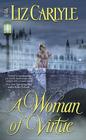
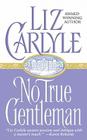
a woman of virtue no true gentleman
A Woman of Virtue and No True Gentleman by Liz Carlyle

Both of these novels contain very decent mysteries. In A Woman of Virtue, Cecilia, the heroine, is being stalked by a serial killer. I enjoyed this mystery more for the atmosphere than anything else. No True Gentleman is more of a proper mystery, with a very Bogart-and-Bacall chemistry between the hero and heroine.


There are also plenty of mystery novels with a strong romantic sub-plot. Some of my favorites:

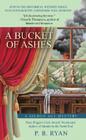
still live with murder
The Gilded Age series by PB Ryan

This series takes place in Gilded Age Boston, with not-quite-lily-white governess, Nell Sweeney. Her partner in crime solving is the über-sketchy Dr. William Hewitt, the son of Nell's employer and the black sheep of the family. William survived in Andersonville Prison during the Civil War, while his elder brother died; and now dude's got some major problems, like drug addiction and gambling.

I love the relationship between Nell and Will in this series, and the kiss they share in the train station at the end of Murder In the North End was one of the best literary kisses I've ever read. I highly recommend these books!


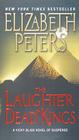
the laughter of dead kings by elizabeth peters
Vicky Bliss mysteries by Elizabeth Peters

Vicky Bliss is an art historian who is involved with a dashing art thief, Sir John Smythe. An art historian and art thief--could there be a better partnership for dramatic potential?


murder in volume by dr meredith

Reading Group mysteries by DR Meredith

Megan Clark is a forensic archaeologist in Amarillo, Texas, who also happens to be a huge mystery fan. When people are murdered, she and her book club, Murder by the Yard, decide to investigate. The only voice of caution is Ryan, Megan's best friend.

Meredith has a history of May/December romances in her novels, and this is no exception. Ryan is 30+ years Megan's senior (if I remember correctly), and certain that she could never be attracted to an old geezer like himself. Megan, much like Brennan on Bones, remains oblivious. I loved the sweet romance between these two, but Meredith has an absolutely nasty habit of hitting the reset button on Megan and Ryan's relationship between one book and the next. Perhaps it's for the best that she stopped writing this series.


Do you have any favorite novels that cross over between mystery and romance?

Wednesday, February 8, 2012

Interview with RJ SILVER

RJ Silver

Today I'm pleased to have a chance to interview RJ Silver, who writes wonderful, entertaining short stories such as The Princess and the Penis (review here) and The Ballerina, the Gymnast, and the Yoga Master (review here), and My Third-World Girlfriend (review here), all of which are must-reads if you enjoy romantic comedy. I thought it would be fun to ask RJ a few questions about his books and being an alien.

Tasha: Welcome, RJ! What inspired you to start self-publishing short stories?
RJ Silver: I got fed up with the publishing establishment. I had one of the top literary agents in the world, and my thrillers were making the rounds with senior editors in the biggest publishing houses, but they seemed to want to cookie cut me into a marketing package, often requesting changes to my books solely to satisfy marketing demographics. That was a disheartening commercial end to my long creative journey, so I said “the hell with it” and decided to write just for fun.
Tasha: Do you consider yourself a "romantic" writer? In content, not personality. ;)
RJ: Well, first of all, you’re asking a man a question with the word “romantic” in it. There’s not a man on this planet who can tell you what that word means, as we rely completely on women to explain it to us. I do believe in love, however. And long-term relationships. And positive, uplifting thoughts. You mix all those together with a little humor, and that pretty much explains why I write the stories I do.
rj in a pub

Tasha: You're obviously well-traveled. What's your favorite book store in the world? Or, alternately, what's your favorite pub?

RJ: You know, I was never a bookstore guy. I tended to get hooked on certain authors, then go from store to store buying everything that author ever wrote. As for pubs, there have been so many (blush). I like little quirky places, full of oddball characters and good-natured buffoonery. You know, some place I easily can fit in.
Tasha: Do aliens like cats?
RJ: Not this alien. Well, it’s not that I don’t like cats. I just don’t understand them. I mean, you treat a dog well, he’s going to lick your face. Cause and effect are very clear. But with a cat, I never know what its thinking. I’ve tried to be affectionate with some, only to have them hiss and claw at me. Others, I’ve completed ignored, only to have them jump on my lap and purr. I’m starting to think they’re collectively messing with me, then getting together to chuckle about it afterward.
Tasha: Since you're an alien, have you thought about writing science fiction? Attack of the Amazonian Aliens, etc.?
RJ: As I’m a huge sci-fi fan, I’ve definitely thought about it. But you have to remember that, given where I’m from, writing about humans is science fiction!
Tasha: In My Third-World Girlfriend, is there a connection between sexual, cultural, and economic dominance?
RJ: Totally. Actually, it goes further than that, becoming outright exploitation of poor women by rich men (relatively speaking). Worse still, it’s exploitation that all too often ends in broken hearts. I see it every day here in Bangkok and it disgusts me, which is what compelled me to write My Third-World Girlfriend in the first place. Being in love with a smart, well-educated, strong Thai woman, I also wanted to combat the stereotype of Thai women as being all bar girls and prostitutes. That part of society does exist here, but the vast majority of Thai women are a lot more like Kinlaya (and thus Jan).

It’s  been very interesting to observe the reaction to this book, incidentally. I think most of my fans (predominantly women) didn’t really like me venturing into quasi-serious subject matter, which kind of surprised me, because usually women are telling me to grow up and act more responsibly.  But when I’m writing, they seem to prefer the other me, you know, the one they make sit in the corner three times a day for lengthy timeouts.
Tasha: You like to play off of stereotypes in your stories. What's one cliche you would love to satirize that you haven't yet?
RJ: Ooh, don’t get me started. I have so many characters I’m experimenting with. The ultimate pessimist, for example. I’m such an irrepressible optimist, I think it’d be fun to invert that perspective. I’ve had so many clashes and with bureaucracies and authority figures in my life, I’m definitely going to poke some fun at one of them at some point. And we still live in an age of such repressed female sexuality (despite having come a long way), I see a sexually voracious female character in my future, too (a kind of reflective satire, where you satirize something by way of its opposite).
Tasha: What would you recommend a Western visitor in Thailand never do?
RJ: Go to Bangkok’s red light district. There’s a lot of human suffering down there. Don’t feed it.

Thank you, RJ! Please check RJ out on the webbernets at his Blog, Twitter, FaceBook, and GoodReads.

Tuesday, February 7, 2012

Review: MY THIRD-WORLD GIRLFRIEND by RJ Silver

book cover

Gerry is a middle-aged man depressed by his life-long history of failed relationships and women throwing things at him, not necessarily in that order. He's doing some soul-searching in the airport when he overhears a trio of dedicated rakes (for lack of better adjective) planning to move to Thailand where, they believe, the women will be easier to deal with because they haven't heard of women's liberation. Soon Gerry finds himself in Thailand, torn between the age-old conundrum of trying to please his new girlfriend and his old buddies, whom his girlfriend naturally hates because they are dicks.

I really liked RJ Silver's The Princess and the Penis (review here) and The Ballerina, the Gymnast, and the Yoga Master (review here). My Third-World Girlfriend is a little more serious than either of those stories, but it's also more grounded in reality--comparatively speaking, of course.

There's a definite connection drawn in this story between economic and sexual dominance. The West has a long history of going into Asia and doing whatever they want, and Gerry's three buddies continue that with the justification that people in Thailand don't know any better. "...if finances are going to force us to settle down now, I'd rather find a woman less inclined to violence," one of them says. Another of the three states, "The Chinese are too capitalist now. The vomen [he's German] there vant so many things, vee'd have to share von just to split the costs." And, once Gerry moves in with his girlfriend, she controls the household budget.

There are lots of funny one-liners in this novella, but I think what makes My Third-World Girlfriend feel more heavy than Silver's other stories is that Gerry's buddies have absolutely no redeeming qualities. In both TP&tP and TBtG&tYM, there are very few characters who aren't likable, even if they are misguided. In My Third-World Girlfriend, more than half of the characters--Gerry's friends--are totally hopeless. It kind of makes the story almost a battle between good and evil. You want to be like, "Don't listen to Hank the Relationship Yoda, Gerry!"

My Third-World Girlfriend wasn't quite what I was expecting, but then I don't think Silver's novellas have ever been what I was expecting, and that's a good thing. I would definitely recommend it for anyone who enjoys funny, romantic stories.


Musical Notes: "Only Daddy Who'll Walk the Line" by Waylon Jennings


Saturday, February 4, 2012

Movie Review: MIDNIGHT IN PARIS


Originally released: 2011
Starring: Owen Wilson, Rachel McAdams, Kathy Bates, Adrien Brody, Marion Cotillard, Carla Bruni, Michael Sheen
Directed by: Woody Allen
Based on: Woody Allen's imaginings of the phrase "midnight in Paris."

Gil, a Hollywood writer and aspiring novelist, is in Paris with his fiancée. He loves the romance of Paris, but she cares more about following around her pedantic friends. From the start, it's pretty clear this relationship isn't going to go anywhere. Then, after trying to make his way to his hotel one night, Gil is pulled into an olde-timey car by a bunch of partiers and swept away to 1920s Paris, an era he idolizes.

car full of drunks

It would be more than fair to call Midnight In Paris a love letter to the City of Lights, but the portrait it paints is distinctly America's love affair with Paris, not Paris as she actually is. The places Gil visits with his fiancée are in every travel guide you can pick up, and the people he meets on his forays to the past are predominantly American ex-pats: Cole Porter, Josephine Baker, Ernest Hemingway, Man Ray, Gertrude Stein. This isn't a film that strives to shine a new light on Paris; it buffets you with every romantic stereotype of the city there is.

The best parts of Midnight In Paris are, of course, the scenes that take place in the 1920s. Gil goes to the coolest parties, meets everyone worth knowing, and gets writing advice from his idols. Who wouldn't love this scenario?

Of all the characters he meets in 1920s Paris, Ernest Hemingway was my absolute favorite. I literally gasped when he first appeared on-screen. Ernest freaking Hemingway! I hate the guy's books and even I would geek out if I got to drink with him. Plus, he gets the best lines in the entire film (Gertrude Stein gets a few good ones in, too), and talks just like you would imagine Hemingway would talk if he was reading one of his own books aloud. It's hilarious.

ernest hemingway

As for the other 1920s characters, like Dalí, Stein, and the Fitzgeralds, their personalities felt watered-down in order to be more palatable and attractive. But I was surprisingly okay with that. This movie is pure fantasy, after all, and doesn't make any claims toward historical (or contemporary, for that matter) accuracy.

There are two connected thematic threads running through Midnight In Paris: one is the fear of death (it IS a Woody Allen movie, after all). Hemingway says, "You'll never be a great writer if you fear dying. Do you?" "Yeah, I do. I would say it's my greatest fear," Gil replies. I would say his fear of FAILURE is more of what's keeping him from taking chances in his writing and his life, but whatever you say, Ernest.

The second theme is one of romanticizing the past. It seems ironic that someone whose greatest fear is death would idolize only dead writers, but it's also appropriate. As I said, Gil is more afraid of failure--of living--than he is of death. The lives of artists in the past is comforting to him because from the perspective of the present, it seems as if they knew more or less what they were doing. But they were just as in the dark and uncertain as we are.

Midnight In Paris is a good movie--it's perfectly paced, hits all the right notes, is gorgeously shot, and Owen Wilson is ideally cast as the lead. It's funny and romantic and whimsical. If you love Paris or literature, you HAVE to see this film.

Quotable Quotes:

Gil: I would like you to read my novel and get your opinion.
Hemingway: I hate it… If it's bad, I'll hate it because I hate bad writing. If it's good, then I'll be envious and hate it even more. You don't want the opinion of another writer.
________________________

Hemingway: If you're a writer, declare yourself the best writer! But you're not as long as I'm around.
________________________

Hemingway: It was a good book because it was an honest book, and that's what war does to men. There's nothing fine and noble about dying in the mud unless you die gracefully, and then it's not only noble but brave. [Makes no sense]
________________________


________________________

Gertrude Stein: The artist's job is not to succumb to despair but to find an antidote for the emptiness of existence. [LOVE this one]
________________________

Gil: You can fool me, but you CANNOT fool Ernest Hemingway! [LOL]

Thursday, February 2, 2012

Discussion: THE FLIGHT OF GEMMA HARDY by Margot Livesey

flight of gemma hardy cover

Today I'm discussing The Flight of Gemma Hardy by Margot Livesey with Colette from A Buckeye Girl Reads. This is part two. To read part one, please head over to Colette's blog, then come back! :)


Did you notice that whenever someone drove Gemma around, they braked for small animals?

Tasha: Yes. This book was filled so many random details. Maybe it's a symbol of something, but if so, I don't know what.

Colette: You are right, they always did break for small animals. I'm sure it was a metaphor for something. However when I read I don't look for metaphors, so when used in books they are always lost on me unless it's super obvious. There were a lot of random details in this book, and I'm sure they all were connected in some way that we are missing.

Tasha: I do read for metaphors and symbolism, and if the details represented anything, I think it was an unwillingness on Livesey's part to kill her "darlings." Perhaps she added extraneous detail because she wanted the novel to sound "Victorian" and didn't understand that the detail was there to make a point? I did like her writing style, but this book needed a lot more work and a heartless editor.


Birds are mentioned a lot throughout the book, what do you think they were trying to symbolize?

Colette: At first I thought the bird thing was there just to connect us to the original story of Jane Eyre. Now, though I'm thinking that it could have been a metaphor for how much Gemma changes... and the different birds mentioned show her changing from someone with little confidence to someone who is sure of herself. I thought birds were an odd hobby for a young girl to have in the era this book was in.

Tasha: I thought the birds were a symbol of Gemma's longing to be independent and an adult. That's probably why she and Sinclair reunited on the plane.


Why did you keep reading?

Tasha: lol Well, when I was in the first part, I was holding out hope the second part would be better, even though you warned me it wasn't. And at first I did really like second part, with the description of the Orkney's; but then it started to feel like it wasn't flowing naturally and things were just happening because they happened in the original Jane Eyre, you know what I mean? By then I wanted to finish it just so I could whinge about it, haha. ;)

Colette: I did love the Orkneys landscape. The descriptions were beautiful. I think you are right, the problem with the second half is that things were happening with the original version, only updated to match the time period of this book.


What did you think of the ending when Gemma goes to Iceland to reconnect with her mother's family?

Colette: I hated the ending. I liked her going to Iceland, but unlike in Jane Eyre, I didn't understand why her family couldn't contact her after her uncle died. Why not hire someone to do it? Why do think they had Gemma be from Iceland instead of England? I couldn't figure that out... except to have it be a reason for her aunt not liking her.

Tasha: The whole Iceland thing did seem pointless. For one, she was doing fine without her family, I didn't get why finding them was such a pressing issue she HAD TO STEAL MONEY FROM HER FRIENDS to go there (again, unlike Jane, Gemma's actions strike one as selfish at best and amoral at worst). For another, that wasn't much of a family; and even if she did find them, who cares? They live in frigging Iceland! This isn't going to make a significant difference to her life. Good luck making international calls, Miss I-don't-know-how-to-use-a-phone.


What did you think of the book overall?

Colette: This is one of those books that when reading reviews on GoodReads on I felt like I read a completely different book then everyone else did. I can't help but wonder if it's because I was expecting a little romance and didn't feel like that part of the book came through very well at all. Do you think that is why we, as romance lovers had such a hard time with this book?

Tasha: I think it's reasonable to expect some romance in a novel that advertises itself as a Jane Eyre adaptation, but the main reason I didn't like it was because of Gemma. Jane Eyre is about a woman who never compromises her ideals to make her life easier, but still gets what she wants. Gemma is like the female version of Meursault from The Stranger. She doesn't have ideals, she's just out to get everything she can for herself... and also the characterization was really weak.

Although Colette and I didn't hate The Flight of Gemma Hardy, it definitely didn't get better as it went on, and the ending was horrible. You'd be better served to spend your time reading or rereading Jane Eyre over this trying-too-hard-but-still-not-getting-it adaptation. We would like to thank the publisher for providing us with copies for review, though!

LinkWithin

Related Posts Plugin for WordPress, Blogger...