Showing posts with label thriller. Show all posts

Saturday, November 26, 2016

A Heap of Mini-Reviews

I've been neglecting book reviews on this blog for much too long. The problem is, while I do have things to say about the books I've been reading, I rarely have bunches to say about them. So, enter mini-reviews!

For this batch of mini-reviews, I'm looking at a mystery, YA dystopian, fantasy novel, and thriller. Which were worth my time and which made me want to set fire to something? Read on to find out!

noblesse oblige cynthia smith
Noblesse Oblige by Cynthia Smith (mystery)

Emma Rhodes has a very unusual job: essentially, she's a private problem resolver. Rich people hire her to solve their problems, big or small, in just two weeks for the low low fee of $20,000. Business is strange, but good: Emma wears the best clothes, drinks the best booze, and jets between her three homes in NYC, London, and Spain. On this particular week, she's house-sitting in Bruges when she happens to be in the right place at the right time to stop the kidnapping of a member of the Belgian royal family. The royals quickly retain her services, but Emma soon realizes she may not survive the two weeks until she can collect her fee.

I read this book when I was a teenager, and I remember being all about Emma Rhodes. She has everything a girl could want: a life full of travel, handsome men, excellent food, exciting puzzles to solve, and best of all complete independence. She's practically the female version of James Bond. As an adult, I found this more irritating than anything else (jealousy? perhaps) and also found it hilarious how Emma goes into rants that leave her sounding like an octogenarian whig. Some of the things Emma has issues with:

  • Kids these days! They blame their parents for everything!
  • Cell phones: terrible invention of the 20th century, or WORST invention of the 20th century?
  • People who don't say good morning. Even if you're a not a morning person, there's no excuse for being rude!

Anyway, I did like this book, but Emma probably won't be my role model. Anymore.

the heir
The Heir by Kiera Cass (YA dystopian-ish)

Princess Eadlyn is the first female to ever be in line for the crown, thanks to her politically progressive parents. But despite their open-minded policies, her parents think forcing her to submit to the traditional Selection–where suitors are gathered from all over the kingdom to compete for a royal's hand in marriage–is a good idea. Eadlyn disagrees, but is forced to go along with it. Nevertheless, she is determined never to fall for any of these "boys."

This is the first Selection book I've read. It was okay. I liked that Eadlyn was a total bitch, but in a good way. Cuz, you know.

bitches get stuff done gif


I found the details of the Selection often vague or illogical. For example, the cameras–when and where are these people being filmed? Sometimes it sounds like there are hidden cameras on them all the time, and sometimes it's only when they're permitted. If they're only allowed during official times, how would they have "caught" her kissing Kyle? Makes no sense. Perhaps it's explained in the previous three novels.

The book ends on a cliffhanger, sort of, and there's another book to wrap everything up, but I'm not sure I'm going to read it. I don't really care who Eadlyn winds up with and the drawn-out passages about other couples in love and how mayyyybeeee she might want that (or not) made me want to scream. How on earth has this been stretched into five books?

masked city genevieve cogman
Masked City by Genevieve Cogman (fantasy)

Librarian Irene has been permanently assigned to Viction Steampunk London with her apprentice, Kai, a dragon. Then Kai is kidnapped by the fae, the dragons' mortal enemies, and taken to a fae-controlled Venice that's a mix of fantasy, dream, and nightmare. Will Irene be able to rescue him and prevent a war between the dragons and the fae that could stretch across worlds and destroy everything the Library has accomplished?

I liked previous book in this series, The Invisible Library, but I adored Masked City. First of all, Venice! And not just any Venice, but the Venice of imagination, with prisons straight out of a Piranesi sketch and a constant whirl of masked balls and mysterious happenings. Another highlight was Sherlock Holmes–oh, sorry, he's called Vale in this alternate–who remains true to the Holmesian tradition by being at once an irritating jerkface and completely awesome. I am totally shipping him and Irene, I don't care about the canon. The ending of the story was very abrupt but left me wanting more and more. I definitely recommend this series!

the chemist book
The Chemist by Stephenie Meyer (thriller)

The Chemist is basically Meyer channeling David Baldacci or Lee Child. Unfortunately she's really bad at it. Basically, you've got a woman of several names and unknown age, hiding from an evil government department she used to work for. What exactly this department does, is called, how she got the job, and what she did there, is never specifically addressed. At some point someone decided she and her mentor were expendable (again, we're not really told why) and attempted to kill them both. They succeeded with the mentor, but she survived. Now she's on the run, dodging assassination attempts. Perhaps she would have more luck with this if she moved beyond driving distance of DC (just a suggestion on my part but what do I know). But then! The department contacts her, asking her to return to the fold and stop a nonsensical terrorist plot that only she can prevent.

I appreciate that the smart, ruthless main character in The Chemist is a woman–you'd never see her like in a Child novel, for sure–but nothing in this book sounded plausible, and reading the long-ass explanations of our paranoid heroine's daily routine was like watching paint dry. Meyers gives us all the details we don't give two shits about and skips over the information that would make this book feel at least slightly grounded in reality. When the secret twin showed, I was done.

ugh

Major ugh.


Stay tuned next time for more mini-reviews!


Discus this post with me on Twitter, FaceBook, Google+ or in the comments below.

Wednesday, December 2, 2015

Review: THE KILL ARTIST by Daniel Silva


the kill artist

I've been a fan of Daniel Silva's Gabriel Allon series ever since reading The English Girl, and since then I've been making my way–backwards, mind–through the series. I kind of stalled out on The Messenger, but I did really want to read the first Gabriel Allon book, The Kill Artist, out of sheer curiosity. It was a unique experience.

If you've read any of the more recent Allon novels, you know there's a kind of formula to how these stories work: Gabriel Allon, superstar art restorer and retired Israeli assassin, is approached by a spy organization–sometimes Mossad, sometimes not–to take care of a situation ONLY HE can resolve. Reluctantly, Allon agrees. Relying on his vast international network of friends and frenemies, Allon eventually saves the girl and the day.

The Kill Artist is not like that. Oh, Allon is an art restorer dragged into hunting down a terrorist and assassin by his old boss and father figure, Ari Shamron, but that's about where the similarities end.

First of all, the book feels a little dated. The Kill Artist was published in 2000, before September 11th, and it shows. I wouldn't say the terrorists seem quaint, but they're definitely old school, and the attitudes of the spy organizations and the world are completely different. Little things like what we would consider extremely lax airport security, or open borders, really underscores how long ago this book was written. The US is generally dismissive of the possibility of terrorist attacks, and interagency cooperation? You must be kidding.

Secondly, The Kill Artist isn't really about Gabriel Allon at all, it's about the Jewish diaspora in Europe and how it forms its own unique intelligence network. Silva's point seems to be that Israel may be a country, but it's one that represents an entire people of many different nationalities, a huge advantage on the intelligence front.

Finally, Allon is not a hero in The Kill Artist. He doesn't save the girl, he doesn't find the terrorist OR kill him, and his character is not admirable. He's really kind of a useless jerk, actually.

What surprised me most in The Kill Artist were revelations concerning Allon and his first wife, Leah. In every Allon book we learn that Allon's car was bombed in Vienna many years ago, in retaliation for his assassination of members of Black September. Allon was not in the car at the time, but his son and Leah were, and afterward his son died while his wife went mad with grief.

spoilers
Yeah, the rest of this review is going to have a ton of spoilers.

What we learn in The Kill Artist is that shortly before the explosion, Allon slept with one of his field agents, and the reason only Leah and his son were in the car was because she'd stormed out after she found out about it. She was leaving him, in other words (good for her).

A Gabriel Allon who sleeps with another woman he's in love with while his wife is in a mental hospital and can't even remember him is one thing; ishy, but you can't blame the guy. Having casual sex with his coworker in exotic locales while his wife is at home with their kid is whole different deal, one I would not have expected from his character.

As for The Other Woman herself, Sarah Halevy, I found her purpose in the book to be pretty annoying. It makes no sense that she's a famous supermodel because if she is, WOULDN'T PEOPLE RECOGNIZE HER? The only reason for it I could see was to make us feel less bad about Allon sleeping with her. She's the most beautiful supermodel in the world! How could he be expected to pass that up? Riiiiiiiiiight.

Usually by the end of a Gabriel Allon novel, I like and respect his character, but that was impossible to do by the end of The Kill Artist. It's quite a cynical novel, and doesn't exactly sync up with what I've come to know of the main characters. I'm not sure I would recommend it to newbies of the series, but I'm glad I read it.


Discus this post with me on Twitter, FaceBook, Google+ or in the comments below.

Monday, September 15, 2014

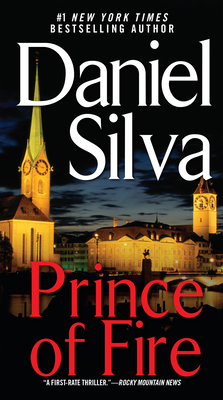
Two Gabriel Allon Novels by Daniel Silva: THE HEIST and PRINCE OF FIRE

As most of you probably know by now, I'm a big fan of Daniel Silva's work. It all started with 2013's The English Girl, one of the best thrillers I've ever read. After finishing that novel, I decided to dig into Silva's backlist and, unintentionally, started reading the Gabriel Allon series backward. But recently I broke with that trend and skipped both ahead and backward, reading Silva's latest—The Heist—and 2006's Prince of Fire practically back-to-back.

Unfortunately I wasn't terribly impressed with either of them.

For those of you who aren't familiar, Silva's series follows the adventures and misadventures of Gabriel Allon, the greatest spy of all the times. Born to a Holocaust survivor, Allon was recruited by the Mossad after the 1972 Olympic Games in Munich. His job: hunt down the members of Black September and assassinate them. Allon, who originally wanted to be an artist, couldn't paint original pieces afterward and instead became an art restorer—an art restorer frequently called in by the Mossad to take care of shit-head terrorists because HE'S THE ONLY SPY IN ISRAEL. Or something.

prince of fire cover


In Prince of Fire, Allon is restoring an important altarpiece in Venice, when he's called back to Israel. His information has been leaked, possibly to the son of one of the Black September men he assassinated. Even worse, the man gunning for Gabriel has figured out where his wife, Leah, is hidden.

Bridget from Portable Pieces of Thoughts told me I should read Prince of Fire next, and I can kind of see why. This is the book where Allon's core team is formed, and so far the only one I've read where Leah plays a big role in the action. Honestly, the way Leah is treated in this book infuriated me. See, Leah keeps reliving the same day—the day her and Gabriel's son died in a car bomb explosion—over and over. Why? Maybe it's because she's hopped up on meds and doesn't do anything but stare out an asylum window all day, who knows! Meanwhile, Gabriel is cavorting with his nubile young lover, Chiara, half a continent away in Venice. Channeling Mr. Rochester much there, buddy?

That's bad enough, but then Leah actually leaves the asylum for a while. And she actually starts getting better! Imagine that. Like, she starts interacting with her world some more and pulling herself out of her fugue states. At least until Gabriel gets ahold of her and sticks her back in another asylum. This is one kidnapping where I was rooting for the bad guys to get away with it.

And don't even get me started on Chiara, who is beyond annoying in this book. If the guy you're in love with is 1. married, 2. promised to marry you, and yet still 3. isn't divorcing his first wife, then there's a problem. The fact that Gabriel pulled the "Leah needs me right now," card quite frankly boggles my mind. At least Chiara left him, although I could have done without the tearful goodbye and Gabriel's attitude of self-sacrificing nobility.

grumpy clint eastwood
Uhg. Get off my lawn.


After finishing Prince of Fire, I resolved to not dig into Silva's backlist any farther, except maybe to read the first Gabriel Allon novel. The books are just getting to be too annoying.

I was, however, still really looking forward to reading Silva's latest release, The Heist. Silva's novels have gotten progressively better over time, so if the trend continued The Heist was shaping up to be completely amazeballs.

Obviously my expectations were really high. Too high.

the heist cover


In The Heist, Gabriel is back in Venice, once again restoring something. Art restorers gonna restore. He's waiting for Chiara to give birth and for Uzi's term as Boss Guy of Israeli Intelligence (I don't know the official name) to end so that he can take over. It's like a mini-vacation, if you will. And then the Boss Guy of the Carabinieri Art Squad (again, don't know the official name, but you get the idea) shows up and "asks" Gabriel to look into the mysterious death of an art collector. Gabriel can't get one moment to himself, I tell ye, NOT ONE MOMENT.

Anywho, after walking around the crime scene for, like, thirty seconds, Gabriel figures out Fancy Art Collector Guy (again, not the official title) was actually and very unsurprisingly Stolen Art Smuggler Guy. And the game is afoot. Will this all tie into a Middle-East terrorist plot to blow something up? This is a Gabriel Allon novel, soooooooo: probably, yes.

The Heist wasn't a bad novel by any means, but so much of it felt like a retread. The use-an-art-smuggling-ring-to-find-terrorists element was extremely reminiscent of the same device Silva employed in The Fallen Angel. Gabriel uses a Muslim woman to gain access to terrorist bank accounts, just like he did in Portrait of a Spy, and said woman is kidnapped, just like she was in Portrait of a Spy (running tally of women kidnapped in this series so far: 4). Even minor characters from The English Girl make a reappearance. And yes, I did like those characters in The English Girl, but there's no reason for them to be in The Heist. Like Christopher Keller literally has nothing to do; I kind of even forgot he was there.

To be fair, I thought Silva executed all these elements more skillfully in The Heist than he did in his previous novels, but it felt a tad phoned in. The Heist had no anima, no oomph. Bridget told me that Silva had trouble finishing the book and only did so because of pressure from his publisher, which if true would explain a lot. Even with the lack of inspiration, however, Silva is still on top of current politics in the region, and what he has to say is still extraordinarily relevant. It's just not terribly new.

The Heist is a novel where the main character is waiting—waiting for his new life as a father and Intelligence Director Guy (I should really look these titles up) to begin and his old life as Broody Super Secret Agent Man to end. Accordingly, it feels like the author is waiting, too. Hopefully whatever Silva is waiting for will happen between now and his next book.


Discus this post with me on Twitter, FaceBook, Google+ or in the comments below.

Monday, June 9, 2014

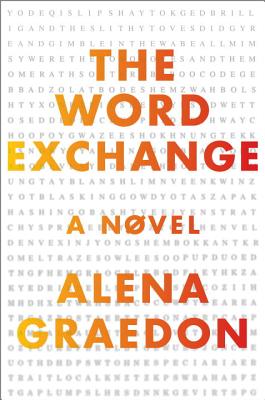
Review: THE WORD EXCHANGE by Alena Graedon

the word exchange cover

I received a copy of The Word Exchange from the publisher for review consideration via Netgalley. For more on my review policies, please see my full disclosure page.

In our not-too-distant dystopian future, the world is connected through Synchronic Memes, the next generation of smartphones that anticipate their owners' needs. Feeling sick? Your Meme will order a hot toddy for you in a restaurant even though you were planning on ordering water. Trying to come up with a specific word and drawing a blank? Simply look at your Meme and the word will pop up! Synchronic got all these words by buying up dictionaries and publishing companies; but when the editor of the last surviving dictionary in North America disappears just before Synchronic announces a new device that literally inserts into your brain, the editor's daughter, Ana, begins to suspect Synchronic's devices aren't as helpful and benign as they claim.

Guys, it took me soooooooooo long to read this book. Not that I wasn't enjoying it while I was reading it—if I hadn't been I would have DNF'd it—but by the time I got to the end I kinda felt like the time I invested in it wasn't worth it. So that was annoying.

Let me back up: I started The Word Exchange in a bit of a MOOD, but it immediately sucked me in. The story starts off with Ana immediately discovering her father is missing. She knows something's very wrong but she has no idea what. Then the point of view switches to Bart, her father's favorite employee, who is secretly in love with Ana. I absolutely loved Bart! The way he expresses himself is so unique—he uses a lot of really big and obscure words. It sounds tedious but it's actually really charming. Alena Graedon is super clever in the way that she uses Bart's speech patterns to give the reader a sense of how malignant and pervasive word flu is. There IS a lot of backstory at the beginning of the novel, but being so invested in Bart and his storyline, I didn't care.

It was around the middle of the book, after Ana discovers the Nautilus sweatshop, that my patience started to wane. There was a whole lot of wondering what was going on and not much explanation or investigation into discovering answers. Also, at that point I was getting pretty sick of the backstory. I may have started skimming a little.

Then came the end. WHAT A DRAG. Lots of explanation about stuff I didn't care about at all, drawn out for the longest possible time with little in the way of a satisfying emotional resolution. I could have skimmed like a mutha through the second half and still would have gotten the same result as far as closure is concerned.

That said, I still recommend this novel.

jon snow confused


I know, I know. Yes, a bad ending can completely ruin a book, but I think The Word Exchange is clever and well-crafted enough to check out anyway. If I hadn't been busy that month (yes, it took me around three weeks to finally finish this thing), it probably would have gone a lot faster (? Maybe. Initially my Kindle told me it would only take 6 hours to read, although how that's supposed to be possible when there's one chapter for each letter of the alphabet and each chapter takes an hour to finish, I don't have any earthly idea). Graedon takes numerous high-concept ideas and complicated theories and synthesizes them all into something that's easily digestible and approachable, with a relatively good story to boot. I thought The Word Exchange was going to be pretentious and annoying, but it's not—for the most part it's surprisingly fun and fast-paced.

Finally, there's just something so, so right about reading a book where smart phones destroy our civilization WHILE ON A SMART PHONE. Oh, the delicious irony.

The Word Exchange is a really good book, but not a satisfying one. If you're into literary thrillers or books about books, though, you should definitely give it a shot.


Discus this post with me on Twitter, FaceBook, Google+ or in the comments below.
Monday, March 24, 2014

Review: PORTRAIT OF A SPY by Daniel Silva

portrait of a spy cover

Gabriel Allon is RETIRED, dammit, and living in Cornwall when jihadists launch coordinated suicide bombings in major cities all across Europe. After running across one said jihadist in London and trying—and failing—to kill him, Gabriel is politely deported to the US, where the CIA demands his help. They want Gabriel to search out the mastermind behind the attacks, and Gabriel agrees. But will his perfectly laid plans survive the vagaries of American politics? I think we all know the answer to that question.

Things I learned from this book:

  • There are over 200,000 people working for the CIA, not counting independent contractors. Holy cow, people! With that kind of staff, it shouldn't be too hard to get a job there, right? Call me, Langley (NSA, you can keep your dirty nose out of my blog).
  • Somewhat related: 'Merica is the worst secret-keeper in the world. We're like that gossipy neighbor you only tell things to if you want the entire block to know about your biznas.
  • US "intelligence" policies when it comes to the Middle East could use a liiiiiiitle work. Example: the CIA director says to Gabriel, "We recruited this one Muslim imam who was all peace-this and harmony-that to spy on jihadist cells for us, and then it turned out he was a jihadist all along! Do you believe that shit?" Gabriel: "Ummmmm, no comment."


Bullet points aside, I thought Portrait of a Spy told a great story, probably the best story of the three Gabriel Allon novels I've read so far. It also reads "lighter," if that makes sense. I had the feeling like I was eating candy during this book: tasty and fun, but not very filling. Maybe I'm just getting used to Daniel Silva's writing style, or maybe the subject matter isn't as heavy or serious as in The English Girl or The Fallen Angel, but either way it seemed like an easy read.

I pretty much had no problems with this book aside from the one that's a major spoiler, so if you care avert your eyes.

In Portrait of Spy, Gabriel uses the daughter of a billionaire who supported jihadists to gain access to their bank accounts. You know pretty early on in the novel that she's going to die (because defiant women are killed, that's just the way it be), but the way she died really annoyed me. Instead of being outright murdered by her misogynist oppressors, she leaps in front of an AK-47 to save Gabriel's life. I'm aware that Silva was comparing her martyrdom, which proves to be genuinely inspiring, to that of the jihadists who blow themselves up (JWBTU? There has to be an acronym for that, the CIA loves acronyms) for essentially their own glory. But a self-sacrificing martyr seemed a little much. Actually the whole situation with her helping out the Mossad seemed a BIT unlikely, even if she did grow up in France and was a feminist, but whatever.

Other than that, Portrait of a Spy was a really good read. I think I'm starting to burn out on reading the series backward, though, even though it's been an interesting experience so far. There's a very brief mention of a character here who plays a major role in The English Girl, something I'd never have noticed or remembered if I'd read all the books in order (and which makes me wonder just how far in advance Silva plots these novels out). I do have book ten on my Kindle, but after I finish that one I might go to the first novel and read the books in proper order like a normal person. Wait... NORMAL? What am I thinking?


Discus this post with me on Twitter, FaceBook, Google+ or in the comments below.

Saturday, February 8, 2014

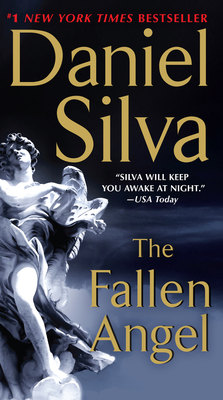
Review: FALLEN ANGEL by Daniel Silva

fallen angel cover

Gabriel Allon, the most famous retired spy in the world, is restoring a Caravaggio for the Vatican Museums when a museum employee is found dead, an apparent suicide, in St. Peter's Basilica (there's blasphemy for you). Luigi Donati, the Pope's secretary, asks Gabriel to look into the matter on the DL, and Gabriel agrees even though Luigi obviously knows more than he's telling. Soon Gabriel isn't just investigating a woman's death, but an art crime ring, the mafia, Hezbollah, and sundry threats against Israel.

Fallen Angel is the novel preceding immediately preceding The English Girl. I didn't know this when I started it, and I didn't mean to read this series backwards, but apparently it's happening. In any case, I wasn't as impressed with Fallen Angel as I was with The English Girl, although the novel was still entertaining and I'm increasingly fascinated by the character of Gabriel Allon.

Fallen Angel has the same basic structure as The English Girl: the story starts with a very specific, localized mystery, then expands to international threats. I loved the beginning of the book—it had the flavor of a Dan Brown novel, only really smart and well-written. I thought Fallen Angel was going to be all about art crime and I was super excited! (Side note: I always thought it would be awesome to be part of the FBI Art Crime Team.)

Unfortunately, I started having trouble with Fallen Angel in the transition from Rome and the art crime mystery to Allon and his team moving against Hezbollah. There basically was no logical transition, it was just like, "Oh Hezbollah's behind everything somehow (???), and we have to stop them RIGHT NOW!" I am still unclear as to what exactly one had to do with the other, and how the characters arrived at this conclusion. Because the change was so abrupt, I was thrown out of the story. It felt like the Rome section of the book and everything else belonged in two separate novels. Good novels, mind you, but narratively they didn't fit together.

I also found myself very annoyed with Chiara, Allon's second wife. She wasn't in The English Girl much, and apparently that was all for the best, because in Fallen Angel I found her to be whiny, clingy, and a bit pointless. The scene that really made me roll my eyes was when she nobly waited in the hotel room while Gabriel bounced off to assassinate terrorists, and strained to hear the sound of sirens so she'd know he was alive. Because that was what Gabriel told her to do. EYE ROLL.

Even when Chiara was annoying me or the story was jumping around, though, Allon was such a compelling character that there was no way I would have even considered not finishing this book. And the climax in Jerusalem was perfectly done: intense, suspenseful, and completely over the top—but in a really fantastic way.

Bottom line: this is a very solid, intelligent thriller; it just doesn't have the epic scope that The English Girl does. It's quieter, less ambitious. Allon is a man haunted by his past in every city he visits, not so much fallen as trapped in Purgatory, but Fallen Angel isn't the novel that gives him a new start.

I will definitely be continuing with the series and am looking forward to spending more time Gabriel Allon.


Discus this post with me on Twitter, FaceBook, Google+ or in the comments below.

Thursday, January 23, 2014

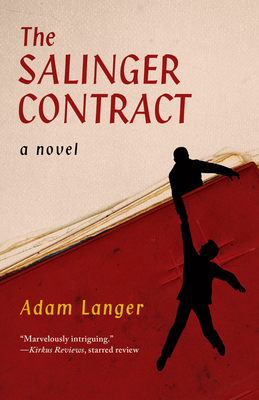
Review: THE SALINGER CONTRACT by Adam Langer

the salinger contract cover

I received a digital copy of The Salinger Contract for review consideration, which didn't influence my opinion of the book in any way.

Adam Langer is an emasculated writer playing house husband in Bloomington, Indiana. His life revolves around laundry, dirty dishes, and his daughters' ear infections. Adam hasn't finished writing a story in YEARS--creatively, he's impotent. But all that changes when he happens to meet up with a fellow author, Conner Joyce, a best-selling writer of thriller novels whose star is on the wane. At least, until he's approached by a bespoke Waldo Lydecker type named Dex. Dex has an offer Conner can't refuse: write a novel just for Dex, for two and a half million dollars. The catch? No one else can ever know about the novel or their deal. Of course, Conner accepts. But it isn't long before he suspects he's made a deal with the devil and turns to Adam for help.

Basically, I loved this novel. When I started it I was in one of those Simon Cowell moods. You know, when everything you pick up makes you go, "BORRRRING. Next!" Or maybe that only happens to me. ANYWAY, The Salinger Contract managed to capture and hold my attention from page one despite my mood. It's fast-paced, unputdownable, and positively delightful, especially if you're a fan of olde-timey crime novels or film noir movies.

Like his friend, Conner, Adam uses an excess of detail to make what would be an otherwise outlandish plot convincing. Thankfully this detail does not involve unnecessary clothing descriptions or other crap I don't care about; instead, the details focus on books, which apparently does not bother me at all. For example, instead of reading his kids an unnamed book before bedtime, Adam reads them Lyle, Lyle, Crocodile. Love that. I also found the portrait Langer paints of life in a small university town to be wry, cynical, and dead-on accurate. One of the university professors Langer describes is so exactly like a former professor of mine that I actually checked to see if he ever taught in Indiana (he hadn't).

Adam's portion of the book was so realistic and pitch-perfect that when Conner's completely bizarre story began, I was 100% ready and willing to be sold on it. The only glitches that niggled at me were Conner's hesitation in signing Dex's contract—I'd be like, "Givemethatthankyoubyenow." And also, it didn't sound like Conner put any money aside for taxes. I think the IRS would probably notice if your bank account suddenly went up by 2.5 million, don't you? I'll also say that I saw all the twists coming pretty early in the novel. But neither that, nor my little niggles about the tax thing, prevented me from thoroughly enjoying The Salinger Contract and wanting to know what happened next.

The thing about this novel is that it tells the type of story that any author or reader would WANT to be true. I mentioned at the beginning of this post that Adam starts the story as emasculated, incapable of creating anything. The same could be said of the other major character, as well: Conner is having problems with his wife, looking at having to sell his house and car, and feeling like his entire career consists of rewriting the same book over and over. Then he agrees to write a novel for Dex and suddenly everything's coming up roses, and not just in the financial department: he's full of inspiration, writing constantly, and his wife and he start trying for another baby. Likewise, in listening to and then telling Conner's story, Adam finds a way to save his family from destitution and discovers who he is—again, not just through money, but by using stories. The Salinger Contract isn't just a fast-paced thriller (though it is that), but a book about the power of stories to inspire people to the point that they're empowered to act out those stories in their own lives.

It's also about the connection between an author and reader that's formed through books. It's one the author's usually completely unaware of and not responsible for; but for the reader it feels very personal, possibly because it says more about them than the book. It's that relationship that gives a story life, and one that every author wishes for their work.

If you're a reader (and since you're visiting this blog, I'm going to assume that you are) who enjoys mysteries, thrillers, or books about books, I would definitely recommend The Salinger Contract. Oh, and I'm totally drinking at the Coq d'Or the next time I'm in Chicago. Cuz you never know.


Discus this post with me on Twitter, FaceBook, Google+ or in the comments below.
Friday, November 29, 2013

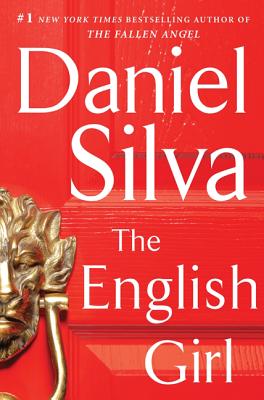
Review: THE ENGLISH GIRL by Daniel Silva

the english girl cover

Harper sent me a copy of The English Girl for review consideration, which did not influence my review in any way.

Infamous Israeli intelligence agent Gabriel Allon is enjoying his retirement from the spy business by dedicating himself to art restoration. But when an old friend in MI-5 calls in a favor, Gabriel agrees to go on the search for a missing English girl—technically woman—who just happens to be the Prime Minister's secret mistress. Will Gabriel be able to save the girl and find her mysterious kidnapper, a man who supposedly doesn't exist?

I think this is probably the best modern (as in, not in the public domain) spy/thriller novel I've ever read. Admittedly I don't read a lot of them, mainly because they tend to bore me out of my pie holes (I'm writing this during Thanksgiving... mmmm, pie). I managed to get through Mission to Paris, I'm not entirely sure how, and I can drag myself through a Dan Brown novel (with much whining about how long it is along the way), but that's about it. Even though it's in the same genre, however, The English Girl doesn't seem comparable to those books—it blows Mission to Paris and any other spy/thriller novel I've come across out of the water in terms of storytelling, writing, and characterization.

In the beginning, The English Girl feels slightly reminiscent of the TV show Scandal. The UK Prime Minister is being threatened with the publication of his affair if he doesn't give in to the kidnappers' demands, so he does what any powerful politician would: calls in the fixers to try and cover it up. As the story progresses, however, the problem evolves from something very specific and localized—find the girl and rescue her—into something with huge consequences for the British Isles and all of Europe. That probably sounds over-the-top, but it's not entirely unbelievable, and at least one of the things Daniel Silva mentions as a potential threat to Israel in The English Girl has recently come to pass.

But The English Girl has more than solid research and plausibility to back it up; for one thing, Silva is a really good writer. There's an almost a poetic use of repetition in the novel that reminds me a bit of Charles Dickens or the chorus of a Greek tragedy. It's the use of ideas and phrases to underscore cycles within the story, rather than the repetition of plot points just because you might not have gotten it the first time. I never once felt like Silva was talking down to his readers or assuming they're idiots—Allon is smart, and there were a few times where he was a few steps ahead of me. Finally, even though Silva's writing style is by no means humorous or light-hearted, there's an underlying wit to the novel that I loved. There are some great one-liners in The English Girl, mostly coming from Gabriel. Here are just a few of my favorites:

Hamdi... had been posing as a playwright, and Gabriel had given him a death worthy of his literary pretensions.

"Jews don't camp, Keller. The last time the Jews went camping, they spent forty years wandering in the desert."

"We have a saying in our service, Graham. We believe that a career without scandal is not a proper career at all."
"We're British," Seymour answered. "We don't have sayings, and we don't like scandals."

The English Girl is also a surprisingly emotional novel, something I've personally never encountered in a spy/thriller like this before. The director of Israeli intelligence accuses Gabriel of making emotional decisions, and it's true: even though he's a trained assassin, he's not some sort of automaton. He acts out of love, anger, and fear exactly as any normal person would, despite his far-from-normal life. But then the same is true for the other characters in the book, too, and the fact that there are personal feelings and motivations driving the characters and tying them together is one of the major reasons why I like the book so much.

I also enjoyed Christopher Keller, or "the Englishman," who serves as a foil to Gabriel. Unlike Gabriel, Keller behaves more like the trained assassins one encounters in movies and novels—a tough, cold-blooded, emotionless killer. But Gabriel doesn't buy his act, just like Keller doesn't buy into his old man routine, and watching the two of them work together is pretty entertaining.

Women also play a strong role in the novel, although it's an indirect one. The English Girl depicts, by and large, a man's game in a man's world, but those men have self-identities and beliefs that are shaped by their mothers, sisters, wives, and female friends. Again, this is an example of the emotional nature of the novel and how well-drawn the characters are. I'd hardly call The English Girl a feminist novel, but it does acknowledge the importance of women to men, and not just as some sort of sidekick or sexual object.

Finally, I liked how Silva took a standard thriller plot and turned it into something epic by taking Gabriel on a journey through the Underworld (metaphorically speaking, of course). He goes into hell and it's "white, pure white," to quote North & South. The English Girl isn't just an entertaining story, it's a book that's about something—resurrection, second chances, and accepting who you are and your place in the world.

Not that the novel was absolutely perfect, of course—Part Three was a much-too-long epilog, and there were some things that were left hanging or answered. But overall I not only enjoyed reading The English Girl, but was super-impressed with it. I am definitely going to be digging into Silva's backlist in 2014!


Discus this post with me on Twitter, FaceBook, Google+ or in the comments below.

Saturday, July 20, 2013

Review of THE LADY VANISHES by Ethel Lina White

cover of the lady vanishes book

(Actual title is The Wheel Spins, but Amazon and Goodreads have apparently decided to rename it. To be fair, The Lady Vanishes is a much better title.)

Iris Carr is a spoiled, wealthy young woman on holiday at some vaguely Alpine resort filled with English tourists. After catching the last train out to Trieste, Iris meets the bubbly Miss Froy, a middle-aged governess returning to England after years abroad. Iris decides to take a nap and when she wakes up, Miss Froy has disappeared. Even more strange is that everyone denies she was even on the train! Certain that something terrible has happened to Miss Froy, Iris enlists the help of the men folk, but they think she's crazy. After a while, Iris starts to wonder if they aren't right.

If you've seen the movie by Alfred Hitchcock, The Lady Vanishes, Ethel White's novel is very similar (in Fear in the Sunlight, Nicola Upson painted Hitch as someone who had no respect for the original work when adapting novels to film; she obviously knows shit-all about Hitchcock movies), right down to the time symbolism and British ethnocentrism. Honestly, the only difference between the book and the movie is that White gives us a ton of backstory about all the other English passengers on the train and why they don't mention they've seen Miss Froy, plus scenes of Miss Froy's family waiting for her in England. So we know from the outset that Miss Froy is real and not a figment of Iris's imagination, which kind of takes the fun out of the whole thing. I also really didn't care about the other English passengers. At all.

In other words, the movie is better than the book. Don't feel the need to read The Wheel Spins/Lady Vanishes, even if you love the movie.

That being said, I found the elaboration of themes in the novel interesting. You might be familiar with a story Hitchcock told François Truffaut in their 1962 interview about The Lady Vanishes and how it was based on a "true story" of a mother and daughter who traveled to Paris at the start of the Paris Exposition and checked into separate rooms in a hotel. When the daughter woke up from a nap, her mother was gone, her luggage had disappeared, and the room didn't appear to have been slept in. When the daughter asked the desk clerk, he said she'd checked into the hotel alone, and everyone else from the maid to the coachman who'd taken them to the hotel confirmed the desk clerk's story. People assumed the daughter was crazy. In fact, during the daughter's nap, her mother had died of the plague. The hotelier and city officials, fearing a plague scare would keep people away from the Exposition, decided to bury the body and pretend as if the woman had never existed.

That story is actually in the novel, along with several other urban legends that underscore how women are presumed to be neurotic and delusional until proven otherwise, and also how easily a woman's identity can be erased. I really liked that there are stories-within-stories in The Wheel Spins that served to create an atmosphere of paranoia on the train, although I don't think White cashed in on this as effectively as Hitchcock did.

Another thing I found interesting was the role of men in the story. There are only a few male characters, but the women are completely dependent upon them because only the men can communicate with the outside world (well, except for Miss Froy: she speaks 10 languages, although we never actually see her speaking any foreign language during the course of the book). The Professor and "Hare" (a reference to the white rabbit from Alice in Wonderland?), two Englishmen who help Iris, are both linguists and fluent in whatever language the locals speak; but even men who don't speak the language can communicate with the outside world. For example, the clergyman who stayed at the same hotel as Iris left every day to sit with the locals in the village, leaving his wife behind to remark that she didn't know how he communicated with them when he didn't speak one word of the language. A big deal is also made of the fact that Iris is absolutely terrible with languages, so that everything she says to local people on the train is interpreted through a male voice—and a misogynist male who thinks she's by turns annoying and delusional, at that. The Wheel Spins really underscores female dependency on men, much more so than The Lady Vanishes.

I actually did enjoy the first half of The Wheel Spins, but Iris started to get annoying because she constantly runs to either the Professor or Hare to fix things for her when that is CLEARLY not working. Why doesn't she do something herself? The second half is also filled with literally paragraphs upon paragraphs of exposition telling us about character motivation. TELLING, not showing. The conclusion of the novel was also a disappointment. I love the end of The Lady Vanishes movie because Miss Froy turns out to be a badass, and there are a ton of fun magic references and a shoot-out. That does NOT happen in The Wheel Spins. I won't spoil the ending for you, but it was really lame, drawn-out, and anti-climatic.

Basically, you could spend five hours of your life reading this book, or ninety minutes watching the movie. Not to mention the book isn't in the public domain (and yet the movie is... makes no sense), so you actually have to pay for it. Not worth it. I'd only recommend The Wheel Spins/Lady Vanishes to those with a vested interest in Pre-War women and literature.


Discus this post with me on Twitter, FaceBook, Google+ or in the comments below.

Saturday, June 8, 2013

INFERNO by Dan Brown — Discussion

inferno cover

It's the middle of the night in Florence, Italy. Robert Langdon, Symbologist!, awakes in a hospital room with no idea of where he is or how he got there. The doctors fill him in: he stumbled into the hospital with a gunshot wound to the head and passed out, muttering incoherently. Robert's suffering from amnesia and the last thing he remembers is sitting at home in Cambridge, Mass., chilling with a bottle of Tanqueray and a novel by Nikolai Gogol. Or was it Bombay Sapphire and something by Dostoyevsky? Either way, the only thing any of us know is that Robert Langdon really needs to work on improving his social life, and possibly cutting back on the gin. Then someone walks into the hospital and starts shooting at him! What-the-what? Fortunately, Robert escapes with the help of an attractive female doctor. Now all he has to do is figure out how he got to Florence, why he's even there, and why someone is trying to kill him. Mysterious!

When I started Inferno, Anachronist from Portable Pieces of Thought asked me if I wanted to discuss it with her. Something you should know about Anachronist is that she hates Dan Brown novels (you can read her review of Inferno on her blog today, incidentally), whereas I tend to enjoy them even though I think they're ridiculous. So what did each of us think of Inferno? Read on to find out!

So, what did you think?

Heidenkind: Uhg. Well, I will say this: it was better than The Lost Symbol (my review), and the beginning was pretty strong. But by the end I was just SMH.

Anachronist: In my opinion it was the worst Dan Brown I’ve ever read. Either the editor was completely drunk/high while doing their job or...I dunno. It is almost fascinating to observe Mr. Brown going from bad to worse - like watching an accident and not being able to turn your head and walk on. I hated The Lost Symbol but this one I simply loathed.

Heidenkind: I had the same thought. Where WAS the editor? I have to say I was in a pretty foul mood by the time I finished this.

Anachronist: Small wonder.


What was your favorite part?

Heidenkind: The scenes where Langdon and Sienna (nice shout-out to Florence’s rival city there) were in the Palazzo Vecchio were really fun. I’m a total sucker for secret passages. I need to get on some of these VIP tours Langdon’s got going.

I also thought Florence was very well-utilized as a setting. The other two locales, not so much.

Anachronist: Florence scenes were nice, plus every mention of Vayentha, one of the secondary characters I felt in love with made me grin. She was of course killed. Murdered in fact. And she was INNOCENT, got it people? Completely innocent! Be warned: Brown murders innocent women in his books!

Heidenkind: At least she wasn’t bald. ;)

Anachronist: no, she was blond with short, spiky hair. I loved her motorcycle! I loved her! And then my least fav author simply finished her off. How not to hate him?


Problems?

Heidenkind: Well quite frankly, there were a lot. There were metaphors that simply made no sense, and the book needed to be edited down a lot. I don’t need to be told the same thing three or four times before I get it, you feel me? At some point I started wondering if Brown thinks his readers are idiots.

Also, the art history tie-in didn’t fit very well with the rest of the plot this time around. The Dante mask, which isn’t really a work of art, was fine, but I’m still confused as to why Zobrist would use a painting by Botticelli to send a coded message. Why not just send a code in a gene sequence or something? Also, that code was pretty lame.

And the descriptions. Holy Mother of God. It sounded like Langdon was leading a tour group. “Welcome to Istanbul. Today we’ll be following Kennedy Avenue, said to be one of the prettiest drives in the city. On the right, you’ll see the Blue Mosque, said to be the inspiration for Disney’s Cinderella castle!”

I’m sure I’ll come up with more as I think about it.

Anachronist: Problems? *Snort* There was one major problem: this book shouldn’t have happened. It should have been written with a better plot and the narration which actually made sense. I didn’t even feel like looking for blunders anymore - it would be like kicking a defeated opponent. Honestly, Mr. Brown, your style doesn’t even deserve that name. I’ve read many fanfics which were 200% better - like 99% of them. I might start to think English is actually your second, nay, third language. In fact some parts of your book read as if they were copied and pasted straight from the more horrible Wikipedia entries. I can’t believe it was edited at any point.

Heidenkind: It wasn’t THAT bad. lol Maybe Brown’s contract states that his manuscripts don’t need to be edited, because he’s a literary genius. ;)

Anachronist: oh it was that bad. Honestly, I rarely read such pathetic books and if I do it’s only because from time to time my inner masochist rears its ugly head and roar for food, hungry little monster.


Okay, let’s break down the problems into things that are more specific. What did you think of the twist?

SPOILERY TERRITORY

Heidenkind: I’m still trying to process it. Because on one level, I was like, “Okay...?” But when I really think about it I’m just like, “Wait... what?” It’s not that the twist didn’t make sense in the context of the book, because I can see that Brown set us up for it; it’s more that it was too incredible and complex to be believed. Also, even though I didn’t see it coming, I still wasn’t surprised by it, I think because Sienna is a sketchy character from the word go so I never trusted her like I did the yummy Camerlengo in Angels & Demons.

Anachronist: Sienna was bald. It was emphasized from the very beginning how bald she was - like completely bald and then some. It was done for a reason, folks. As far as I remember no bald Brown character has ever been up to any good so there was no twist in my opinion, not really. Think about the whole symbolism. A bald woman. Unnatural. A Freak. A Shocking beast. *nodding vigorously*


What about the conclusion with Zobrist’s “final solution?”

Heidenkind: Okay, I’m not a geneticist or virologist or anything, but this part really MAKES NO SENSE WHATSOEVER. Because people have more than one or two kids; that’s where overpopulation comes from! And infertile people still have surrogates carry their kids, or in vitro fertilization, et cetera. It’s not as if having a kid is like having a penis and you either get one or don’t depending on which chromosomes you inherit, so this plan to reduce the earth’s population has no chance of working. Unless Zobrist’s virus removed the biological imperative to procreate, in which case that would be cray.

I also liked how the director of the WHO was all, “Hey, that was actually a good idea! Why didn’t I listen to this mad scientist when I had the chance?” FAIL

Anachronist: FAIL, complete and total fail. You get it even if you know nothing about genetics and viruses. It was like Inferno which never managed to happen because wait, there is a sequel coming and our virile main lead, Saint Langdon the Sweetest, CANNOT BE sterile. Not before he gets a wife and a dozen kids. And he hasn’t married or engaged yet. And Sienna has to save the world somehow or die trying.

END OF SPOILERY TERRITORY


Conclusion

Heidenkind: I honestly wanted to like this book, but I just can’t. Like I said, it’s better than The Lost Symbol, but Brown was still really pulling his punches on this one, and that’s not going to work.

I think Dan Brown is a nice guy, and I think the controversy stirred up over The Da Vinci Code kind of traumatized him. And I don’t blame him for that. But that doesn’t mean one should write inoffensive literary pablum in response to it.

I just really wish he’d get pissed off about something and write about that so we’d have a book with some ideas and conviction.

Anachronist: I honestly wanted to hate this book and I wasn’t disappointed. My inner glee carried me through even the worst paragraphs and made me practically whistling with joy. Yes I enjoyed myself immensely thinking: “That’s it. Perhaps Dan Brown will get the message this time and leave the poor, tormented suspense and action literature be. It deserves better than that. It deserves a new Indiana Jones not Robert Langdon and his old tricks.”

I am not a delusional hater. I would shake hands with Dan Brown on the street. Maybe he is a good guy. Maybe he, like his favourite protagonist, professor Langdon, has a good heart (very deep down of course - look what he’s done to Vayentha!). He’s earned more than enough; I am sure any writer would be satisfied having such a bank account. Let him play golf and fly fish now. Let him crochet. His novels will be remembered - and loathed - forever. Imagine how many trees you can save by not publishing his next book.


Have any of you read Inferno? What did you think?

Discus this post with me on Twitter, FaceBook, Google+ or in the comments below.
Friday, May 3, 2013

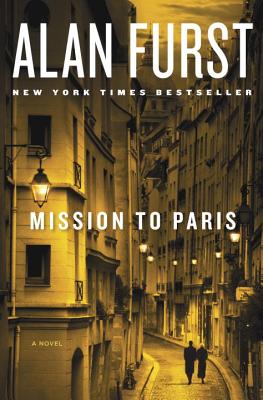
Review: MISSION TO PARIS by Alan Furst

mission to paris cover

An Austrian-born Hollywood star named Frederic Stahl is traded to a movie studio in Paris to make a film called Après le Guerre. This proves to be ironic, seeing as how it's 1938 and a second World War is clearly on the horizon and a-comin' this way. Since he's famous (Nazis love movies, as we all know from Inglourious Basterds) and Austria is now officially part of Nazi Germany, Frederic is courted by several Nazis in Paris, becoming gradually more annoyed with their bullying tactics until he decides to help the American embassy spy on them. When the Nazis find out, they go from intimidation to outright threats. Will Frederic and his German émigré girlfriend get out of Europe alive AND manage to finish filming their movie? Either way, the show must go on!

I picked up Mission to Paris after several people recommended Alan Furst to me in my post about spy novels that have romantic subplots. The novel really has everything: Paris. Hollywood glamor. Movie-making. Spies. Kristallnacht. Snow-bound European castles with doughty, eccentric counts. Romance. And let's not forget those insensitive Nazis!

So how could I not like it, right? And I did like it. As a historical novel, Mission to Paris is 100% awesome. I really felt like I was in pre-War Paris: dining at Maxim's, noshing on Lebanese food, living in a relatively constant state of paranoia while everyone carries on with their daily business. I actually learned quite a bit about World War Two and how the Nazis overthrew the French government, and I was not expecting this novel to be historically illuminating in the least, so that was neat. I also loved the details Furst included about the process of getting a movie made and how precarious and drawn-out production is.

I also loved Stahl, who manages to embody Old Hollywood Glamor and the practical side of acting and being well-known all at the same time. He's living the life, but he doesn't let it inflate his ego. I might have found this a bit unbelievable, actually, but he is the hero of the novel.

Furst's writing style is worth a mention, as well—I found it to be quite stylized and at first difficult to get into. But that quickly passed and I appreciated how his writing style helped to make Mission to Paris a world unto itself.

So yes, I liked Mission to Paris and I think it's a good book. But I didn't love it, and I had trouble connecting with it on any level except intellectually. First of all, the story is very steady and the climaxes aren't moments of super-high tension, more like: And then this happened. Secondly, this is a very male-centric book. It would not pass the Bechdel Test. And even though I liked the central male character, I was BOTHERED. I admit I loved the romance when it first showed up about halfway through the book, but it was difficult to maintain an emotional engagement with that part of the story when woman z didn't seem to be appreciably different from casual sex partners x and y.

Still, I think I enjoyed this book more than my prejudice against novels where the male lead casually thinks, "He wanted to fuck her," will allow me to admit to myself (I'm looking at you, Casino Royale). I do plan on reading more books by Furst in the future—I would love to check out Spies of Warsaw, which was adapted into a mini-series with David Tenant and which I also found very one-note until I rewatched it out of boredom and was suddenly like "BEST SHOW EVER SO INTO." So maybe I should just reread Mission to Paris and see if I don't appreciate it more on the second go-around.


Discus this post with me on Twitter, FaceBook, Google+ or in the comments below.
Sunday, April 21, 2013

Movie Review: COMPLIANCE


Originally released: 2012
Starring: Ann Dowd, Dreama Walker, and Pat Healy
Directed by: Craig Zobel
Based on: the strip-search prank scam in Mount Washington, Kentucky


Review by the lovely Bridget of Books as Portable Pieces of Thoughts

Synopsis:

A very busy fast food joint, somewhere in one of the unnamed towns of the USA. The manager, a middle-aged woman called Sandra, is having a really bad day: due to a screw-up by her underlings, almost $1,500 worth of bacon has been ruined, and she is now conscious of needing some extra effort to please her bosses. All of a sudden she gets a call from a cool, authoritative man who identifies himself as Officer Daniels; he claims one of her employees, a pretty twenty-something blonde called Becky working on the till, has stolen some money from a customer's bag.

Very distressed and very busy, Sandra more or less meekly comply with every request of that man, although they are just talking on the phone. Afer all he wants her to avoid the worst - an unnecessary delay and scandal, tarnishing the reputation of the whole joint and herself as an efficient manager. First she search Becky's bag, then she strip-searches the girl and keeps her almost naked in the back office, under the 'surveillance' of several men. Becky is to be isolated and effectively imprisoned and helpless until the squad car arrives. The results of Sandra's decisions are disastrous. Soon most of the staff are involved in demeaning, humiliating and compromising activities. How will it end?

compliance film still

My impressions:

This chilling film, written and directed by Craig Zobel, is based closely on the true story of a serial phone-prankster sociopath in the US who, for a decade, got away with a bizarre repeated hoax. His daring escalated and in 2004 he brought off his masterstroke of insidious evil. The con trick was a very sadistic demonstration of the weakness and suggestibility of human nature, more devastating than anything in the well-known Stanford and Milgram experiments (testing individuals' response to authority in the 60s of 20th century) because real lives were wrecked.

From different optical illusions like Escher’s impossible labyrinths to unsolicited emails from rich and generous African officials who offer us a fortune for a very small favour, common sense has us hard-wired to reject the implausible. We should be able to do it in our best interest. Unfortunately sometimes we fail. Believe me, it is a movie which will drive a cruel punch to your gut far more effectively than any thriller or slasher because it will make you ask yourself: what would I do in such a situation? It is a cold, hard, shrewd film: satire with a drop of cyanide. The set and decorations match that : filth and grease set the scene for human sliminess.


That doesn't look good.

What Compliance shows, however, is how very important it is that "Officer Daniels" targets a fast food chain. A fast food joint is a place to lower your guard as well as your standards. Here is where the real degradation can flourish because a chain is always conscious of a menacing corporate authority somewhere above them: branch managers, regional managers, people who might only reveal themselves as a voice on the phone. Obedience and badly suppressed fear are the order of the day, especially on the unthinkable subject of hurting your milking cow, a customer. Relinquishing your free will and simply going with the flow is part of the process for all concerned. So when some brazen authority figure on the phone knocks everyone with some new situation, submitting is the natural way to react. Your inner voice might nag you, suggesting that something is very wrong and yet at any time, in any period, when people supposedly in authority tell us what to do – more often than not we do it. Without thinking about the consequences. Without thinking at all.

One weakness of this low-budget film is that the characters — though realistically acted — are a bit too shallow and generic. It’s also a mistake, in my opinion, to keep cutting away to the prankster but without showing his inner self. I WANTED to know what made him tick and my questions weren't answered - not really. I also have to say it seemed to me that Zobel didn’t sell the idea, just the outrage: The more indignities and violations Becky endured at the hands of people who were supposed to be her friends and co-workers, the more it felt like a hollow provocation. As things went from bad to horrible, I got the urge to walk into that back room where Becky was being interrogated and start yelling, “What’s wrong with you people? Are you a bunch of puppets? Switch on your brains! Take a moment and call somebody, like the actual freaking police!”

Final verdict:

A competently crafted film, telling a very chilly story - undoubtedly one of the toughest sits of the movie year 2012. Still sometimes it is good to be reminded how we are programmed to do things that go against our natural instincts as long as we believe we have the law on our side.


Discus this post with Bridget on Twitter or in the comments below.

Sunday, April 7, 2013

I Spy Books with Spies

spies

So you've watched Casino Royale three hundred times and can recite whole portions of The Bourne Identity from memory (that's, like, your superpower). You even sat through all five hours of Tinker, Tailer, Soldier, Spy. Okay, that was more for the man candy, and you might have spent most of it tweeting, but anyway. The point is, you can't get enough of sophisticated spies, but you're so desperate for something new you're considering watching Knight and Day; and yeah, you could read (or reread) the actual James Bond novels, but you're hoping for something slightly less misogynistic. Fortunately for you: sexy spies with a love story thrown in? We got that.

Note that this list isn't of spy novels as per literary fiction--if you love John Le Carré, more power to you, but I prefer my spy stories to be as divorced from reality as possible. The way God, or at least Ian Fleming, intended.

black ice cover

Black Ice by Anne Stuart--Chloe is scraping by as a translator in Paris (shades of Charade!) when she's offered a job in the French countryside. Only the job turns out to be for a group of arms dealers. Fortunately for Chloe, there's a spy among them--Bastien Toussaint, who's not sure what Chloe's game is, but is willing to protect her from the baddies until he finds out. This book is the first in a series about an organization of spies who travel the world. All of the novels are unputdownable with just the right mix of thriller and romance. NO ONE writes bad boy heroes like Anne Stuart.

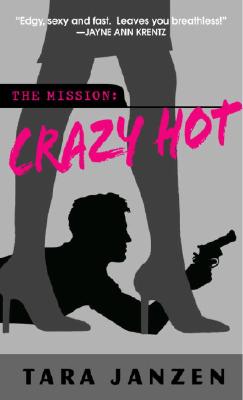
crazy hot cover

Crazy Hot by Tara Janzen--Quinn used to be the black sheep of his small town, until he left to join the military. Now he's part of a special ops team that operates under the cover of a specialty car shop, and his first mission involves working with Regan, the poor little rich girl who broke his heart. Fast cars, kick ass men, and wrong-side-of-the-tracks romance? TOTALLY THERE. I also love this book because it takes place in my home state (Colorado); Regan is super-smart and doesn't take any crap from anyone; and it really is a hot book. Also: first in a series, again. All of the installments with high entertainment value.

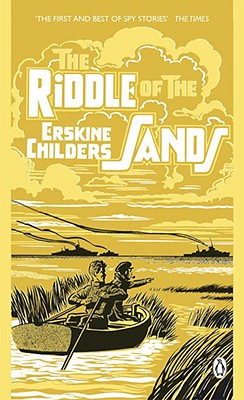
riddle of the sands cover

The Riddle of the Sands by Erskine Childers--Okay, so the guys are more hugable than hot in this one, and the romance is kind of incidental, but I do recommend Riddle of the Sands for anyone who loves spy stories. Curruthers is a suit at the Foreign Office who is desperate for a vacation, so he accepts an invitation from a random acquaintance, Davies, to go sailing on his yacht. In the Baltic Sea. In September. When he arrives, it's to find out that Davies only invited him because he thinks a German spy tried to kill him, and now he needs help figuring out what the spy was trying to hide. This is a great book. I absolutely love Carruthers, who is sarcastic and hilarious, and the story is surprisingly tense and 100% believable. Childers really knew what of he wrote. Winston Churchill even used Riddle of the Sands as a blueprint for British operations in the Baltic during WWII.

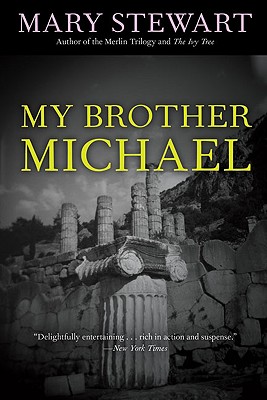
my brother michael cover

My Bother Michael by Mary Stewart--Camilla is sitting in a cafe in Athens, bemoaning how boring her life is and how nothing ever happens, when something happens! (Note I have attempted this tactic myself on several occasions and it NEVER WORKS.) A stranger presses a key into her hand and begs her to take a car to a man named Simon in Delphi. It's a matter of life and death! Well, what's a girl to do? Camilla hops in the car and drives that sucker down to Delphi, where she gets involved with the mysterious Simon and all the non-boring car chases, shoot-outs, and cloak-and-dagger craziness that is his life.


What are some of your favorite spy novels?


Discus this post with me on Twitter, FaceBook, Google+ or in the comments below.
Friday, September 9, 2011

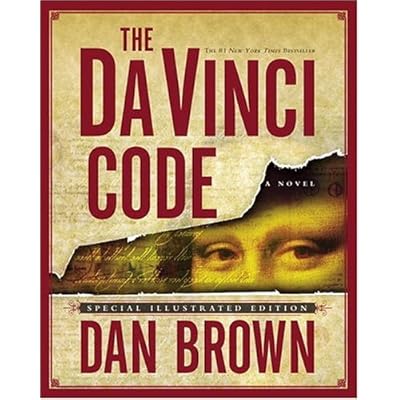
Book Review: THE DA VINCI CODE (Special Illustrated Edition) by Dan Brown

da vinci code cover

Recently, I had a strange urge to re-read The Da Vinci Code--strange, because while I did enjoy reading it the first time (around 2005-ish), I wasn't in love over it. This isn't the typical sort of novel I enjoy, and at 597 pages it was a near-miracle I even finished it, so I never saw myself rereading it. However, after reading a review of Rise of the Planet of the Apes (I can't find the link, sorry), I found myself re-intrigued with The Da Vinci Code.

The point of the review of Rise was that successful sci-fi movies resonate with contemporary social and political subtext (I'll let you guess as to the reviewer's opinion on how successful Rise was at doing that). That got me thinking about The Da Vinci Code because it obviously resonated when it was released, but with what? Whatever it was certainly didn't translate to the movie.

At its heart, TDVC is a quest, filled with a lot of traveling, symbols, and treasures like the Holy Grail. There are a lot of knight references in the book--not just the Knights Templar and Holy Grail, which are pretty obvious, but more subtle references like the statue of the knight in shining armor in Saunière's office, and Robert Langdon and Sophie Neveu going to a "knight," Leigh Teabing, for help.

Also as in many questing stories, the final goal isn't an object, even though the protagonist may not realize this. As Langdon reflects early in the book,
Rome [from Angels & Demons] had unlocked in him a longing he never imagined he could feel. His lifelong affinity for bachelorhood and the simple freedoms it allowed had been shaken somehow... replaced by an unexpected emptiness that seemed to have grown over the past year.
There's a lot to read into that sentence (no lifelong bachelor jokes, please--too easy). Is Langdon questioning his existential nihilism, looking for God, or love? Or all three? Either way, I think this gives the novel more of a romantic streak than your average thriller.

I don't believe the reason behind TVDC's massive appeal was a romantic quest, though. Aside from Langdon and Sophie's odyssey, the main message of the book is about the threats of extremism. The only part of the novel that was truly alarming was the idea that an organization like Opus Dei could not only exist in the modern Western world, but thrive. In a post-9/11 US, the notion of a very conservative monotheistic organization that wanted to severely suppress women's rights and was semi-secretly headquartered in New York City was not only more credible than it would have been previously, but more portentous. Just think of all the fuss that was stirred up a few months back over the building of a new Islamic community center. Because of 9/11, people were more wary of "hidden threats" and the knowledge that extremism was gaining a foothold in the US.

I'm not saying the plot of TDVC is anti-Islam, although it could probably be read that way--the novel does tend to treat anything east of Provence as suspect--but rather that it's anti-fundamentalist, arguing against simply accepting someone else's definition of what events mean or who is and isn't dangerous. In many ways, Langdon himself could be described as a monist: many paths can lead to the same answer. Unfortunately, anyone who's tried to avoid hearing about politics lately knows that message, if noted at all, clearly didn't stick.

book interior
Example from the interior of the book.

As for the writing, Dan Brown has gotten a lot slack for it (especially on The Colbert Report), and I have to admit the book was more cheesy than I remember it being. But on the plus side, the obscure product placements were kept under control, so that's good. The only thing Brown does that really drives me crazy is insert the characters' thoughts randomly in italics for no reason. It makes me go, Huh? Why do I need to know lovely little Silas is thinking that? It should be self-evident. And now Brown's got me doing it!! Aiee! 


TDVC has also been criticized for historical inaccuracy, which quite honestly makes me laugh. One, it's a novel. Look up the definition, please, then get back to me on why this is news. Two, historical accuracy or lack thereof not withstanding, Brown researched the ever-loving crapload out of this topic, and pulled it all together in a way that was really interesting and creative, so I think he deserves kudos for that.

As for the Illustrated Special Edition... uhg. The illustrations have an inconsistent, home PhotoShopped feel to them; and some of the things they chose to illustrate were just odd. The Olympic Rings, for instance--considering that most five-year-olds know what the Olympic Rings are, I don't think it's necessary to include a picture of them in this book. And even if it was necessary, they could have found a damn better example than the .gif-quality image that just about anyone could pull off the internet.

Overall I'm happy I decided to reread this book. It's definitely better than the movie (sorry, Tom Hanks, you just don't make a believable academic), and as a modern-day quest/thriller novel, I think it's pretty decent.


Musical Notes: I don't know why, but I had "Give Me Some Love" by James Blunt and "Your Song" from Moulin Rouge stuck in my head the entire time I was reading this.


LinkWithin

Related Posts Plugin for WordPress, Blogger...